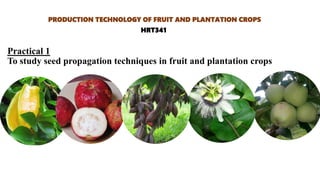
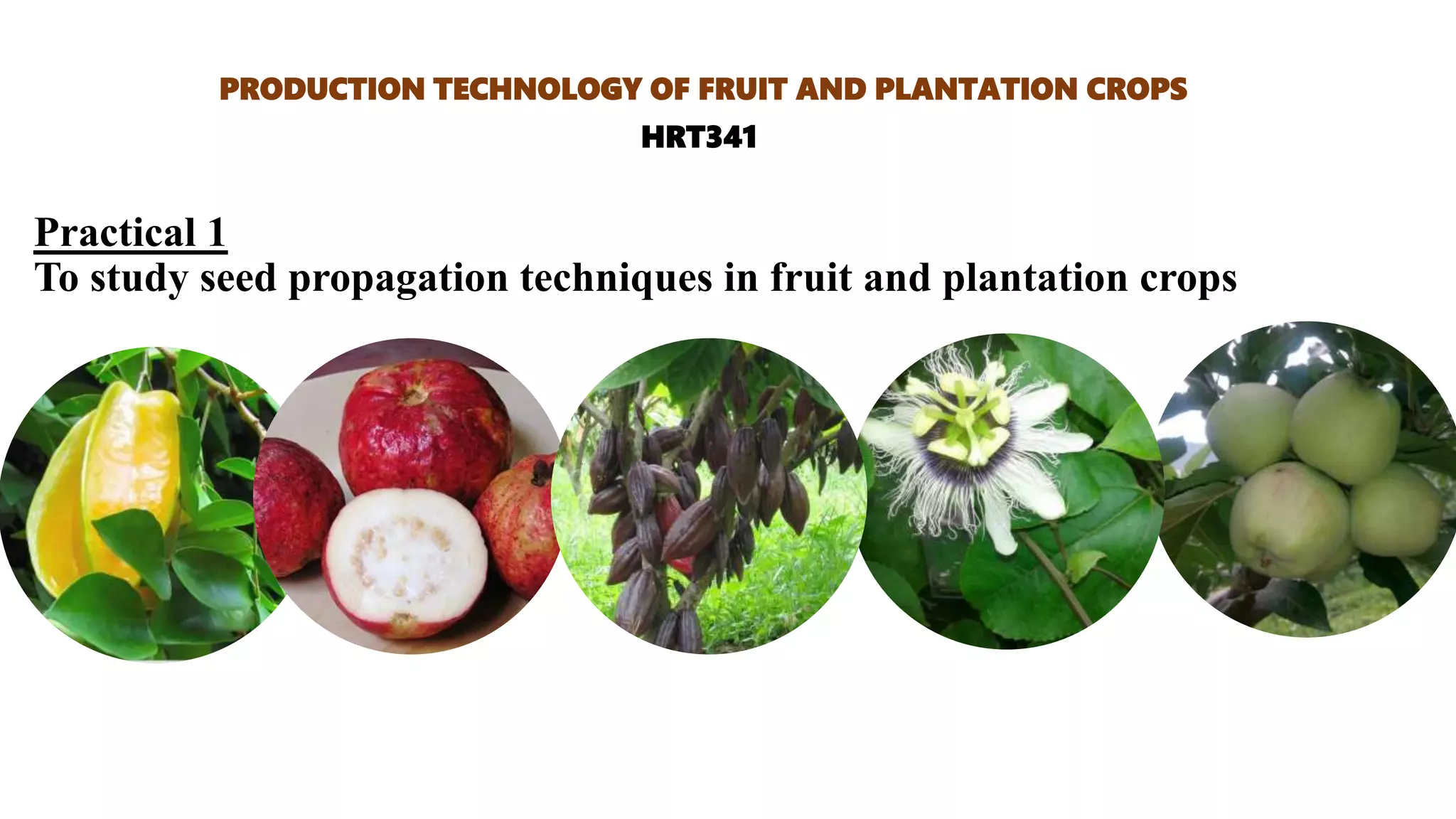
Practical 1
To study seed propagation techniques in fruit and plantation crops
PRODUCTION TECHNOLOGY OF FRUIT AND PLANTATION CROPS
HRT341
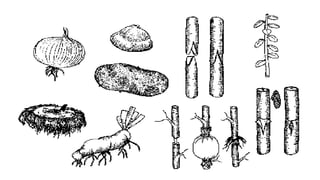
Plant propagation...
• Sexual methods - Seed propagation
• Asexual methods
• Rooting cuttings
• Layering; air layering
• Grafting
• Specialized structures
• tissue culture; micropropagation
“the art and science of multiplying
plants by sexual or asexual means.”
Seed propagation techniques in fruit and
plantation crops
• Seed propagation of plants is older than the 1st Human on earth
• 100% natural technique
SEED DEVELOPMENT PROCESS
• Sexual propagation starts with seed formation.
• Seed development requires sexual reproduction which involves the fusion of male and female gamete to form a
zygote (2n) which develops into embryo
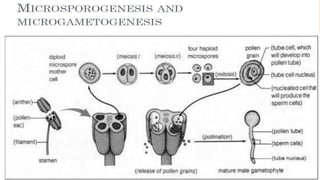
• The male and female gametes are produced in specialized structures of flowers, the anthers and pistil in which male
and female gametophytes are produced respectively.
• The functions of the gametophytes are the production of the sperm cells and the female cells, and their union in
fertilization.
• In flowering plants, the pollen grain is the male gametophyte and the embryo sac is the female gametophyte.
Process of seed development in simple words
1. Pollen grain from male anther fall in receptive female pistil
2. Germination of pollen on stigma surface
3. Pollen tube development
4. Pollen tube enter ovule
5. Fusion of gametes (Gametogenesis)
6. Fertilization
7. Zygote development
8. Ovary develops into fruit, Ovule into seeds, integument into seed coat.
Process of seed germination
i. Imbibition (Water uptake and increase in volume)
ii. Mitochondria mature, enzymes activated, food reserves
metabolized and proteins are synthesised
iii. Radicle & Plumule emerges
• Play germination video
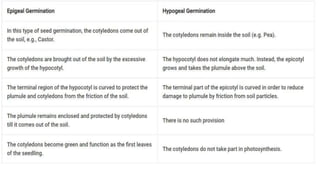
• Play video for Epigeal and Hypogeal
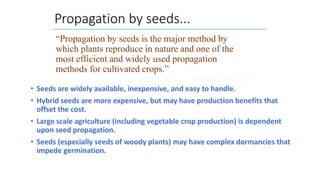
Propagation by seeds...
• Seeds are widely available, inexpensive, and easy to handle.
• Hybrid seeds are more expensive, but may have production benefits that
offset the cost.
• Large scale agriculture (including vegetable crop production) is dependent
upon seed propagation.
• Seeds (especially seeds of woody plants) may have complex dormancies that
impede germination.
“Propagation by seeds is the major method by
which plants reproduce in nature and one of the
most efficient and widely used propagation
methods for cultivated crops.”
Hartmann and Kester
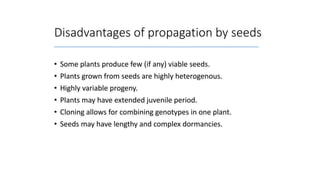
Disadvantages of propagation by seeds
• Some plants produce few (if any) viable seeds.
• Plants grown from seeds are highly heterogenous.
• Highly variable progeny.
• Plants may have extended juvenile period.
• Cloning allows for combining genotypes in one plant.
• Seeds may have lengthy and complex dormancies.
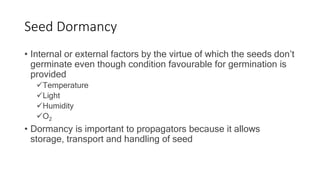
Seed Dormancy
• Internal or external factors by the virtue of which the seeds don’t
germinate even though condition favourable for germination is
provided
Temperature
Light
Humidity
O2
• Dormancy is important to propagators because it allows
storage, transport and handling of seed
Types of Dormancy
• Exogenous dormancy - factors outside the embryo (seed coat or parts of the fruit)
Inhibits water uptake
Physical restriction on embryo expansion or radicle emergence
Controlling gas exchange (O2/CO2)
Preventing leaching of internal inhibitors
Supplies inhibitors to the embryo
Exogenous physical dormancy (“seed coat”)
• Outer integument becomes hard or fibrous during
(Ex: coconut, Kentucky coffee tree) In drupes (cherry,
• Have a hardened endocarp (“pit” or “stone”)
• In nature, hard seed coats are softened by:
an animal’s digestive tract Abrasion -freeze/thaw, Fire
Exogenous chemical dormancy
• In fleshy fruits - chemical inhibitors such as ABA (Ex:
apples, pears, grapes, etc.)
• Desert plant fruits have chemical inhibitors that must be
rains that then provide enough water for germination and
development
Endogenous dormancy
• Morphological dormancy
• Rudimentary embryo = araliaceae (ginseng), papaveraceae (poppy), ranunculaceae
(anemone)
• Linear embryo = ericaceae (rhododendron), annonaceae (pawpaw)
Overcome by:
 Alternating temperatures
 Treat with KNO3 or GA
• Seeds require either light or dark conditions
• Involves phytochrome (in most plants) which is photoreversible
• Light requirement can sometimes be offset by cool temperatures or alternating
temperatures (Ex: lettuce seed, can germ. in dark if temp. below 73°F)
• Play video
Seed viability
• - Tetrazolium test
- Please watch the video
Recalcitrant and Orthodox seeds
• Recalcitrant seeds cannot withstand water loss
• Viability lost if dried
• Need to be sown immediately
• Mango, jamun, citrus
Polyembryony
- Multiple embryo within the seeds
- 1 is sexual seedling and others are true to the type asexual
seedling
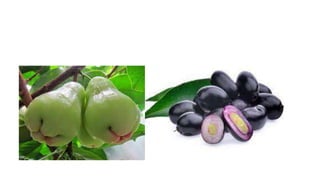
Among horticultural crops jamun, rose apple, onion, etc are polyembryonic in
nature.
Except Citrus grandis (pummelo), C. latolia (Tahiti lime) and Citrus medica (Citron)
all other species are polyembryonic.
Mango – South Indian varieties (Bappakai, Chandrakaran, Kensington, Kitchner,
Kurukkan, Muvandan, Mylepelian, Nekkare, Olour, Peach, Prior )
Apomixis...
“Apomixis is a form of asexual reproduction that
occurs via seeds, in which embryos develop without
fertilization.
“an exception to the rule of nonclonal embryony.”
Vivipary
• Seed germination within fruits
• Jackfruit
• Cocoa
• Papaya
Seed production is seldom practiced
• Phalsa (also cutting) - 15 days dormancy
• Jamun (no dormancy)
• Mangosteen
• Jackfruit (also forket budding)
• Arecanut
• Coconut
• Cocoa
• Coffee
• Tea (also cutting)
• Palmyrah palm
In these fruits and planation crops propagation by seed is commercially done
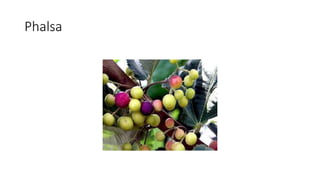
Phalsa
Seed propagation (tough or not possible)
• Banana - Sucker
• Pineapple
• Strawberry (Runner)
• Rubber/Jackfruit (very tough)
Thank you 

Seed propagation in plants

  • 1.
    Practical 1 To studyseed propagation techniques in fruit and plantation crops PRODUCTION TECHNOLOGY OF FRUIT AND PLANTATION CROPS HRT341
  • 3.
    Plant propagation... • Sexualmethods - Seed propagation • Asexual methods • Rooting cuttings • Layering; air layering • Grafting • Specialized structures • tissue culture; micropropagation “the art and science of multiplying plants by sexual or asexual means.”
  • 4.
    Seed propagation techniquesin fruit and plantation crops • Seed propagation of plants is older than the 1st Human on earth • 100% natural technique SEED DEVELOPMENT PROCESS • Sexual propagation starts with seed formation. • Seed development requires sexual reproduction which involves the fusion of male and female gamete to form a zygote (2n) which develops into embryo • The male and female gametes are produced in specialized structures of flowers, the anthers and pistil in which male and female gametophytes are produced respectively. • The functions of the gametophytes are the production of the sperm cells and the female cells, and their union in fertilization. • In flowering plants, the pollen grain is the male gametophyte and the embryo sac is the female gametophyte.
  • 5.
    Process of seeddevelopment in simple words 1. Pollen grain from male anther fall in receptive female pistil 2. Germination of pollen on stigma surface 3. Pollen tube development 4. Pollen tube enter ovule 5. Fusion of gametes (Gametogenesis) 6. Fertilization 7. Zygote development 8. Ovary develops into fruit, Ovule into seeds, integument into seed coat.
  • 7.
    Process of seedgermination i. Imbibition (Water uptake and increase in volume) ii. Mitochondria mature, enzymes activated, food reserves metabolized and proteins are synthesised iii. Radicle & Plumule emerges
  • 8.
  • 11.
    • Play videofor Epigeal and Hypogeal
  • 12.
    Propagation by seeds... •Seeds are widely available, inexpensive, and easy to handle. • Hybrid seeds are more expensive, but may have production benefits that offset the cost. • Large scale agriculture (including vegetable crop production) is dependent upon seed propagation. • Seeds (especially seeds of woody plants) may have complex dormancies that impede germination. “Propagation by seeds is the major method by which plants reproduce in nature and one of the most efficient and widely used propagation methods for cultivated crops.” Hartmann and Kester
  • 13.
    Disadvantages of propagationby seeds • Some plants produce few (if any) viable seeds. • Plants grown from seeds are highly heterogenous. • Highly variable progeny. • Plants may have extended juvenile period. • Cloning allows for combining genotypes in one plant. • Seeds may have lengthy and complex dormancies.
  • 14.
    Seed Dormancy • Internalor external factors by the virtue of which the seeds don’t germinate even though condition favourable for germination is provided Temperature Light Humidity O2 • Dormancy is important to propagators because it allows storage, transport and handling of seed
  • 15.
    Types of Dormancy •Exogenous dormancy - factors outside the embryo (seed coat or parts of the fruit) Inhibits water uptake Physical restriction on embryo expansion or radicle emergence Controlling gas exchange (O2/CO2) Preventing leaching of internal inhibitors Supplies inhibitors to the embryo
  • 16.
    Exogenous physical dormancy(“seed coat”) • Outer integument becomes hard or fibrous during (Ex: coconut, Kentucky coffee tree) In drupes (cherry, • Have a hardened endocarp (“pit” or “stone”) • In nature, hard seed coats are softened by: an animal’s digestive tract Abrasion -freeze/thaw, Fire
  • 17.
    Exogenous chemical dormancy •In fleshy fruits - chemical inhibitors such as ABA (Ex: apples, pears, grapes, etc.) • Desert plant fruits have chemical inhibitors that must be rains that then provide enough water for germination and development
  • 18.
    Endogenous dormancy • Morphologicaldormancy • Rudimentary embryo = araliaceae (ginseng), papaveraceae (poppy), ranunculaceae (anemone) • Linear embryo = ericaceae (rhododendron), annonaceae (pawpaw) Overcome by:  Alternating temperatures  Treat with KNO3 or GA • Seeds require either light or dark conditions • Involves phytochrome (in most plants) which is photoreversible • Light requirement can sometimes be offset by cool temperatures or alternating temperatures (Ex: lettuce seed, can germ. in dark if temp. below 73°F)
  • 19.
  • 20.
    Seed viability • -Tetrazolium test - Please watch the video
  • 21.
    Recalcitrant and Orthodoxseeds • Recalcitrant seeds cannot withstand water loss • Viability lost if dried • Need to be sown immediately • Mango, jamun, citrus
  • 22.
    Polyembryony - Multiple embryowithin the seeds - 1 is sexual seedling and others are true to the type asexual seedling Among horticultural crops jamun, rose apple, onion, etc are polyembryonic in nature. Except Citrus grandis (pummelo), C. latolia (Tahiti lime) and Citrus medica (Citron) all other species are polyembryonic. Mango – South Indian varieties (Bappakai, Chandrakaran, Kensington, Kitchner, Kurukkan, Muvandan, Mylepelian, Nekkare, Olour, Peach, Prior )
  • 24.
    Apomixis... “Apomixis is aform of asexual reproduction that occurs via seeds, in which embryos develop without fertilization. “an exception to the rule of nonclonal embryony.”
  • 25.
    Vivipary • Seed germinationwithin fruits • Jackfruit • Cocoa • Papaya
  • 26.
    Seed production isseldom practiced • Phalsa (also cutting) - 15 days dormancy • Jamun (no dormancy) • Mangosteen • Jackfruit (also forket budding) • Arecanut • Coconut • Cocoa • Coffee • Tea (also cutting) • Palmyrah palm In these fruits and planation crops propagation by seed is commercially done
  • 27.
  • 28.
    Seed propagation (toughor not possible) • Banana - Sucker • Pineapple • Strawberry (Runner) • Rubber/Jackfruit (very tough)
  • 29.