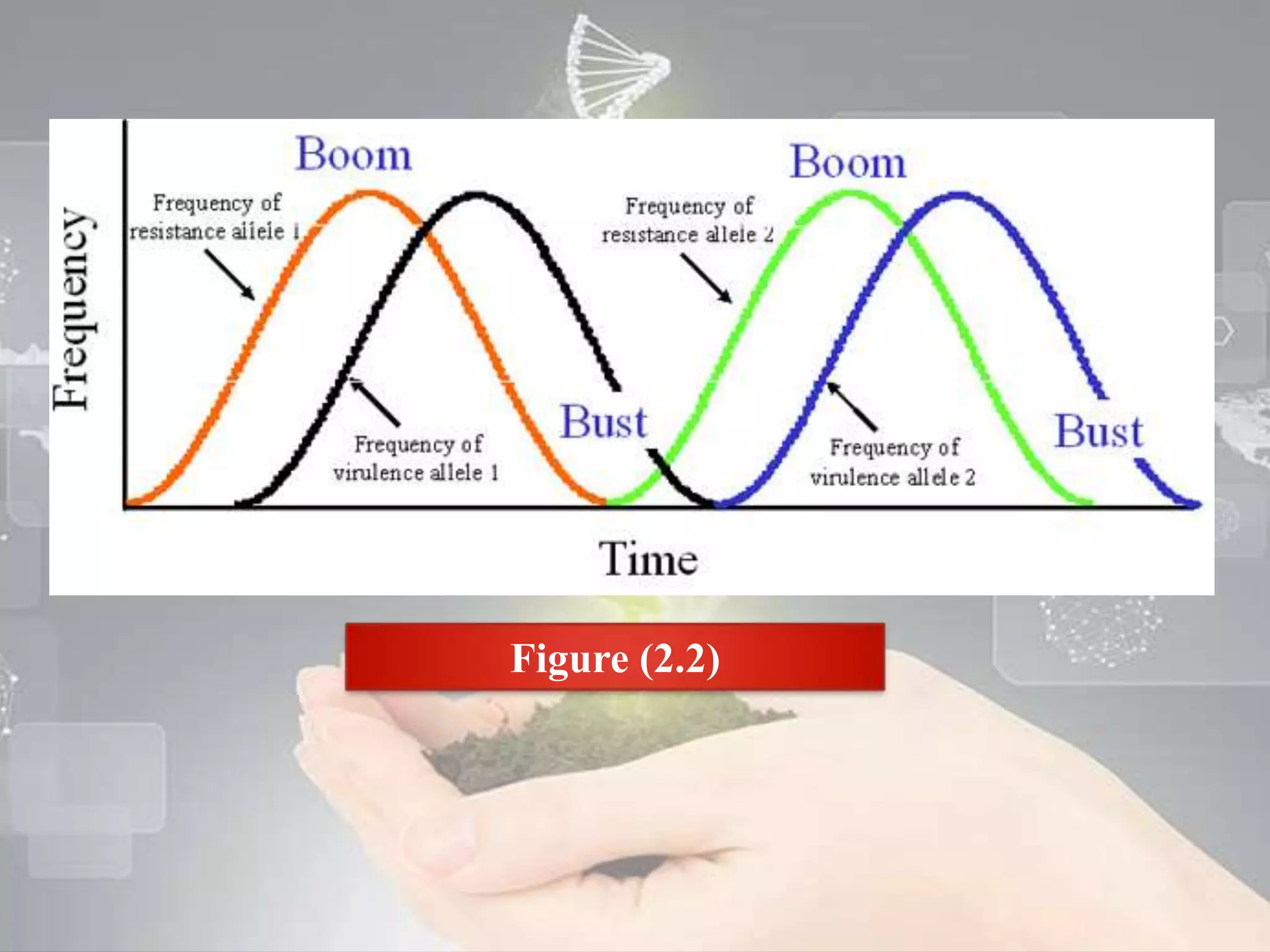
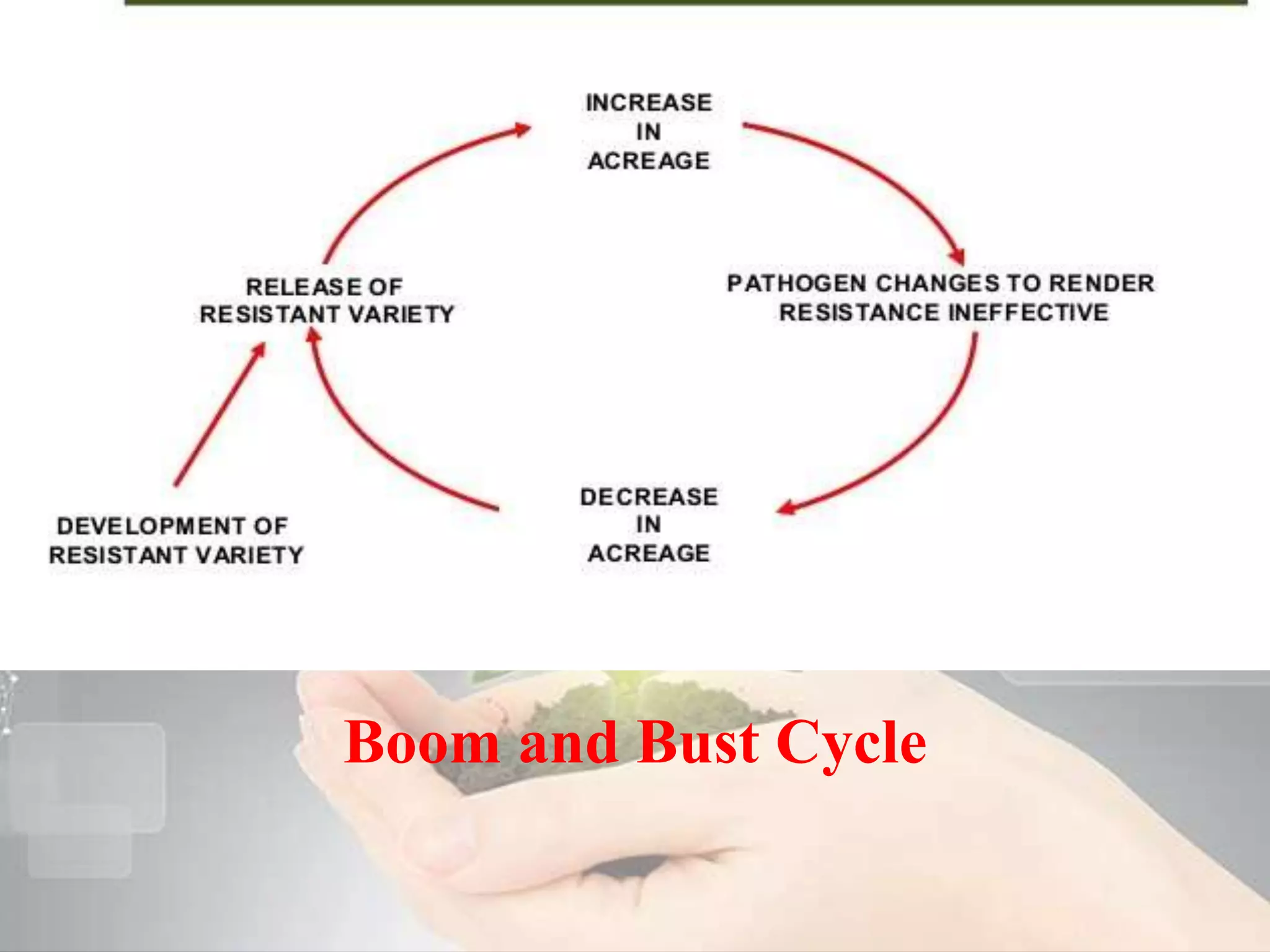
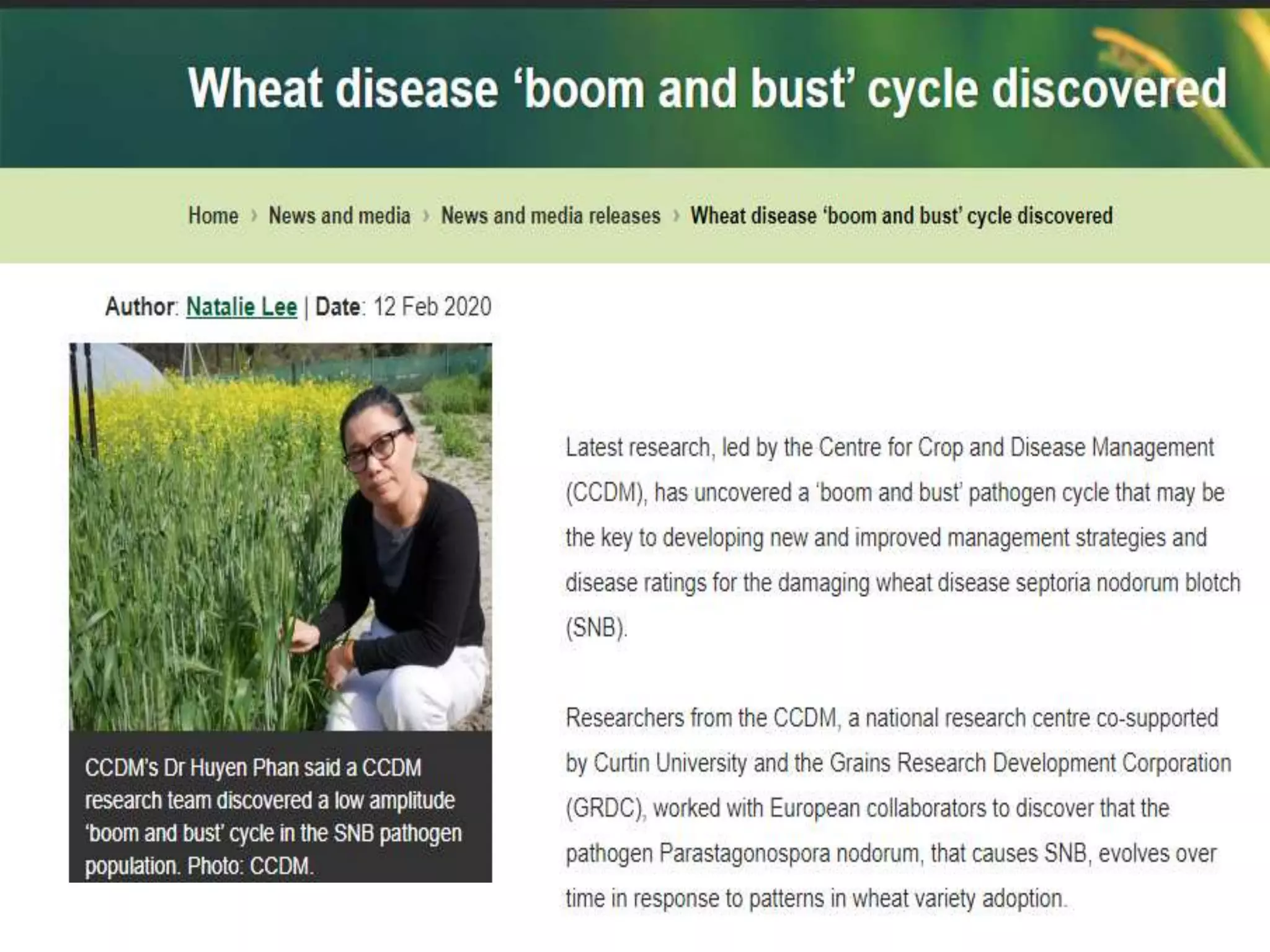
The document discusses the Vertifolia effect and boom-bust cycle in plant breeding. The Vertifolia effect refers to the loss of horizontal resistance that occurs during breeding for vertical resistance in the presence of fungicides/insecticides. An example is the loss of horizontal resistance to potato blight after the discovery of fungicides. The boom-bust cycle describes how a resistant cultivar with a single resistance gene is widely adopted by farmers, but then virulent pathogens spread and break the resistance, leading farmers to abandon the cultivar. Maintaining horizontal resistance and incorporating resistance genes later in breeding can help reduce these effects.