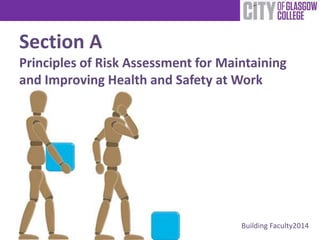
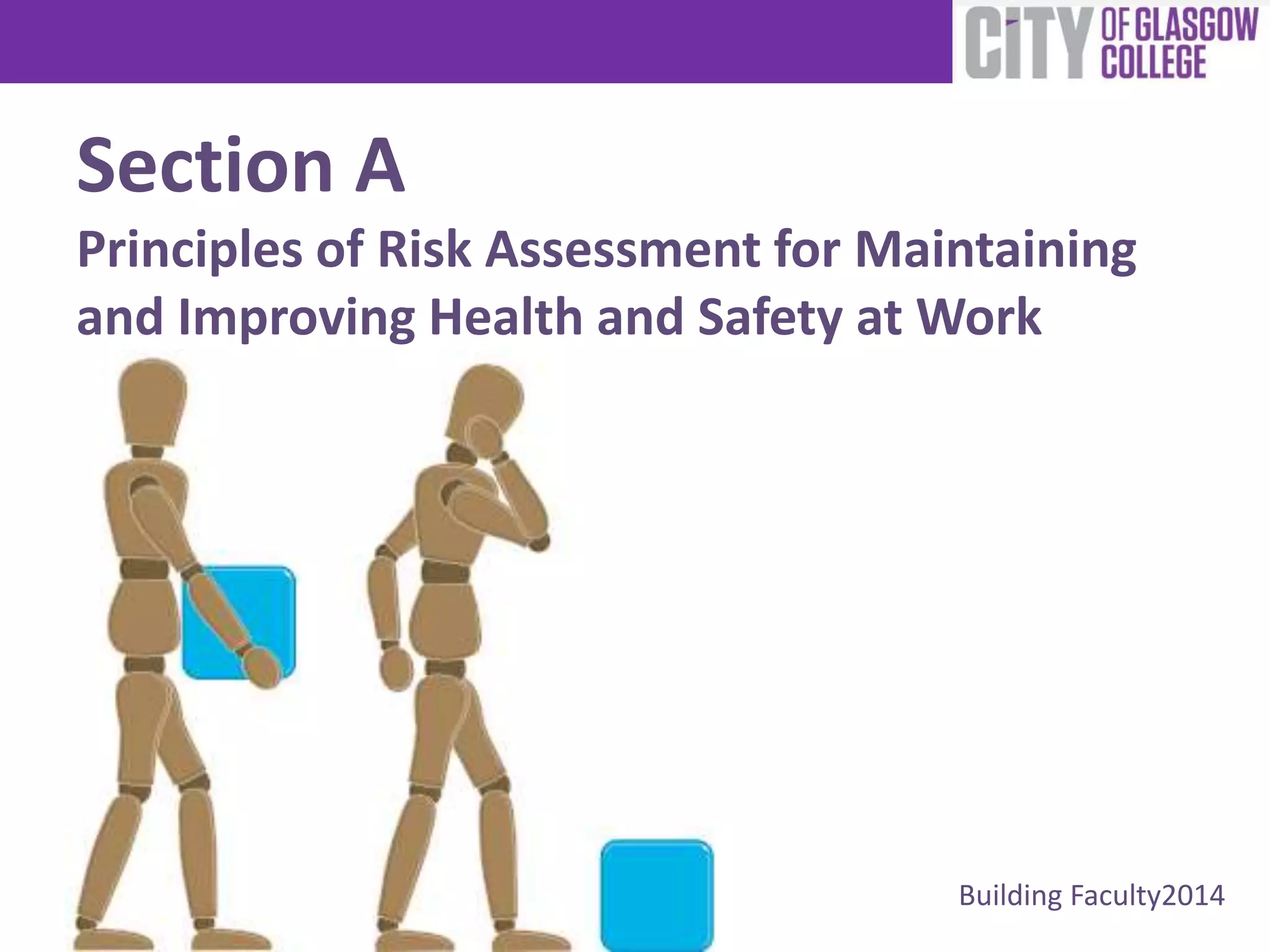
Section A 
Principles of Risk Assessment for Maintaining 
and Improving Health and Safety at Work 
Building Faculty2014
What is Risk Assessment? 
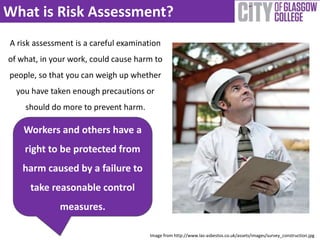
A risk assessment is a careful examination 
of what, in your work, could cause harm to 
people, so that you can weigh up whether 
you have taken enough precautions or 
should do more to prevent harm. 
Image from http://www.las-asbestos.co.uk/assets/images/survey_construction.jpg 
Workers and others have a 
right to be protected from 
harm caused by a failure to 
take reasonable control 
measures.
Hazard or Risk? 
A hazard is anything that 
may cause harm such as 
chemicals, electricity, 
working from height or 
Before considering risk assessments it is important to be able to identify the difference 
between a hazard and a risk. 
machinery 
A risk is the chance, high or 
low that someone could be 
harmed by a hazard 
together with an indication 
of how serious the harm 
could be.
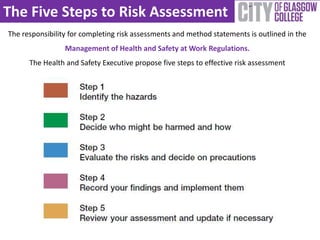
The Five Steps to Risk Assessment 
The responsibility for completing risk assessments and method statements is outlined in the 
Management of Health and Safety at Work Regulations. 
The Health and Safety Executive propose five steps to effective risk assessment
Method Statements 
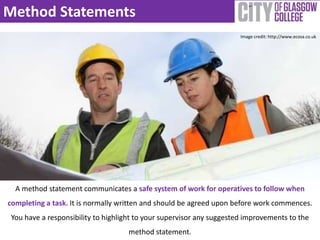
A method statement communicates a safe system of work for operatives to follow when 
completing a task. It is normally written and should be agreed upon before work commences. 
You have a responsibility to highlight to your supervisor any suggested improvements to the 
method statement. 
Image credit: http://www.ecosa.co.uk
What is RIDDOR? 
Image credit: http://www.safetyforward.co.uk 
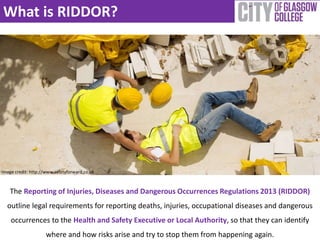
The Reporting of Injuries, Diseases and Dangerous Occurrences Regulations 2013 (RIDDOR) 
outline legal requirements for reporting deaths, injuries, occupational diseases and dangerous 
occurrences to the Health and Safety Executive or Local Authority, so that they can identify 
where and how risks arise and try to stop them from happening again.
What is RIDDOR? 
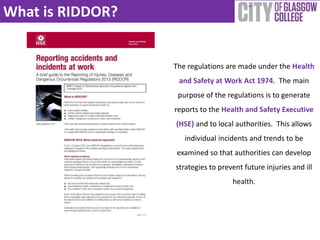
The regulations are made under the Health 
and Safety at Work Act 1974. The main 
purpose of the regulations is to generate 
reports to the Health and Safety Executive 
(HSE) and to local authorities. This allows 
individual incidents and trends to be 
examined so that authorities can develop 
strategies to prevent future injuries and ill 
health.
Accident Reporting 
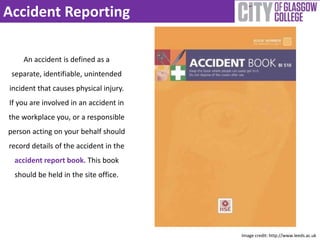
An accident is defined as a 
separate, identifiable, unintended 
incident that causes physical injury. 
If you are involved in an accident in 
the workplace you, or a responsible 
person acting on your behalf should 
record details of the accident in the 
accident report book. This book 
should be held in the site office. 
Image credit: http://www.leeds.ac.uk
Accident Reporting 
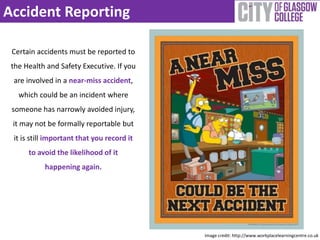
Certain accidents must be reported to 
the Health and Safety Executive. If you 
are involved in a near-miss accident, 
which could be an incident where 
someone has narrowly avoided injury, 
it may not be formally reportable but 
it is still important that you record it 
to avoid the likelihood of it 
happening again. 
Image credit: http://www.workplacelearningcentre.co.uk
Causes of Death 
Falls 
Being struck by a falling or 
moving object 
A collapse or overturn 
Being hit by a moving 
vehicle 
Electricity 
Other or unconfirmed 
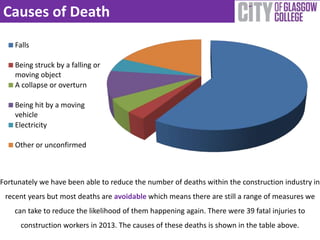
Fortunately we have been able to reduce the number of deaths within the construction industry in 
recent years but most deaths are avoidable which means there are still a range of measures we 
can take to reduce the likelihood of them happening again. There were 39 fatal injuries to 
construction workers in 2013. The causes of these deaths is shown in the table above.
Causes of Injury 
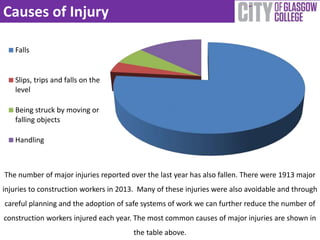
The number of major injuries reported over the last year has also fallen. There were 1913 major 
injuries to construction workers in 2013. Many of these injuries were also avoidable and through 
careful planning and the adoption of safe systems of work we can further reduce the number of 
construction workers injured each year. The most common causes of major injuries are shown in 
the table above. 
Falls 
Slips, trips and falls on the 
level 
Being struck by moving or 
falling objects 
Handling
Fire Safety 
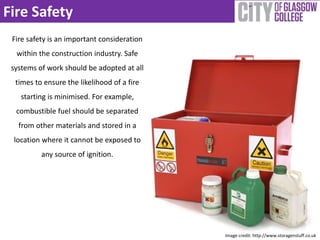
Fire safety is an important consideration 
within the construction industry. Safe 
systems of work should be adopted at all 
times to ensure the likelihood of a fire 
starting is minimised. For example, 
combustible fuel should be separated 
from other materials and stored in a 
location where it cannot be exposed to 
any source of ignition. 
Image credit: http://www.storagenstuff.co.uk
Electrical Safety 
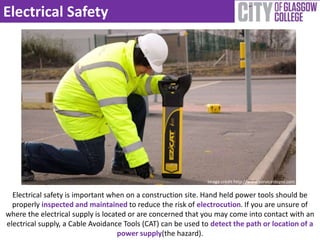
Electrical safety is important when on a construction site. Hand held power tools should be 
properly inspected and maintained to reduce the risk of electrocution. If you are unsure of 
where the electrical supply is located or are concerned that you may come into contact with an 
electrical supply, a Cable Avoidance Tools (CAT) can be used to detect the path or location of a 
power supply(the hazard). 
Image credit http://www.servicestopni.com
Manual Handling 
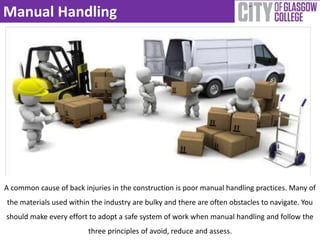
A common cause of back injuries in the construction is poor manual handling practices. Many of 
the materials used within the industry are bulky and there are often obstacles to navigate. You 
should make every effort to adopt a safe system of work when manual handling and follow the 
three principles of avoid, reduce and assess.
Competent Person 
Image credit: Massachusetts construction school 
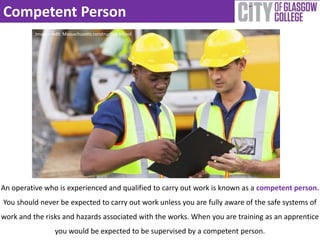
An operative who is experienced and qualified to carry out work is known as a competent person. 
You should never be expected to carry out work unless you are fully aware of the safe systems of 
work and the risks and hazards associated with the works. When you are training as an apprentice 
you would be expected to be supervised by a competent person.
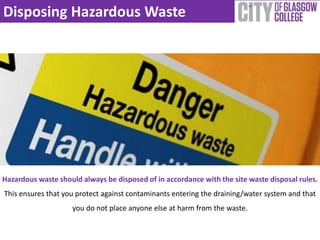
Disposing Hazardous Waste 
Hazardous waste should always be disposed of in accordance with the site waste disposal rules. 
This ensures that you protect against contaminants entering the draining/water system and that 
you do not place anyone else at harm from the waste.

Principles of Risk Assessment

  • 1.
    Section A Principlesof Risk Assessment for Maintaining and Improving Health and Safety at Work Building Faculty2014
  • 2.
    What is RiskAssessment? A risk assessment is a careful examination of what, in your work, could cause harm to people, so that you can weigh up whether you have taken enough precautions or should do more to prevent harm. Image from http://www.las-asbestos.co.uk/assets/images/survey_construction.jpg Workers and others have a right to be protected from harm caused by a failure to take reasonable control measures.
  • 3.
    Hazard or Risk? A hazard is anything that may cause harm such as chemicals, electricity, working from height or Before considering risk assessments it is important to be able to identify the difference between a hazard and a risk. machinery A risk is the chance, high or low that someone could be harmed by a hazard together with an indication of how serious the harm could be.
  • 4.
    The Five Stepsto Risk Assessment The responsibility for completing risk assessments and method statements is outlined in the Management of Health and Safety at Work Regulations. The Health and Safety Executive propose five steps to effective risk assessment
  • 5.
    Method Statements Amethod statement communicates a safe system of work for operatives to follow when completing a task. It is normally written and should be agreed upon before work commences. You have a responsibility to highlight to your supervisor any suggested improvements to the method statement. Image credit: http://www.ecosa.co.uk
  • 6.
    What is RIDDOR? Image credit: http://www.safetyforward.co.uk The Reporting of Injuries, Diseases and Dangerous Occurrences Regulations 2013 (RIDDOR) outline legal requirements for reporting deaths, injuries, occupational diseases and dangerous occurrences to the Health and Safety Executive or Local Authority, so that they can identify where and how risks arise and try to stop them from happening again.
  • 7.
    What is RIDDOR? The regulations are made under the Health and Safety at Work Act 1974. The main purpose of the regulations is to generate reports to the Health and Safety Executive (HSE) and to local authorities. This allows individual incidents and trends to be examined so that authorities can develop strategies to prevent future injuries and ill health.
  • 8.
    Accident Reporting Anaccident is defined as a separate, identifiable, unintended incident that causes physical injury. If you are involved in an accident in the workplace you, or a responsible person acting on your behalf should record details of the accident in the accident report book. This book should be held in the site office. Image credit: http://www.leeds.ac.uk
  • 9.
    Accident Reporting Certainaccidents must be reported to the Health and Safety Executive. If you are involved in a near-miss accident, which could be an incident where someone has narrowly avoided injury, it may not be formally reportable but it is still important that you record it to avoid the likelihood of it happening again. Image credit: http://www.workplacelearningcentre.co.uk
  • 10.
    Causes of Death Falls Being struck by a falling or moving object A collapse or overturn Being hit by a moving vehicle Electricity Other or unconfirmed Fortunately we have been able to reduce the number of deaths within the construction industry in recent years but most deaths are avoidable which means there are still a range of measures we can take to reduce the likelihood of them happening again. There were 39 fatal injuries to construction workers in 2013. The causes of these deaths is shown in the table above.
  • 11.
    Causes of Injury The number of major injuries reported over the last year has also fallen. There were 1913 major injuries to construction workers in 2013. Many of these injuries were also avoidable and through careful planning and the adoption of safe systems of work we can further reduce the number of construction workers injured each year. The most common causes of major injuries are shown in the table above. Falls Slips, trips and falls on the level Being struck by moving or falling objects Handling
  • 12.
    Fire Safety Firesafety is an important consideration within the construction industry. Safe systems of work should be adopted at all times to ensure the likelihood of a fire starting is minimised. For example, combustible fuel should be separated from other materials and stored in a location where it cannot be exposed to any source of ignition. Image credit: http://www.storagenstuff.co.uk
  • 13.
    Electrical Safety Electricalsafety is important when on a construction site. Hand held power tools should be properly inspected and maintained to reduce the risk of electrocution. If you are unsure of where the electrical supply is located or are concerned that you may come into contact with an electrical supply, a Cable Avoidance Tools (CAT) can be used to detect the path or location of a power supply(the hazard). Image credit http://www.servicestopni.com
  • 14.
    Manual Handling Acommon cause of back injuries in the construction is poor manual handling practices. Many of the materials used within the industry are bulky and there are often obstacles to navigate. You should make every effort to adopt a safe system of work when manual handling and follow the three principles of avoid, reduce and assess.
  • 15.
    Competent Person Imagecredit: Massachusetts construction school An operative who is experienced and qualified to carry out work is known as a competent person. You should never be expected to carry out work unless you are fully aware of the safe systems of work and the risks and hazards associated with the works. When you are training as an apprentice you would be expected to be supervised by a competent person.
  • 16.
    Disposing Hazardous Waste Hazardous waste should always be disposed of in accordance with the site waste disposal rules. This ensures that you protect against contaminants entering the draining/water system and that you do not place anyone else at harm from the waste.

Editor's Notes

  • #11 Source: Health and Safety in Construction in Great Britain 2013 – Work-related injuries and ill health
  • #12 Source: Health and Safety in Construction in Great Britain 2013 – Work-related injuries and ill health