Core 01 – Health, Safety and
Welfare in Construction and
Associated Industries
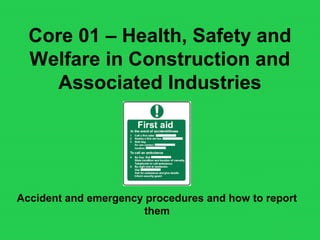
Accident and emergency procedures and how to report
them
Tutor Copy
Major hazards in the workplace.
• Fires
• Tripping
• Chemical spills
• Falls from Height
• Burns
• Electrical
• Exposure to hazardous substances
(Asbestos or Moulds etc.)
• Plant and vehicles
Some hazards cause long term
damage to people
These may take years to develop, but could have
been prevented by following health and Safety
guidelines.
• Hearing Damage
• Respiratory Failure
• Lung Damage/Disease
• Asbestosis
• Hand/Arm Vibration Syndrome (HAVS) or
Vibration White Finger.
• Death
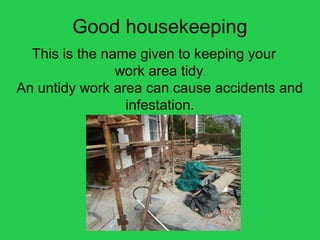
Good housekeeping
This is the name given to keeping your
work area tidy.
An untidy work area can cause accidents and
infestation.
Accident Reporting and
Emergency Procedures
RIDDOR requires employers to report certain
accidents etc. to the Health and Safety
Executive.
RIDDOR
Reporting of Injuries Diseases
and Dangerous Occurrences
Regulations
The legislation states
• Injuries and accidents must be reported to
the Health and Safety Executive.
• Who is responsible for filling in accident
reports.
• You must report accidents to your employer.
Minor Accident Reporting
Every accident involving an injury should be
reported in an accident report book.
Every site has to keep one as a record for
future reference.
This will help prevent these accidents from
happening again.
Near Miss
A near miss or accidents that happened
and no one was injured should also be
reported In the site hazard book.
Reporting near misses will help to prevent
this kind of accident happening in the
future.
Accident Reporting
Employers must make employees aware of where the
accident book is kept.
All accidents have to be entered in the accident book, and
the following information must be recorded:
• Name, address and occupation of the injured person.
• Signature of the person making the entry, address,
occupation and date.
• When and where the accident happened.
• Brief description of the accident, cause and what injury
occurred.
• If the accident is of such a nature that it has be reported to
the HSE.
Some accidents are more serious than
others.
The Health and Safety Executive (HSE)
must be informed of an accident which
results in:
• Death
• major injury
• more than three days’
absence from work
These are called “Major Accidents”
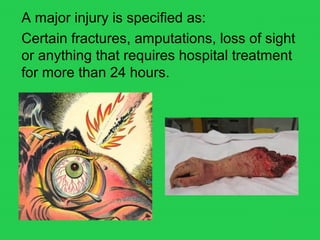
A major injury is specified as:
Certain fractures, amputations, loss of sight
or anything that requires hospital treatment
for more than 24 hours.
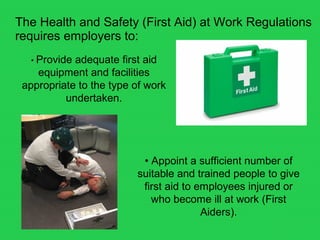
The Health and Safety (First Aid) at Work Regulations
requires employers to:
• Provide adequate first aid
equipment and facilities
appropriate to the type of work
undertaken.
• Appoint a sufficient number of
suitable and trained people to give
first aid to employees injured or
who become ill at work (First
Aiders).
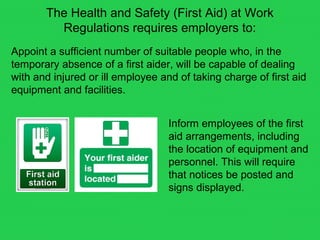
The Health and Safety (First Aid) at Work
Regulations requires employers to:
Appoint a sufficient number of suitable people who, in the
temporary absence of a first aider, will be capable of dealing
with and injured or ill employee and of taking charge of first aid
equipment and facilities.
Inform employees of the first
aid arrangements, including
the location of equipment and
personnel. This will require
that notices be posted and
signs displayed.
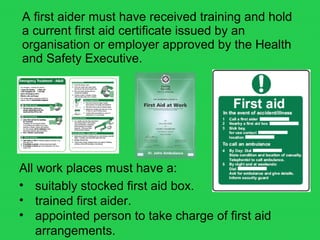
A first aider must have received training and hold
a current first aid certificate issued by an
organisation or employer approved by the Health
and Safety Executive.
• suitably stocked first aid box.
• trained first aider.
• appointed person to take charge of first aid
arrangements.
All work places must have a:
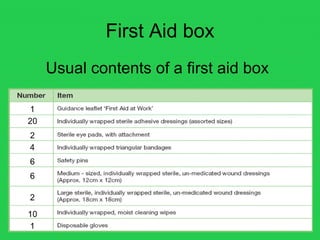
First Aid box
Usual contents of a first aid box
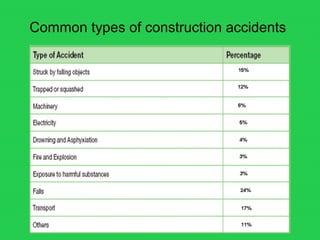
Common types of construction accidents
Causes of accidents in the workplace:
• Rushing to get the job done.
• Lack of preparation in making the work area safe.
• Distraction by others.
• Lack of concentration.
• Not following the health and safety rules.
• Messing about, acting irresponsibly.
• PPE not used or worn correctly.
• Poor training and supervision.
• Poor lighting/heating or excessive noise.
• Poor storage of materials.
• Unsafe lifting and handling..
• Poor weather conditions.
• Electrical faults.
• Using unsafe tools and equipment.
• Working under the influence of drugs and alcohol.
Major types of Emergencies
Emergencies on site are as common as
accidents.
Typical emergencies are:
• Fires
• Bombs and security alerts
• Flooding
• Collapses
• Gas
Accident Trends
Accident statistics are used to create lists of accident
trends
These trends are used by HSE and The Royal
Society for The Prevention of Accidents to warn
other companies of construction and workplace
dangers.
http://www.rospa.com/occupationalsafety/
http://www.hse.gov.uk/search/search-results.htm?q=tren
Accidents
Accidents can affect companies in many
ways, such as:
•Closure of site
•Loss of production
•Insurance claims
•Poor company image (future employees
and future customers)
In the event of an accident
• Make the area as safe as possible (do
NOT put yourself at risk).
• Call for help and warn others of the
dangers.
• Telephone the emergency services.
• Stay with the injured person until help
arrives.

Tutor core 01 accident reporting

  • 1.
    Core 01 –Health, Safety and Welfare in Construction and Associated Industries Accident and emergency procedures and how to report them
  • 2.
  • 3.
    Major hazards inthe workplace. • Fires • Tripping • Chemical spills • Falls from Height • Burns • Electrical • Exposure to hazardous substances (Asbestos or Moulds etc.) • Plant and vehicles
  • 4.
    Some hazards causelong term damage to people These may take years to develop, but could have been prevented by following health and Safety guidelines. • Hearing Damage • Respiratory Failure • Lung Damage/Disease • Asbestosis • Hand/Arm Vibration Syndrome (HAVS) or Vibration White Finger. • Death
  • 5.
    Good housekeeping This isthe name given to keeping your work area tidy. An untidy work area can cause accidents and infestation.
  • 6.
    Accident Reporting and EmergencyProcedures RIDDOR requires employers to report certain accidents etc. to the Health and Safety Executive. RIDDOR Reporting of Injuries Diseases and Dangerous Occurrences Regulations
  • 7.
    The legislation states •Injuries and accidents must be reported to the Health and Safety Executive. • Who is responsible for filling in accident reports. • You must report accidents to your employer.
  • 8.
    Minor Accident Reporting Everyaccident involving an injury should be reported in an accident report book. Every site has to keep one as a record for future reference. This will help prevent these accidents from happening again.
  • 9.
    Near Miss A nearmiss or accidents that happened and no one was injured should also be reported In the site hazard book. Reporting near misses will help to prevent this kind of accident happening in the future.
  • 10.
    Accident Reporting Employers mustmake employees aware of where the accident book is kept. All accidents have to be entered in the accident book, and the following information must be recorded: • Name, address and occupation of the injured person. • Signature of the person making the entry, address, occupation and date. • When and where the accident happened. • Brief description of the accident, cause and what injury occurred. • If the accident is of such a nature that it has be reported to the HSE.
  • 11.
    Some accidents aremore serious than others. The Health and Safety Executive (HSE) must be informed of an accident which results in: • Death • major injury • more than three days’ absence from work These are called “Major Accidents”
  • 12.
    A major injuryis specified as: Certain fractures, amputations, loss of sight or anything that requires hospital treatment for more than 24 hours.
  • 13.
    The Health andSafety (First Aid) at Work Regulations requires employers to: • Provide adequate first aid equipment and facilities appropriate to the type of work undertaken. • Appoint a sufficient number of suitable and trained people to give first aid to employees injured or who become ill at work (First Aiders).
  • 14.
    The Health andSafety (First Aid) at Work Regulations requires employers to: Appoint a sufficient number of suitable people who, in the temporary absence of a first aider, will be capable of dealing with and injured or ill employee and of taking charge of first aid equipment and facilities. Inform employees of the first aid arrangements, including the location of equipment and personnel. This will require that notices be posted and signs displayed.
  • 15.
    A first aidermust have received training and hold a current first aid certificate issued by an organisation or employer approved by the Health and Safety Executive. • suitably stocked first aid box. • trained first aider. • appointed person to take charge of first aid arrangements. All work places must have a:
  • 16.
    First Aid box Usualcontents of a first aid box
  • 17.
    Common types ofconstruction accidents
  • 18.
    Causes of accidentsin the workplace: • Rushing to get the job done. • Lack of preparation in making the work area safe. • Distraction by others. • Lack of concentration. • Not following the health and safety rules. • Messing about, acting irresponsibly. • PPE not used or worn correctly. • Poor training and supervision. • Poor lighting/heating or excessive noise. • Poor storage of materials. • Unsafe lifting and handling.. • Poor weather conditions. • Electrical faults. • Using unsafe tools and equipment. • Working under the influence of drugs and alcohol.
  • 19.
    Major types ofEmergencies Emergencies on site are as common as accidents. Typical emergencies are: • Fires • Bombs and security alerts • Flooding • Collapses • Gas
  • 20.
    Accident Trends Accident statisticsare used to create lists of accident trends These trends are used by HSE and The Royal Society for The Prevention of Accidents to warn other companies of construction and workplace dangers. http://www.rospa.com/occupationalsafety/ http://www.hse.gov.uk/search/search-results.htm?q=tren
  • 21.
    Accidents Accidents can affectcompanies in many ways, such as: •Closure of site •Loss of production •Insurance claims •Poor company image (future employees and future customers)
  • 22.
    In the eventof an accident • Make the area as safe as possible (do NOT put yourself at risk). • Call for help and warn others of the dangers. • Telephone the emergency services. • Stay with the injured person until help arrives.