CHAPTER 1
Section 1
UNDERSTANDING OUR PAST
 Austen Layard dug up statues in Iraq in 1845
that were from the Assyrian civilization---
statues that were 3,000 years old
 Geography---the study of people, their
environments, and their available resources
 Five important themes sum up the impact of
geography on the human story---location,
place, movement, region, and human-
environment interaction
LOCATION
 Location tells us where a place is on the
Earth’s surface
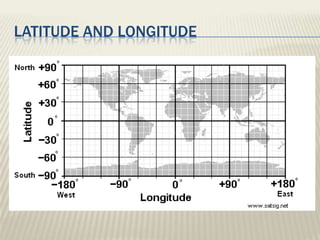
 Latitude---measures distances north or south
of the Equator
 Longitude---measures distances east or west
of the Prime Meridian
LATITUDE AND LONGITUDE
PLACE
 Geographers describe places in terms of
their physical features and human
characteristics
 Physical features of a place can include:
landforms, bodies of water, climate, soil
quality, resources, and plant and animal life
 Human characteristics include: where most
people live, economic activities, religious
beliefs, and languages
HUMAN-ENVIRONMENT INTERACTION
 People interact with the environment
(Common Sense!!!)
 Examples---using river water to irrigate
crops, cutting down trees for farmland,
canals and roads
MOVEMENT
 In early times, people followed herds of
animals on which they depended on for food
 In more recent times, people have migrated
from rural areas into cities in search of jobs
 In both ancient times and today, traders carry
goods from one part of the Earth to the other
and people such as settlers carry ideas
REGION
 Geographers divide the world into many
types of regions
 Regions can be defined based on location
(the Middle East),or by political, economic, or
cultural features
PREHISTORY
 Prehistory is the period of time before writing
(think about it logically---without writing
anything down there was no records of
anything humans did before they learned to
write)
 Prehistoric people DID NOT HAVE: cities,
countries, governments, or complex
inventions
ANTHROPOLOGY AND CULTURE
 Anthropology---the study of the origins and
development of people and their societies
 Culture---the way of life of a society handed
down from generation to generation
ARCHAEOLOGY
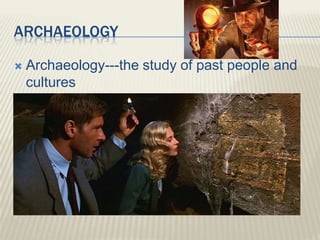
 Archaeology---the study of past people and
cultures
TECHNOLOGY
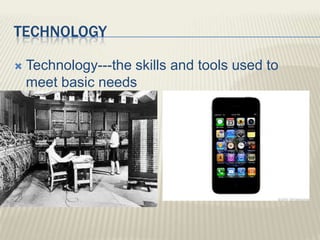
 Technology---the skills and tools used to
meet basic needs
EXAMPLES OF SCIENTISTS WHO HELP OUT
ARCHAEOLOGISTS
 Geologists, botanists, zoologists, biologists,
chemists, climate experts
HISTORIANS
 Historians---study how people lived in the
past
 What historians do you know?

WH Chapter 1 Section 1 Notes

  • 1.
  • 2.
    UNDERSTANDING OUR PAST Austen Layard dug up statues in Iraq in 1845 that were from the Assyrian civilization--- statues that were 3,000 years old  Geography---the study of people, their environments, and their available resources  Five important themes sum up the impact of geography on the human story---location, place, movement, region, and human- environment interaction
  • 3.
    LOCATION  Location tellsus where a place is on the Earth’s surface  Latitude---measures distances north or south of the Equator  Longitude---measures distances east or west of the Prime Meridian
  • 4.
  • 5.
    PLACE  Geographers describeplaces in terms of their physical features and human characteristics  Physical features of a place can include: landforms, bodies of water, climate, soil quality, resources, and plant and animal life  Human characteristics include: where most people live, economic activities, religious beliefs, and languages
  • 6.
    HUMAN-ENVIRONMENT INTERACTION  Peopleinteract with the environment (Common Sense!!!)  Examples---using river water to irrigate crops, cutting down trees for farmland, canals and roads
  • 7.
    MOVEMENT  In earlytimes, people followed herds of animals on which they depended on for food  In more recent times, people have migrated from rural areas into cities in search of jobs  In both ancient times and today, traders carry goods from one part of the Earth to the other and people such as settlers carry ideas
  • 8.
    REGION  Geographers dividethe world into many types of regions  Regions can be defined based on location (the Middle East),or by political, economic, or cultural features
  • 9.
    PREHISTORY  Prehistory isthe period of time before writing (think about it logically---without writing anything down there was no records of anything humans did before they learned to write)  Prehistoric people DID NOT HAVE: cities, countries, governments, or complex inventions
  • 10.
    ANTHROPOLOGY AND CULTURE Anthropology---the study of the origins and development of people and their societies  Culture---the way of life of a society handed down from generation to generation
  • 11.
    ARCHAEOLOGY  Archaeology---the studyof past people and cultures
  • 12.
    TECHNOLOGY  Technology---the skillsand tools used to meet basic needs
  • 13.
    EXAMPLES OF SCIENTISTSWHO HELP OUT ARCHAEOLOGISTS  Geologists, botanists, zoologists, biologists, chemists, climate experts
  • 14.
    HISTORIANS  Historians---study howpeople lived in the past  What historians do you know?