Secondary Market
Meaning of Secondary Market

  Refers to a market where securities are traded


      Securities are already listed in Stock
                    Exchange

   Provides an efficient platform for trading of
                   his securities
Difference between Primary Market &
           Secondary Market


    Primary Market            Secondary Market
• Securities are offered to    • Already existing
  public for subscription      securities are traded
  • Purpose of Raising        • Purpose of capital
      Capital or fund             appreciation
Stock Exchange


Provide a trading platform
         by SEBI


      Where transaction done in
              securities
Demutualization of Stock Market


      Refers to the legal structure
            of an exchange


       Ownership, management
      and the trading rights at the
       exchange are segregated
           from one another
Demutualised Stock Exchanges in India


      National Stock      Over the
        Exchange          Counter
          (NSE)         Exchange of
                       India (OTCEI)
Stock Trading
Screen Based Trading System (SBTS)

                  Introduced by NSE


   Where a member can punch quantities and price of
               security in computer


Transaction is executed as soon as a matching sale or buy
           order from a counter party is found
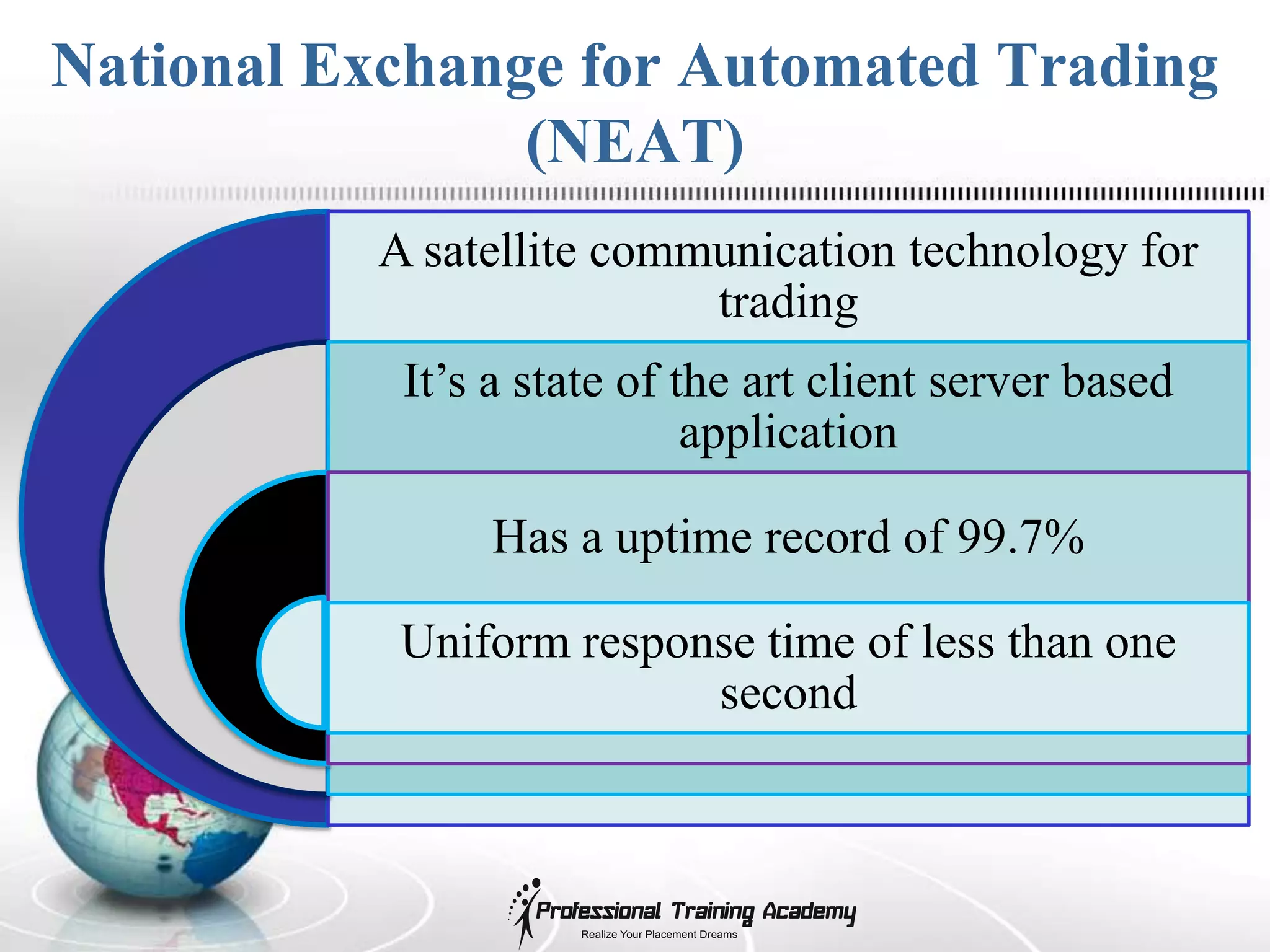
National Exchange for Automated Trading
                (NEAT)
          A satellite communication technology for
                          trading
           It’s a state of the art client server based
                            application

               Has a uptime record of 99.7%

           Uniform response time of less than one
                         second
Contract Note

  A confirmation of trades done on particular day

    On behalf of the client by a trading member

Enforceable relationship between the client and the
                  trading member
 For the propose of purchase / sale and settlement
                      of trades
          It should be in Prescribed Form
Benefits of trading in Stock Exchanges

         • Best prices prevailing at the time in the market
1.

       • Lack of any counter party risk which is assumed by
2.                    the clearing corporation

           • Access to investor grievance and redressal
3.                mechanism of stock exchange

                • Protection up to prescribed limit
4.
How to know if the Broker / Sub Broker is
              Registered?
  By verifying the registration certificate
             issued by SEBI


  Broker registration number begins with
              the letter ‘INB’


    A sub broker with the letters ‘INS’
Precautions of investing in the Stock
             Markets
  Make sure your broker is registered with SEBI and the
                      Exchanges

    Ensure that you receive contract notes for all your
                       transactions

    Invest in a manner that matches their risk tolerance

        Do not be misled by market rumors, luring
                advertisement or ‘hot tips’

  Take informed decisions by studying the fundamentals
                    of the company
Instruments of Secondary Market

                                                  Secondary
                                                   Market


                   Shares                                                 Bonds


                                                                Zero
Equity    Rights            Bonus            Preference                 Convertible   Treasury
                                                               Coupon
Shares    Shares            Shares             Shares                     Bond          Bills
                                                               Bonds

                                                      Cumulative
                                     Cumulative       Convertible
                                     Preference       Preference
                                       Share            Shares
Shares

                Equity Shares
• Represent the form of fractional ownership in a
                 business venture
                Rights Shares
• Issue of new securities to existing shareholders

                Bonus Shares
 • Issued by the companies to their shareholder
                 free of cost based
Preference Shares


         Entitled to get fixed
        dividend before equity
             shareholders


       Priority of getting surplus
       before equity shareholder


       At the time of liquidation
         their claims below to
          equity shareholders
Types of Preference Shares


Cumulative
              • Dividend accumulates if remained
Preference                  unpaid
  Shares


Cumulative      • Dividend payable on the same
Convertible          accumulates, if not paid
Preference    • Converted into equity capital of the
  Shares                    company
Bond


Negotiable certificate
    evidencing             Normally Unsecured
   indebtedness


              Issued by a Company,
                 Municipality or
               Government Agency
Types of Bond

                     • Issued at discount and repaid at face
Zero Coupon Bond                       value
                          • No periodic interest is paid


                      • Giving the option to the investor
Convertible Bond       • Convert the bond into equity at
                             fixed conversion price


                           • Issued by government
  Treasury Bills     • Short term bearer discount security
Equity Investment


  Provides portfolio with growth


Reach on long term investment goals


 Equities are high risk investment
Dividend


                         A company returns
 A percentage of
                         to its shareholders
the face value of a
                           from its annul
       share
                                profits
Factors affected the price of stock


 Stock Specific
                   Market Specific
Stock Specific Factor


                                        Level of
                                      Technology
                          Financial   & Marketing
                           Health        Skills
                         Management
               Future
              Earning
              Capacity

  People
Expectation
 about the
 Company
Market Specific Factor

                   Generally short
                    term factor

                  Depends upon on
                  the environment
                     rather than
                    performance
                     Its include
                    Budget, War
                     Economic
                  Growth & Crises
                          etc.
Growth Stock


       Whose potential
        for growth in
             sales


                    Growing
                   faster than
Earning are
                      other
 excellent
                  companies in
                     market
Value Stock


               Investor look to
Stock which
                buy stokes that
 may have
                      are
hidden value
                 undervalued
Portfolio


                             Purpose of
Combination of different
                            achieving an
  investment assets
                           investor’s goal
Diversification


 It’s A Risk        Mixes a      Reduce the
Management        wide variety     risk in
 Technique             of         portfolio
                  investments
                     with in
                    portfolio
Debt Instruments


Represents a contract whereby one party
       lends money to another
Debt Instruments


 Bond               Debenture


 Issued by the          Issued by
central and state        private
  government         corporate sector


 Public sector
 organization
Features of Debt Instruments

                      • The date on which
                       borrower has agreed
          Maturity
                           to repay the
                             principal

                            • Refers to the
                             periodic interest
              Coupon        payment that are
                            made by borrower
                                 to lender


                       • The amount that
          Principal
                        has been borrowed
Segment of Debt Market

                 • Comprises the Centre, State and
Government           state sponsored securities
 Securities          • They are not tax –free


Public Sector        • They are tax –free
Units Bonds

 Corporate      • Comprise of commercial paper
 Securities                and bonds
Participants of Debt Market

                  Financial
    Banks
                 Institutions


   Provident       Mutual
    Funds          Funds


                 Insurance
   Corporate
                 Companies

Secondary market

  • 1.
  • 2.
    Meaning of SecondaryMarket Refers to a market where securities are traded Securities are already listed in Stock Exchange Provides an efficient platform for trading of his securities
  • 3.
    Difference between PrimaryMarket & Secondary Market Primary Market Secondary Market • Securities are offered to • Already existing public for subscription securities are traded • Purpose of Raising • Purpose of capital Capital or fund appreciation
  • 4.
    Stock Exchange Provide atrading platform by SEBI Where transaction done in securities
  • 5.
    Demutualization of StockMarket Refers to the legal structure of an exchange Ownership, management and the trading rights at the exchange are segregated from one another
  • 6.
    Demutualised Stock Exchangesin India National Stock Over the Exchange Counter (NSE) Exchange of India (OTCEI)
  • 7.
  • 8.
    Screen Based TradingSystem (SBTS) Introduced by NSE Where a member can punch quantities and price of security in computer Transaction is executed as soon as a matching sale or buy order from a counter party is found
  • 9.
    National Exchange forAutomated Trading (NEAT) A satellite communication technology for trading It’s a state of the art client server based application Has a uptime record of 99.7% Uniform response time of less than one second
  • 10.
    Contract Note A confirmation of trades done on particular day On behalf of the client by a trading member Enforceable relationship between the client and the trading member For the propose of purchase / sale and settlement of trades It should be in Prescribed Form
  • 11.
    Benefits of tradingin Stock Exchanges • Best prices prevailing at the time in the market 1. • Lack of any counter party risk which is assumed by 2. the clearing corporation • Access to investor grievance and redressal 3. mechanism of stock exchange • Protection up to prescribed limit 4.
  • 12.
    How to knowif the Broker / Sub Broker is Registered? By verifying the registration certificate issued by SEBI Broker registration number begins with the letter ‘INB’ A sub broker with the letters ‘INS’
  • 13.
    Precautions of investingin the Stock Markets Make sure your broker is registered with SEBI and the Exchanges Ensure that you receive contract notes for all your transactions Invest in a manner that matches their risk tolerance Do not be misled by market rumors, luring advertisement or ‘hot tips’ Take informed decisions by studying the fundamentals of the company
  • 14.
    Instruments of SecondaryMarket Secondary Market Shares Bonds Zero Equity Rights Bonus Preference Convertible Treasury Coupon Shares Shares Shares Shares Bond Bills Bonds Cumulative Cumulative Convertible Preference Preference Share Shares
  • 15.
    Shares Equity Shares • Represent the form of fractional ownership in a business venture Rights Shares • Issue of new securities to existing shareholders Bonus Shares • Issued by the companies to their shareholder free of cost based
  • 16.
    Preference Shares Entitled to get fixed dividend before equity shareholders Priority of getting surplus before equity shareholder At the time of liquidation their claims below to equity shareholders
  • 17.
    Types of PreferenceShares Cumulative • Dividend accumulates if remained Preference unpaid Shares Cumulative • Dividend payable on the same Convertible accumulates, if not paid Preference • Converted into equity capital of the Shares company
  • 18.
    Bond Negotiable certificate evidencing Normally Unsecured indebtedness Issued by a Company, Municipality or Government Agency
  • 19.
    Types of Bond • Issued at discount and repaid at face Zero Coupon Bond value • No periodic interest is paid • Giving the option to the investor Convertible Bond • Convert the bond into equity at fixed conversion price • Issued by government Treasury Bills • Short term bearer discount security
  • 20.
    Equity Investment Provides portfolio with growth Reach on long term investment goals Equities are high risk investment
  • 21.
    Dividend A company returns A percentage of to its shareholders the face value of a from its annul share profits
  • 22.
    Factors affected theprice of stock Stock Specific Market Specific
  • 23.
    Stock Specific Factor Level of Technology Financial & Marketing Health Skills Management Future Earning Capacity People Expectation about the Company
  • 24.
    Market Specific Factor Generally short term factor Depends upon on the environment rather than performance Its include Budget, War Economic Growth & Crises etc.
  • 25.
    Growth Stock Whose potential for growth in sales Growing faster than Earning are other excellent companies in market
  • 26.
    Value Stock Investor look to Stock which buy stokes that may have are hidden value undervalued
  • 27.
    Portfolio Purpose of Combination of different achieving an investment assets investor’s goal
  • 28.
    Diversification It’s ARisk Mixes a Reduce the Management wide variety risk in Technique of portfolio investments with in portfolio
  • 29.
    Debt Instruments Represents acontract whereby one party lends money to another
  • 30.
    Debt Instruments Bond Debenture Issued by the Issued by central and state private government corporate sector Public sector organization
  • 31.
    Features of DebtInstruments • The date on which borrower has agreed Maturity to repay the principal • Refers to the periodic interest Coupon payment that are made by borrower to lender • The amount that Principal has been borrowed
  • 32.
    Segment of DebtMarket • Comprises the Centre, State and Government state sponsored securities Securities • They are not tax –free Public Sector • They are tax –free Units Bonds Corporate • Comprise of commercial paper Securities and bonds
  • 33.
    Participants of DebtMarket Financial Banks Institutions Provident Mutual Funds Funds Insurance Corporate Companies