Primary and
Secondary Markets
By: Anurag Kinger
101086002
ECE-2
Agenda
 Capital Market
 Primary Market
 Features of Primary market
 Secondary Market
 Features of Secondary Market
 Conclusion
CAPITAL MARKET
 The market where investment instruments like
bonds, equities and mortgages are traded is
known as the capital market.
 The primal role of this market is to make
investment from investors who have surplus
funds to the ones who are running a deficit.
 The capital market offers both long term and
overnight funds.
 The different types of financial instruments
that are traded in the capital markets are:
> equity instruments
> credit market instruments,
> insurance instruments,
> foreign exchange instruments,
> hybrid instruments and
> derivative instruments.
Importance of Capital Markets
 Help firms and governments raise cash by selling
securities
 Allow investors with excess funds to invest and earn a
return
 Channel funds from savers to borrowers
 Allocate resources optimally (i.e., provide funds to those
who can make the best use of them)
 Help allocate cash to where it is most productive
 Help lower the cost of exchange
 Secondary markets, where investors trade existing
securities, assures investors that they can quickly sell
their securities if the need arises
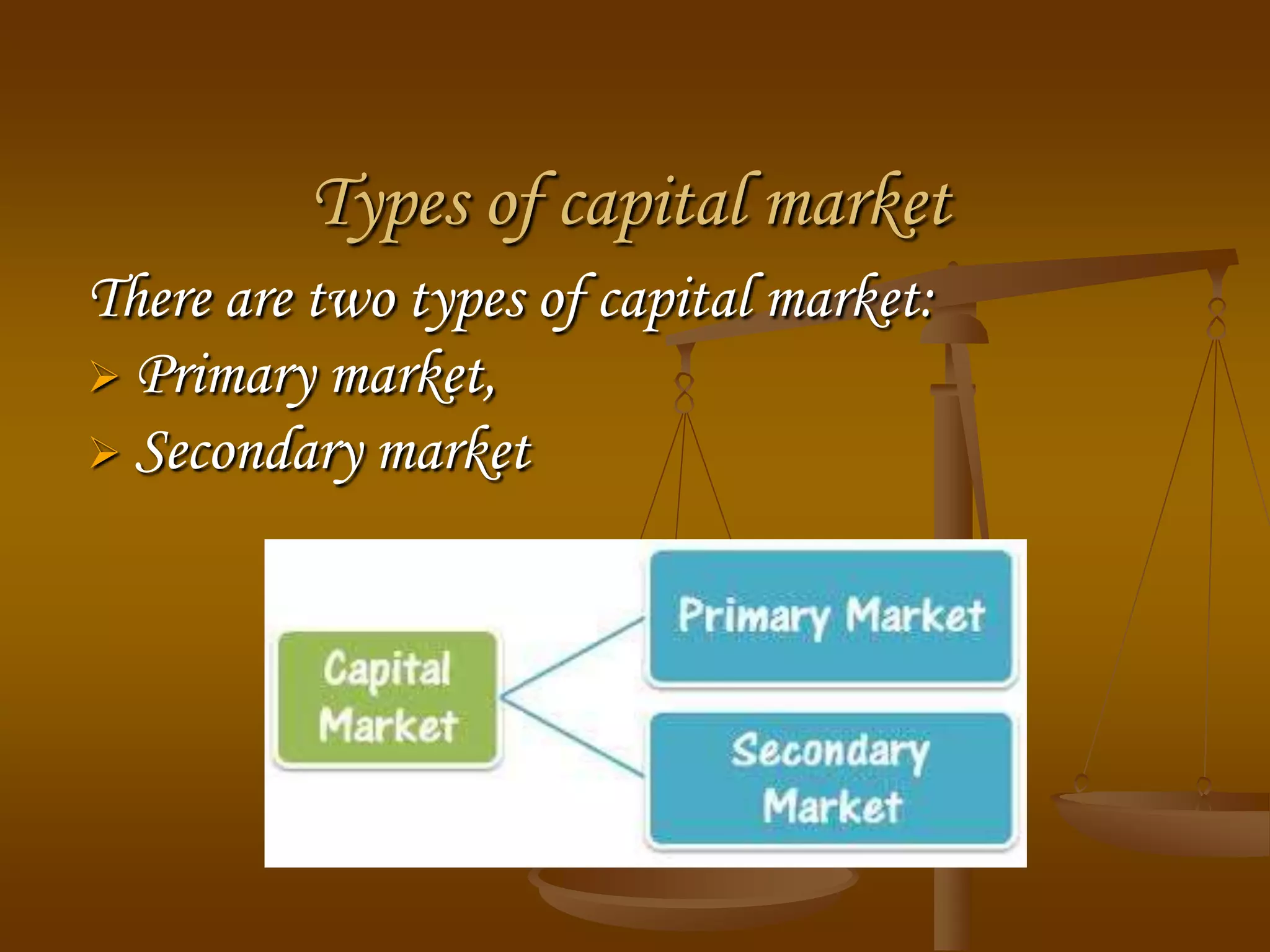
Types of capital market
There are two types of capital market:
 Primary market,
 Secondary market
Primary Market
 It is that market in which
shares, debentures and other securities are
sold for the first time for collecting long-
term capital.
 This market is concerned with new issues.
Therefore, the primary market is also called
NEW ISSUE MARKET.
 In this market, the flow of funds is from savers
to borrowers (industries), hence, it helps directly
in the capital formation of the country.
 The money collected from this market is
generally used by the companies to modernize
the plant, machinery and buildings, for
extending business, and for setting up new
business unit.
Features of Primary Market
 It Is Related With New Issues
 It Has No Particular Place
 It Has Various Methods Of Float Capital: Following
are the methods of raising capital in the primary
market:
i) Public Issue
ii) Offer For Sale
iii) Private Placement
iv) Right Issue
v) Electronic-Initial Public Offer
 It comes before Secondary Market
 Initial public offering (IPO) The first sale of a
company’s stock to the general public.
 Investment bankers Financial specialists who handle
the sales of most corporate and municipal securities.
 Underwriting Process of purchasing an issue from a
firm or government and then reselling the issue to
investors.
Factors to be considered by Investors
 Promoters Credibility
 Project Details
 Product
 Financial data
 Risk factors
 Auditors report
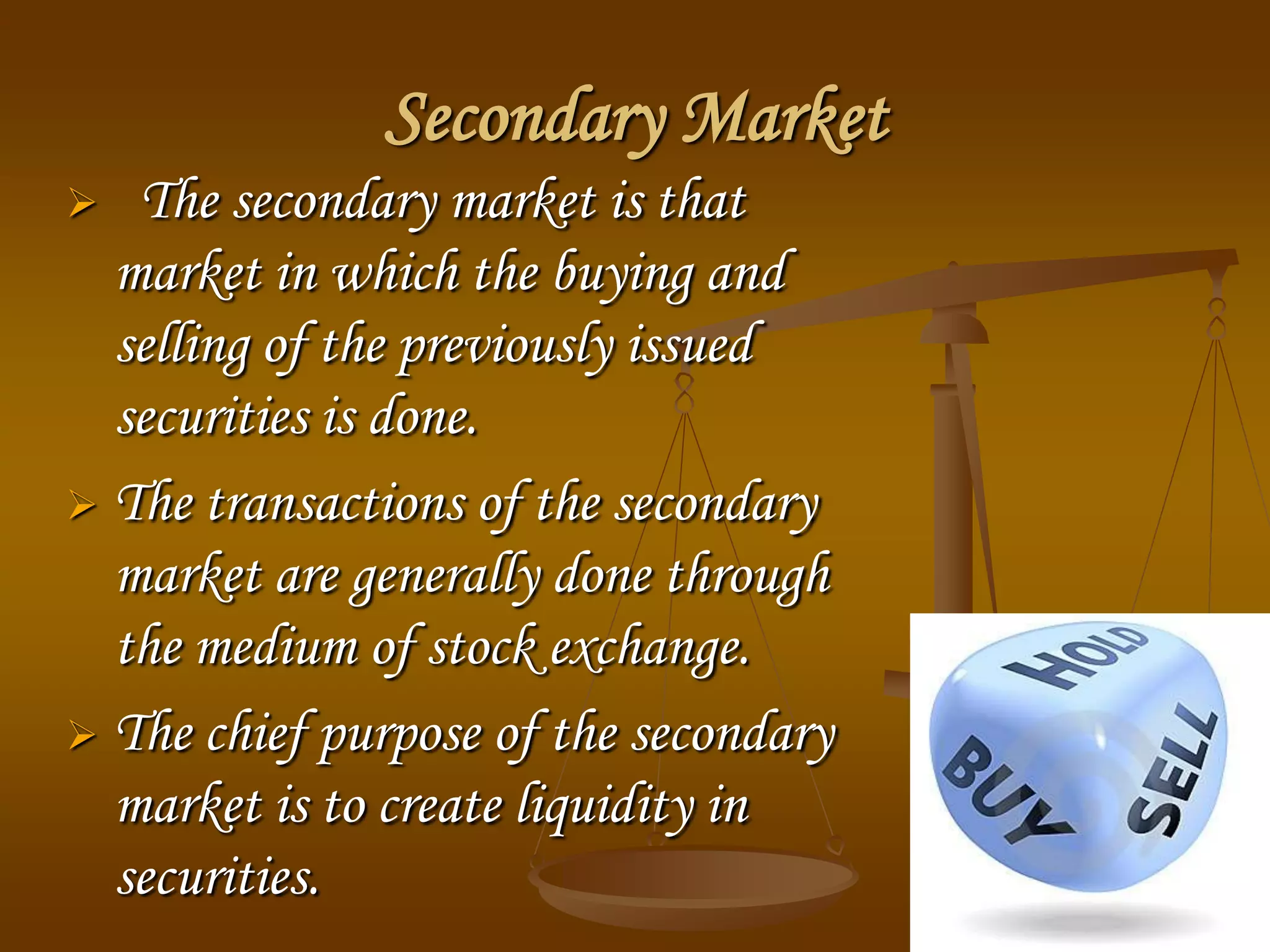
Secondary Market
 The secondary market is that
market in which the buying and
selling of the previously issued
securities is done.
 The transactions of the secondary
market are generally done through
the medium of stock exchange.
 The chief purpose of the secondary
market is to create liquidity in
securities.
 If an individual has bought some
security and he now wants to sell it, he
can do so through the medium of stock
exchange to sell or purchase through
the medium of stock exchange requires
the services of the broker
presently, their are 24 stock exchange
in India.
.
Features of Secondary Market
 It Creates Liquidity
 It Comes After Primary Market
 It Has A Particular Place
 It Encourage New Investments
 Aids in financing the industry
 Ensures safe & fair Dealing( MEDIA
BROADCASTING)
Functions of Secondary Markets
 Provides regular information about the value of
security.
 Helps to observe prices of bonds and their interest
rates.
 Offers to investors liquidity for their assets.
 Secondary markets bring together many interested
parties.
 It keeps the cost of transactions low.
Famous Secondary Markets worldwide
 New York Stock Exchange
 NASDAQ
 The London Stock Exchange
 The Tokyo Stock Exchange
 Shanghai Stock Exchange
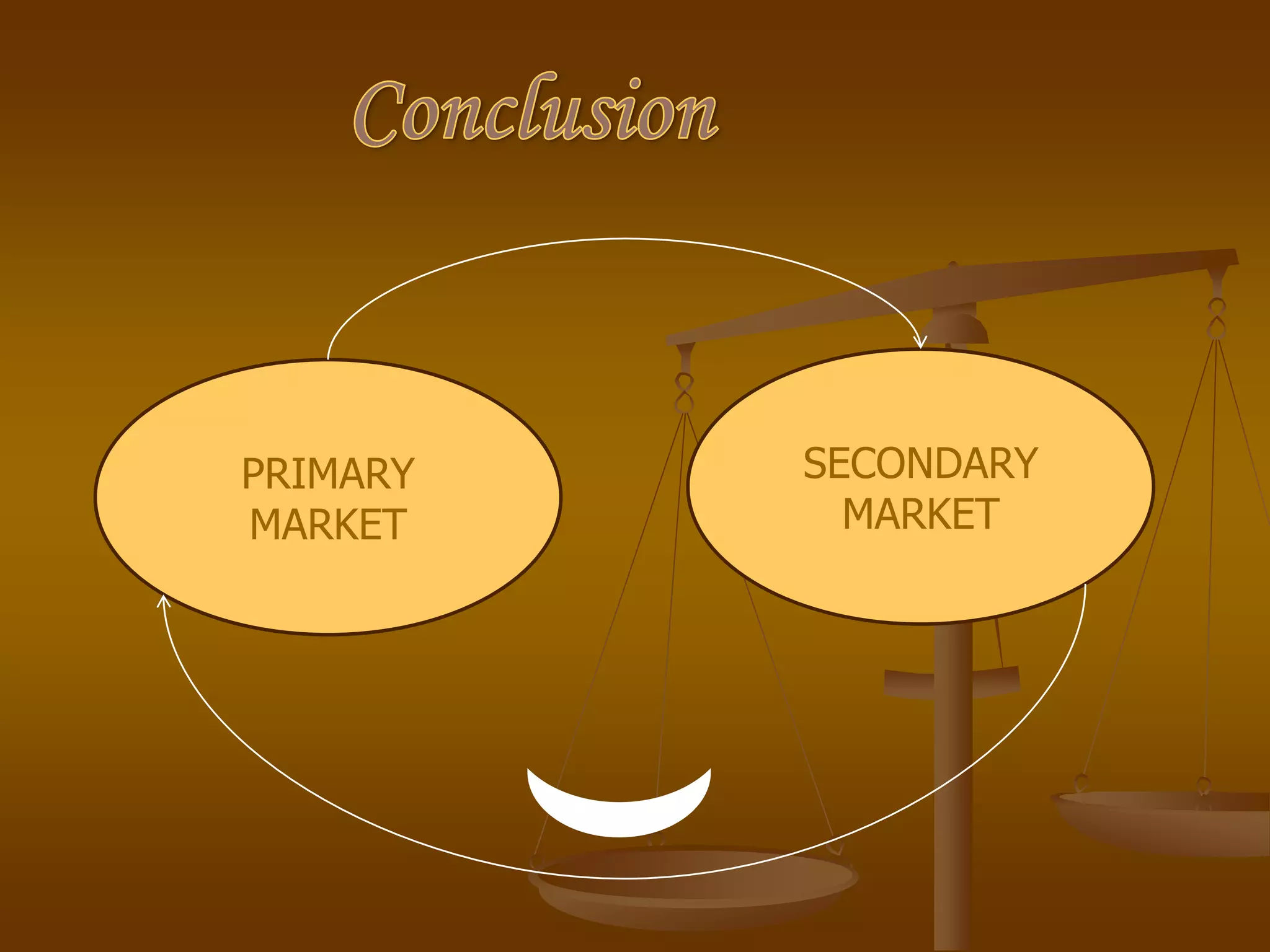
PRIMARY
MARKET
SECONDARY
MARKET
Thank you

Primary and Secondary Markets

  • 1.
    Primary and Secondary Markets By:Anurag Kinger 101086002 ECE-2
  • 2.
    Agenda  Capital Market Primary Market  Features of Primary market  Secondary Market  Features of Secondary Market  Conclusion
  • 3.
    CAPITAL MARKET  Themarket where investment instruments like bonds, equities and mortgages are traded is known as the capital market.  The primal role of this market is to make investment from investors who have surplus funds to the ones who are running a deficit.
  • 4.
     The capitalmarket offers both long term and overnight funds.  The different types of financial instruments that are traded in the capital markets are: > equity instruments > credit market instruments, > insurance instruments, > foreign exchange instruments, > hybrid instruments and > derivative instruments.
  • 5.
    Importance of CapitalMarkets  Help firms and governments raise cash by selling securities  Allow investors with excess funds to invest and earn a return  Channel funds from savers to borrowers  Allocate resources optimally (i.e., provide funds to those who can make the best use of them)  Help allocate cash to where it is most productive  Help lower the cost of exchange  Secondary markets, where investors trade existing securities, assures investors that they can quickly sell their securities if the need arises
  • 6.
    Types of capitalmarket There are two types of capital market:  Primary market,  Secondary market
  • 7.
    Primary Market  Itis that market in which shares, debentures and other securities are sold for the first time for collecting long- term capital.  This market is concerned with new issues. Therefore, the primary market is also called NEW ISSUE MARKET.
  • 8.
     In thismarket, the flow of funds is from savers to borrowers (industries), hence, it helps directly in the capital formation of the country.  The money collected from this market is generally used by the companies to modernize the plant, machinery and buildings, for extending business, and for setting up new business unit.
  • 9.
    Features of PrimaryMarket  It Is Related With New Issues  It Has No Particular Place  It Has Various Methods Of Float Capital: Following are the methods of raising capital in the primary market: i) Public Issue ii) Offer For Sale iii) Private Placement iv) Right Issue v) Electronic-Initial Public Offer  It comes before Secondary Market
  • 10.
     Initial publicoffering (IPO) The first sale of a company’s stock to the general public.  Investment bankers Financial specialists who handle the sales of most corporate and municipal securities.  Underwriting Process of purchasing an issue from a firm or government and then reselling the issue to investors.
  • 11.
    Factors to beconsidered by Investors  Promoters Credibility  Project Details  Product  Financial data  Risk factors  Auditors report
  • 12.
    Secondary Market  Thesecondary market is that market in which the buying and selling of the previously issued securities is done.  The transactions of the secondary market are generally done through the medium of stock exchange.  The chief purpose of the secondary market is to create liquidity in securities.
  • 13.
     If anindividual has bought some security and he now wants to sell it, he can do so through the medium of stock exchange to sell or purchase through the medium of stock exchange requires the services of the broker presently, their are 24 stock exchange in India. .
  • 14.
    Features of SecondaryMarket  It Creates Liquidity  It Comes After Primary Market  It Has A Particular Place  It Encourage New Investments  Aids in financing the industry  Ensures safe & fair Dealing( MEDIA BROADCASTING)
  • 15.
    Functions of SecondaryMarkets  Provides regular information about the value of security.  Helps to observe prices of bonds and their interest rates.  Offers to investors liquidity for their assets.  Secondary markets bring together many interested parties.  It keeps the cost of transactions low.
  • 16.
    Famous Secondary Marketsworldwide  New York Stock Exchange  NASDAQ  The London Stock Exchange  The Tokyo Stock Exchange  Shanghai Stock Exchange
  • 17.
  • 18.