A. Endogenous processes
which occur beneath the surface
of the Earth.
B. Exogenous processes
which take place above the
Earth’s surface.
Note: these two major are responsible in the
changes of landscapes in the different
regions of the world.
 Plate tectonics (from the Late
Latin tectonicus, from
the Greek: τεκτονικός "pertaining to
building") is a scientific theory that
describes the large-scale motions
of Earth's lithosphere.
 The lithosphere is broken up into tectonic
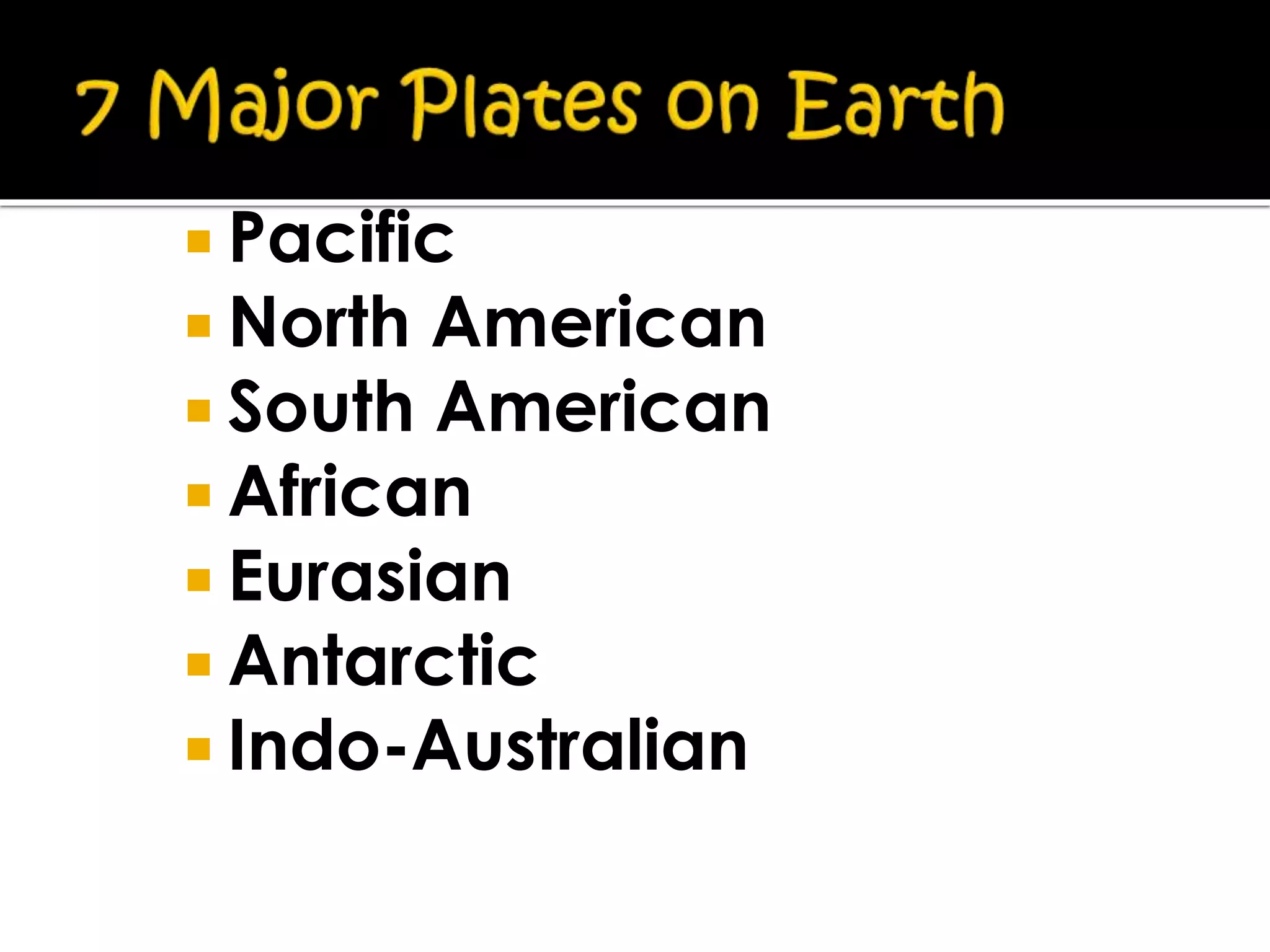
plates. On Earth, there are seven major
plates and many minor plates.
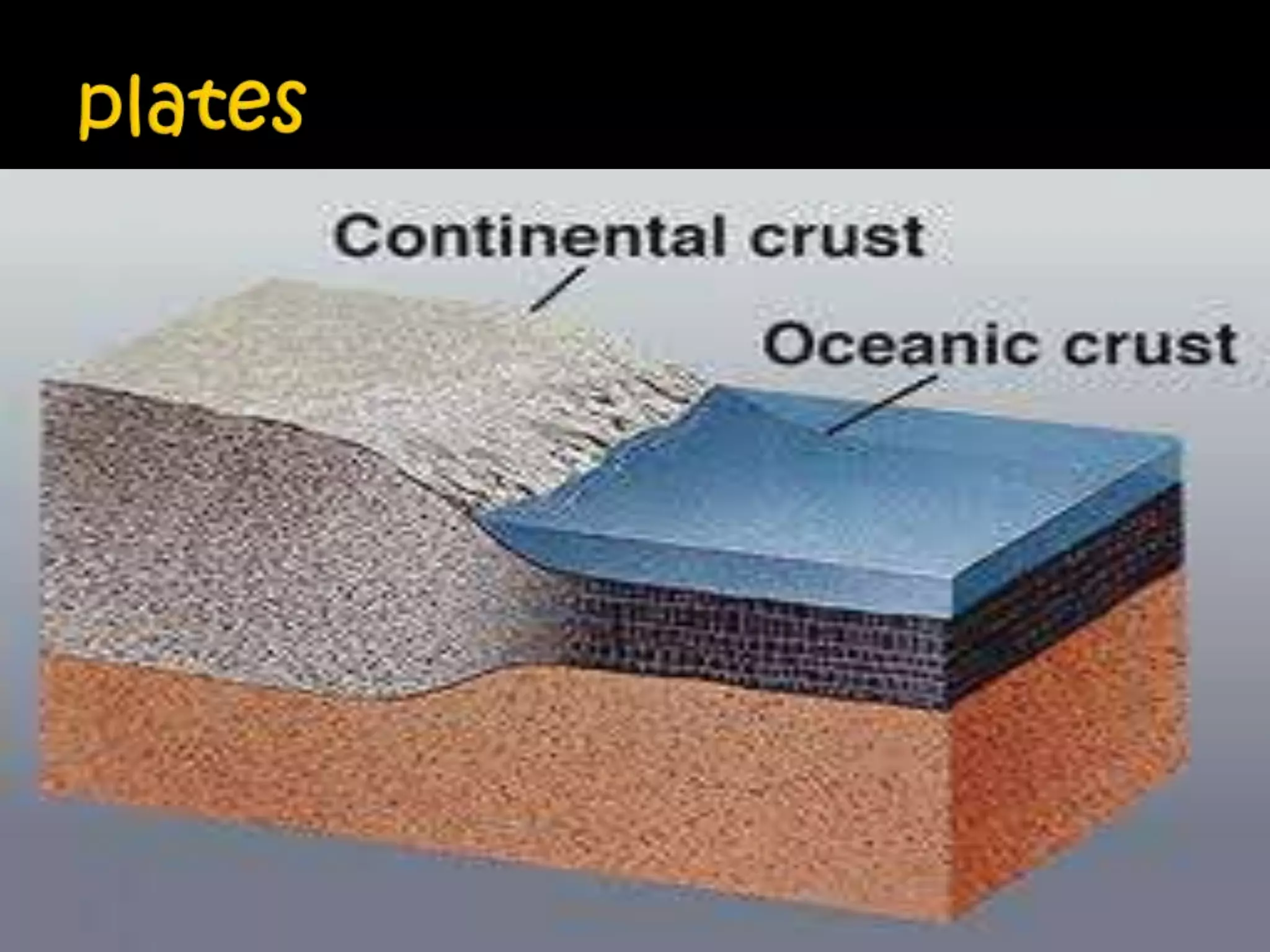
 Plates is made up of thick slabs of rocks.
PLATES is composed of a continental crust
and an oceanic crust
is composed of a continental crust and
an oceanic crust
 Pacific
 North American
 South American
 African
 Eurasian
 Antarctic
 Indo-Australian
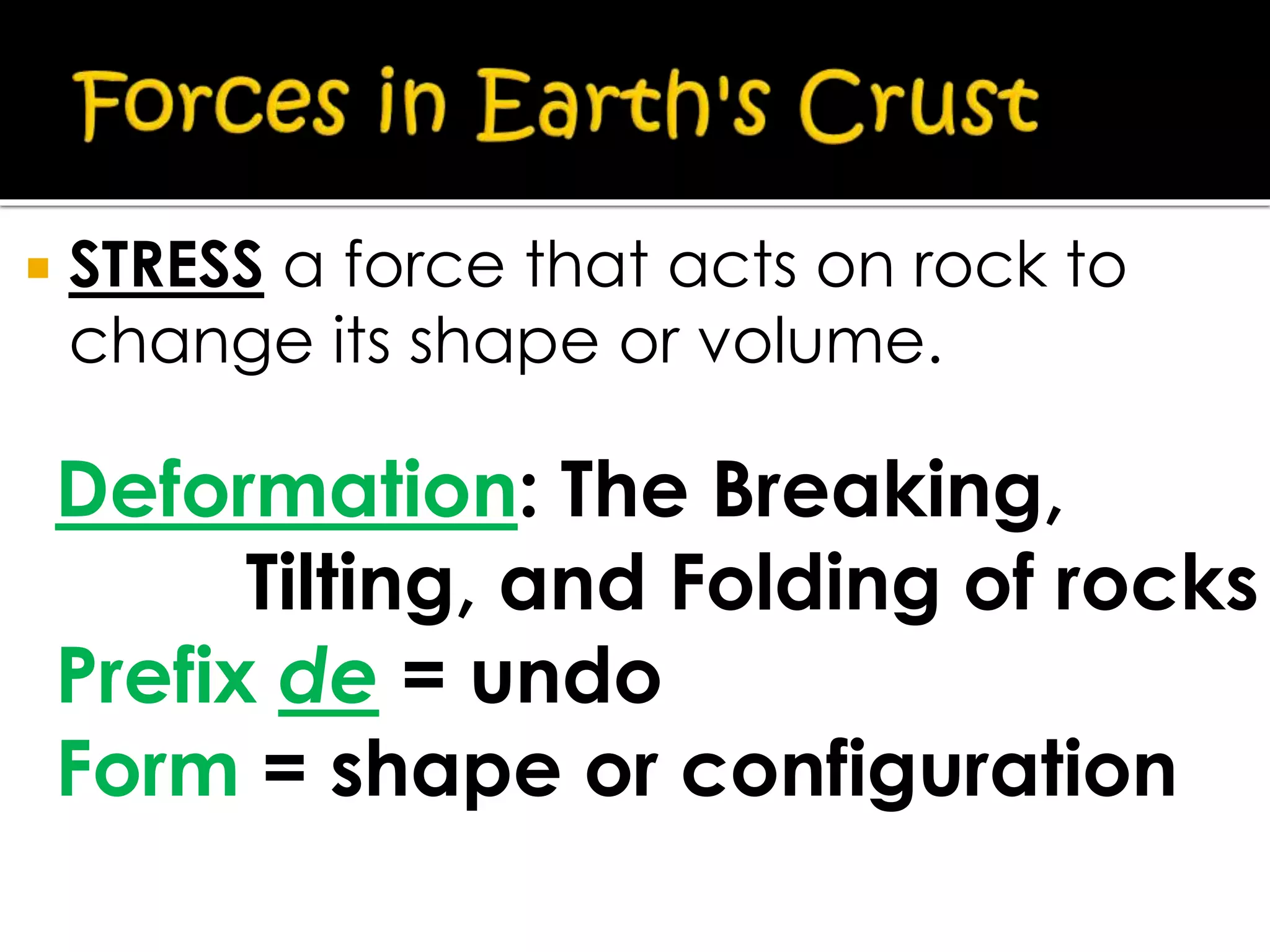
 STRESS a force that acts on rock to
change its shape or volume.
Deformation: The Breaking,
Tilting, and Folding of rocks
Prefix de = undo
Form = shape or configuration
1.Tension – pulls
on the rocks of
the crust
stretching rocks
so that it
become thinner
in the middle.
Think: Divergent
2.Compression
– squeezes the
rocks of the
crust until it
folds or break. Think: Covergent
3. Shearing –
pushes a mass
of rock in two
opposite
directions.
Think: transform
Movements of plates
When the plates move and interact
with each other and bring about
1. DIASTROPHISM
2. VULCANISM
 Earth’s crust brought by
tectonic forces or the
movements of the
plates.
1.Faulting this movement refers to the
fracturing or breaking of
rock masses or the Earth’s
crust.
this usually happens when the
rock masses are under tension
due to plate movement.
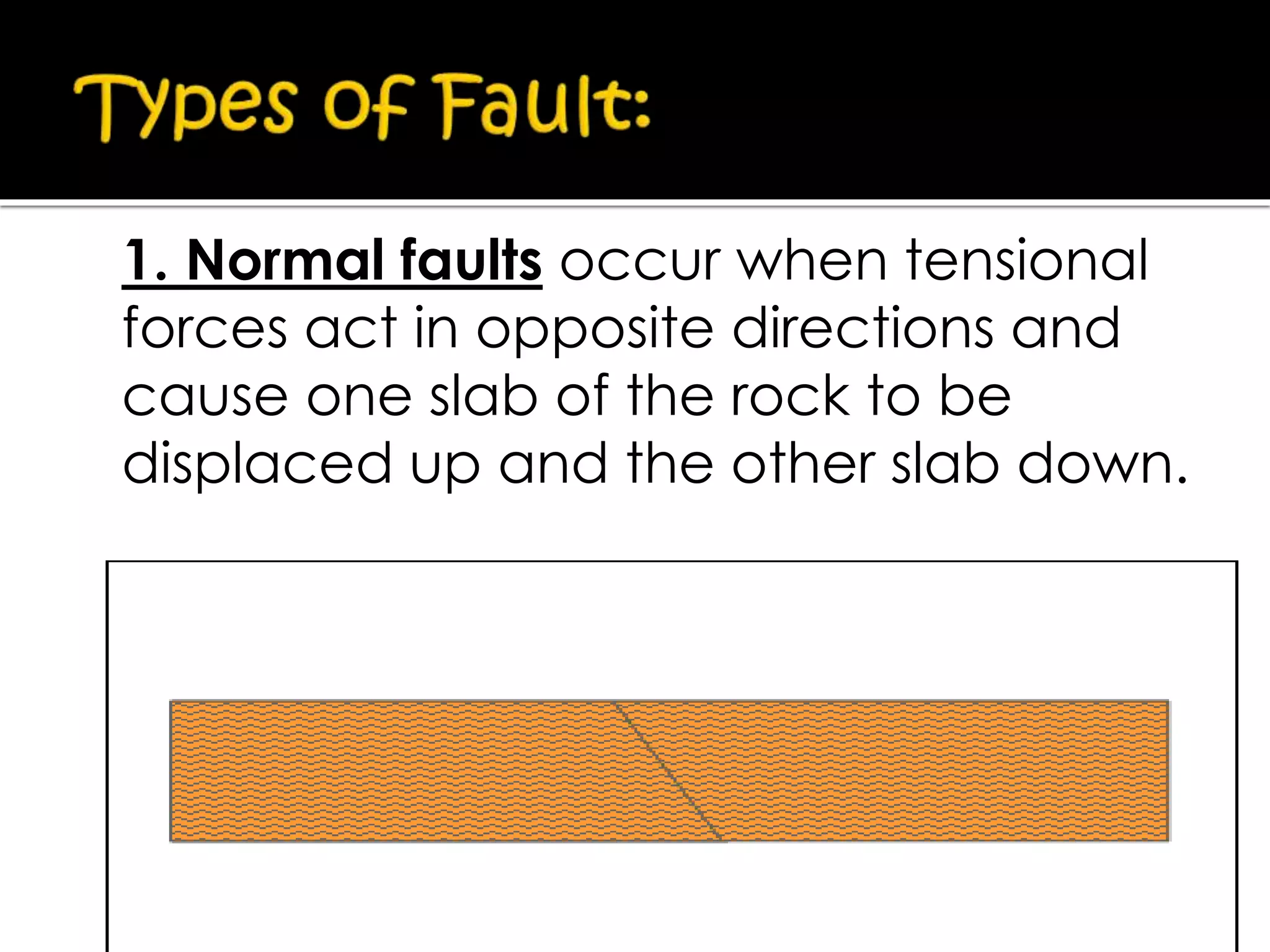
1. Normal faults occur when tensional
forces act in opposite directions and
cause one slab of the rock to be
displaced up and the other slab down.
2. Reverse faults develop when
compressional forces exist compression
causes one block to be pushed up and
over the other block.
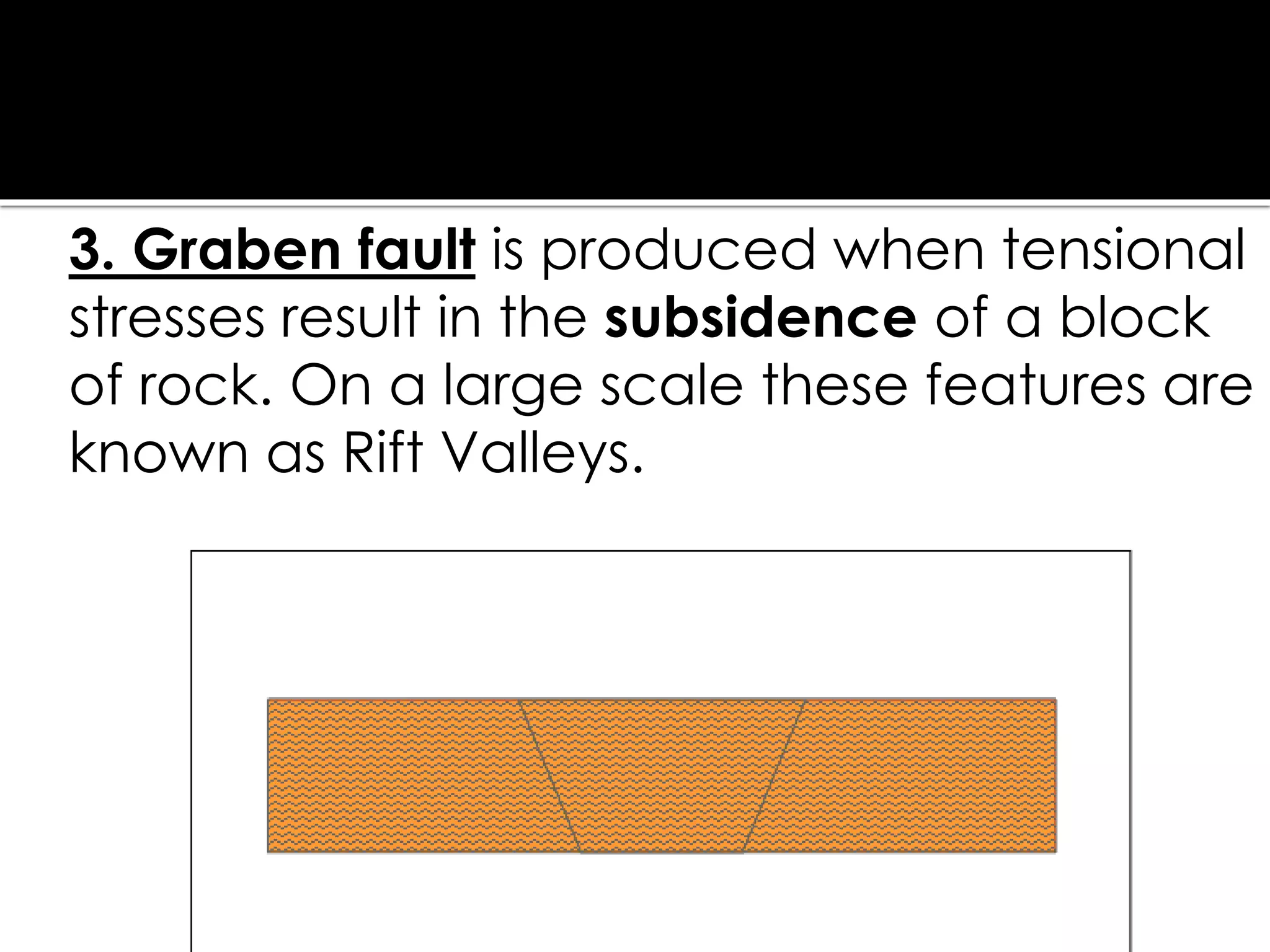
3. Graben fault is produced when tensional
stresses result in the subsidence of a block
of rock. On a large scale these features are
known as Rift Valleys.
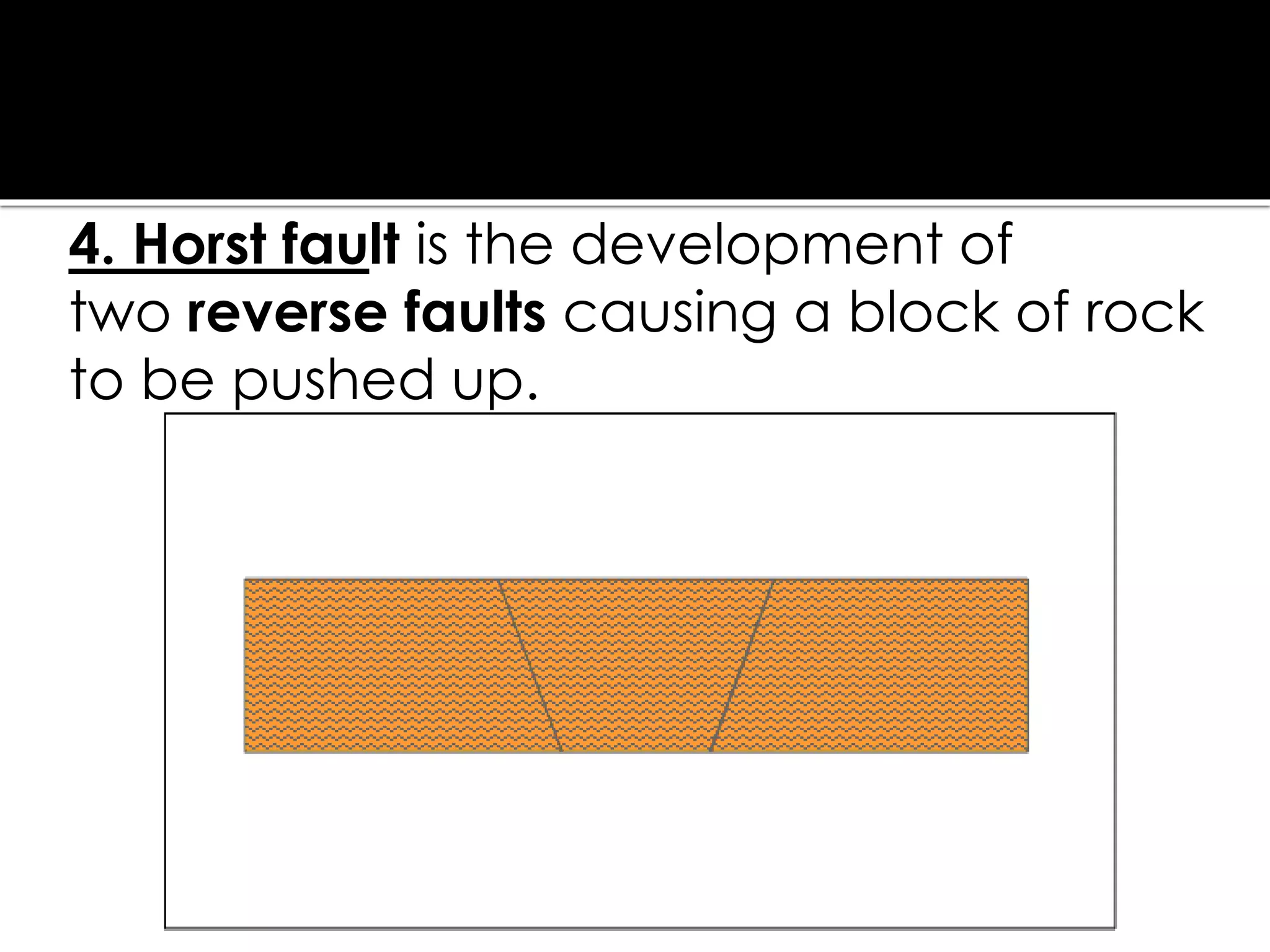
4. Horst fault is the development of
two reverse faults causing a block of rock
to be pushed up.
5. Strike slip or transform fault
are vertical in nature and are
produced where the stresses
are exerted parallel to each
other.
Result of displacement of structures
on the earth’s crust.
2. Folding occurs when the
Earth’s crust is compressed
due to plate movement.
(into collision)
1. Anticline – fold that forms an upward
arch.
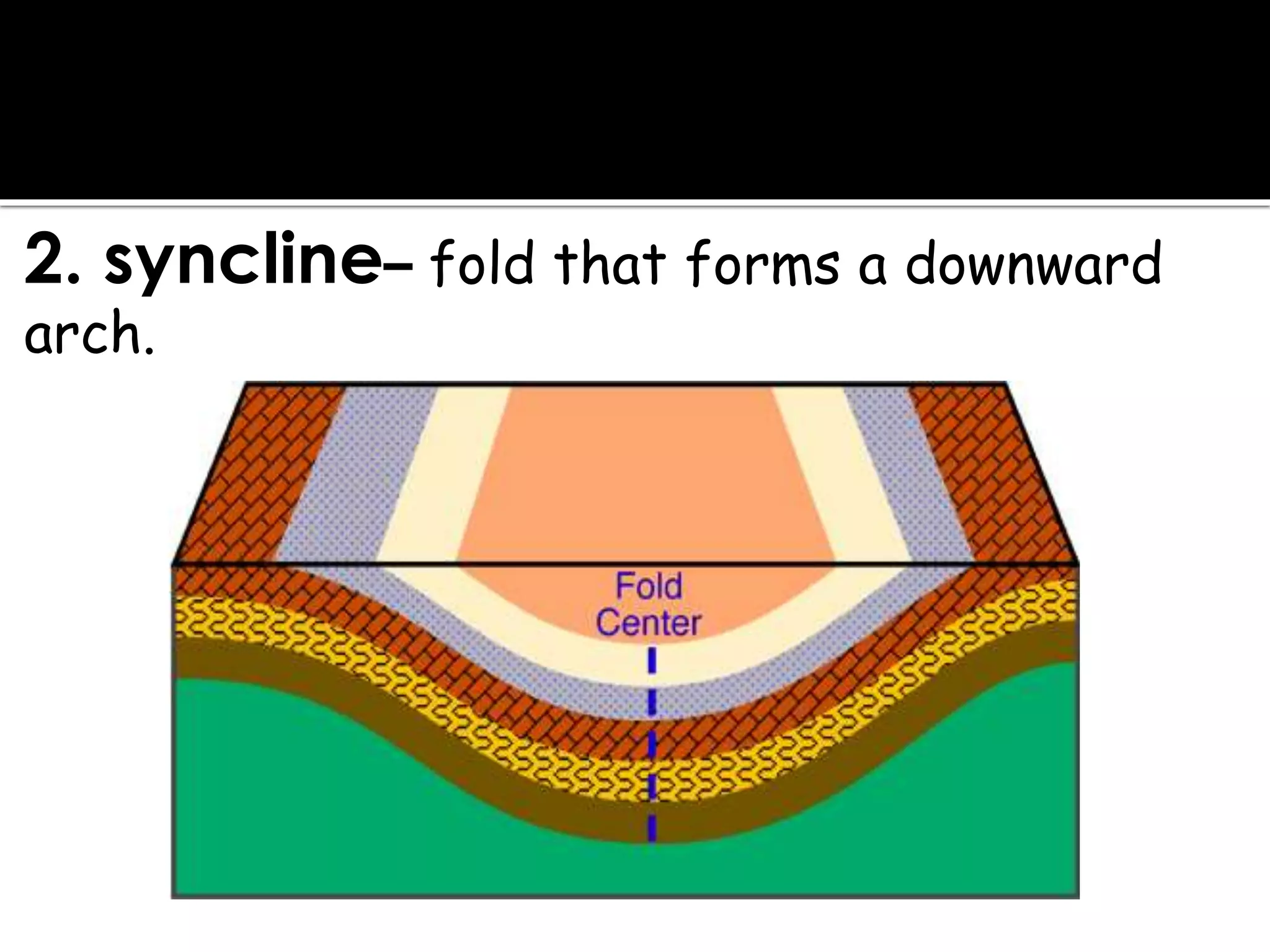
2. syncline– fold that forms a downward
arch.
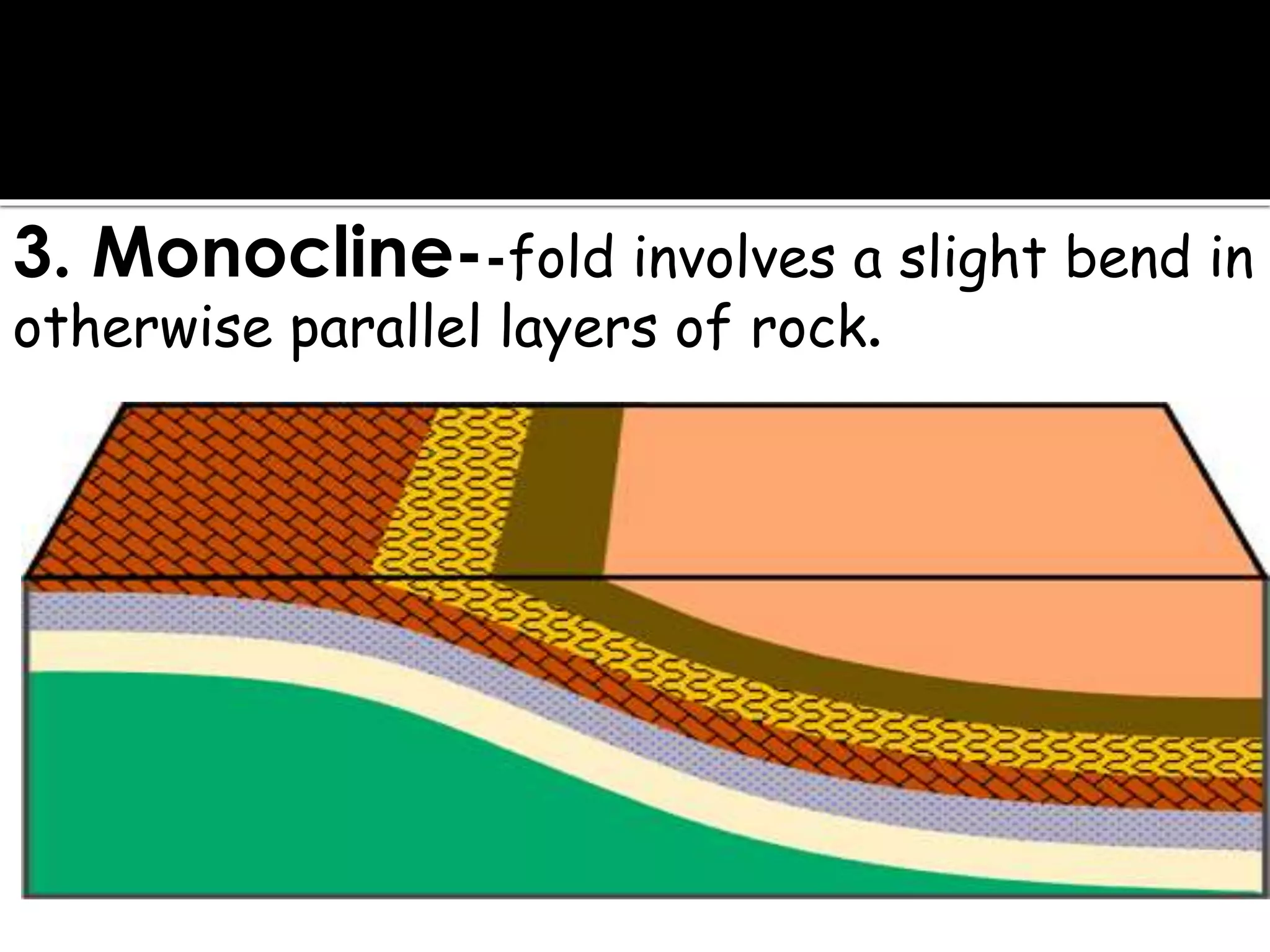
3. Monocline--fold involves a slight bend in
otherwise parallel layers of rock.
 Is another process that takes place
beneath the Earth’s crust.
This happen when molten materials
from the interior of the earth forced
into the crust and even onto the
Earth’s surface because of high
pressures with the Earth.
Is both constructive and
destructive.
Magma is a molten materials that
still inside the Earth.
is a hot liquid rock below the
surface of the Earth
Lava--- once they are spewed out
of the Earth’s surface and
solidified.
--- melted rock from a volcano.
 Fertile soils.
 Rich in sulphur deposits.
 Sources of geothermal energy.
Bring damage to man:
 Damage to human lives
 Crops
 Property
 Faulting and folding
1.Weathering– this refers to the breaking up
of solid rocks into fragments. It is also the
process that results in the chemical decay of
soli rocks in place or near the surface of the
Earth.
Two kinds of Weathering
1.Physical or mechanical weathering
Refers to the disintegration or
breaking down of solid rocks into
smaller fragments.
2. Chemical weathering
Is the breaking down of rocks and
minerals with a change in their
chemical composition.
Is also the result of chemical
reactions bet. The rock mineral and
the moisture, rain water, sea water
and organic acids produced by
plants and animals.
Oxidation
Hydration
Hydrolysis
Carbonation
solution
2. Erosion– is the movement of weathered
materials like rock fragments and particles of
soil that have been broken down and
carried by the different agents of erosion.
3. Deposition– is the process of
accumulation of soil particles and other
materials carried by the agents of erosion.
THANK YOU
FOR
LISTENING
Helen de la cruz BEED 2-A…

SCULPTURING THE EARTH SURFACE

  • 2.
    A. Endogenous processes whichoccur beneath the surface of the Earth. B. Exogenous processes which take place above the Earth’s surface. Note: these two major are responsible in the changes of landscapes in the different regions of the world.
  • 3.
     Plate tectonics(from the Late Latin tectonicus, from the Greek: τεκτονικός "pertaining to building") is a scientific theory that describes the large-scale motions of Earth's lithosphere.  The lithosphere is broken up into tectonic plates. On Earth, there are seven major plates and many minor plates.  Plates is made up of thick slabs of rocks. PLATES is composed of a continental crust and an oceanic crust is composed of a continental crust and an oceanic crust
  • 5.
     Pacific  NorthAmerican  South American  African  Eurasian  Antarctic  Indo-Australian
  • 6.
     STRESS aforce that acts on rock to change its shape or volume. Deformation: The Breaking, Tilting, and Folding of rocks Prefix de = undo Form = shape or configuration
  • 7.
    1.Tension – pulls onthe rocks of the crust stretching rocks so that it become thinner in the middle. Think: Divergent
  • 8.
    2.Compression – squeezes the rocksof the crust until it folds or break. Think: Covergent
  • 9.
    3. Shearing – pushesa mass of rock in two opposite directions. Think: transform
  • 10.
    Movements of plates Whenthe plates move and interact with each other and bring about 1. DIASTROPHISM 2. VULCANISM
  • 11.
     Earth’s crustbrought by tectonic forces or the movements of the plates.
  • 12.
    1.Faulting this movementrefers to the fracturing or breaking of rock masses or the Earth’s crust. this usually happens when the rock masses are under tension due to plate movement.
  • 13.
    1. Normal faultsoccur when tensional forces act in opposite directions and cause one slab of the rock to be displaced up and the other slab down.
  • 14.
    2. Reverse faultsdevelop when compressional forces exist compression causes one block to be pushed up and over the other block.
  • 15.
    3. Graben faultis produced when tensional stresses result in the subsidence of a block of rock. On a large scale these features are known as Rift Valleys.
  • 16.
    4. Horst faultis the development of two reverse faults causing a block of rock to be pushed up.
  • 17.
    5. Strike slipor transform fault are vertical in nature and are produced where the stresses are exerted parallel to each other.
  • 18.
    Result of displacementof structures on the earth’s crust. 2. Folding occurs when the Earth’s crust is compressed due to plate movement. (into collision)
  • 19.
    1. Anticline –fold that forms an upward arch.
  • 20.
    2. syncline– foldthat forms a downward arch.
  • 21.
    3. Monocline--fold involvesa slight bend in otherwise parallel layers of rock.
  • 22.
     Is anotherprocess that takes place beneath the Earth’s crust. This happen when molten materials from the interior of the earth forced into the crust and even onto the Earth’s surface because of high pressures with the Earth. Is both constructive and destructive.
  • 23.
    Magma is amolten materials that still inside the Earth. is a hot liquid rock below the surface of the Earth Lava--- once they are spewed out of the Earth’s surface and solidified. --- melted rock from a volcano.
  • 24.
     Fertile soils. Rich in sulphur deposits.  Sources of geothermal energy. Bring damage to man:  Damage to human lives  Crops  Property  Faulting and folding
  • 25.
    1.Weathering– this refersto the breaking up of solid rocks into fragments. It is also the process that results in the chemical decay of soli rocks in place or near the surface of the Earth. Two kinds of Weathering 1.Physical or mechanical weathering Refers to the disintegration or breaking down of solid rocks into smaller fragments.
  • 26.
    2. Chemical weathering Isthe breaking down of rocks and minerals with a change in their chemical composition. Is also the result of chemical reactions bet. The rock mineral and the moisture, rain water, sea water and organic acids produced by plants and animals.
  • 27.
  • 28.
    2. Erosion– isthe movement of weathered materials like rock fragments and particles of soil that have been broken down and carried by the different agents of erosion. 3. Deposition– is the process of accumulation of soil particles and other materials carried by the agents of erosion.
  • 29.