2 Categories of geologic processes
1. Exogenous Processes
2. Endogenous Processes
Exogenous Processes – occur on or near the
surface of the earth.
- they are usually influenced or
driven by gravity, water, wind and organi-
sms.
Types of exogenous processes
1. Weathering
2. Erosion
3. Mass wasting
4. Sediments
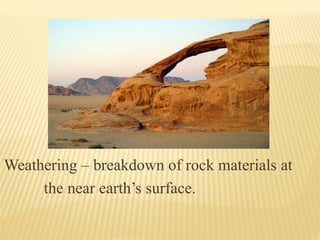
Weathering – breakdown of rock materials at
the near earth’s surface.
Types of weathering
1.Physical Weathering
2.Chemical weathering
Physical weathering or mechanical weathering
- breaking smaller fragments from a
larger block or outcrop of rock.
- a process where the outer layer of the
rock peels away.
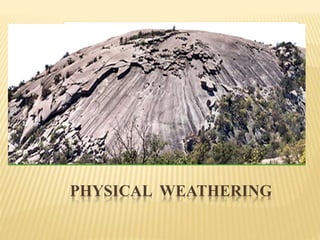
PHYSICAL WEATHERING
5 Principal Types of Physical Weathering
1.Unloading - when the outer layers of the rock
break down away from the rest of the
rock.
- rocks are formed with layers they
become compact and become a solid
rock.
2.Freeze-thaw weathering – occurs when water
continually seeps in cracks ,freezes and
expands eventually break the rock.
3. Thermal expansion – involvement of temp.
when the sun rays heating the rock in
daytime. At night ,rocks contract when
temp. go down.
4. Salt-crystal growth (salt crystalization)
- causes saltwater rocks to rapture due
to a saline solution entering a rock
through cracks and then evaporating
this causes crystal form.
5.Hydration – water molecules attach to the
crystalline structure of a mineral w/o
causing a permanent change in that’s
mineral composition.
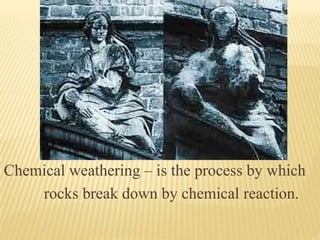
Chemical weathering – is the process by which
rocks break down by chemical reaction.
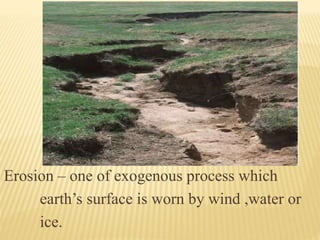
Erosion – one of exogenous process which
earth’s surface is worn by wind ,water or
ice.
Mass wasting – refers to the movement of large
masses of materials down a slope or steep
sided hill or mountain due to the pull of
gravity.
Forms of mass wasting
1.Debris flow
2.Mudflow
3.Slump
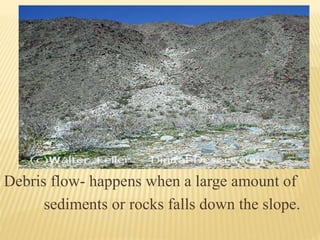
Debris flow- happens when a large amount of
sediments or rocks falls down the slope.
b. Mudflow – combined of soil and water flow
down a slope.
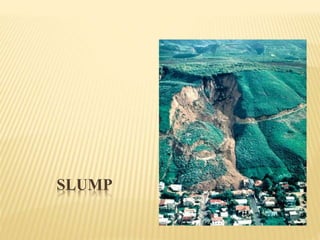
c. Slump – is a slow movement of soil along a
curved surface.
SLUMP
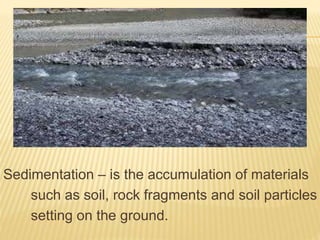
Sedimentation – is the accumulation of materials
such as soil, rock fragments and soil particles
setting on the ground.
ENDOGENOUS PROCESSES
- responsible for earthquakes, develop-
ment of continents and other related to
earth’s crust.
Endogenous process that played a role in
the evolution of landforms on earth:
1.Magmatism- happens when magma is genera-
ted and develops into igneous rocks.
magma- is the original material that make up
igneous rock.
magma is found beneath the surface of the
earth.
2.Volcanisms (plutonism) – is the process that
usually happens after magma is formed.
3.Metamorphism- it is the process of changing
materials that make up a rock.

categories of geologic processes.pptx

  • 1.
    2 Categories ofgeologic processes 1. Exogenous Processes 2. Endogenous Processes Exogenous Processes – occur on or near the surface of the earth. - they are usually influenced or driven by gravity, water, wind and organi- sms.
  • 2.
    Types of exogenousprocesses 1. Weathering 2. Erosion 3. Mass wasting 4. Sediments
  • 3.
    Weathering – breakdownof rock materials at the near earth’s surface.
  • 4.
    Types of weathering 1.PhysicalWeathering 2.Chemical weathering Physical weathering or mechanical weathering - breaking smaller fragments from a larger block or outcrop of rock. - a process where the outer layer of the rock peels away.
  • 5.
  • 6.
    5 Principal Typesof Physical Weathering 1.Unloading - when the outer layers of the rock break down away from the rest of the rock. - rocks are formed with layers they become compact and become a solid rock. 2.Freeze-thaw weathering – occurs when water continually seeps in cracks ,freezes and expands eventually break the rock.
  • 7.
    3. Thermal expansion– involvement of temp. when the sun rays heating the rock in daytime. At night ,rocks contract when temp. go down. 4. Salt-crystal growth (salt crystalization) - causes saltwater rocks to rapture due to a saline solution entering a rock through cracks and then evaporating this causes crystal form.
  • 8.
    5.Hydration – watermolecules attach to the crystalline structure of a mineral w/o causing a permanent change in that’s mineral composition.
  • 9.
    Chemical weathering –is the process by which rocks break down by chemical reaction.
  • 10.
    Erosion – oneof exogenous process which earth’s surface is worn by wind ,water or ice.
  • 11.
    Mass wasting –refers to the movement of large masses of materials down a slope or steep sided hill or mountain due to the pull of gravity. Forms of mass wasting 1.Debris flow 2.Mudflow 3.Slump
  • 12.
    Debris flow- happenswhen a large amount of sediments or rocks falls down the slope.
  • 13.
    b. Mudflow –combined of soil and water flow down a slope. c. Slump – is a slow movement of soil along a curved surface.
  • 14.
  • 15.
    Sedimentation – isthe accumulation of materials such as soil, rock fragments and soil particles setting on the ground.
  • 16.
    ENDOGENOUS PROCESSES - responsiblefor earthquakes, develop- ment of continents and other related to earth’s crust. Endogenous process that played a role in the evolution of landforms on earth: 1.Magmatism- happens when magma is genera- ted and develops into igneous rocks. magma- is the original material that make up
  • 17.
    igneous rock. magma isfound beneath the surface of the earth. 2.Volcanisms (plutonism) – is the process that usually happens after magma is formed. 3.Metamorphism- it is the process of changing materials that make up a rock.