Prehistoric Art
PRESENTATION BY:
IMPRAIM-SWANZY ENOCK
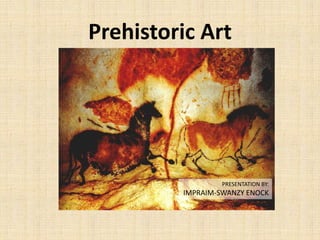
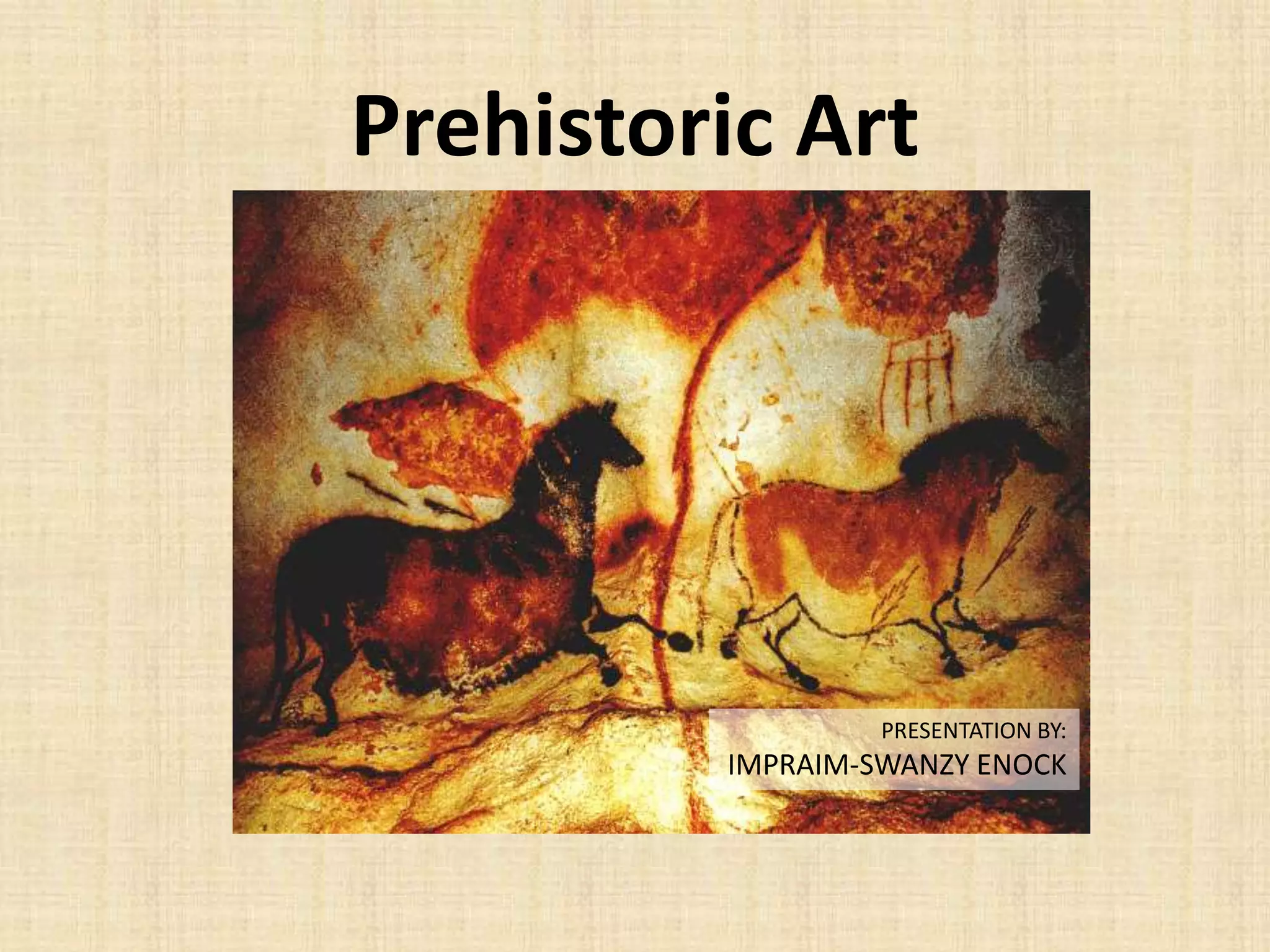
Prehistoric Art
The term “ prehistoric” is used to mark the time when
there were no written records or verbal accounts of
man’s activities, that is between 80,000 BC and
5,000BC.
Prehistoric Art refers to paintings, engravings, sculpture
and other forms of art, which were done in the earlier
stage of man’s cultural development when there were
no written records.
It began in 30,000BC and ended in 5,000BC
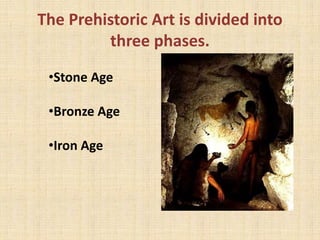
The Prehistoric Art is divided into
three phases.
•Stone Age
•Bronze Age
•Iron Age
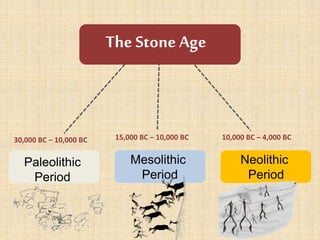
The Stone Age
Paleolithic
Period
Mesolithic
Period
Neolithic
Period
30,000 BC – 10,000 BC 15,000 BC – 10,000 BC 10,000 BC – 4,000 BC
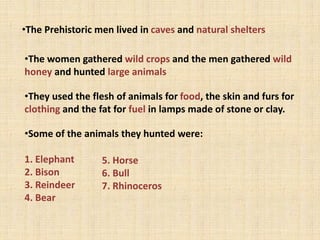
•The Prehistoric men lived in caves and natural shelters
•The women gathered wild crops and the men gathered wild
honey and hunted large animals
•They used the flesh of animals for food, the skin and furs for
clothing and the fat for fuel in lamps made of stone or clay.
•Some of the animals they hunted were:
1. Elephant
2. Bison
3. Reindeer
4. Bear
5. Horse
6. Bull
7. Rhinoceros
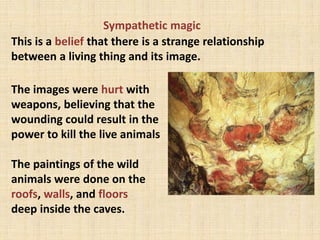
Sympathetic magic
This is a belief that there is a strange relationship
between a living thing and its image.
The images were hurt with
weapons, believing that the
wounding could result in the
power to kill the live animals
The paintings of the wild
animals were done on the
roofs, walls, and floors
deep inside the caves.
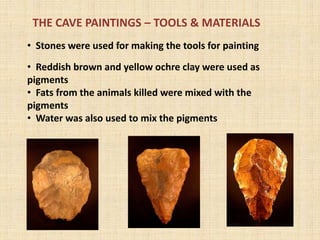
THE CAVE PAINTINGS – TOOLS & MATERIALS
• Stones were used for making the tools for painting
• Reddish brown and yellow ochre clay were used as
pigments
• Fats from the animals killed were mixed with the
pigments
• Water was also used to mix the pigments
TECHNIQUES
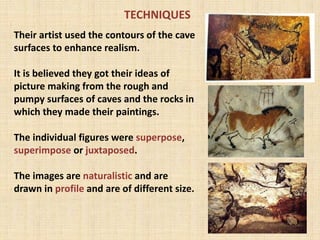
Their artist used the contours of the cave
surfaces to enhance realism.
It is believed they got their ideas of
picture making from the rough and
pumpy surfaces of caves and the rocks in
which they made their paintings.
The individual figures were superpose,
superimpose or juxtaposed.
The images are naturalistic and are
drawn in profile and are of different size.
SCULPTURE
Their sculptures were presented in
relief or sculpture in the round, in
small forms (miniatures/ statuettes)
They include animal and human
figures carved in stone, bone or
modeled in clay.
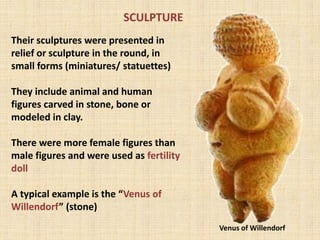
There were more female figures than
male figures and were used as fertility
doll
A typical example is the “Venus of
Willendorf” (stone)
Venus of Willendorf
Thank You
Email: eimpraimswanzy@yahoo.com

Prehistoric art

  • 1.
  • 2.
    Prehistoric Art The term“ prehistoric” is used to mark the time when there were no written records or verbal accounts of man’s activities, that is between 80,000 BC and 5,000BC. Prehistoric Art refers to paintings, engravings, sculpture and other forms of art, which were done in the earlier stage of man’s cultural development when there were no written records. It began in 30,000BC and ended in 5,000BC
  • 3.
    The Prehistoric Artis divided into three phases. •Stone Age •Bronze Age •Iron Age
  • 4.
    The Stone Age Paleolithic Period Mesolithic Period Neolithic Period 30,000BC – 10,000 BC 15,000 BC – 10,000 BC 10,000 BC – 4,000 BC
  • 5.
    •The Prehistoric menlived in caves and natural shelters •The women gathered wild crops and the men gathered wild honey and hunted large animals •They used the flesh of animals for food, the skin and furs for clothing and the fat for fuel in lamps made of stone or clay. •Some of the animals they hunted were: 1. Elephant 2. Bison 3. Reindeer 4. Bear 5. Horse 6. Bull 7. Rhinoceros
  • 6.
    Sympathetic magic This isa belief that there is a strange relationship between a living thing and its image. The images were hurt with weapons, believing that the wounding could result in the power to kill the live animals The paintings of the wild animals were done on the roofs, walls, and floors deep inside the caves.
  • 7.
    THE CAVE PAINTINGS– TOOLS & MATERIALS • Stones were used for making the tools for painting • Reddish brown and yellow ochre clay were used as pigments • Fats from the animals killed were mixed with the pigments • Water was also used to mix the pigments
  • 8.
    TECHNIQUES Their artist usedthe contours of the cave surfaces to enhance realism. It is believed they got their ideas of picture making from the rough and pumpy surfaces of caves and the rocks in which they made their paintings. The individual figures were superpose, superimpose or juxtaposed. The images are naturalistic and are drawn in profile and are of different size.
  • 9.
    SCULPTURE Their sculptures werepresented in relief or sculpture in the round, in small forms (miniatures/ statuettes) They include animal and human figures carved in stone, bone or modeled in clay. There were more female figures than male figures and were used as fertility doll A typical example is the “Venus of Willendorf” (stone) Venus of Willendorf
  • 10.