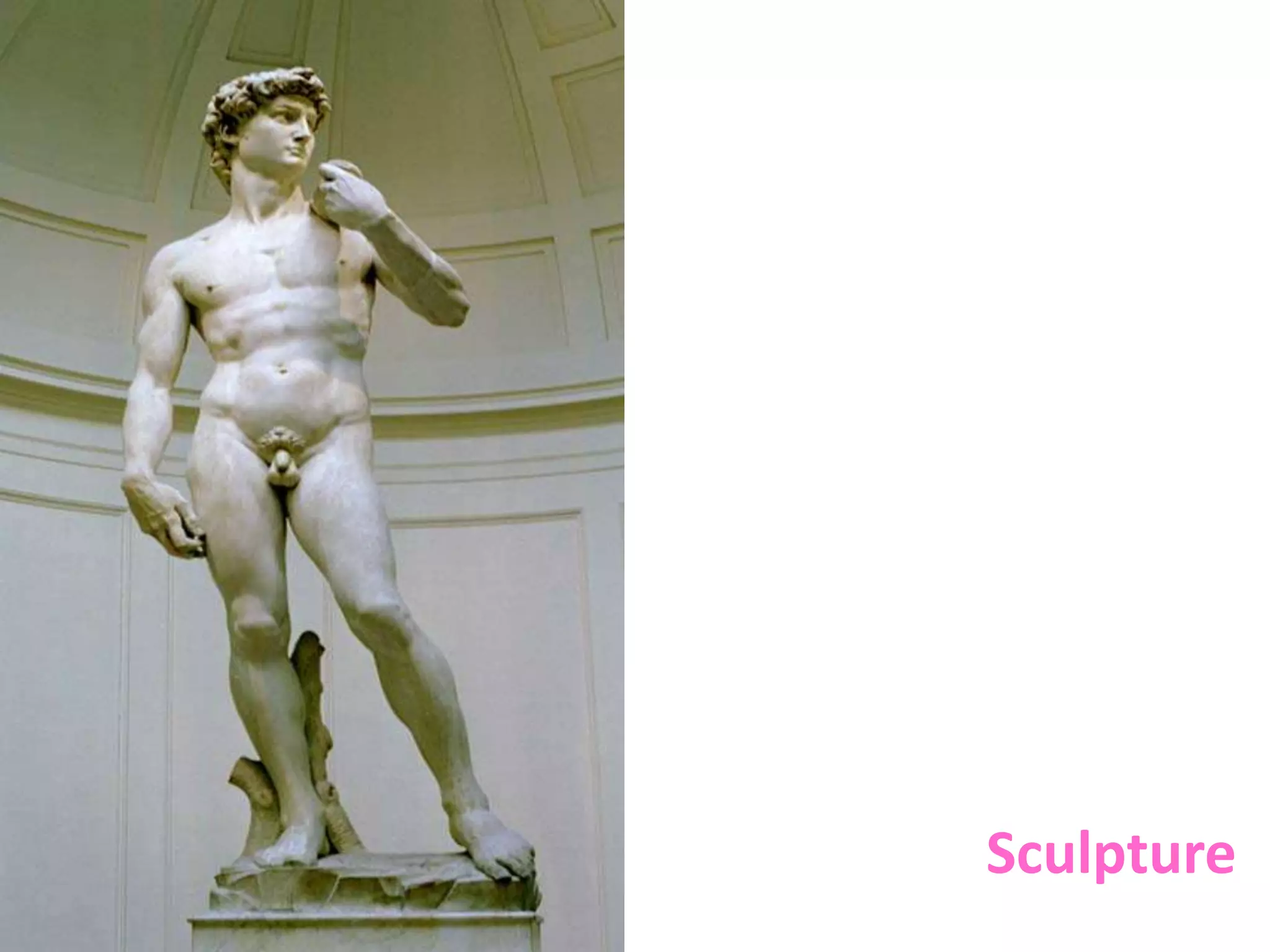
Sculpture
• What is Sculpture?
• Sculptural Techniques
• Materials/ mediums use in sculpture
• Characteristics of the Materials
• Sculptural Concerns
Sculpture
• Sculpture is the branch of the visual arts that operates in three dimensions which
can be seen from different sides.
• Sculpture comes from Latin word “Sculpere” – meaning to carve. It refers to the
creation of three-dimensional figures, forms designs from a single block mass of
materials.
• the action or art of processing (as by carving, modeling, or welding) plastic or hard
materials into works of art
• Sculpture may be the oldest of the arts
Sculpture
There are two major sculptural processes:
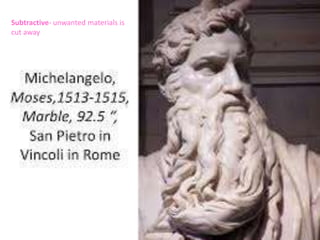
1. Subtractive- unwanted materials is cut away
2. Additive- construction of a figure by putting together.
Sculpture
Subtractive- unwanted materials is
cut away
Calder
Example of Additive sculptural process
Sculptural Techniques
Sculpture is created in four basic ways:
• Carving
• Modeling
• Casting
• Construction
Sculpture
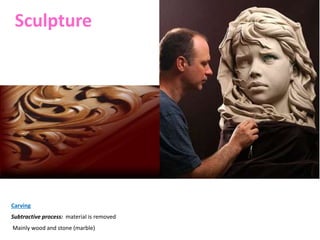
Carving
Subtractive process: material is removed
Mainly wood and stone (marble)
Sculpture
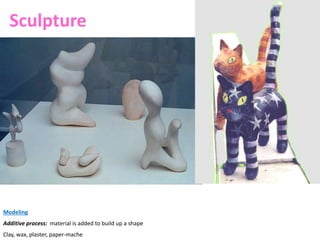
Modeling
Additive process: material is added to build up a shape
Clay, wax, plaster, paper-mache
Sculpture
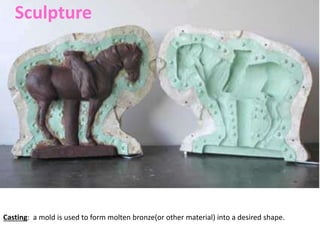
Casting: a mold is used to form molten bronze(or other material) into a desired shape.
Sculpture
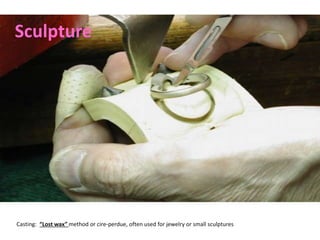
Casting: “Lost wax” method or cire-perdue, often used for jewelry or small sculptures
Sculpture
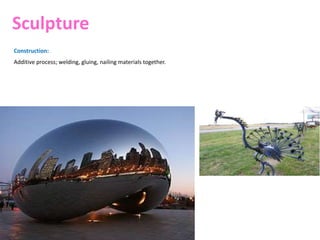
Construction:
Additive process; welding, gluing, nailing materials together.
Sculpture
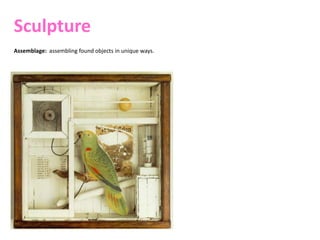
Assemblage: assembling found objects in unique ways.
Sculpture
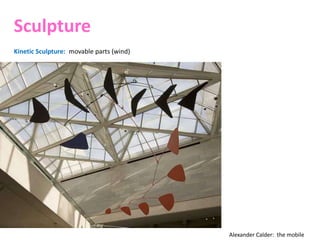
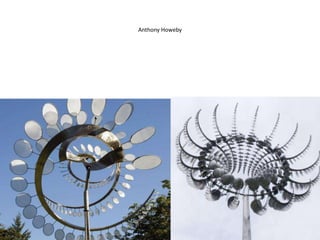
Kinetic Sculpture: movable parts (wind)
Alexander Calder: the mobile
MATERIAL USE IN SCULPTURE
Materials use in Sculpture
1. Stone- hard and durable, weather and fire resistant, but is heavy and
durable.
a) Basalt and Diorite (black and hard)
b) Marble (finely-grained, with crystalline
sparkle)
c) Granite- (tough, coarse-grained but suitable for bold effects)
d) Limestone- (Softer)
2. Wood- lighter, softer, and cheaper, and easy to cut.
3. Terra Cotta- which means “ baked earth” is made by firing clay, as in
pottery making.
4. Bronze- is solid and too expensive. The difficult process of casting bronze
is one of its disadvantages.
TYPES OF
SCULPTURE
Sculpture
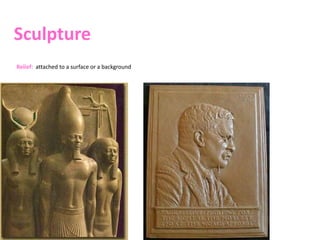
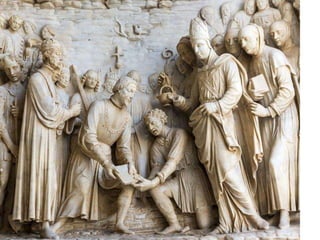
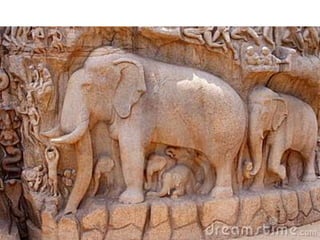
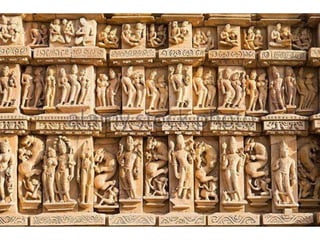
Relief: attached to a surface or a background
Sculpture
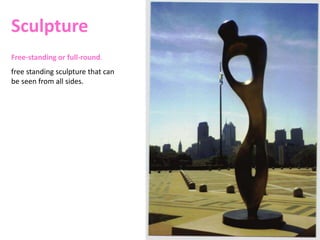
Free-standing or full-round.
free standing sculpture that can
be seen from all sides.
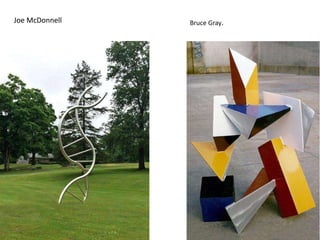
Joe McDonnell Bruce Gray.
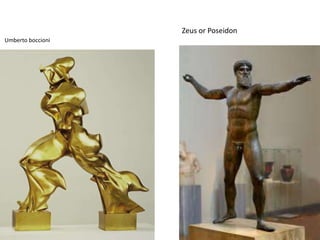
Umberto boccioni
Zeus or Poseidon
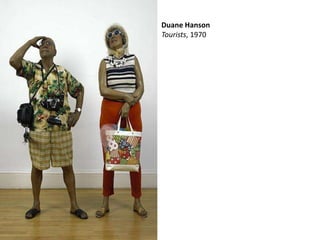
Duane Hanson
Tourists, 1970
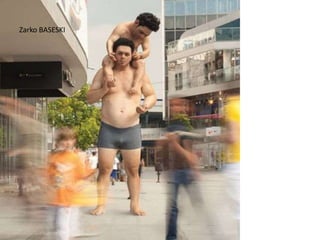
Zarko BASESKI
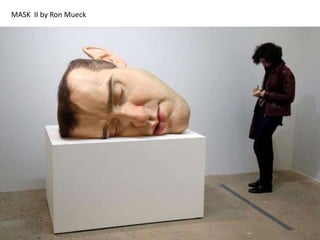
MASK II by Ron Mueck
Sculpture
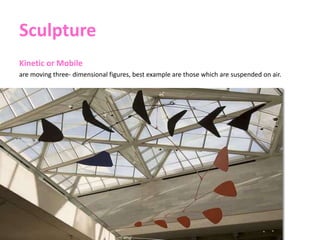
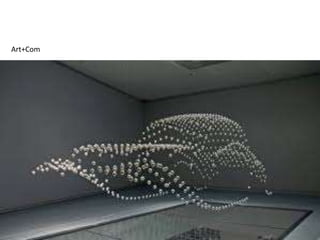
Kinetic or Mobile
are moving three- dimensional figures, best example are those which are suspended on air.
Anthony Howeby
Art+Com

types of sculptures.pptx