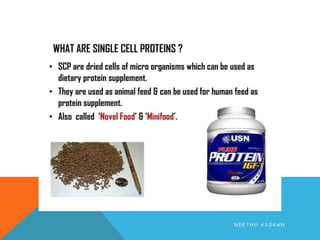
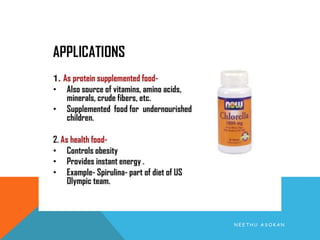
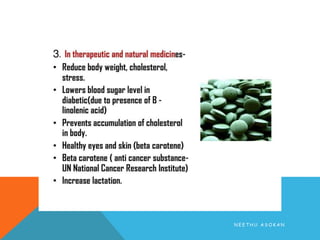
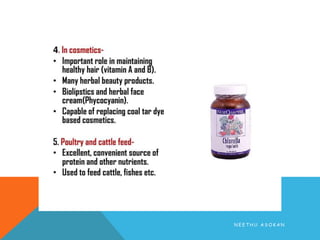
Single-cell proteins are proteins extracted from microorganisms like algae, yeast and bacteria. They are used as substitutes for protein in animal feeds and dietary supplements. Microbes can be used to produce single-cell proteins by fermenting waste materials like straw, wood, food waste and human/animal excreta. However, extracting proteins from these wastes is challenging due to low concentrations. Engineers have developed methods to increase concentrations, like centrifugation. Microorganisms used include yeasts, fungi, bacteria and algae. While single-cell proteins grow quickly and use varied raw materials, their nucleic acid contents and potential toxins limit their use as food.