Downloaded 164 times
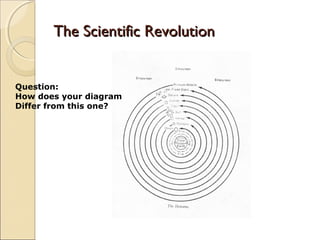
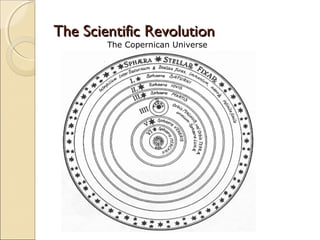
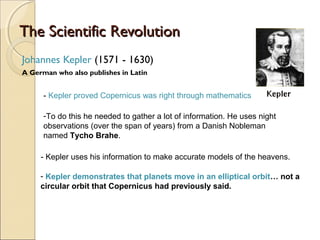
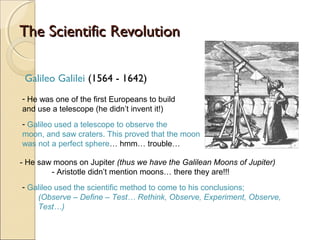
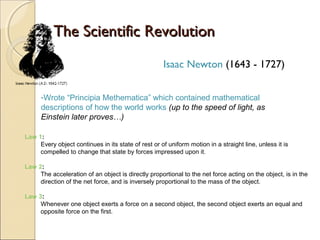
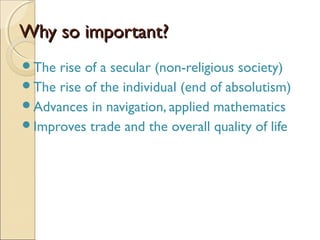
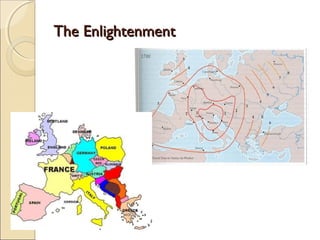
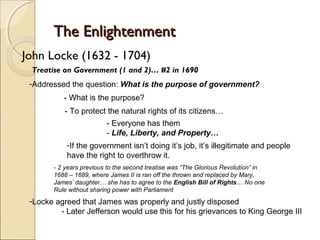
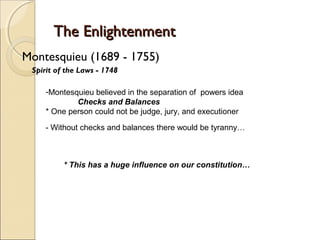
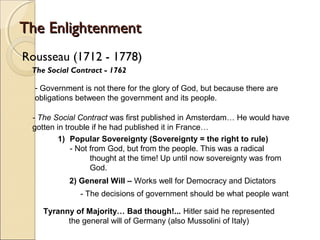

The Scientific Revolution began a new way of thinking that was secular, rational, based on reason, and believed in progress through study of the natural world. Key figures included Copernicus, who proposed a sun-centered solar system; Kepler, who proved Copernicus right through mathematics; Galileo, who used a telescope to make observations that supported Copernicus; and Isaac Newton, who formulated mathematical laws of motion and gravity. This new scientific thinking challenged the authority of the Catholic Church and led to advances in many fields through empirical study.


