11/05/1441
1
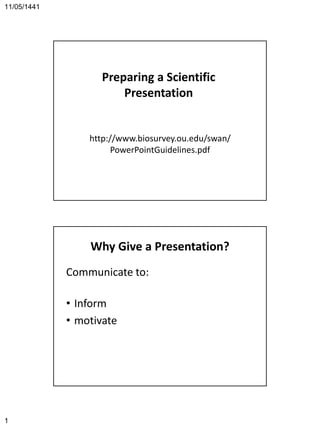
Preparing a Scientific
Presentation
http://www.biosurvey.ou.edu/swan/
PowerPointGuidelines.pdf
Why Give a Presentation?
Communicate to:
• Inform
• motivate
11/05/1441
2
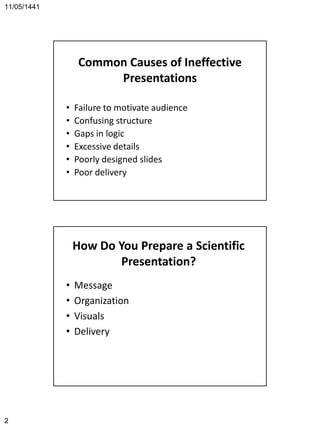
Common Causes of Ineffective
Presentations
• Failure to motivate audience
• Confusing structure
• Gaps in logic
• Excessive details
• Poorly designed slides
• Poor delivery
How Do You Prepare a Scientific
Presentation?
• Message
• Organization
• Visuals
• Delivery
11/05/1441
3
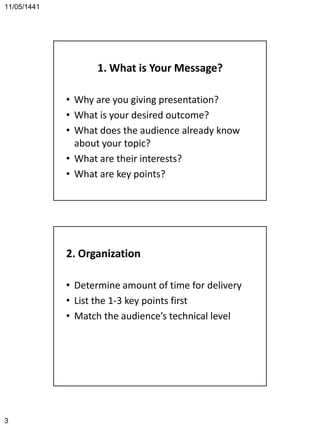
1. What is Your Message?
• Why are you giving presentation?
• What is your desired outcome?
• What does the audience already know
about your topic?
• What are their interests?
• What are key points?
2. Organization
• Determine amount of time for delivery
• List the 1-3 key points first
• Match the audience’s technical level
11/05/1441
4
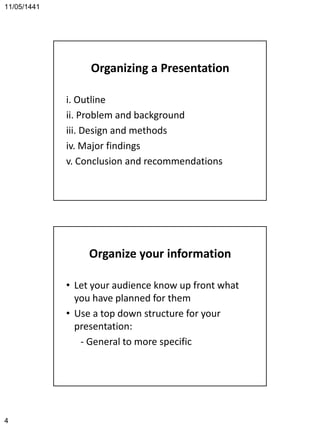
Organizing a Presentation
i. Outline
ii. Problem and background
iii. Design and methods
iv. Major findings
v. Conclusion and recommendations
Organize your information
• Let your audience know up front what
you have planned for them
• Use a top down structure for your
presentation:
- General to more specific
11/05/1441
5
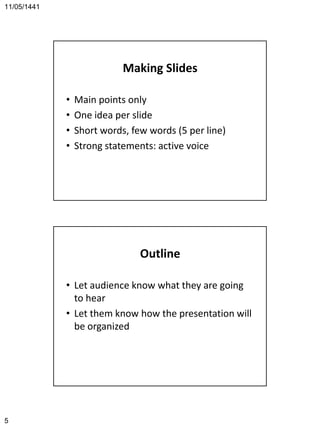
Making Slides
• Main points only
• One idea per slide
• Short words, few words (5 per line)
• Strong statements: active voice
Outline
• Let audience know what they are going
to hear
• Let them know how the presentation will
be organized
11/05/1441
6
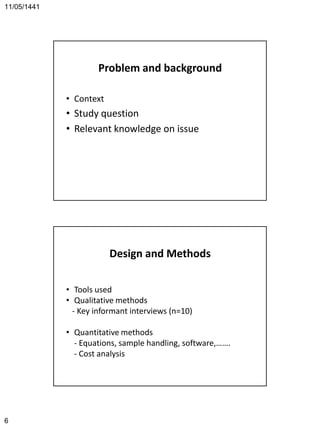
Problem and background
• Context
• Study question
• Relevant knowledge on issue
Design and Methods
• Tools used
• Qualitative methods
- Key informant interviews (n=10)
• Quantitative methods
- Equations, sample handling, software,…….
- Cost analysis
11/05/1441
7
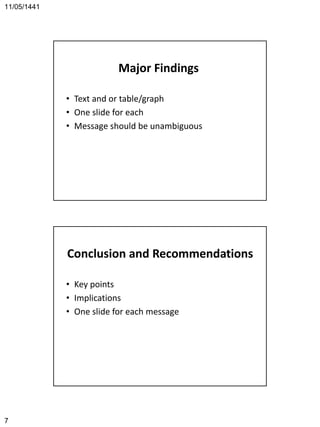
Major Findings
• Text and or table/graph
• One slide for each
• Message should be unambiguous
Conclusion and Recommendations
• Key points
• Implications
• One slide for each message
11/05/1441
8
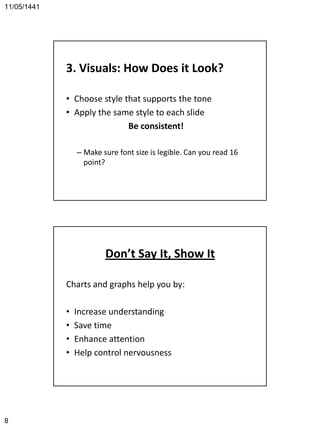
3. Visuals: How Does it Look?
• Choose style that supports the tone
• Apply the same style to each slide
Be consistent!
– Make sure font size is legible. Can you read 16
point?
Don’t Say It, Show It
Charts and graphs help you by:
• Increase understanding
• Save time
• Enhance attention
• Help control nervousness
11/05/1441
9
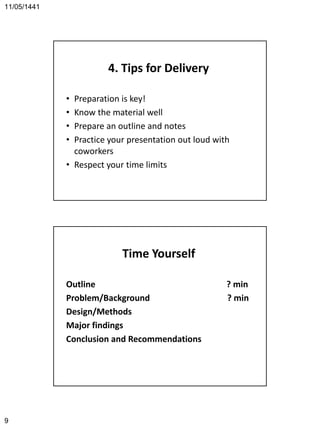
4. Tips for Delivery
• Preparation is key!
• Know the material well
• Prepare an outline and notes
• Practice your presentation out loud with
coworkers
• Respect your time limits
Time Yourself
Outline ? min
Problem/Background ? min
Design/Methods
Major findings
Conclusion and Recommendations
11/05/1441
10
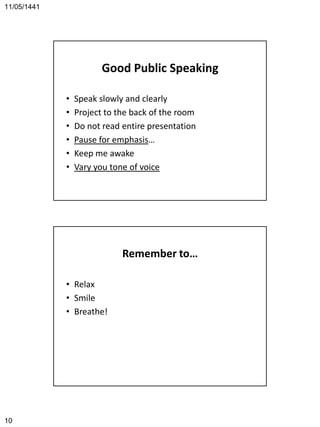
Good Public Speaking
• Speak slowly and clearly
• Project to the back of the room
• Do not read entire presentation
• Pause for emphasis…
• Keep me awake
• Vary you tone of voice
Remember to…
• Relax
• Smile
• Breathe!
11/05/1441
11
11/05/1441
12
11/05/1441
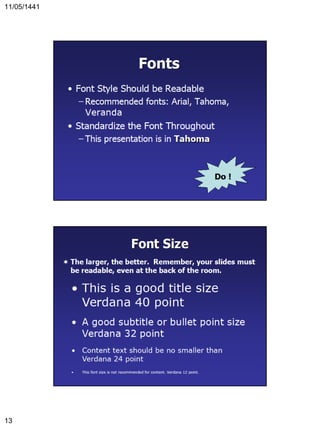
13
11/05/1441
14
11/05/1441
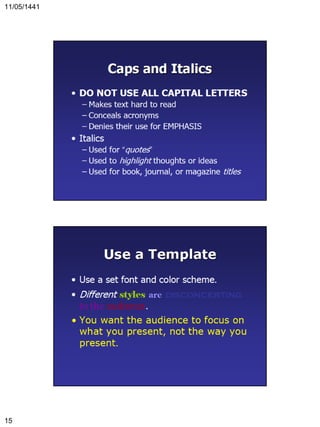
15
11/05/1441
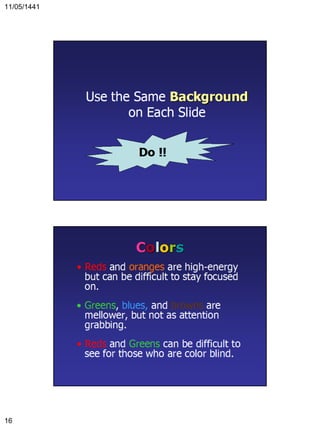
16
11/05/1441
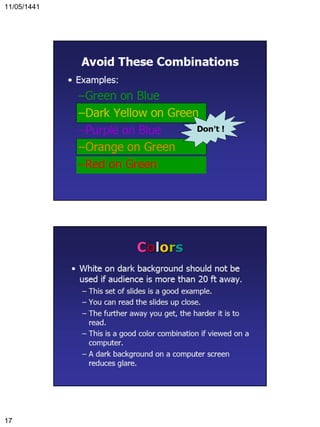
17
11/05/1441
18
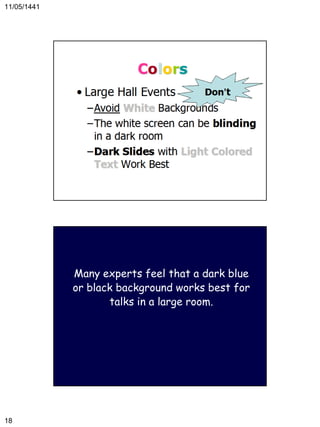
Many experts feel that a dark blue
or black background works best for
talks in a large room.
11/05/1441
19
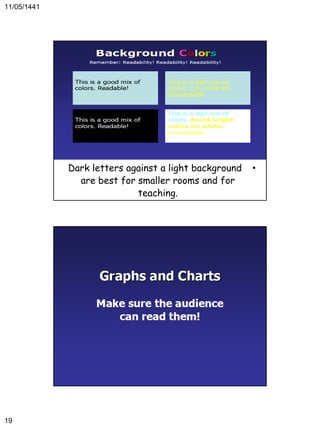
•Dark letters against a light background
are best for smaller rooms and for
teaching.
11/05/1441
20
11/05/1441
21
11/05/1441
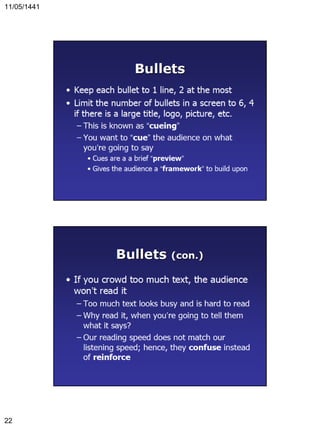
22
11/05/1441
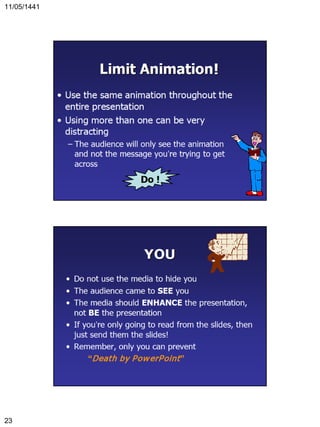
23
11/05/1441
24

scientific presentation

  • 1.
  • 2.
    11/05/1441 2 Common Causes ofIneffective Presentations • Failure to motivate audience • Confusing structure • Gaps in logic • Excessive details • Poorly designed slides • Poor delivery How Do You Prepare a Scientific Presentation? • Message • Organization • Visuals • Delivery
  • 3.
    11/05/1441 3 1. What isYour Message? • Why are you giving presentation? • What is your desired outcome? • What does the audience already know about your topic? • What are their interests? • What are key points? 2. Organization • Determine amount of time for delivery • List the 1-3 key points first • Match the audience’s technical level
  • 4.
    11/05/1441 4 Organizing a Presentation i.Outline ii. Problem and background iii. Design and methods iv. Major findings v. Conclusion and recommendations Organize your information • Let your audience know up front what you have planned for them • Use a top down structure for your presentation: - General to more specific
  • 5.
    11/05/1441 5 Making Slides • Mainpoints only • One idea per slide • Short words, few words (5 per line) • Strong statements: active voice Outline • Let audience know what they are going to hear • Let them know how the presentation will be organized
  • 6.
    11/05/1441 6 Problem and background •Context • Study question • Relevant knowledge on issue Design and Methods • Tools used • Qualitative methods - Key informant interviews (n=10) • Quantitative methods - Equations, sample handling, software,……. - Cost analysis
  • 7.
    11/05/1441 7 Major Findings • Textand or table/graph • One slide for each • Message should be unambiguous Conclusion and Recommendations • Key points • Implications • One slide for each message
  • 8.
    11/05/1441 8 3. Visuals: HowDoes it Look? • Choose style that supports the tone • Apply the same style to each slide Be consistent! – Make sure font size is legible. Can you read 16 point? Don’t Say It, Show It Charts and graphs help you by: • Increase understanding • Save time • Enhance attention • Help control nervousness
  • 9.
    11/05/1441 9 4. Tips forDelivery • Preparation is key! • Know the material well • Prepare an outline and notes • Practice your presentation out loud with coworkers • Respect your time limits Time Yourself Outline ? min Problem/Background ? min Design/Methods Major findings Conclusion and Recommendations
  • 10.
    11/05/1441 10 Good Public Speaking •Speak slowly and clearly • Project to the back of the room • Do not read entire presentation • Pause for emphasis… • Keep me awake • Vary you tone of voice Remember to… • Relax • Smile • Breathe!
  • 11.
  • 12.
  • 13.
  • 14.
  • 15.
  • 16.
  • 17.
  • 18.
    11/05/1441 18 Many experts feelthat a dark blue or black background works best for talks in a large room.
  • 19.
    11/05/1441 19 •Dark letters againsta light background are best for smaller rooms and for teaching.
  • 20.
  • 21.
  • 22.
  • 23.
  • 24.