User Research 

Interviews 

Prep & Practice
James Oliver 

Independent User Experience Consultant

17th Sept 2015
About me
• Freelance User Experience Consultant

• Working @ HMRC Digital Delivery team

• Relocated to North-east in Oct 2014

• Spent 1st year @StatusDigi as UX Director

• 11+ years design industry experience

• Particular interest in research & design

Clients I’ve worked with
www.studiosolo.co.uk | @Studiosololtd
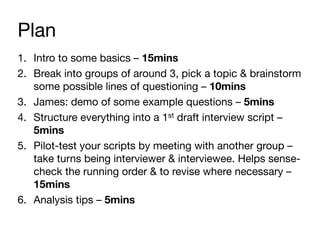
Plan
1. Intro to some basics – 15mins
2. Break into groups of around 3, pick a topic & brainstorm
some possible lines of questioning – 10mins 

3. James: demo of some example questions – 5mins
4. Structure everything into a 1st draft interview script –
5mins
5. Pilot-test your scripts by meeting with another group –
take turns being interviewer & interviewee. Helps sense-
check the running order & to revise where necessary –
15mins
6. Analysis tips – 5mins
Why?
Reasons to do research
• To inform a new product idea or more indepth insight
into a particularly blurry or complex topic

• The research you want to do is not already out there &
freely available

• To learn about all influencing factors of the intended
users who would ultimately use your creation

• Understand the user’s goals, attitudes, emotions, 

and frustrations

• Generate further specific features and ideas

• Get to understand other competitors, or current work-
arounds (especially if a solution doesn’t exist)
How?
How to be a good interviewer
• Smile!

• Start with some small-talk or ice-breakers

• Do more listening than talking

• Ensure to keep some eye-contact (ideally you’d have a
separate note-taker and/or dictaphone to record audio –
although ask permission first!)

• Allow the participant to go off-topic, and be willing to
break the order of questions in your script
What if?
Trouble-shooting
• What if the participant is giving me short or
incomplete answers? Ask them ‘Why?’ or ‘Tell me more
about that…’. Avoid yes/no answer questions.

• What if there are awkward silences? It’s something you
should get used to & allow to happen, as it may prompt
the user to speak more. Don’t try to fill in silence or
provide them with easy answers

• What if the user is talking too much or going off-track?
The script is a guide, but don’t feel you have to stick
100% to the running order – as long as you cover all your
core topics. The more the participant talks the better!
Where?
Where should I facilitate?
• Depends on time, budget and access to participants

• In-person is always best – valuable cognitive insight

• Ensure the room you meet in is quiet & relaxed

• Natural environment? (Ethnographic research)

• Telephone & video-calls – speed, tighter budgets or
difficult-to-access participants

• Guerilla research at coffee shops – unexpected, random,
free/low-cost, issues with approaching strangers
What should 

I ask?
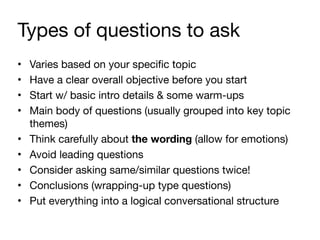
Types of questions to ask
• Varies based on your specific topic

• Have a clear overall objective before you start

• Start w/ basic intro details & some warm-ups

• Main body of questions (usually grouped into key topic
themes)

• Think carefully about the wording (allow for emotions)

• Avoid leading questions

• Consider asking same/similar questions twice!

• Conclusions (wrapping-up type questions)

• Put everything into a logical conversational structure
Start to prep!
Choose a topic:
• Booking a holiday

• Travelling to work

• Your food shopping habits

• Buying a car

• Buying a house

• Last cinema trip

• Organising a party

• Going out for a meal

• Chocolate

• Coffee
15
Why Pets?
• Name, age, gender, occupation, no. & type of pets

• What interests do you have?

• Why did you choose your particular pet(s)?

• What do you typically do during a week with your pet(s)?

• Tell me about a positive experience with pet

• Tell me about any negative experiences

• Tell me about the bond you have?

• How do friends & family interact with your pet(s)?

EXAMPLE
Refine
Pilot-test!
Wrapping up
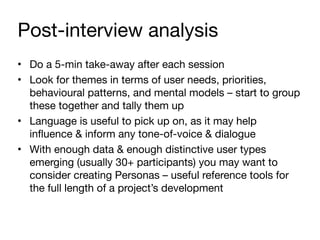
Post-interview analysis
• Do a 5-min take-away after each session

• Look for themes in terms of user needs, priorities,
behavioural patterns, and mental models – start to group
these together and tally them up

• Language is useful to pick up on, as it may help
influence & inform any tone-of-voice & dialogue

• With enough data & enough distinctive user types
emerging (usually 30+ participants) you may want to
consider creating Personas – useful reference tools for
the full length of a project’s development
Further reading
Interviewing Humans, Erika Hall, Alistapart
http://alistapart.com/article/interviewing-humans
Nielsen Norman Group

http://www.nngroup.com/topic/user-testing/
Remote Research Webinar Series

https://www.usertesting.com/resources/remotely-possible
5 Steps to Create Good User Interview Questions by @Metacole
https://medium.com/interactive-mind/5-steps-to-create-good-user-interview-
questions-by-metacole-a-comprehensive-guide-8a591b0e2162
Thanks!

User research interviews

  • 1.
    User Research 
 Interviews
 Prep & Practice James Oliver 
 Independent User Experience Consultant 17th Sept 2015
  • 2.
    About me • FreelanceUser Experience Consultant • Working @ HMRC Digital Delivery team • Relocated to North-east in Oct 2014 • Spent 1st year @StatusDigi as UX Director • 11+ years design industry experience • Particular interest in research & design Clients I’ve worked with www.studiosolo.co.uk | @Studiosololtd
  • 3.
    Plan 1. Intro tosome basics – 15mins 2. Break into groups of around 3, pick a topic & brainstorm some possible lines of questioning – 10mins 3. James: demo of some example questions – 5mins 4. Structure everything into a 1st draft interview script – 5mins 5. Pilot-test your scripts by meeting with another group – take turns being interviewer & interviewee. Helps sense- check the running order & to revise where necessary – 15mins 6. Analysis tips – 5mins
  • 4.
  • 5.
    Reasons to doresearch • To inform a new product idea or more indepth insight into a particularly blurry or complex topic • The research you want to do is not already out there & freely available • To learn about all influencing factors of the intended users who would ultimately use your creation • Understand the user’s goals, attitudes, emotions, 
 and frustrations • Generate further specific features and ideas • Get to understand other competitors, or current work- arounds (especially if a solution doesn’t exist)
  • 6.
  • 7.
    How to bea good interviewer • Smile! • Start with some small-talk or ice-breakers • Do more listening than talking • Ensure to keep some eye-contact (ideally you’d have a separate note-taker and/or dictaphone to record audio – although ask permission first!) • Allow the participant to go off-topic, and be willing to break the order of questions in your script
  • 8.
  • 9.
    Trouble-shooting • What ifthe participant is giving me short or incomplete answers? Ask them ‘Why?’ or ‘Tell me more about that…’. Avoid yes/no answer questions. • What if there are awkward silences? It’s something you should get used to & allow to happen, as it may prompt the user to speak more. Don’t try to fill in silence or provide them with easy answers • What if the user is talking too much or going off-track? The script is a guide, but don’t feel you have to stick 100% to the running order – as long as you cover all your core topics. The more the participant talks the better!
  • 10.
  • 11.
    Where should Ifacilitate? • Depends on time, budget and access to participants • In-person is always best – valuable cognitive insight • Ensure the room you meet in is quiet & relaxed • Natural environment? (Ethnographic research) • Telephone & video-calls – speed, tighter budgets or difficult-to-access participants • Guerilla research at coffee shops – unexpected, random, free/low-cost, issues with approaching strangers
  • 12.
  • 13.
    Types of questionsto ask • Varies based on your specific topic • Have a clear overall objective before you start • Start w/ basic intro details & some warm-ups • Main body of questions (usually grouped into key topic themes) • Think carefully about the wording (allow for emotions) • Avoid leading questions • Consider asking same/similar questions twice! • Conclusions (wrapping-up type questions) • Put everything into a logical conversational structure
  • 14.
  • 15.
    Choose a topic: •Booking a holiday • Travelling to work • Your food shopping habits • Buying a car • Buying a house • Last cinema trip • Organising a party • Going out for a meal • Chocolate • Coffee 15
  • 16.
    Why Pets? • Name,age, gender, occupation, no. & type of pets • What interests do you have? • Why did you choose your particular pet(s)? • What do you typically do during a week with your pet(s)? • Tell me about a positive experience with pet • Tell me about any negative experiences • Tell me about the bond you have? • How do friends & family interact with your pet(s)? EXAMPLE
  • 17.
  • 18.
  • 19.
  • 20.
    Post-interview analysis • Doa 5-min take-away after each session • Look for themes in terms of user needs, priorities, behavioural patterns, and mental models – start to group these together and tally them up • Language is useful to pick up on, as it may help influence & inform any tone-of-voice & dialogue • With enough data & enough distinctive user types emerging (usually 30+ participants) you may want to consider creating Personas – useful reference tools for the full length of a project’s development
  • 21.
    Further reading Interviewing Humans,Erika Hall, Alistapart http://alistapart.com/article/interviewing-humans Nielsen Norman Group
 http://www.nngroup.com/topic/user-testing/ Remote Research Webinar Series
 https://www.usertesting.com/resources/remotely-possible 5 Steps to Create Good User Interview Questions by @Metacole https://medium.com/interactive-mind/5-steps-to-create-good-user-interview- questions-by-metacole-a-comprehensive-guide-8a591b0e2162
  • 22.