Giving an Engaging
Oral Presentation
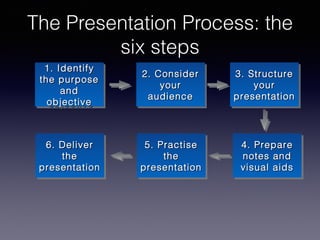
The Presentation Process: the
six steps
1. Identify
1. Identify
the purpose
the purpose
and
and
objective
objective

2. Consider
2. Consider
your
your
audience
audience

6. Deliver
6. Deliver
the
the
presentation
presentation

5. Practise
5. Practise
the
the
presentation
presentation

3. Structure
3. Structure
your
your
presentation
presentation

4. Prepare
4. Prepare
notes and
notes and
visual aids
visual aids
1. What is the purpose of
your oral presentation?

•

What are you hoping to achieve?

•

Being clear about its purpose helps you to know
what to include or omit.
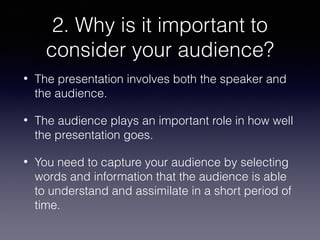
2. Why is it important to
consider your audience?
•

The presentation involves both the speaker and
the audience.

•

The audience plays an important role in how well
the presentation goes.

•

You need to capture your audience by selecting
words and information that the audience is able
to understand and assimilate in a short period of
time.
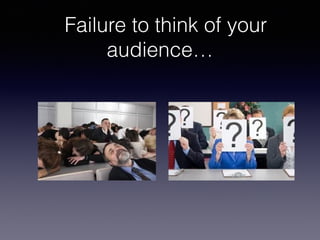
Failure to think of your
audience…
3. Structure
•

Tell them what you are going to tell them.

•

Tell them.

•

Tell them what you told them.
The Introduction
Include the following in your introduction:
•

An attention grabber

•

Background information

•

A clear thesis statement
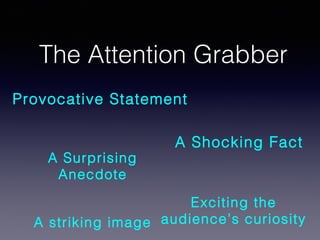
The Attention Grabber
Provocative Statement

A Surprising
Anecdote

A Shocking Fact

Exciting the
A striking image audience’s curiosity
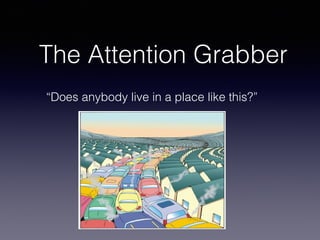
The Attention Grabber
“Does anybody live in a place like this?”
The Body
Include the following in your body:
•

Accurate researched details

•

Smooth and logical order of ideas

•

Make sure the points back-up your thesis
statement.
The Conclusion
Include the following in your conclusion:
•

Restate the thesis statement.

•

Restate the supporting arguments.

•

End with a prediction, suggestion or a rhetorical
question.
4. How do you remember
what you want to present?

•

Use cue-cards

•

Use visual-aids as notes
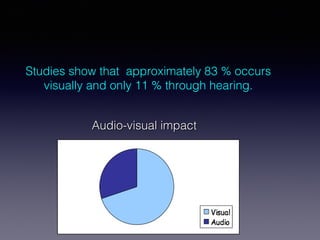
Studies show that approximately 83 % occurs
visually and only 11 % through hearing.
Audio-visual impact
5. How to prepare for your
oral presentation
•

Practice in front of friends

•

Practice in front of the mirror

•

Record yourself and work on the weak points.
6. Delivering the oral
presentation
Before the
presentation:
•

Have your outline completed.

•

Make sure that your cue-cards are easy to read.

•

Don’t forget to bring your USB if you will use a
PowerPoint.
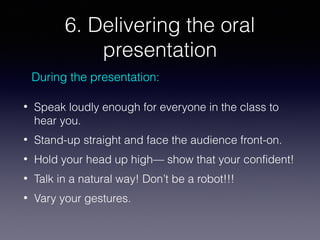
6. Delivering the oral
presentation
During the presentation:
•

Speak loudly enough for everyone in the class to
hear you.

•

Stand-up straight and face the audience front-on.

•

Hold your head up high— show that your confident!

•

Talk in a natural way! Don’t be a robot!!!

•

Vary your gestures.
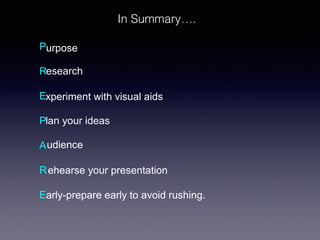
In Summary….
Purpose
Research
Experiment with visual aids
Plan your ideas
A udience
R ehearse your presentation
Early-prepare early to avoid rushing.

Presentations to impress 2

  • 1.
  • 2.
    The Presentation Process:the six steps 1. Identify 1. Identify the purpose the purpose and and objective objective 2. Consider 2. Consider your your audience audience 6. Deliver 6. Deliver the the presentation presentation 5. Practise 5. Practise the the presentation presentation 3. Structure 3. Structure your your presentation presentation 4. Prepare 4. Prepare notes and notes and visual aids visual aids
  • 3.
    1. What isthe purpose of your oral presentation? • What are you hoping to achieve? • Being clear about its purpose helps you to know what to include or omit.
  • 4.
    2. Why isit important to consider your audience? • The presentation involves both the speaker and the audience. • The audience plays an important role in how well the presentation goes. • You need to capture your audience by selecting words and information that the audience is able to understand and assimilate in a short period of time.
  • 5.
    Failure to thinkof your audience…
  • 6.
    3. Structure • Tell themwhat you are going to tell them. • Tell them. • Tell them what you told them.
  • 7.
    The Introduction Include thefollowing in your introduction: • An attention grabber • Background information • A clear thesis statement
  • 8.
    The Attention Grabber ProvocativeStatement A Surprising Anecdote A Shocking Fact Exciting the A striking image audience’s curiosity
  • 9.
    The Attention Grabber “Doesanybody live in a place like this?”
  • 10.
    The Body Include thefollowing in your body: • Accurate researched details • Smooth and logical order of ideas • Make sure the points back-up your thesis statement.
  • 11.
    The Conclusion Include thefollowing in your conclusion: • Restate the thesis statement. • Restate the supporting arguments. • End with a prediction, suggestion or a rhetorical question.
  • 12.
    4. How doyou remember what you want to present? • Use cue-cards • Use visual-aids as notes
  • 13.
    Studies show thatapproximately 83 % occurs visually and only 11 % through hearing. Audio-visual impact
  • 14.
    5. How toprepare for your oral presentation • Practice in front of friends • Practice in front of the mirror • Record yourself and work on the weak points.
  • 15.
    6. Delivering theoral presentation Before the presentation: • Have your outline completed. • Make sure that your cue-cards are easy to read. • Don’t forget to bring your USB if you will use a PowerPoint.
  • 16.
    6. Delivering theoral presentation During the presentation: • Speak loudly enough for everyone in the class to hear you. • Stand-up straight and face the audience front-on. • Hold your head up high— show that your confident! • Talk in a natural way! Don’t be a robot!!! • Vary your gestures.
  • 17.
    In Summary…. Purpose Research Experiment withvisual aids Plan your ideas A udience R ehearse your presentation Early-prepare early to avoid rushing.