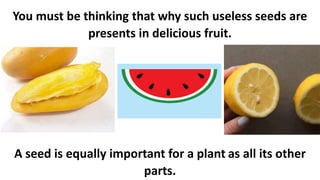

You must be thinking that why such useless seeds are
presents in delicious fruit.
A seed is equally important for a plant as all its other
parts.
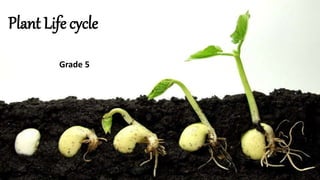
Plant Life cycle
Grade 5
What Will I Learn?
1. Know why plants reproduce.
2. Understand the different stages in the life cycle of a
flowering plant.
3. Know that seeds need water, air and warmth for
germination.
4. Observe that plants produce flowers which have male
and female organs.
5. Know that seeds are formed after a flower is pollinated.
6. Understand how pollination take place.
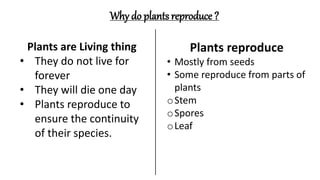
Why do plants reproduce ?
Plants are Living thing
• They do not live for
forever
• They will die one day
• Plants reproduce to
ensure the continuity
of their species.
Plants reproduce
• Mostly from seeds
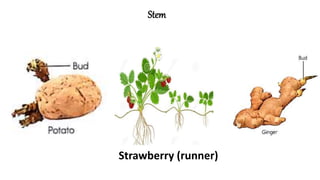
• Some reproduce from parts of
plants
oStem
oSpores
oLeaf
Stem
Strawberry (runner)
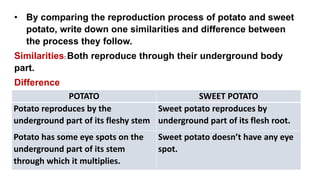
POTATO SWEET POTATO
Potato reproduces by the
underground part of its fleshy stem
Sweet potato reproduces by
underground part of its flesh root.
Potato has some eye spots on the
underground part of its stem
through which it multiplies.
Sweet potato doesn’t have any eye
spot.
• By comparing the reproduction process of potato and sweet
potato, write down one similarities and difference between
the process they follow.
Similarities: Both reproduce through their underground body
part.
Difference
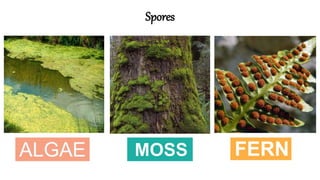
Spores
• Name two plants that
reproduce by spores.
Ans. Fern, Mosses,
Mushroom etc
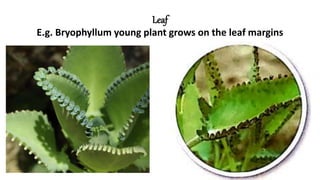
Leaf
E.g. Bryophyllum young plant grows on the leaf margins
Complete the series
Potato: Underground stems::bryophyllum: _________
Ans: Leaves
Mango: seed::fern: __________
Ans. Spore
• What are the various methods by which
plants reproduce?
Ans. Flowering plants reproduce directly
through their seeds
e.g. mango and bean.
Some plants reproduce through their body parts
like stems, leaves and roots.
Some plants reproduce through special tiny
structures called spores.
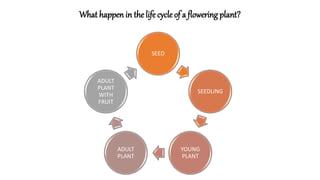
What happen in the life cycle of a flowering plant?
SEED
SEEDLING
YOUNG
PLANT
ADULT
PLANT
ADULT
PLANT
WITH
FRUIT
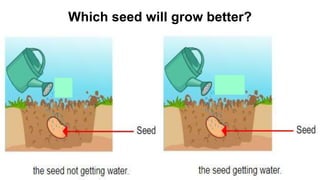
Which seed will grow better?
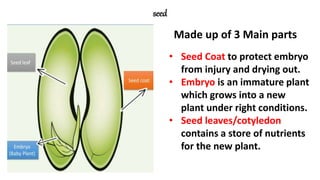
seed
Made up of 3 Main parts
• Seed Coat to protect embryo
from injury and drying out.
• Embryo is an immature plant
which grows into a new
plant under right conditions.
• Seed leaves/cotyledon
contains a store of nutrients
for the new plant.
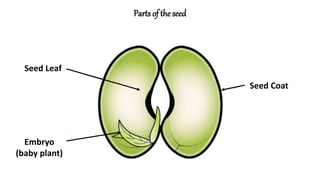
Parts of the seed
Seed Leaf
Seed Coat
Embryo
(baby plant)
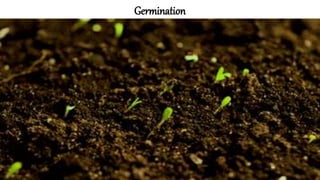
Germination
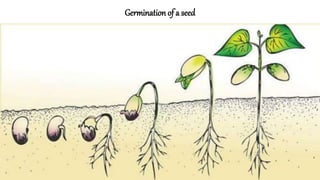
Germination of a seed
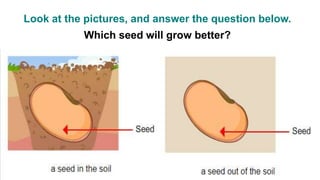
Look at the pictures, and answer the question below.
Which seed will grow better?
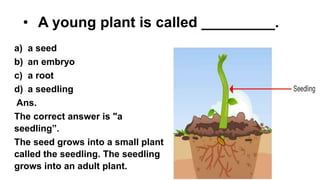
• A young plant is called _________.
a) a seed
b) an embryo
c) a root
d) a seedling
Ans.
The correct answer is "a
seedling”.
The seed grows into a small plant
called the seedling. The seedling
grows into an adult plant.
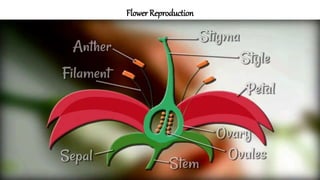
Flower Reproduction
• Some fruits seeds are waterproof and can float in
water. Give example
Ans. Coconut seeds are waterproof and can float in
water.
• What do we call the practice of germinating seeds
and growing plants from them on a large scale?
Ans. Cropping
• What is the function of flowers in the plants?
Ans. They help in reproduction in plants.
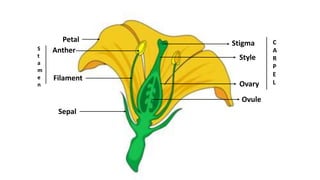
Petal
Anther
Filament
S
t
a
m
e
n
Sepal
Stigma
Style
Ovary
Ovule
C
A
R
P
E
L
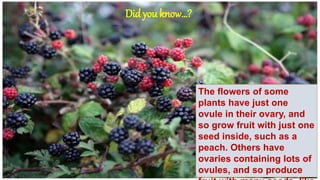
Did you know…?
The flowers of some
plants have just one
ovule in their ovary, and
so grow fruit with just one
seed inside, such as a
peach. Others have
ovaries containing lots of
ovules, and so produce
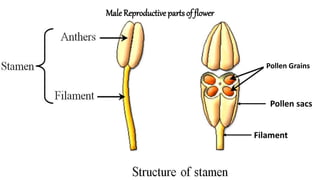
Pollen Grains
Pollen sacs
Filament
Male Reproductive partsof flower
Structure of stamen
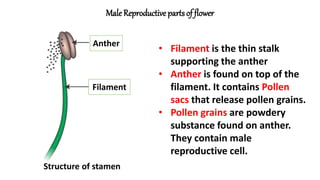
Anther
Filament
• Filament is the thin stalk
supporting the anther
• Anther is found on top of the
filament. It contains Pollen
sacs that release pollen grains.
• Pollen grains are powdery
substance found on anther.
They contain male
reproductive cell.
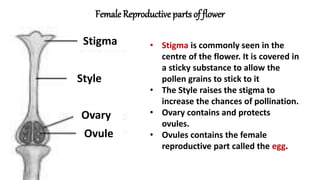
Female Reproductive parts of flower
Stigma
Style
Ovary
Ovule
• Stigma is commonly seen in the
centre of the flower. It is covered in
a sticky substance to allow the
pollen grains to stick to it
• The Style raises the stigma to
increase the chances of pollination.
• Ovary contains and protects
ovules.
• Ovules contains the female
reproductive part called the egg.
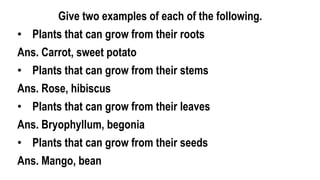
Give two examples of each of the following.
• Plants that can grow from their roots
Ans. Carrot, sweet potato
• Plants that can grow from their stems
Ans. Rose, hibiscus
• Plants that can grow from their leaves
Ans. Bryophyllum, begonia
• Plants that can grow from their seeds
Ans. Mango, bean
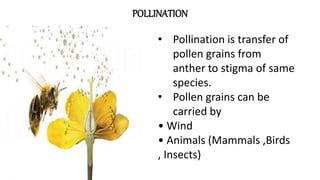
POLLINATION
• Pollination is transfer of
pollen grains from
anther to stigma of same
species.
• Pollen grains can be
carried by
• Wind
• Animals (Mammals ,Birds
, Insects)
SELFPOLLINATION
The transfer of pollens
from the anther to the
stigma of the same flower
or another flower born on
the same plant is called
self-pollination.
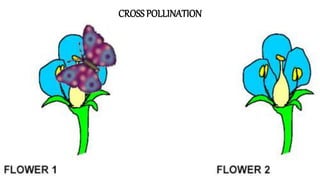
CROSS POLLINATION
• Different plants choose different ways to
reproduce. Why don’t all plants use common
way to reproduce?
Ans. As we know that on earth there are a great variety of
plants, some are very big and some are very small. Some
are found on land and some are aquatic. So, according to
their suitability they perform the same process by different
ways. Just like this, ways of reproduction also vary greatly
among different plants.
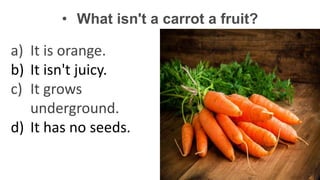
• What isn't a carrot a fruit?
a) It is orange.
b) It isn't juicy.
c) It grows
underground.
d) It has no seeds.
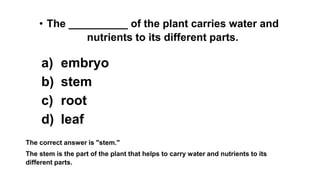
• The __________ of the plant carries water and
nutrients to its different parts.
a) embryo
b) stem
c) root
d) leaf
The correct answer is "stem."
The stem is the part of the plant that helps to carry water and nutrients to its
different parts.
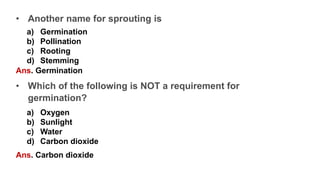
• Another name for sprouting is
a) Germination
b) Pollination
c) Rooting
d) Stemming
Ans. Germination
• Which of the following is NOT a requirement for
germination?
a) Oxygen
b) Sunlight
c) Water
d) Carbon dioxide
Ans. Carbon dioxide
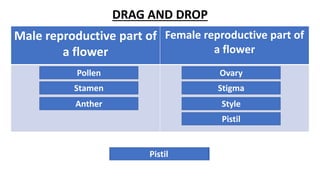
DRAG AND DROP
Male reproductive part of
a flower
Female reproductive part of
a flower
Pollen
Pollen
Ovary
Ovary
Stamen
Stamen
Stigma
Stigma
Anther
Anther
Style
Style
Pistil
Pistil
SCIENCE - THE PLANT LIFE CYCLE (CLASS V)

SCIENCE - THE PLANT LIFE CYCLE (CLASS V)

  • 2.
    You must bethinking that why such useless seeds are presents in delicious fruit. A seed is equally important for a plant as all its other parts.
  • 3.
  • 4.
    What Will ILearn? 1. Know why plants reproduce. 2. Understand the different stages in the life cycle of a flowering plant. 3. Know that seeds need water, air and warmth for germination. 4. Observe that plants produce flowers which have male and female organs. 5. Know that seeds are formed after a flower is pollinated. 6. Understand how pollination take place.
  • 6.
    Why do plantsreproduce ? Plants are Living thing • They do not live for forever • They will die one day • Plants reproduce to ensure the continuity of their species. Plants reproduce • Mostly from seeds • Some reproduce from parts of plants oStem oSpores oLeaf
  • 7.
  • 8.
    POTATO SWEET POTATO Potatoreproduces by the underground part of its fleshy stem Sweet potato reproduces by underground part of its flesh root. Potato has some eye spots on the underground part of its stem through which it multiplies. Sweet potato doesn’t have any eye spot. • By comparing the reproduction process of potato and sweet potato, write down one similarities and difference between the process they follow. Similarities: Both reproduce through their underground body part. Difference
  • 9.
  • 10.
    • Name twoplants that reproduce by spores. Ans. Fern, Mosses, Mushroom etc
  • 11.
    Leaf E.g. Bryophyllum youngplant grows on the leaf margins
  • 12.
    Complete the series Potato:Underground stems::bryophyllum: _________ Ans: Leaves Mango: seed::fern: __________ Ans. Spore
  • 13.
    • What arethe various methods by which plants reproduce? Ans. Flowering plants reproduce directly through their seeds e.g. mango and bean. Some plants reproduce through their body parts like stems, leaves and roots. Some plants reproduce through special tiny structures called spores.
  • 14.
    What happen inthe life cycle of a flowering plant? SEED SEEDLING YOUNG PLANT ADULT PLANT ADULT PLANT WITH FRUIT
  • 15.
    Which seed willgrow better?
  • 16.
    seed Made up of3 Main parts • Seed Coat to protect embryo from injury and drying out. • Embryo is an immature plant which grows into a new plant under right conditions. • Seed leaves/cotyledon contains a store of nutrients for the new plant.
  • 17.
    Parts of theseed Seed Leaf Seed Coat Embryo (baby plant)
  • 18.
  • 19.
  • 20.
    Look at thepictures, and answer the question below. Which seed will grow better?
  • 21.
    • A youngplant is called _________. a) a seed b) an embryo c) a root d) a seedling Ans. The correct answer is "a seedling”. The seed grows into a small plant called the seedling. The seedling grows into an adult plant.
  • 22.
  • 23.
    • Some fruitsseeds are waterproof and can float in water. Give example Ans. Coconut seeds are waterproof and can float in water. • What do we call the practice of germinating seeds and growing plants from them on a large scale? Ans. Cropping • What is the function of flowers in the plants? Ans. They help in reproduction in plants.
  • 24.
  • 25.
    Did you know…? Theflowers of some plants have just one ovule in their ovary, and so grow fruit with just one seed inside, such as a peach. Others have ovaries containing lots of ovules, and so produce
  • 26.
    Pollen Grains Pollen sacs Filament MaleReproductive partsof flower
  • 27.
    Male Reproductive partsofflower Structure of stamen Anther Filament • Filament is the thin stalk supporting the anther • Anther is found on top of the filament. It contains Pollen sacs that release pollen grains. • Pollen grains are powdery substance found on anther. They contain male reproductive cell.
  • 28.
    Female Reproductive partsof flower Stigma Style Ovary Ovule • Stigma is commonly seen in the centre of the flower. It is covered in a sticky substance to allow the pollen grains to stick to it • The Style raises the stigma to increase the chances of pollination. • Ovary contains and protects ovules. • Ovules contains the female reproductive part called the egg.
  • 31.
    Give two examplesof each of the following. • Plants that can grow from their roots Ans. Carrot, sweet potato • Plants that can grow from their stems Ans. Rose, hibiscus • Plants that can grow from their leaves Ans. Bryophyllum, begonia • Plants that can grow from their seeds Ans. Mango, bean
  • 32.
    POLLINATION • Pollination istransfer of pollen grains from anther to stigma of same species. • Pollen grains can be carried by • Wind • Animals (Mammals ,Birds , Insects)
  • 33.
    SELFPOLLINATION The transfer ofpollens from the anther to the stigma of the same flower or another flower born on the same plant is called self-pollination.
  • 34.
  • 35.
    • Different plantschoose different ways to reproduce. Why don’t all plants use common way to reproduce? Ans. As we know that on earth there are a great variety of plants, some are very big and some are very small. Some are found on land and some are aquatic. So, according to their suitability they perform the same process by different ways. Just like this, ways of reproduction also vary greatly among different plants.
  • 36.
    • What isn'ta carrot a fruit? a) It is orange. b) It isn't juicy. c) It grows underground. d) It has no seeds.
  • 37.
    • The __________of the plant carries water and nutrients to its different parts. a) embryo b) stem c) root d) leaf The correct answer is "stem." The stem is the part of the plant that helps to carry water and nutrients to its different parts.
  • 38.
    • Another namefor sprouting is a) Germination b) Pollination c) Rooting d) Stemming Ans. Germination • Which of the following is NOT a requirement for germination? a) Oxygen b) Sunlight c) Water d) Carbon dioxide Ans. Carbon dioxide
  • 39.
    DRAG AND DROP Malereproductive part of a flower Female reproductive part of a flower Pollen Pollen Ovary Ovary Stamen Stamen Stigma Stigma Anther Anther Style Style Pistil Pistil