REPRODUCTION
IN PLANTS
CLASS- VII
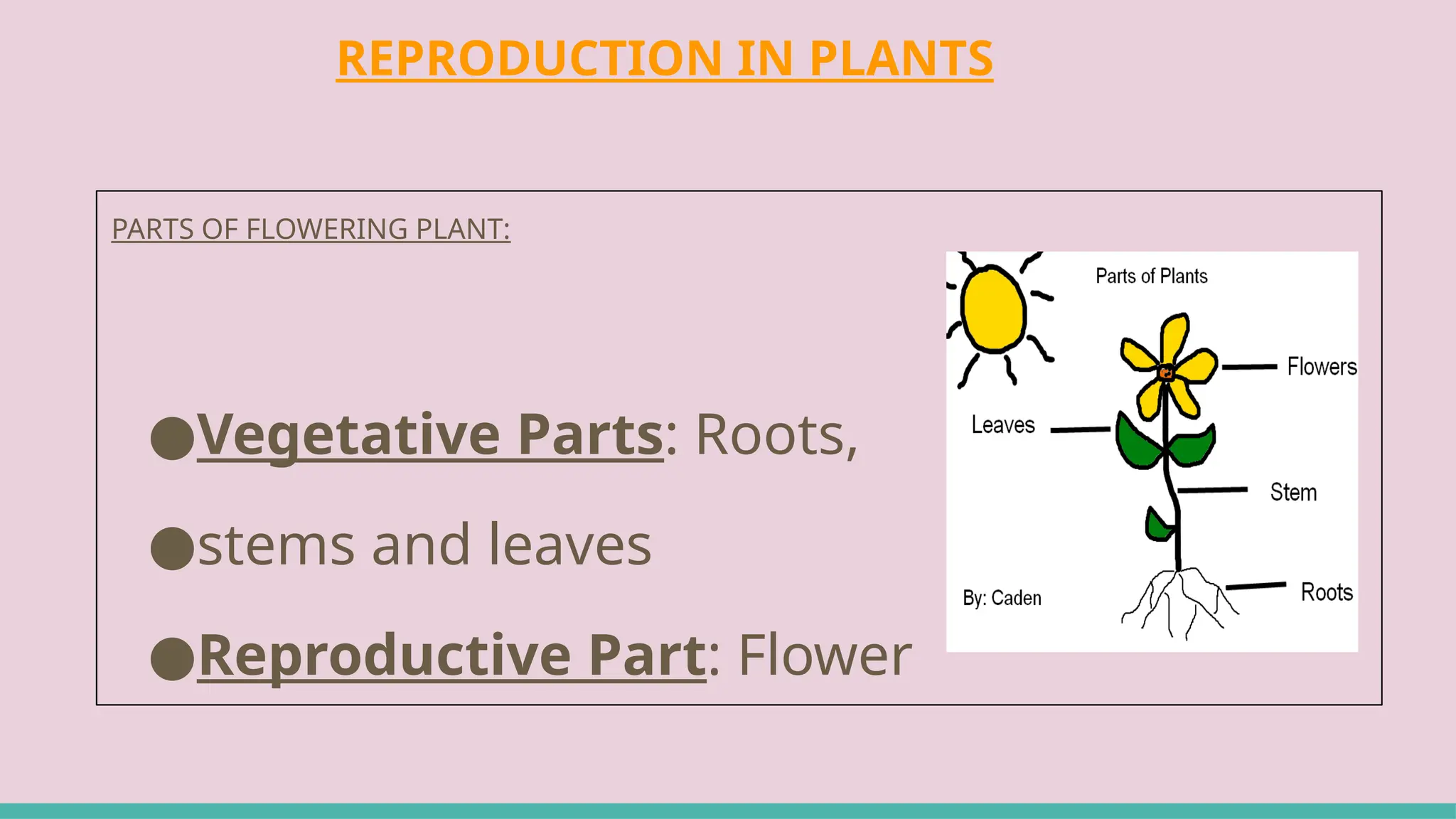
PARTS OF FLOWERING PLANT:
●Vegetative Parts: Roots,
●stems and leaves
●Reproductive Part: Flower
REPRODUCTION IN PLANTS
REPRODUCTION
It is the process by which living organism
can produce more of their own kind
e.g. A mango plant produces mango.
Reproduction is of two types:
* Asexual Reproduction
* Sexual Reproduction
Asexual Reproduction: An
individual can reproduce on its
own without the involvement
of another individual of the
same species (e.g. Bacteria)
Sexual Reproduction:
Involvement of two individuals
(one of each sex)
TYPES OF ASEXUAL REPRODUCTION
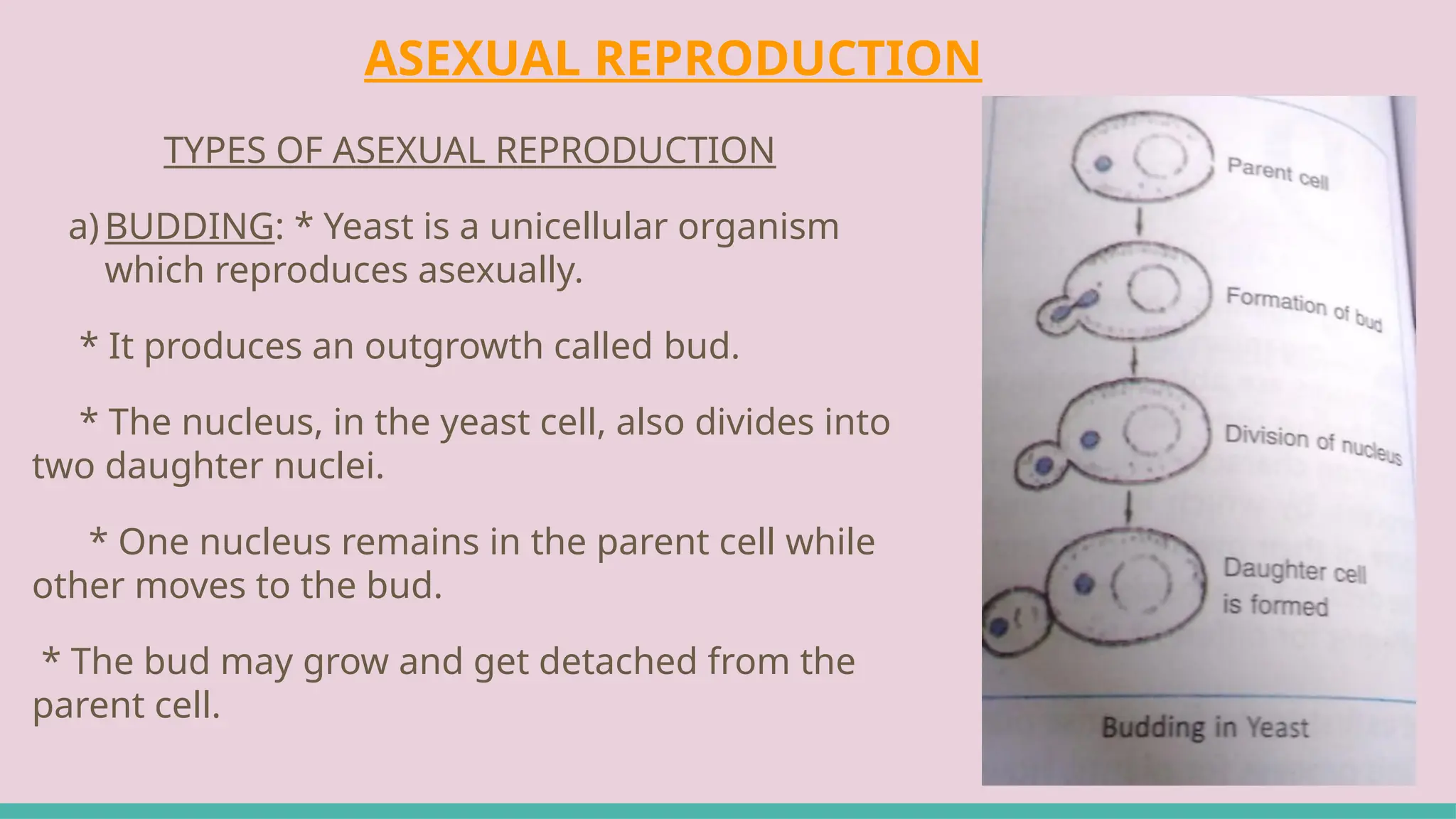
a)BUDDING: * Yeast is a unicellular organism
which reproduces asexually.
* It produces an outgrowth called bud.
* The nucleus, in the yeast cell, also divides into
two daughter nuclei.
* One nucleus remains in the parent cell while
other moves to the bud.
* The bud may grow and get detached from the
parent cell.
ASEXUAL REPRODUCTION
* Spirogyra is a algae which reproduces
asexually by fragmentation.
* A spirogyra filament breaks into two or
more fragments.
* These fragments grow & develops into
new individuals.
FRAGMENTATION
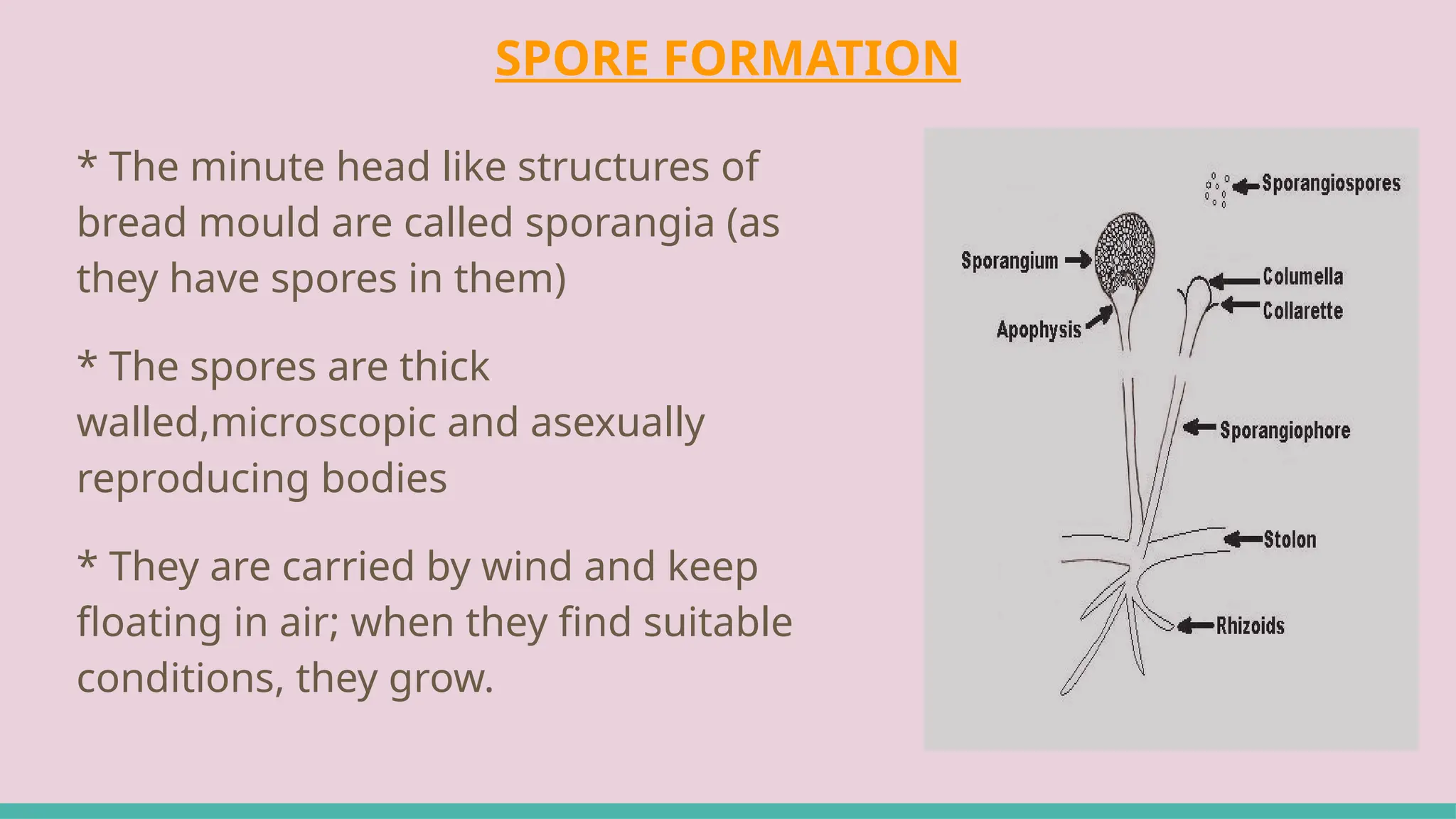
* The minute head like structures of
bread mould are called sporangia (as
they have spores in them)
* The spores are thick
walled,microscopic and asexually
reproducing bodies
* They are carried by wind and keep
floating in air; when they find suitable
conditions, they grow.
SPORE FORMATION
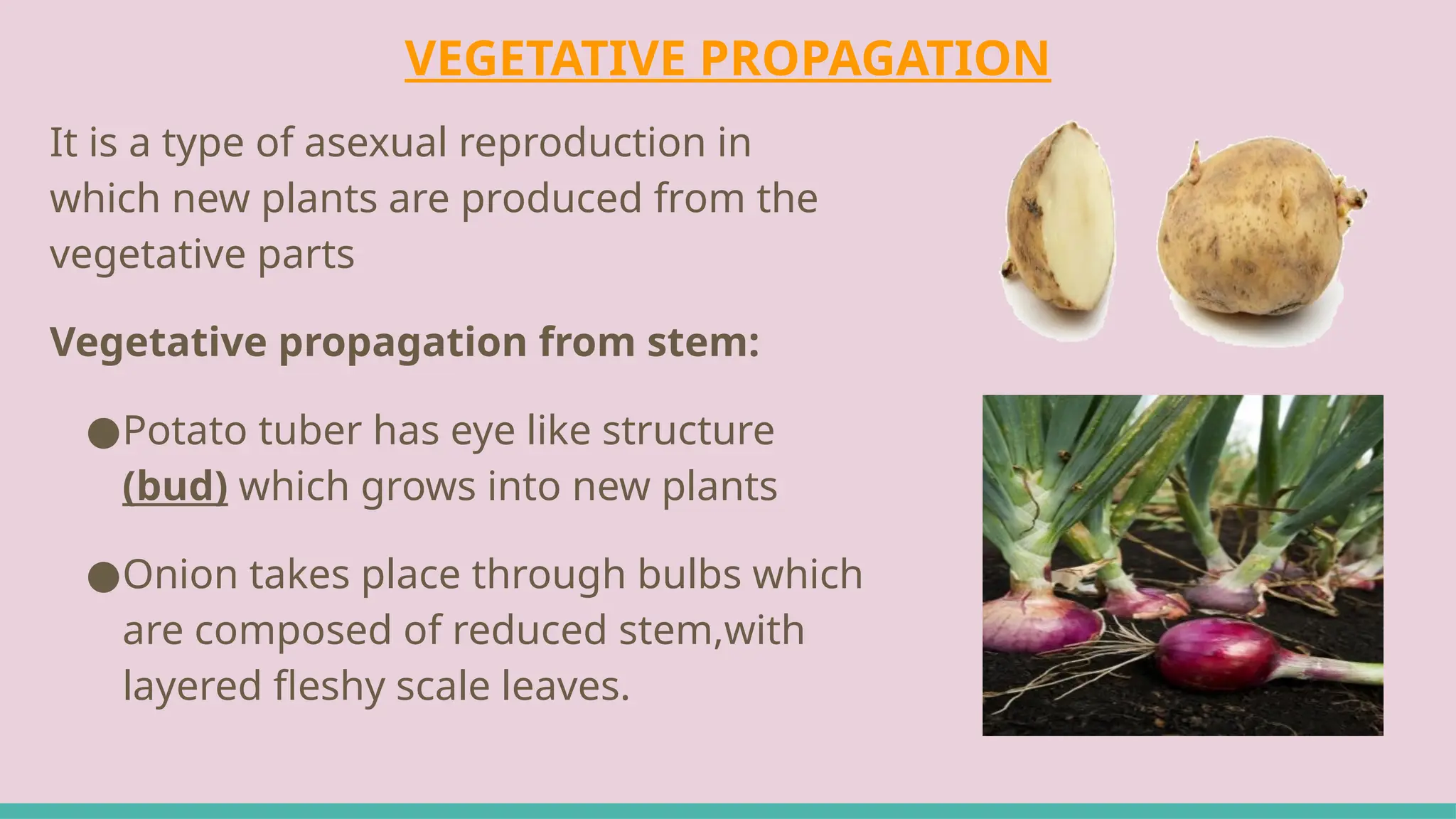
It is a type of asexual reproduction in
which new plants are produced from the
vegetative parts
Vegetative propagation from stem:
●Potato tuber has eye like structure
(bud) which grows into new plants
●Onion takes place through bulbs which
are composed of reduced stem,with
layered fleshy scale leaves.
VEGETATIVE PROPAGATION
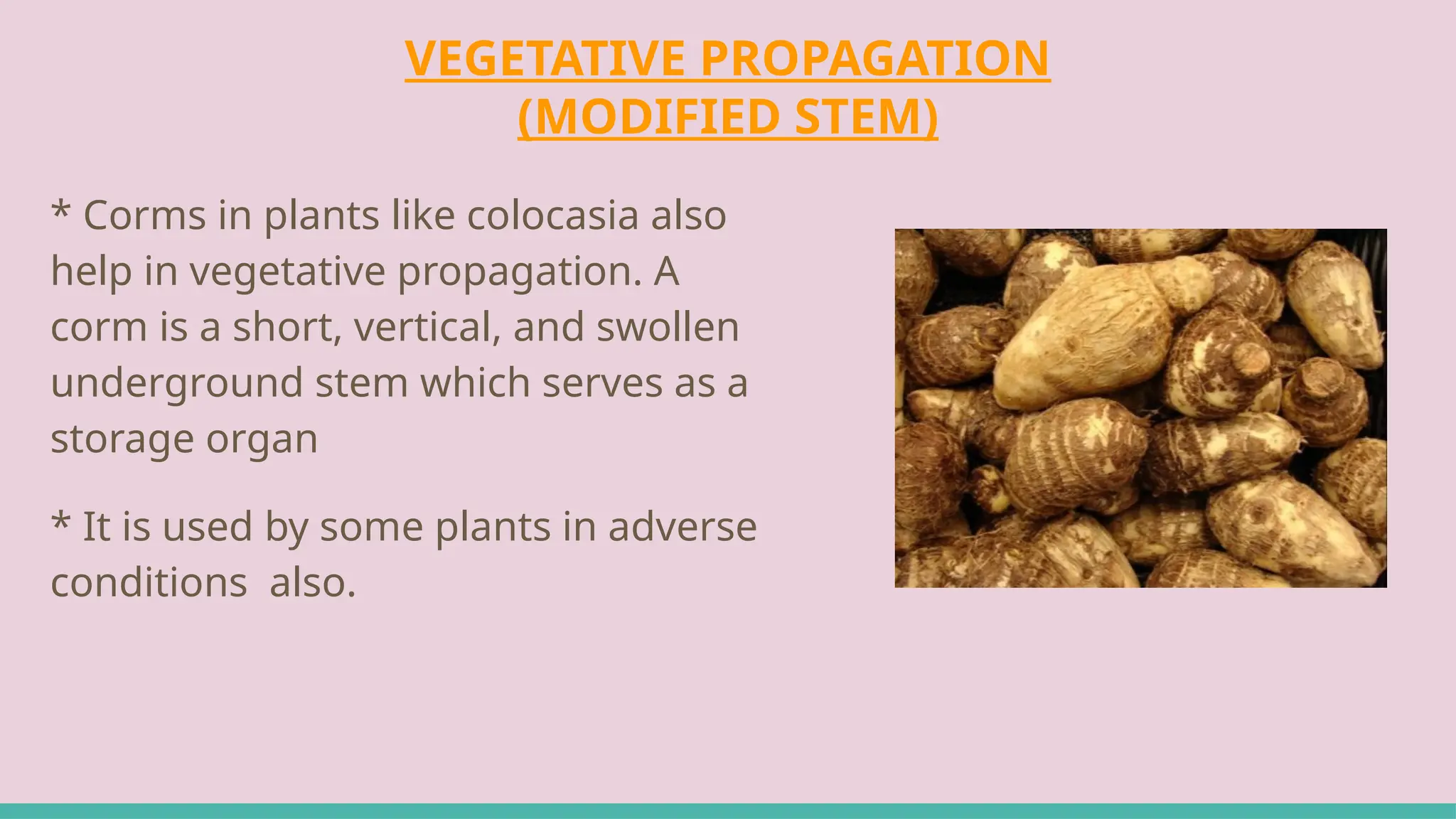
* Corms in plants like colocasia also
help in vegetative propagation. A
corm is a short, vertical, and swollen
underground stem which serves as a
storage organ
* It is used by some plants in adverse
conditions also.
VEGETATIVE PROPAGATION
(MODIFIED STEM)
* Some plants like sweet potato and
dahlia use their roots for asexual
reproduction.
* In time, an entire grove of trees
may form from the original tree.
VEGETATIVE PROPAGATION
(ROOTS)
* Leaves of bryophyllum have leaf
buds in the notches of leaves.
* The buds develop into tiny plantlets.
VEGETATIVE PROPAGATION
(LEAVES)
Advantages:
* Plants produced by this method take less time to grow
* New plants are exact copies of the parent plant
* New plants have the same desirable characters as those of the parent plant
* They also bear flowers and fruits earlier than the plants produced from
seeds
Disadvantages:
* As all such plants are identical, if a disease spreads,it can infect the whole
lot of them
VEGETATIVE PROPAGATION
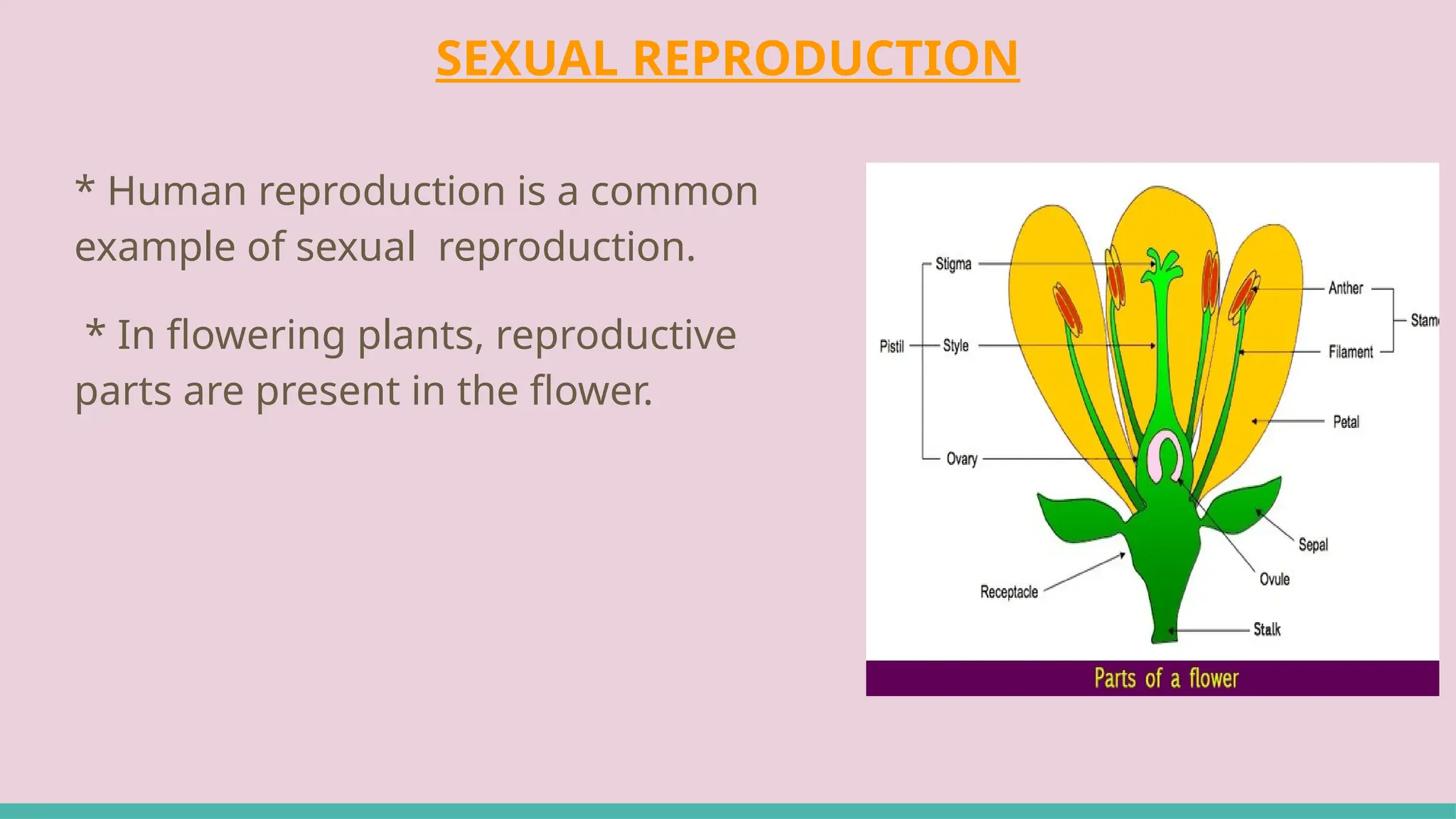
* Human reproduction is a common
example of sexual reproduction.
* In flowering plants, reproductive
parts are present in the flower.
SEXUAL REPRODUCTION
There are four parts of the flower:
* Sepal (outermost part of the flower): green part
* Petal: coloured part of the flower
* Stamen (Male reproductive part): consists of anther and filament
* Pistil (Female reproductive part): consists of ovary and ovules
FLOWER
There are two types of flowers:
a) Unisexual flowers b) Bisexual flowers
* Have either pistil or stamen. * Have both stamen and
pistil in every flower .
e.g. Papaya e.g. Tomato, Brinjal
TYPES OF FLOWERS
LIFE CYCLE OF A FLOWERING PLANT
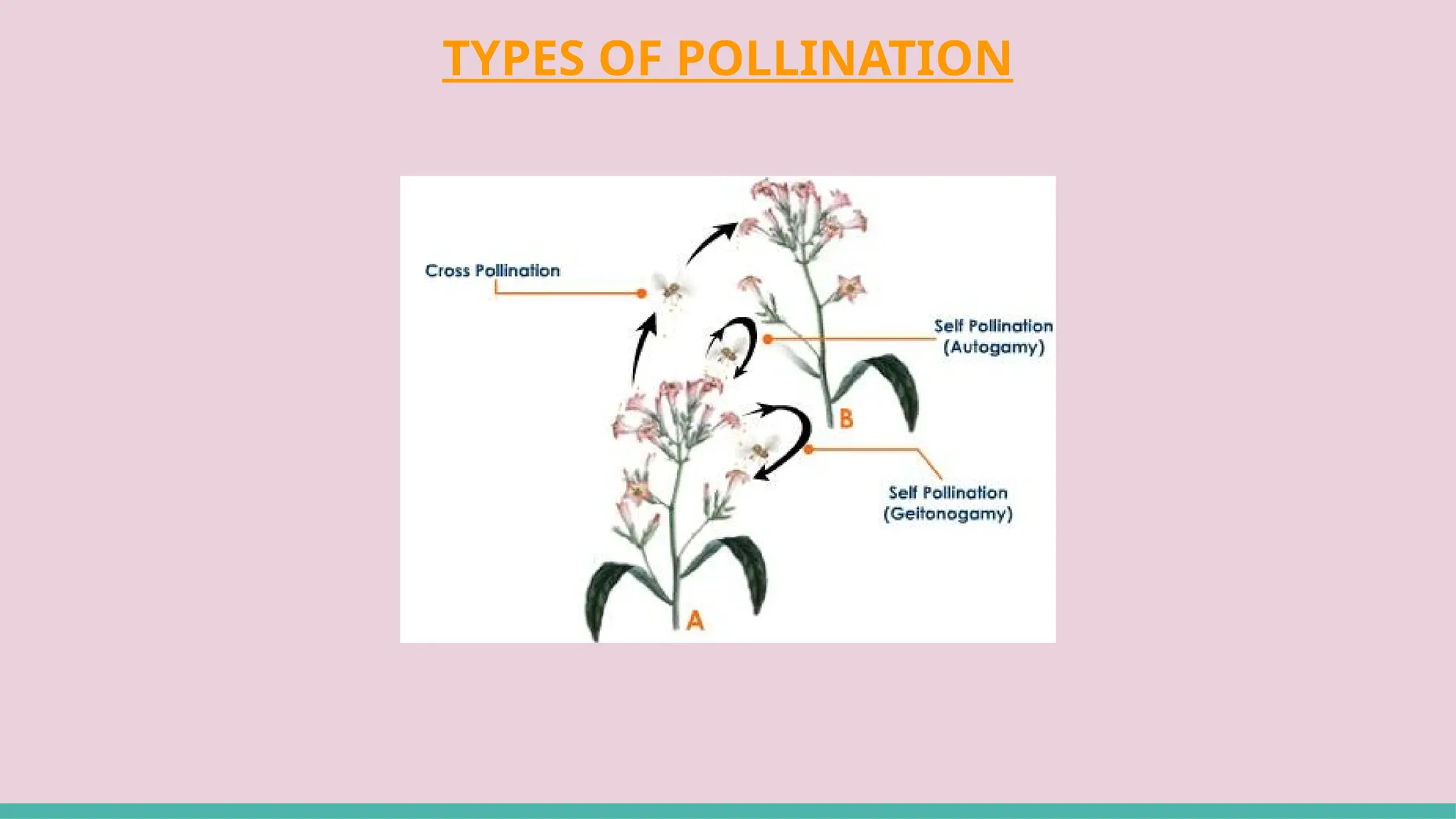
POLLINATION
* Pollination is transfer of pollen grains from anther to
stigma in flowers.
* It requires pollinators, which are the agents that transfer
pollen grains from anther to a stigma.
* Wind, bees, butterflies, birds, rats and bats are the main
pollinators in nature.
TYPES OF POLLINATION
FERTILISATION
Male gamete + Female gamete
Fertilisation
Zygote
Embryo (Baby plant)
Click here
FATE OF FLOWER AFTER FERTILISATION
* After fertilisation, sepals, petals, stamens and stigma
usually dry and fall off.
* Development of seed: Ovules form seeds.
* Development of fruit: After fertilisation, ovary
begins to grow and forms the fruit.
* Germination of Seed: Under suitable conditions,
seed germinates to form seedling .
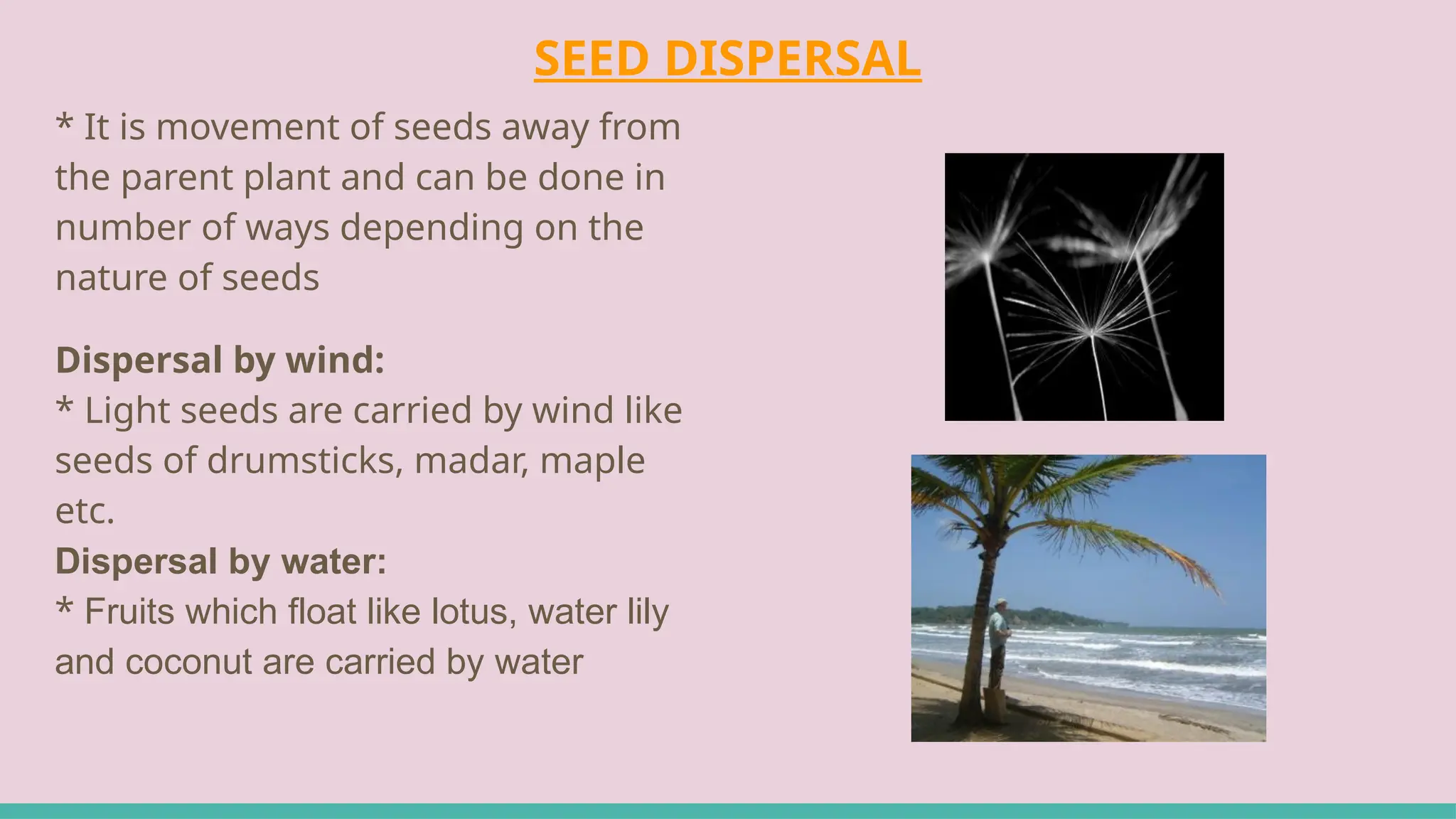
SEED DISPERSAL
* It is movement of seeds away from
the parent plant and can be done in
number of ways depending on the
nature of seeds
Dispersal by wind:
* Light seeds are carried by wind like
seeds of drumsticks, madar, maple
etc.
Dispersal by water:
* Fruits which float like lotus, water lily
and coconut are carried by water
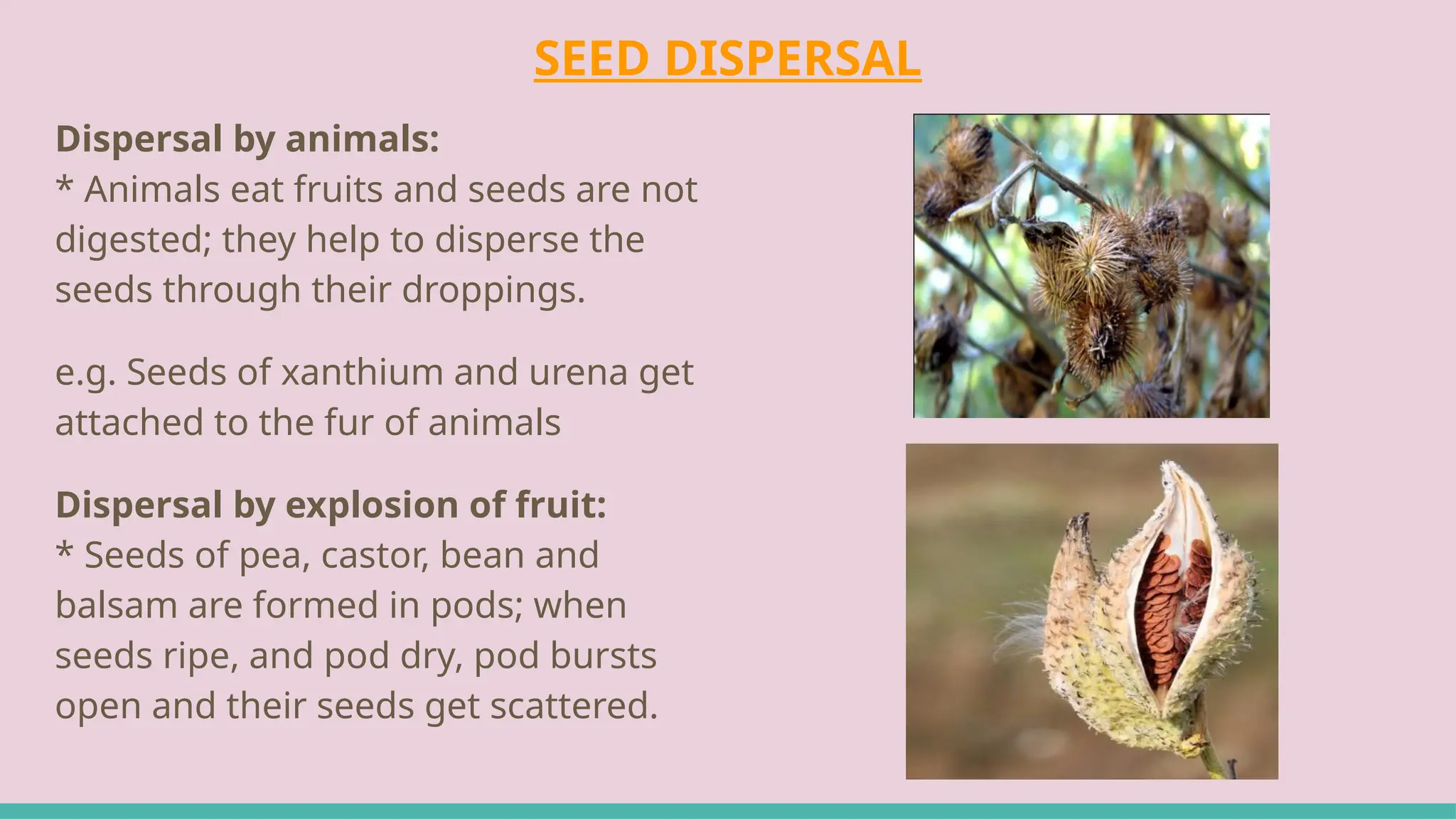
SEED DISPERSAL
Dispersal by animals:
* Animals eat fruits and seeds are not
digested; they help to disperse the
seeds through their droppings.
e.g. Seeds of xanthium and urena get
attached to the fur of animals
Dispersal by explosion of fruit:
* Seeds of pea, castor, bean and
balsam are formed in pods; when
seeds ripe, and pod dry, pod bursts
open and their seeds get scattered.

REPRODUCTION IN PLANTS ppt. class 7.pptx

  • 1.
  • 2.
    PARTS OF FLOWERINGPLANT: ●Vegetative Parts: Roots, ●stems and leaves ●Reproductive Part: Flower REPRODUCTION IN PLANTS
  • 3.
    REPRODUCTION It is theprocess by which living organism can produce more of their own kind e.g. A mango plant produces mango. Reproduction is of two types: * Asexual Reproduction * Sexual Reproduction
  • 4.
    Asexual Reproduction: An individualcan reproduce on its own without the involvement of another individual of the same species (e.g. Bacteria) Sexual Reproduction: Involvement of two individuals (one of each sex)
  • 5.
    TYPES OF ASEXUALREPRODUCTION a)BUDDING: * Yeast is a unicellular organism which reproduces asexually. * It produces an outgrowth called bud. * The nucleus, in the yeast cell, also divides into two daughter nuclei. * One nucleus remains in the parent cell while other moves to the bud. * The bud may grow and get detached from the parent cell. ASEXUAL REPRODUCTION
  • 6.
    * Spirogyra isa algae which reproduces asexually by fragmentation. * A spirogyra filament breaks into two or more fragments. * These fragments grow & develops into new individuals. FRAGMENTATION
  • 7.
    * The minutehead like structures of bread mould are called sporangia (as they have spores in them) * The spores are thick walled,microscopic and asexually reproducing bodies * They are carried by wind and keep floating in air; when they find suitable conditions, they grow. SPORE FORMATION
  • 8.
    It is atype of asexual reproduction in which new plants are produced from the vegetative parts Vegetative propagation from stem: ●Potato tuber has eye like structure (bud) which grows into new plants ●Onion takes place through bulbs which are composed of reduced stem,with layered fleshy scale leaves. VEGETATIVE PROPAGATION
  • 9.
    * Corms inplants like colocasia also help in vegetative propagation. A corm is a short, vertical, and swollen underground stem which serves as a storage organ * It is used by some plants in adverse conditions also. VEGETATIVE PROPAGATION (MODIFIED STEM)
  • 10.
    * Some plantslike sweet potato and dahlia use their roots for asexual reproduction. * In time, an entire grove of trees may form from the original tree. VEGETATIVE PROPAGATION (ROOTS)
  • 11.
    * Leaves ofbryophyllum have leaf buds in the notches of leaves. * The buds develop into tiny plantlets. VEGETATIVE PROPAGATION (LEAVES)
  • 12.
    Advantages: * Plants producedby this method take less time to grow * New plants are exact copies of the parent plant * New plants have the same desirable characters as those of the parent plant * They also bear flowers and fruits earlier than the plants produced from seeds Disadvantages: * As all such plants are identical, if a disease spreads,it can infect the whole lot of them VEGETATIVE PROPAGATION
  • 13.
    * Human reproductionis a common example of sexual reproduction. * In flowering plants, reproductive parts are present in the flower. SEXUAL REPRODUCTION
  • 14.
    There are fourparts of the flower: * Sepal (outermost part of the flower): green part * Petal: coloured part of the flower * Stamen (Male reproductive part): consists of anther and filament * Pistil (Female reproductive part): consists of ovary and ovules FLOWER
  • 15.
    There are twotypes of flowers: a) Unisexual flowers b) Bisexual flowers * Have either pistil or stamen. * Have both stamen and pistil in every flower . e.g. Papaya e.g. Tomato, Brinjal TYPES OF FLOWERS
  • 16.
    LIFE CYCLE OFA FLOWERING PLANT
  • 17.
    POLLINATION * Pollination istransfer of pollen grains from anther to stigma in flowers. * It requires pollinators, which are the agents that transfer pollen grains from anther to a stigma. * Wind, bees, butterflies, birds, rats and bats are the main pollinators in nature.
  • 18.
  • 19.
    FERTILISATION Male gamete +Female gamete Fertilisation Zygote Embryo (Baby plant) Click here
  • 20.
    FATE OF FLOWERAFTER FERTILISATION * After fertilisation, sepals, petals, stamens and stigma usually dry and fall off. * Development of seed: Ovules form seeds. * Development of fruit: After fertilisation, ovary begins to grow and forms the fruit. * Germination of Seed: Under suitable conditions, seed germinates to form seedling .
  • 21.
    SEED DISPERSAL * Itis movement of seeds away from the parent plant and can be done in number of ways depending on the nature of seeds Dispersal by wind: * Light seeds are carried by wind like seeds of drumsticks, madar, maple etc. Dispersal by water: * Fruits which float like lotus, water lily and coconut are carried by water
  • 22.
    SEED DISPERSAL Dispersal byanimals: * Animals eat fruits and seeds are not digested; they help to disperse the seeds through their droppings. e.g. Seeds of xanthium and urena get attached to the fur of animals Dispersal by explosion of fruit: * Seeds of pea, castor, bean and balsam are formed in pods; when seeds ripe, and pod dry, pod bursts open and their seeds get scattered.