Lesson 15
 Plant reproduction is the process of producing y
oung plants. Plants reproduce in two different w
ays:
 Asexual Reproduction involves one parent pro
ducing genetically identical plants. Each plant is
a clone or exact copy of its parents.
 Sexual Reproduction involves two parents, a
male and a female, producing genetically differe
nt plants. The new plants are different from each
other and from the parents.
 There are several reasons why seed plants find
this form of reproduction advantageous. If the e
nvironment has been stable for many generatio
ns, variability may not be as essential to the sur
vival of the species.
 Asexual reproduction which is not as complex a
nd requires far less energy, would be preferabl
e.
 When colonizing a new area, finding a mate for
sexual reproduction may be difficult or impossibl
e.
 If the environment is particularly harsh, the m
ore delicate or susceptible organs or stages
of sexual reproduction may not be able to sur
vive.
 Many plants which inhabit such areas as des
erts or arctic tundra only reproduce asexually
.
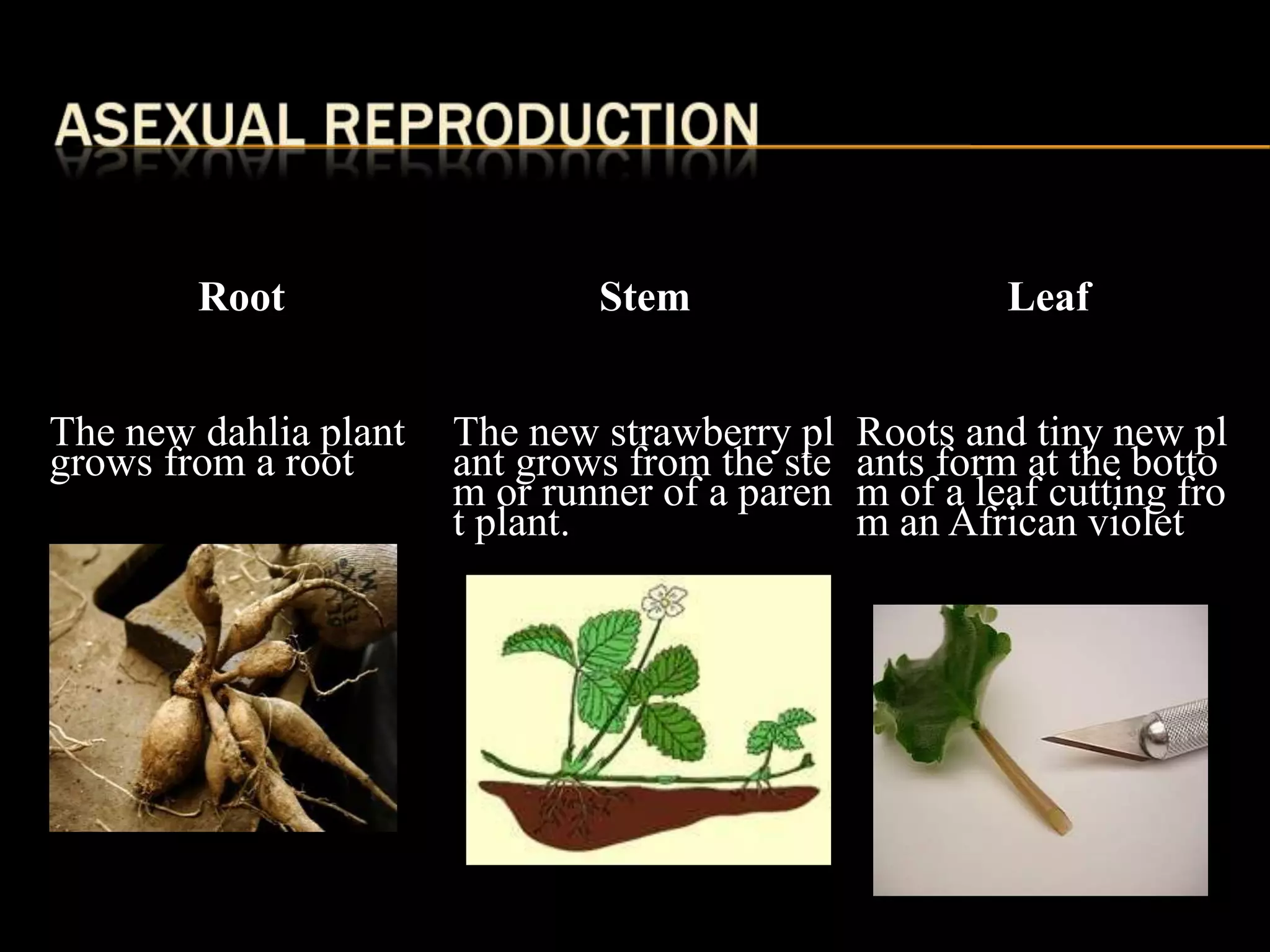
Root Stem Leaf
The new dahlia plant
grows from a root
The new strawberry pl
ant grows from the ste
m or runner of a paren
t plant.
Roots and tiny new pl
ants form at the botto
m of a leaf cutting fro
m an African violet
 Nursery and greenhouses workers produce n
ew plants by Grafting. In grafting, the stem
of the one plant grows on the root system of
another plant. Experienced nursery workers
are knowledgeable about which plants can b
e grafted and different methods of grafting.
A
B
 Plant A grows excellent fruit
 Plant B grows strong roots
 Grafting combines desirable qualities of two
different plants. This allows us to combine tre
es that produce good fruit with trees that hav
e strong roots.
 Name four ways that plants reproduce asexually
 1 Roots
 2 stems
 3 Leaves
 4 Grafting

 What is the advantage of grafting plants?
 we can mix the good traits of plants

 Plants flowers contain its reproductive cells.
Many plants have both the male and female
sex organs on the same plant. In some case
s they will have male and female flowers on t
he same plant or they can have both the mal
e and female organs on the same flower.
 These plants are called Hermaphrodites
. Some plants such as poplars have separate
male plants and female plants. This type of s
exual reproduction is called? Sepa
rate Sexes
 Seeds are the product of sexual repro
duction in most plants. A seed is a complete r
eproductive package that contains an
Embryo , a food supply, and a seed coat
which protects it from Drying
Out .
 Two groups of seed-bearing plants are
Angiosperms and Gymnosperm
s .
 Flowering plants are called Angiosperms
. Seeds form inside the Flowers .
 The seeds are enclosed in a case called a
Pod or a shell .
 Some angiosperms include: Apples ,
Tomatoes , and sunflowers .
 Plants that do not produce flowers are called
gymnosperms .
 The seeds are produced inside Cones
.
 The seeds are not enclosed in a case but ha
ve Coat that protects them from
dehydration.
 Some gymnosperms include: Pine tr
ees and Fir trees
 Other plants such as ferns and
mosses reproduce sexually without bearing
seeds.
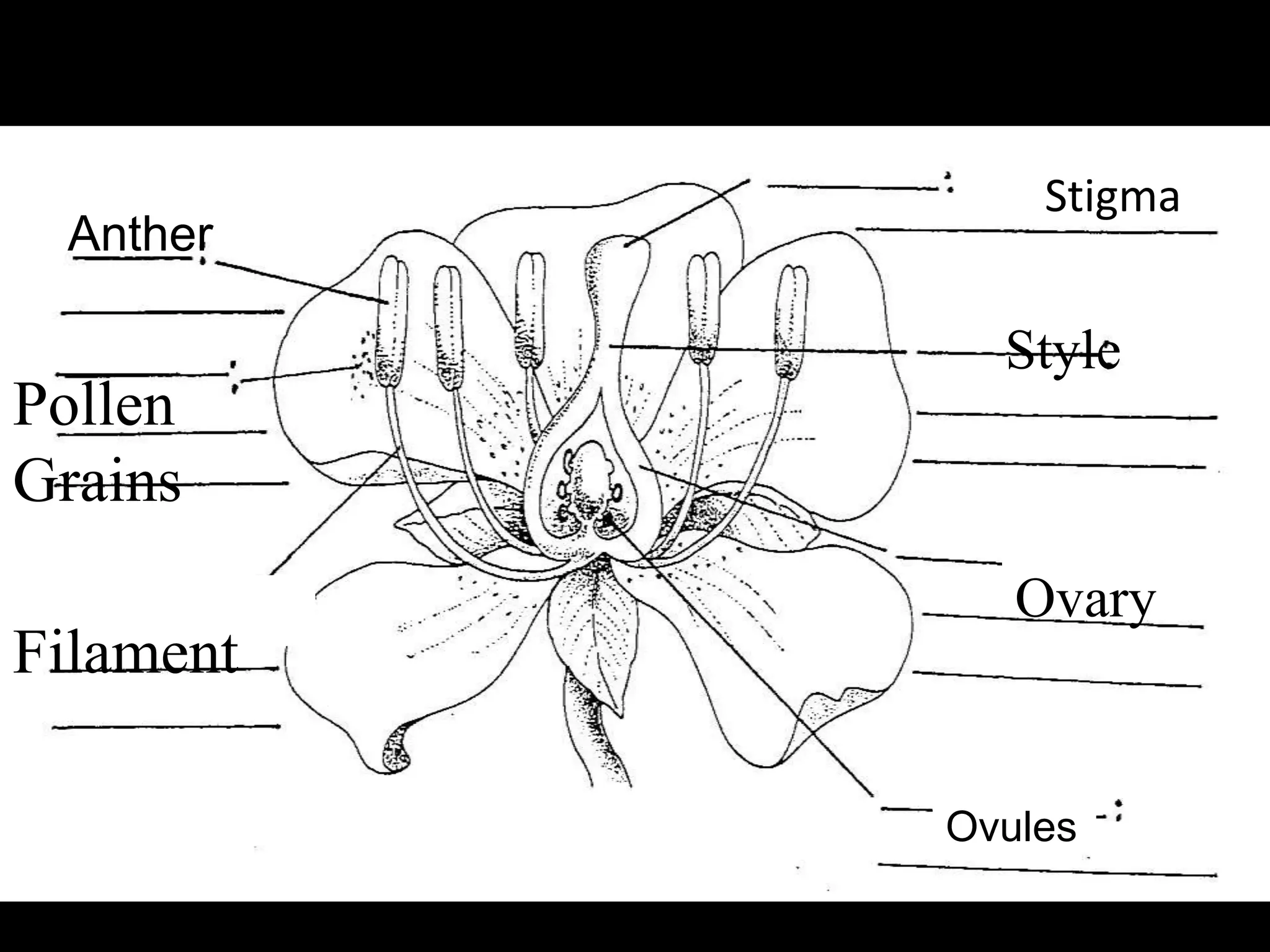
 The reproductive organs of an angiosperm ar
e found in the Flowers .
 The female reproductive organ is called the
Pistil . The pistil contains 4 parts.
 The stigma is the sticky part that c
aptures the pollen grains.
 The Style is the stalk that suppor
ts the stigma.
 The Ovary contains the ovules.
 The Ovules are sacs containing th
e female gametes.
 The male reproductive organ is called the
Stamen . The stamen contains 3 parts.
 The Anther is where the pollen is p
roduced and stored.
 The Pollen Grains are ca
ses containing the male gametes.
 The Filament is a stalk that supports t
he anther.
Pollen
Grains
Anther
Filament
Style
Ovary
Ovules
Stigma
Anther
 Pollination is the process of Pollen Grain
s from the anther reaching the stigma of th
e Pistil so that seeds can develop i
nside a flower.
 If the male and female gametes ( Egg and Sp
erm ) come from the same plant the process is call
ed Self pollination.
 If the gametes come from two different plants the pro
cess is called Cross Pollination .
 In order for fertilization to occur, the pollen grain grow
s and extension called a pollen Tube .

 A Zygote is formed when a sperm r
eaches an Egg . In some plants the o
vary surrounding the zygotes develops into t
he Fruit . The fruit helps to protect and
disperse the seeds.
 The transport of seeds away from the parent
plant is called Dispersal .
 Seeds can be eaten by Animals and fal
l far away as droppings.
 Seeds can also stick to Fur of mammal
s until rubbed off.
 Seeds can also be transported by the Wi
nd and by running water .
 The process by which a plant starts to grow i
s called Germination .

 Gymnosperms are also called Conifers
because their seeds are formed inside cones
.

plant reproduction.pptx

  • 1.
  • 2.
     Plant reproductionis the process of producing y oung plants. Plants reproduce in two different w ays:  Asexual Reproduction involves one parent pro ducing genetically identical plants. Each plant is a clone or exact copy of its parents.  Sexual Reproduction involves two parents, a male and a female, producing genetically differe nt plants. The new plants are different from each other and from the parents.
  • 3.
     There areseveral reasons why seed plants find this form of reproduction advantageous. If the e nvironment has been stable for many generatio ns, variability may not be as essential to the sur vival of the species.  Asexual reproduction which is not as complex a nd requires far less energy, would be preferabl e.  When colonizing a new area, finding a mate for sexual reproduction may be difficult or impossibl e.
  • 4.
     If theenvironment is particularly harsh, the m ore delicate or susceptible organs or stages of sexual reproduction may not be able to sur vive.  Many plants which inhabit such areas as des erts or arctic tundra only reproduce asexually .
  • 5.
    Root Stem Leaf Thenew dahlia plant grows from a root The new strawberry pl ant grows from the ste m or runner of a paren t plant. Roots and tiny new pl ants form at the botto m of a leaf cutting fro m an African violet
  • 6.
     Nursery andgreenhouses workers produce n ew plants by Grafting. In grafting, the stem of the one plant grows on the root system of another plant. Experienced nursery workers are knowledgeable about which plants can b e grafted and different methods of grafting. A B
  • 7.
     Plant Agrows excellent fruit  Plant B grows strong roots  Grafting combines desirable qualities of two different plants. This allows us to combine tre es that produce good fruit with trees that hav e strong roots.
  • 8.
     Name fourways that plants reproduce asexually  1 Roots  2 stems  3 Leaves  4 Grafting   What is the advantage of grafting plants?  we can mix the good traits of plants 
  • 9.
     Plants flowerscontain its reproductive cells. Many plants have both the male and female sex organs on the same plant. In some case s they will have male and female flowers on t he same plant or they can have both the mal e and female organs on the same flower.
  • 10.
     These plantsare called Hermaphrodites . Some plants such as poplars have separate male plants and female plants. This type of s exual reproduction is called? Sepa rate Sexes
  • 11.
     Seeds arethe product of sexual repro duction in most plants. A seed is a complete r eproductive package that contains an Embryo , a food supply, and a seed coat which protects it from Drying Out .
  • 12.
     Two groupsof seed-bearing plants are Angiosperms and Gymnosperm s .  Flowering plants are called Angiosperms . Seeds form inside the Flowers .  The seeds are enclosed in a case called a Pod or a shell .  Some angiosperms include: Apples , Tomatoes , and sunflowers .
  • 13.
     Plants thatdo not produce flowers are called gymnosperms .  The seeds are produced inside Cones .  The seeds are not enclosed in a case but ha ve Coat that protects them from dehydration.  Some gymnosperms include: Pine tr ees and Fir trees
  • 14.
     Other plantssuch as ferns and mosses reproduce sexually without bearing seeds.
  • 15.
     The reproductiveorgans of an angiosperm ar e found in the Flowers .  The female reproductive organ is called the Pistil . The pistil contains 4 parts.
  • 16.
     The stigmais the sticky part that c aptures the pollen grains.  The Style is the stalk that suppor ts the stigma.  The Ovary contains the ovules.  The Ovules are sacs containing th e female gametes.
  • 17.
     The malereproductive organ is called the Stamen . The stamen contains 3 parts.  The Anther is where the pollen is p roduced and stored.  The Pollen Grains are ca ses containing the male gametes.  The Filament is a stalk that supports t he anther.
  • 18.
  • 19.
     Pollination isthe process of Pollen Grain s from the anther reaching the stigma of th e Pistil so that seeds can develop i nside a flower.  If the male and female gametes ( Egg and Sp erm ) come from the same plant the process is call ed Self pollination.  If the gametes come from two different plants the pro cess is called Cross Pollination .  In order for fertilization to occur, the pollen grain grow s and extension called a pollen Tube . 
  • 20.
     A Zygoteis formed when a sperm r eaches an Egg . In some plants the o vary surrounding the zygotes develops into t he Fruit . The fruit helps to protect and disperse the seeds.
  • 21.
     The transportof seeds away from the parent plant is called Dispersal .  Seeds can be eaten by Animals and fal l far away as droppings.  Seeds can also stick to Fur of mammal s until rubbed off.  Seeds can also be transported by the Wi nd and by running water .
  • 22.
     The processby which a plant starts to grow i s called Germination .   Gymnosperms are also called Conifers because their seeds are formed inside cones .