The
Microscope
and Its
Historical
Development
Science Links 7 Revised
Edition pp. 112-115
BOHOL INTERNATIONAL
LEARNING COLLEGE
Microscope
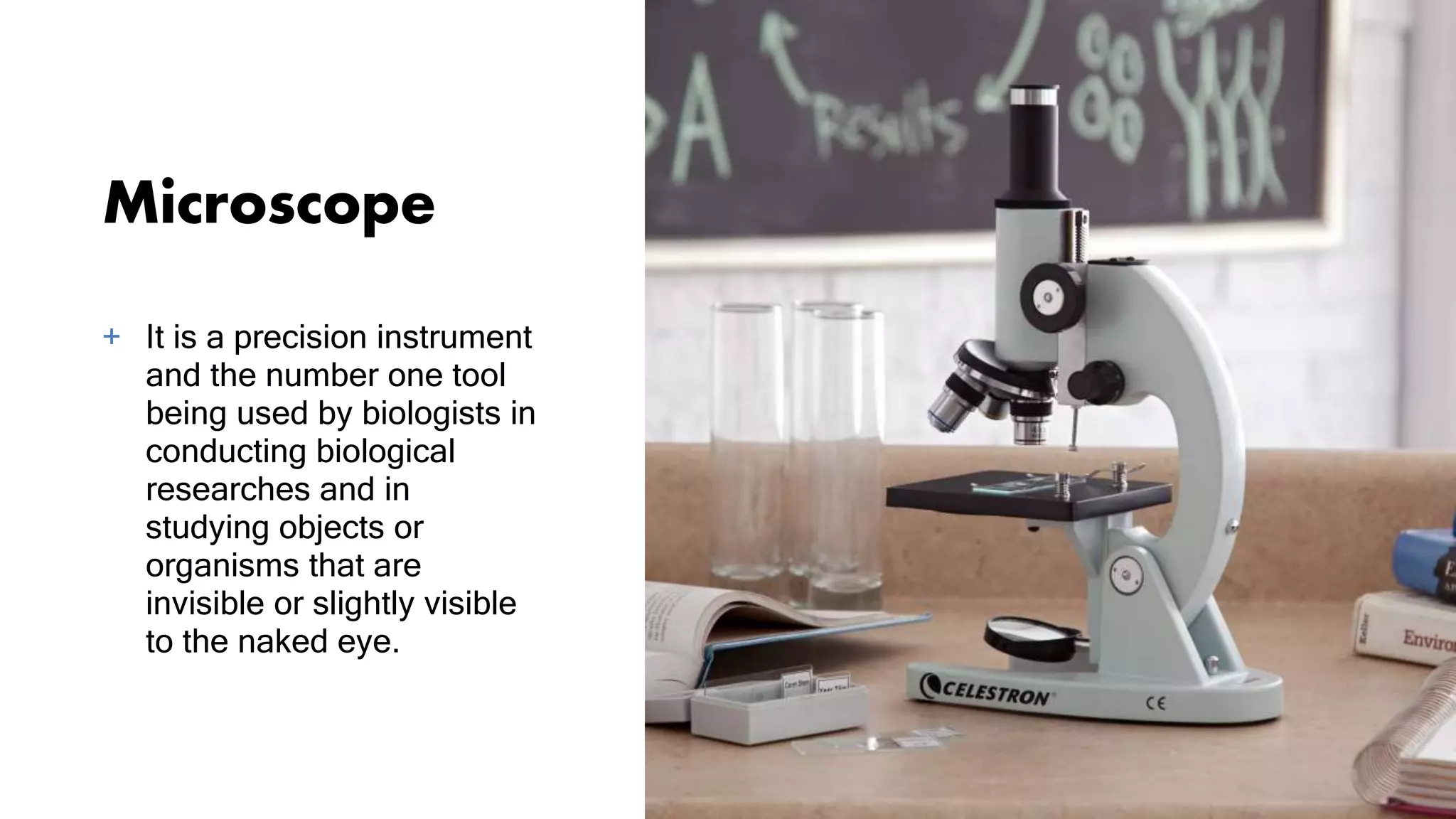
+ It is a precision instrument
and the number one tool
being used by biologists in
conducting biological
researches and in
studying objects or
organisms that are
invisible or slightly visible
to the naked eye.
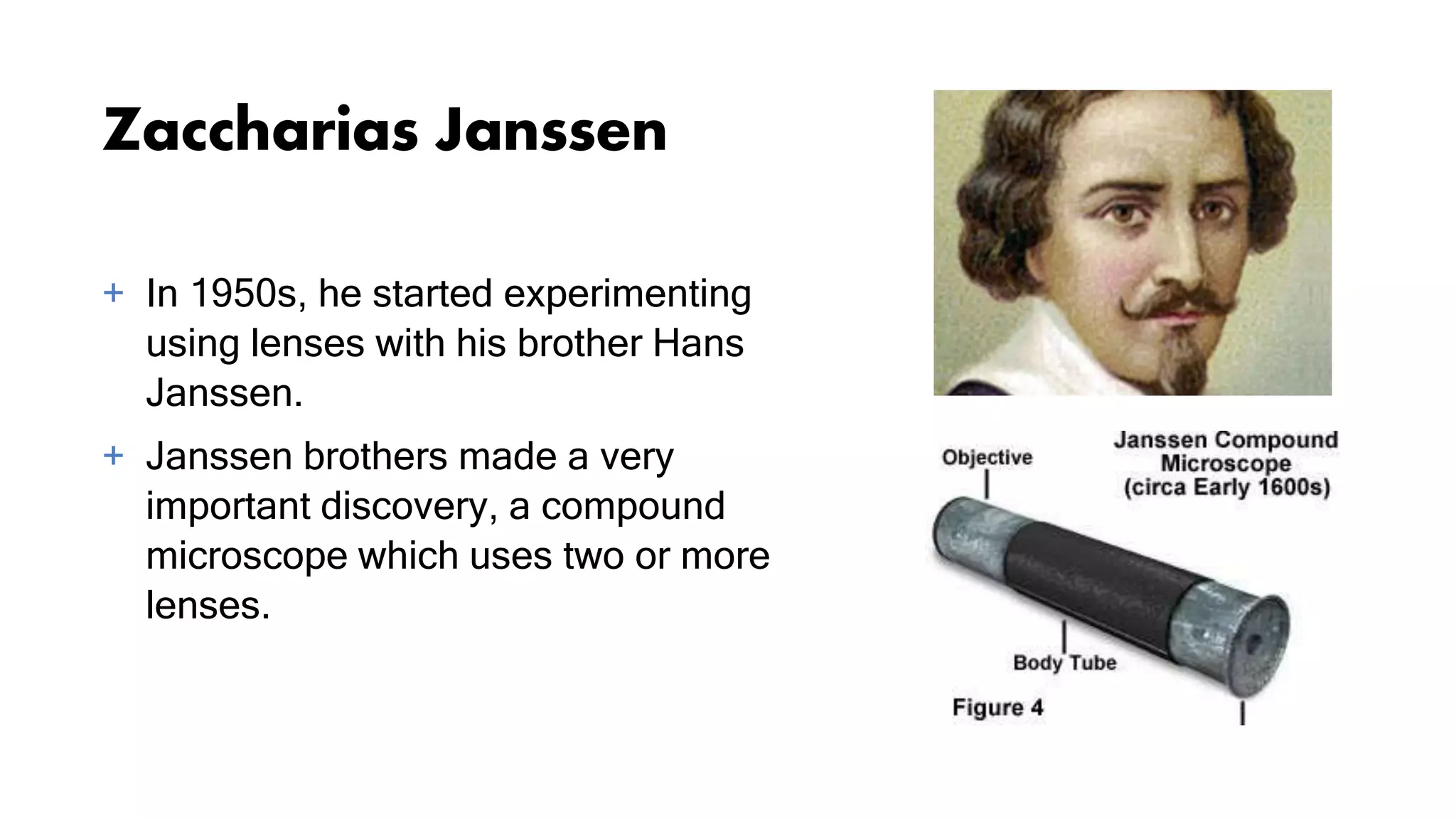
Zaccharias Janssen
+ In 1950s, he started experimenting
using lenses with his brother Hans
Janssen.
+ Janssen brothers made a very
important discovery, a compound
microscope which uses two or more
lenses.
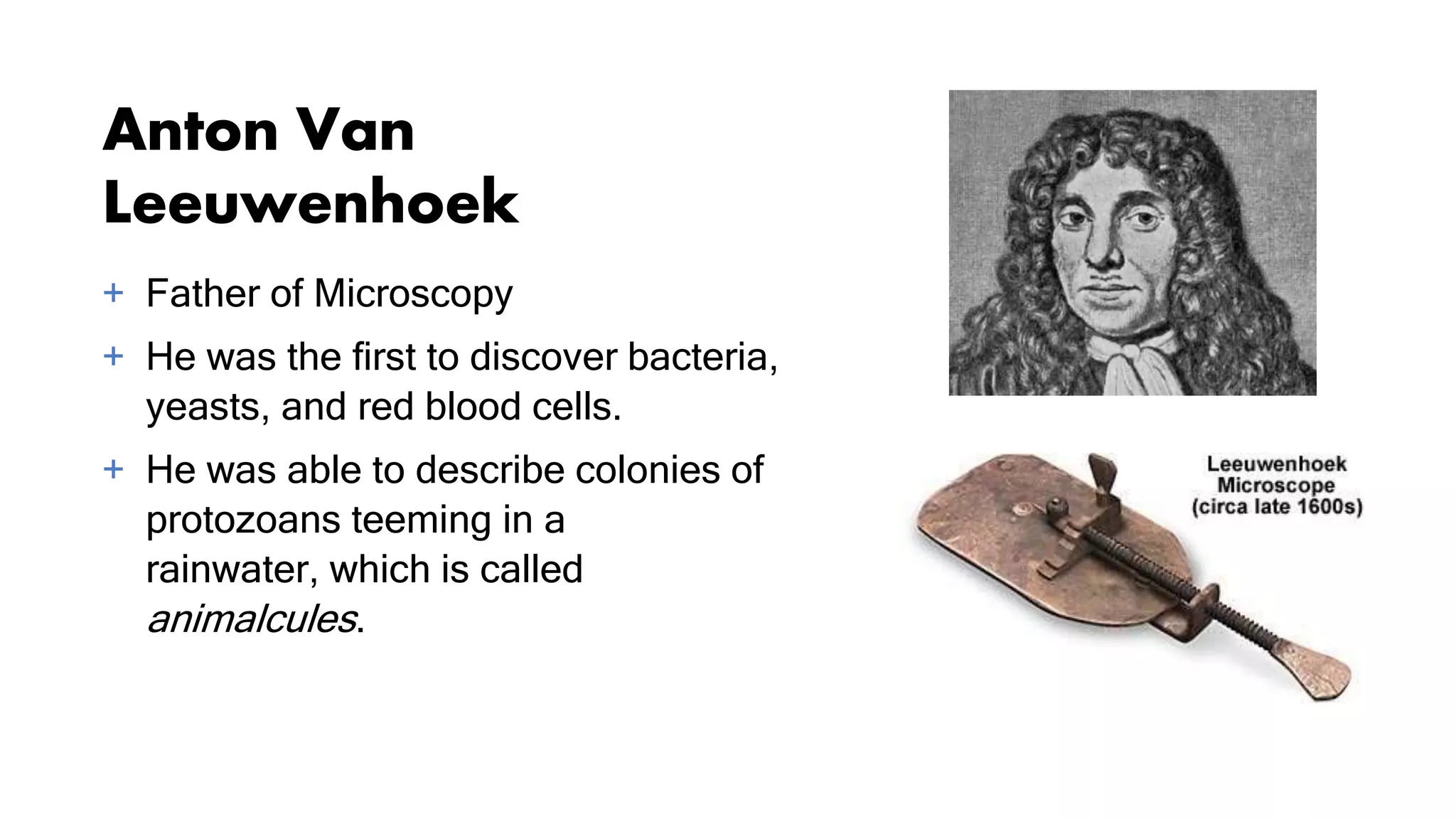
Anton Van
Leeuwenhoek
+ Father of Microscopy
+ He was the first to discover bacteria,
yeasts, and red blood cells.
+ He was able to describe colonies of
protozoans teeming in a
rainwater, which is called
animalcules.
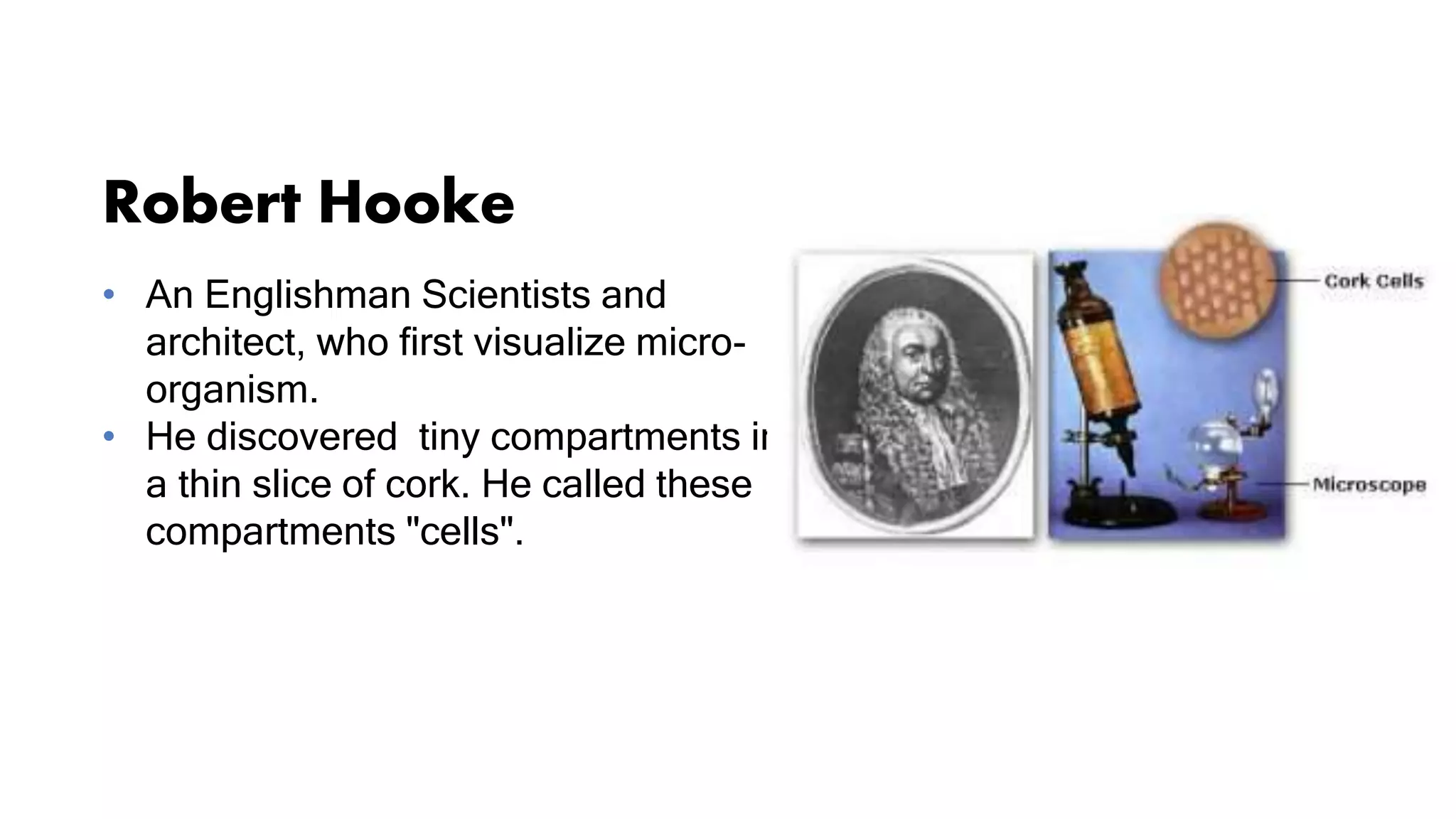
Robert Hooke
• An Englishman Scientists and
architect, who first visualize micro-
organism.
• He discovered tiny compartments in
a thin slice of cork. He called these
compartments "cells".
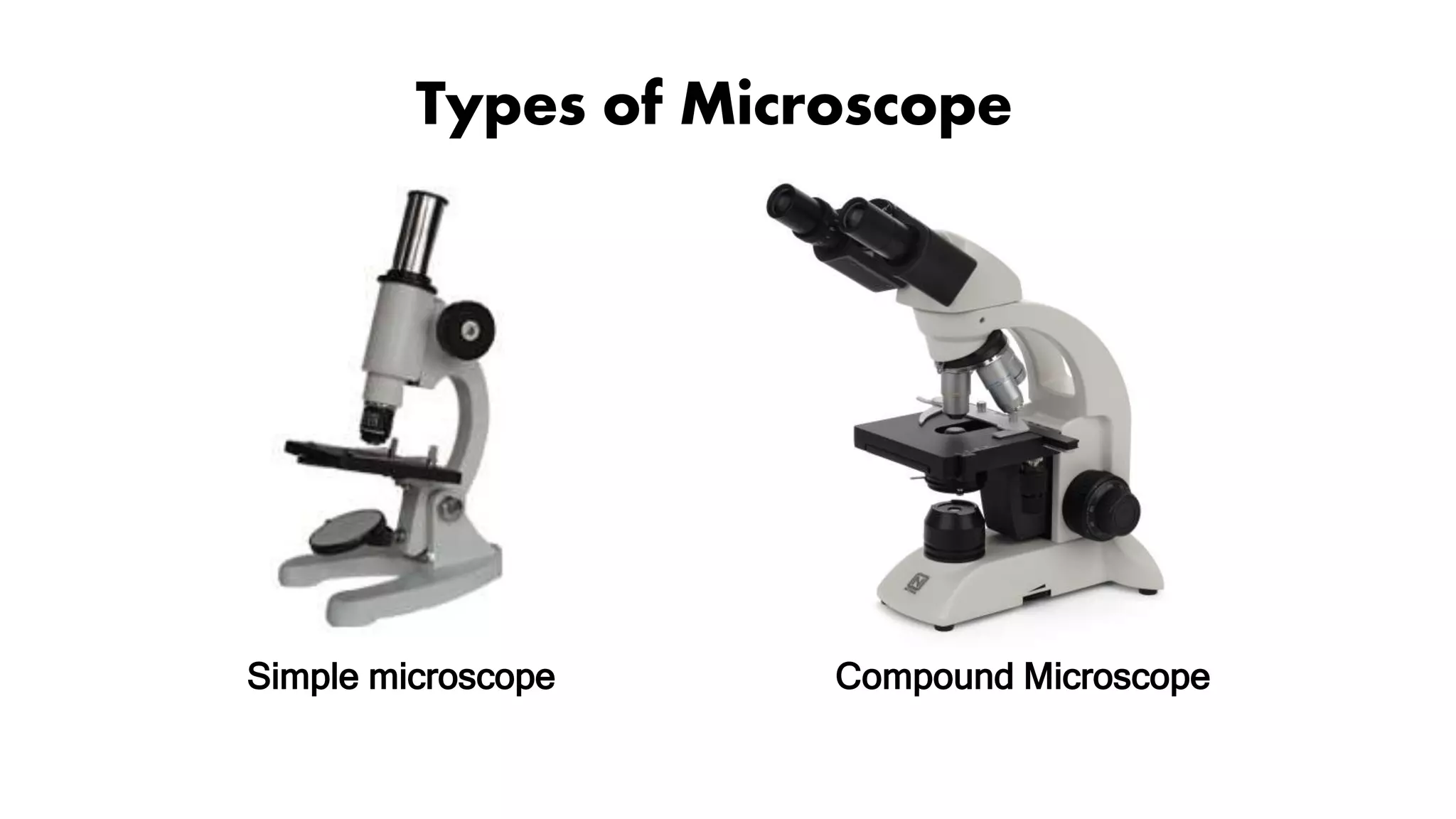
Types of Microscope
Simple microscope Compound Microscope
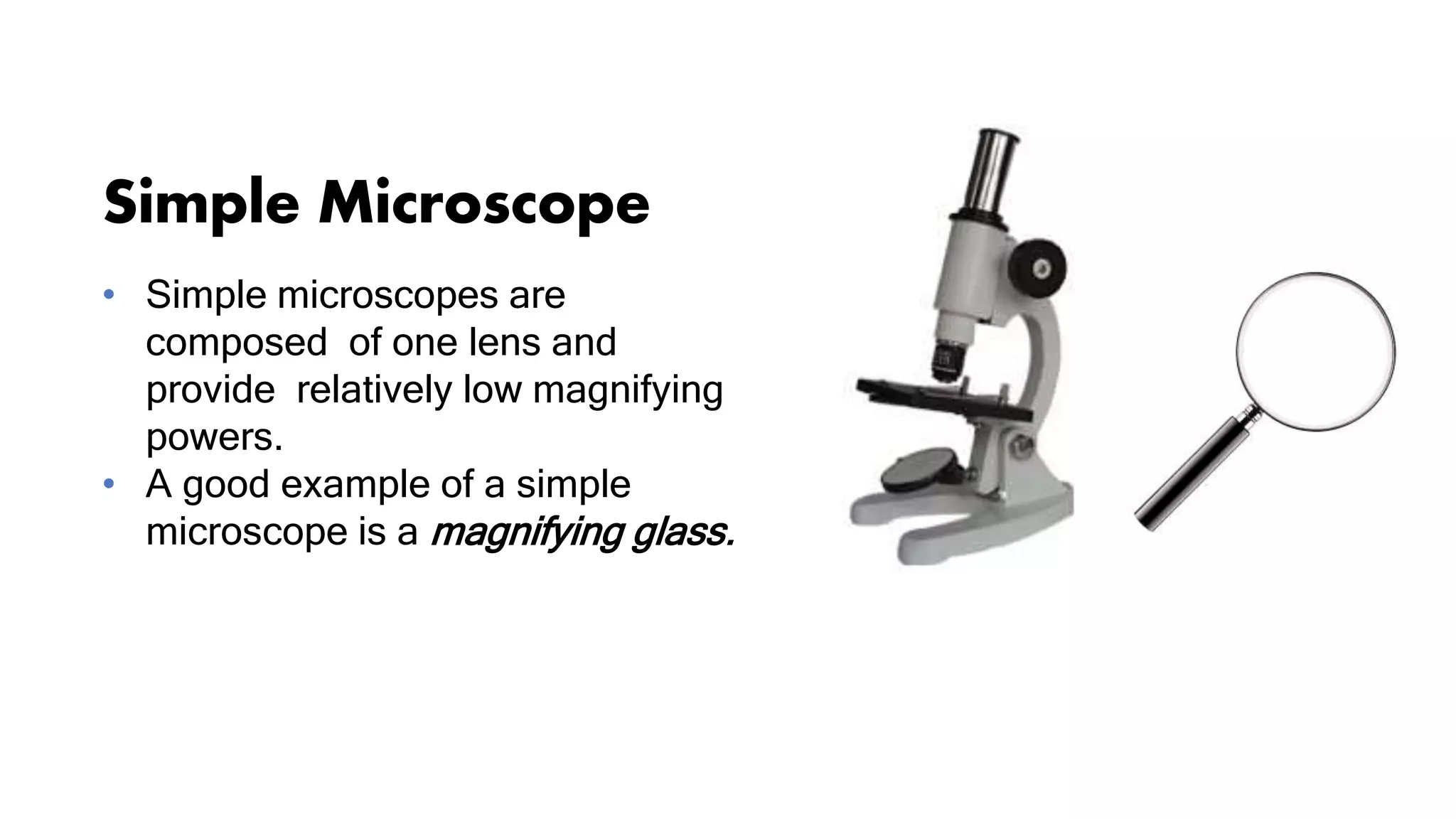
Simple Microscope
• Simple microscopes are
composed of one lens and
provide relatively low magnifying
powers.
• A good example of a simple
microscope is a magnifying glass.
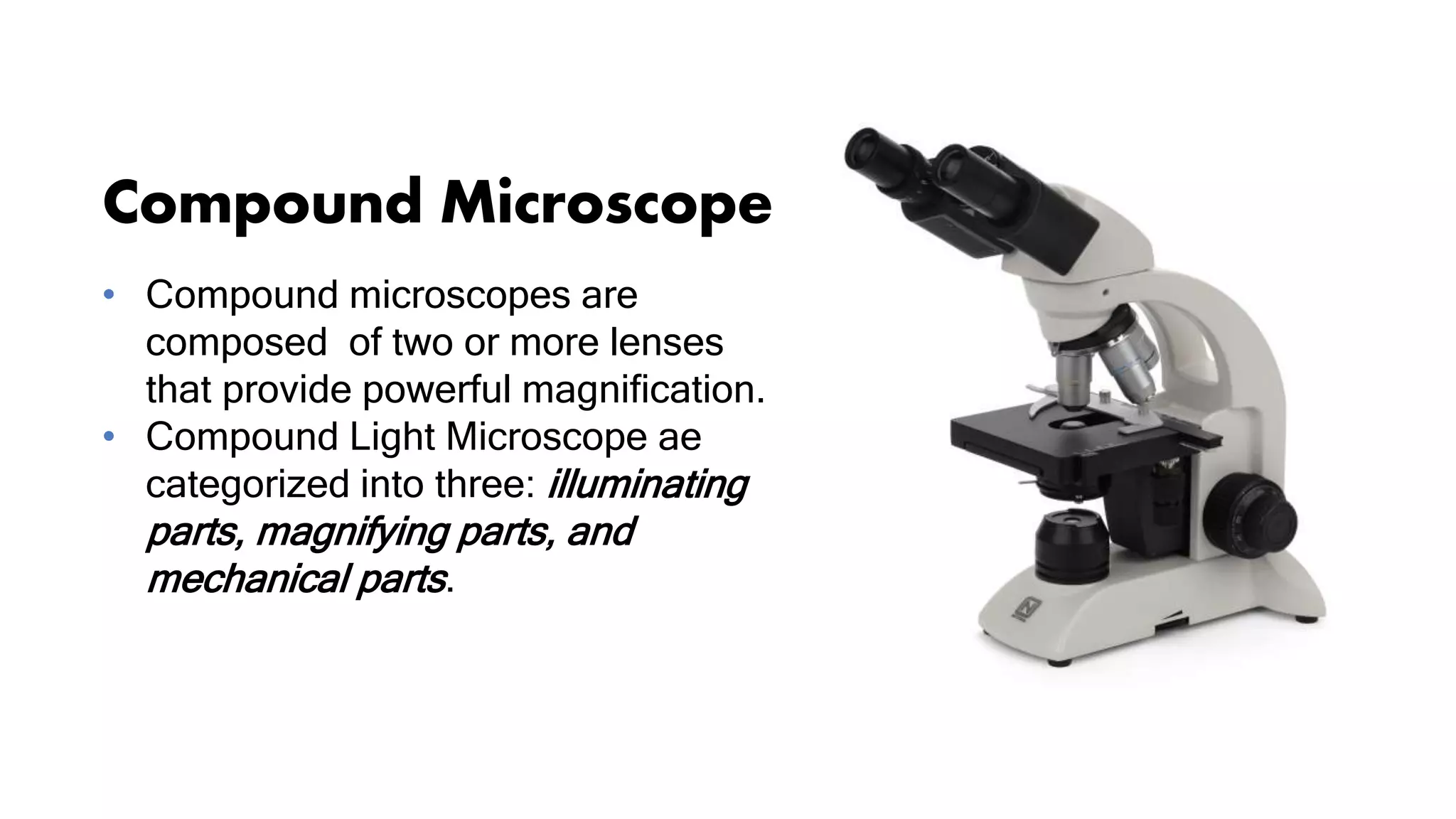
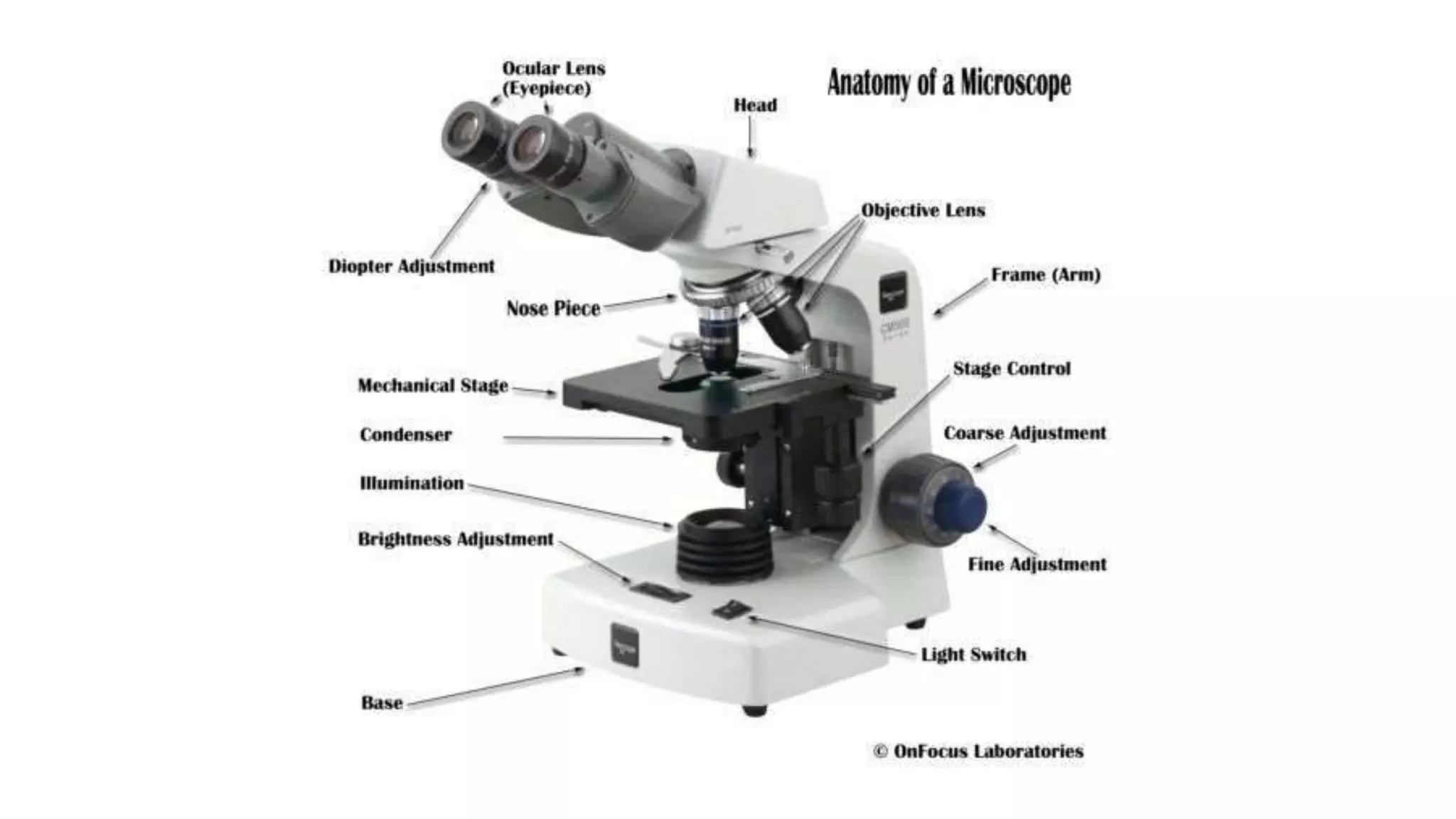
Compound Microscope
• Compound microscopes are
composed of two or more lenses
that provide powerful magnification.
• Compound Light Microscope ae
categorized into three: illuminating
parts, magnifying parts, and
mechanical parts.
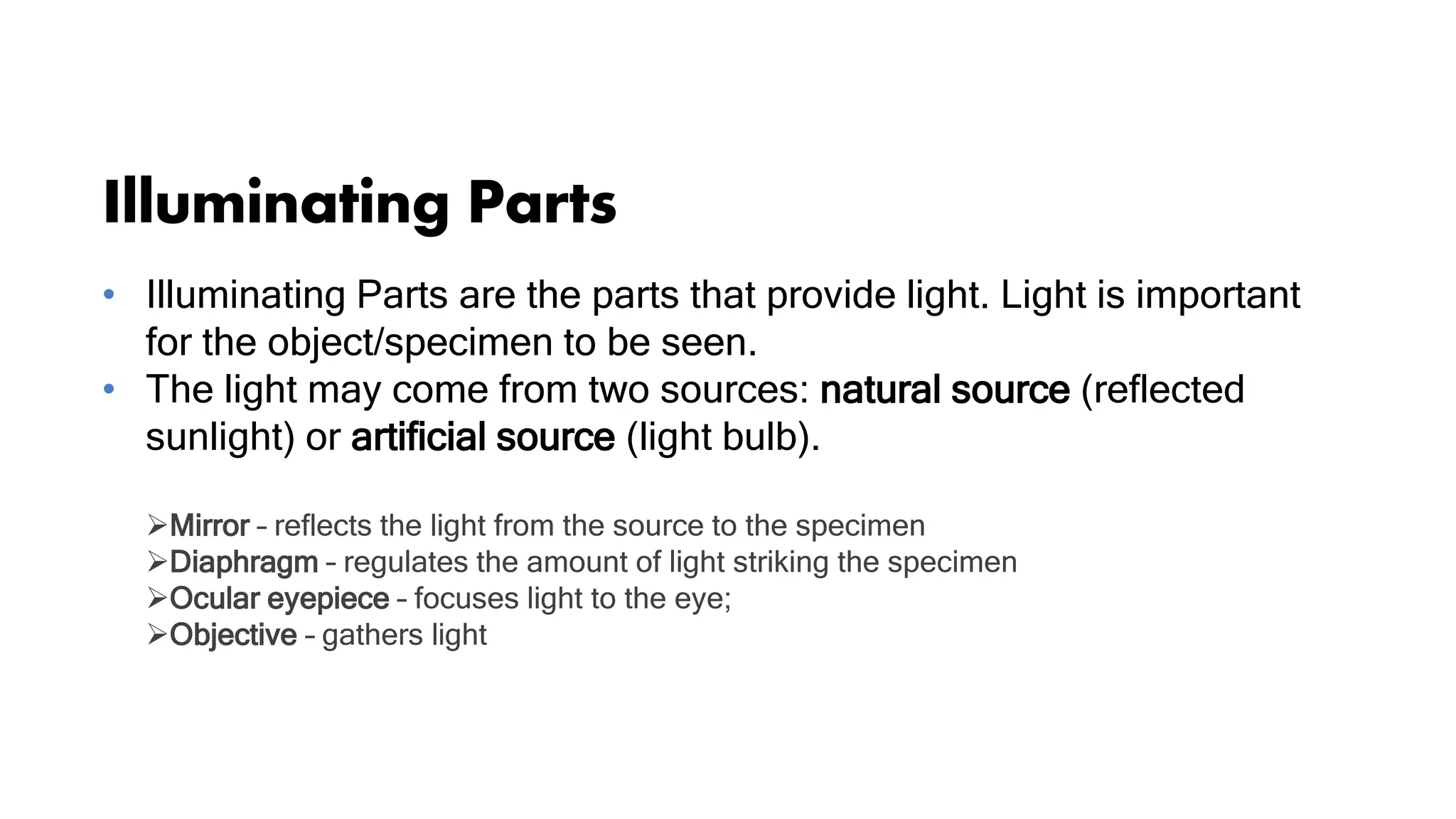
Illuminating Parts
• Illuminating Parts are the parts that provide light. Light is important
for the object/specimen to be seen.
• The light may come from two sources: natural source (reflected
sunlight) or artificial source (light bulb).
Mirror – reflects the light from the source to the specimen
Diaphragm – regulates the amount of light striking the specimen
Ocular eyepiece – focuses light to the eye;
Objective – gathers light
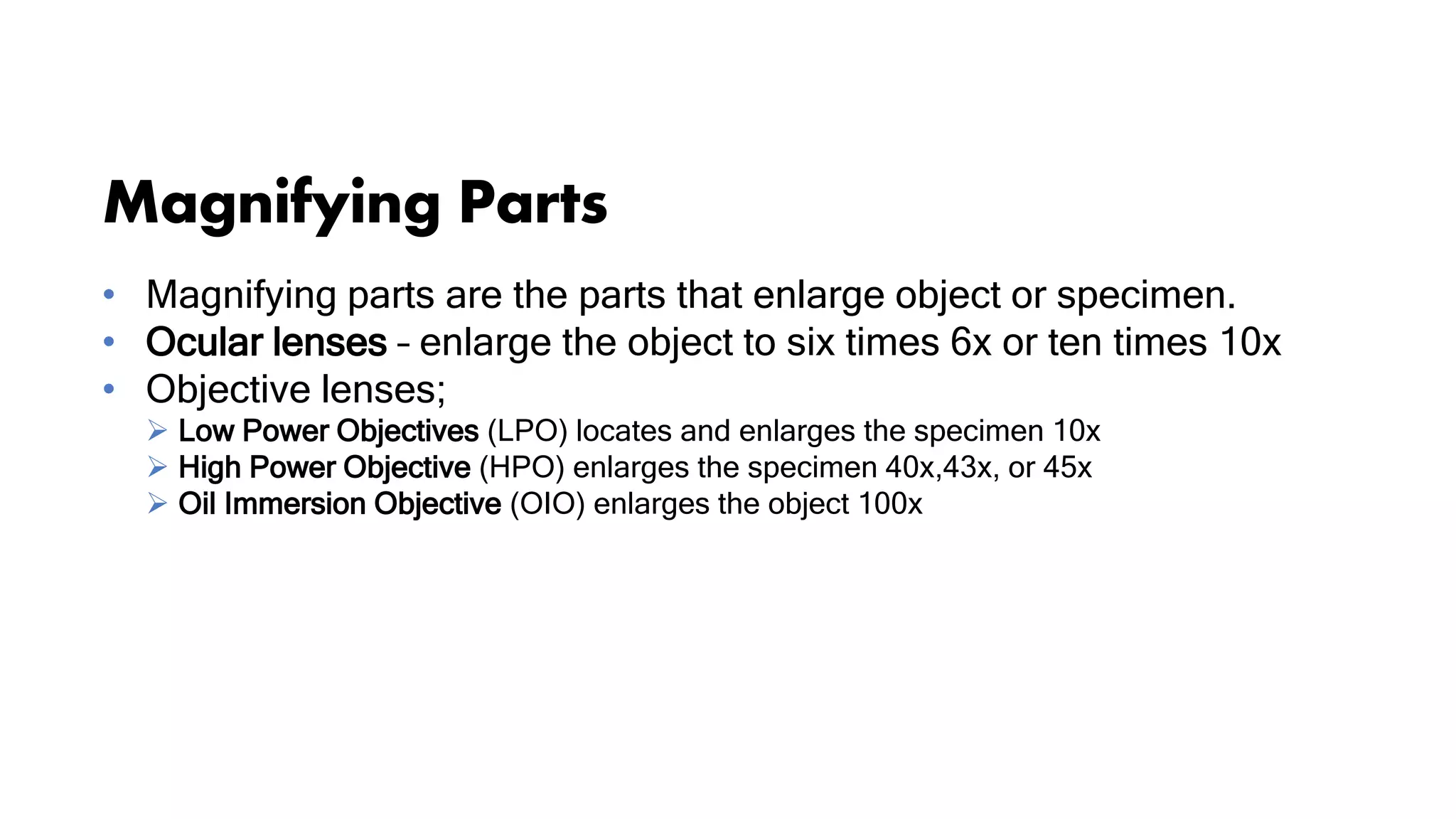
Magnifying Parts
• Magnifying parts are the parts that enlarge object or specimen.
• Ocular lenses – enlarge the object to six times 6x or ten times 10x
• Objective lenses;
 Low Power Objectives (LPO) locates and enlarges the specimen 10x
 High Power Objective (HPO) enlarges the specimen 40x,43x, or 45x
 Oil Immersion Objective (OIO) enlarges the object 100x
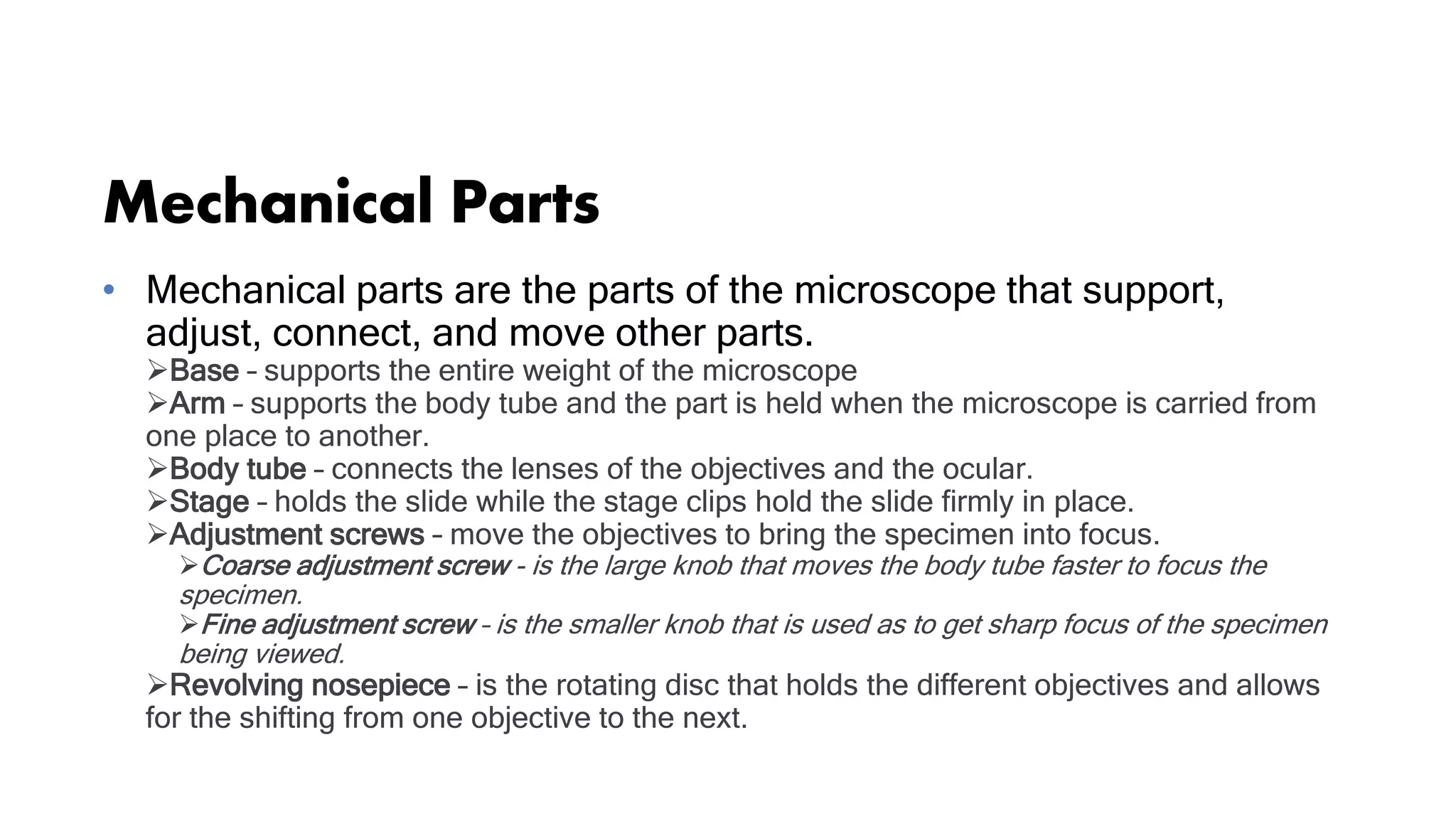
Mechanical Parts
• Mechanical parts are the parts of the microscope that support,
adjust, connect, and move other parts.
Base – supports the entire weight of the microscope
Arm – supports the body tube and the part is held when the microscope is carried from
one place to another.
Body tube – connects the lenses of the objectives and the ocular.
Stage – holds the slide while the stage clips hold the slide firmly in place.
Adjustment screws – move the objectives to bring the specimen into focus.
Coarse adjustment screw - is the large knob that moves the body tube faster to focus the
specimen.
Fine adjustment screw – is the smaller knob that is used as to get sharp focus of the specimen
being viewed.
Revolving nosepiece – is the rotating disc that holds the different objectives and allows
for the shifting from one objective to the next.
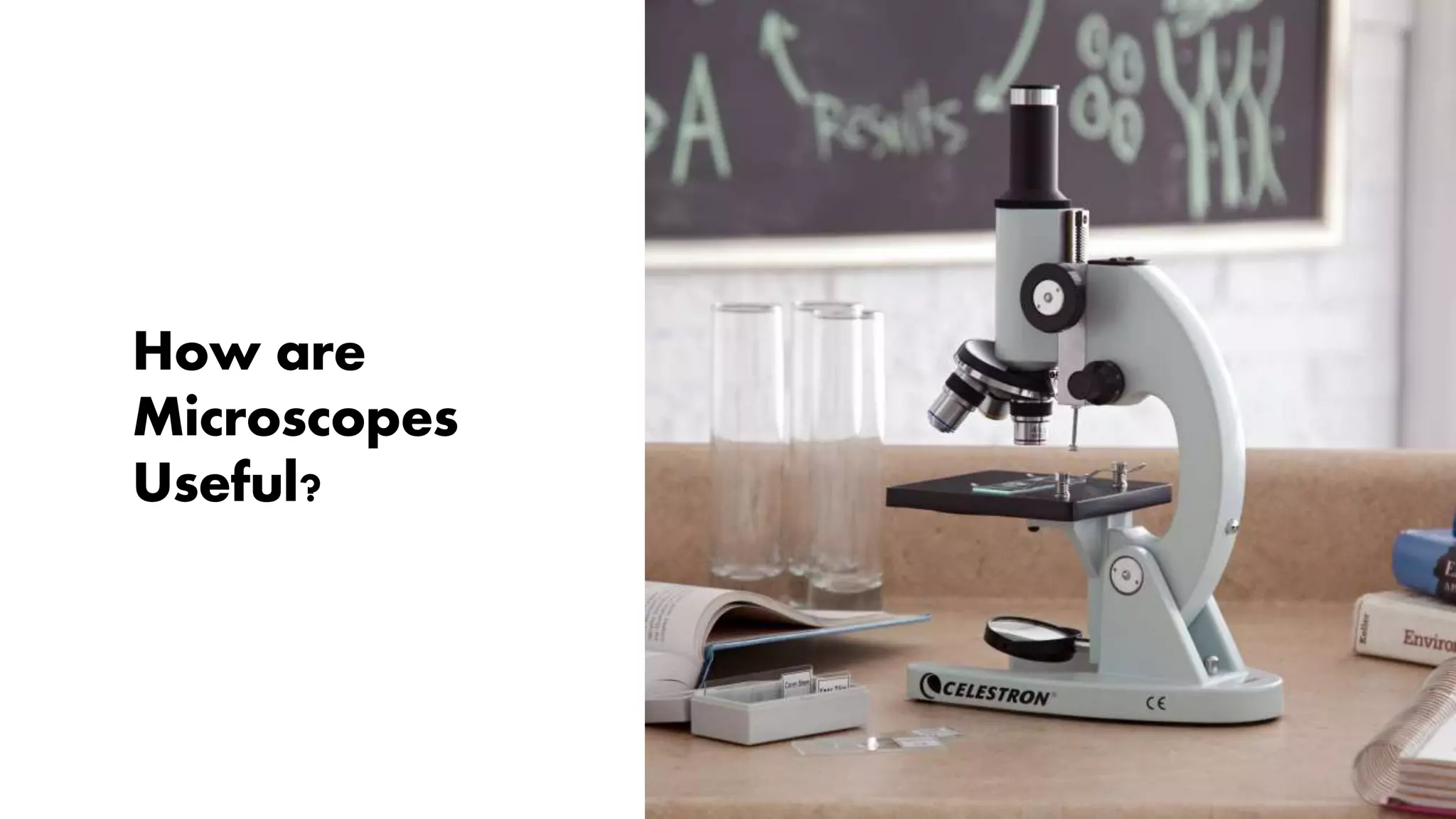
How are
Microscopes
Useful?
End

Science links 7 quarter 2 - lesson1

  • 1.
    The Microscope and Its Historical Development Science Links7 Revised Edition pp. 112-115 BOHOL INTERNATIONAL LEARNING COLLEGE
  • 2.
    Microscope + It isa precision instrument and the number one tool being used by biologists in conducting biological researches and in studying objects or organisms that are invisible or slightly visible to the naked eye.
  • 3.
    Zaccharias Janssen + In1950s, he started experimenting using lenses with his brother Hans Janssen. + Janssen brothers made a very important discovery, a compound microscope which uses two or more lenses.
  • 4.
    Anton Van Leeuwenhoek + Fatherof Microscopy + He was the first to discover bacteria, yeasts, and red blood cells. + He was able to describe colonies of protozoans teeming in a rainwater, which is called animalcules.
  • 5.
    Robert Hooke • AnEnglishman Scientists and architect, who first visualize micro- organism. • He discovered tiny compartments in a thin slice of cork. He called these compartments "cells".
  • 6.
    Types of Microscope Simplemicroscope Compound Microscope
  • 7.
    Simple Microscope • Simplemicroscopes are composed of one lens and provide relatively low magnifying powers. • A good example of a simple microscope is a magnifying glass.
  • 8.
    Compound Microscope • Compoundmicroscopes are composed of two or more lenses that provide powerful magnification. • Compound Light Microscope ae categorized into three: illuminating parts, magnifying parts, and mechanical parts.
  • 10.
    Illuminating Parts • IlluminatingParts are the parts that provide light. Light is important for the object/specimen to be seen. • The light may come from two sources: natural source (reflected sunlight) or artificial source (light bulb). Mirror – reflects the light from the source to the specimen Diaphragm – regulates the amount of light striking the specimen Ocular eyepiece – focuses light to the eye; Objective – gathers light
  • 11.
    Magnifying Parts • Magnifyingparts are the parts that enlarge object or specimen. • Ocular lenses – enlarge the object to six times 6x or ten times 10x • Objective lenses;  Low Power Objectives (LPO) locates and enlarges the specimen 10x  High Power Objective (HPO) enlarges the specimen 40x,43x, or 45x  Oil Immersion Objective (OIO) enlarges the object 100x
  • 12.
    Mechanical Parts • Mechanicalparts are the parts of the microscope that support, adjust, connect, and move other parts. Base – supports the entire weight of the microscope Arm – supports the body tube and the part is held when the microscope is carried from one place to another. Body tube – connects the lenses of the objectives and the ocular. Stage – holds the slide while the stage clips hold the slide firmly in place. Adjustment screws – move the objectives to bring the specimen into focus. Coarse adjustment screw - is the large knob that moves the body tube faster to focus the specimen. Fine adjustment screw – is the smaller knob that is used as to get sharp focus of the specimen being viewed. Revolving nosepiece – is the rotating disc that holds the different objectives and allows for the shifting from one objective to the next.
  • 13.
  • 14.