SCIENCE FORM 3 CHAPTER 4.12
VEGETATIVE REPRODUCTION
Group member:
Nikkie Koh
Ong Siew Fong
Chin Ying Zhen
Koay Jia Xuan
definition
 Vegetative reproduction in plants is defined as a type of asexual
reproduction.
 Does not involve gametes
 Vegetative reproduction is also defined as the production of new plantlets
from the vegetative parts (leaf, stem, roots) of a parent plant.
TYPES OF
VEGETATIVE
PARTS
Vegetative parts—LEAVES
Leaves
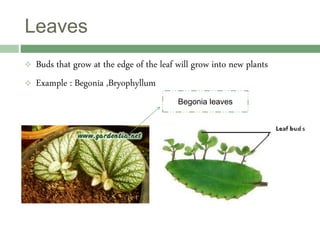
 Buds that grow at the edge of the leaf will grow into new plants
 Example : Begonia ,Bryophyllum
Begonia leaves
TYPES OF
VEGETATIVE
PARTS
Vegetative parts—
STEMS
runners
rhizomes
tubers
suckers
corms
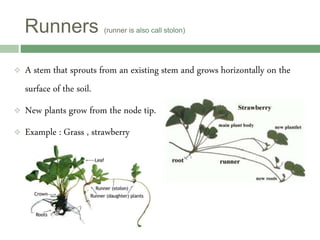
Runners (runner is also call stolon)
 A stem that sprouts from an existing stem and grows horizontally on the
surface of the soil.
 New plants grow from the node tip.
 Example : Grass , strawberry
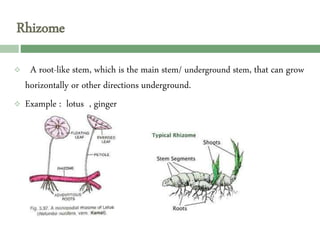
Rhizome
 A root-like stem, which is the main stem/ underground stem, that can grow
horizontally or other directions underground.
 Example : lotus , ginger
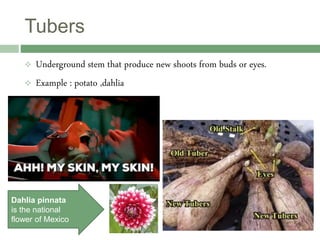
 Underground stem that produce new shoots from buds or eyes.
 Example : potato ,dahlia
Tubers
Dahlia pinnata
is the national
flower of Mexico
Corms
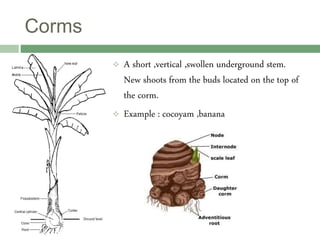
 A short ,vertical ,swollen underground stem.
New shoots from the buds located on the top of
the corm.
 Example : cocoyam ,banana
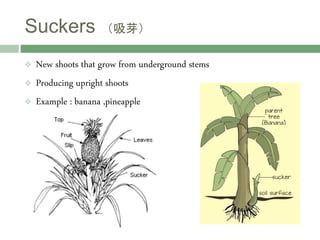
Suckers (吸芽)
 New shoots that grow from underground stems
 Producing upright shoots
 Example : banana ,pineapple
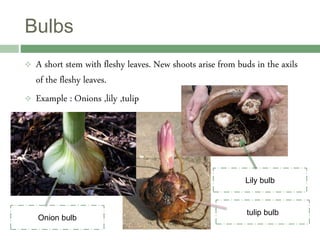
Onion bulb
Lily bulb
tulip bulb
Bulbs
 A short stem with fleshy leaves. New shoots arise from buds in the axils
of the fleshy leaves.
 Example : Onions ,lily ,tulip
TYPES OF
VEGETATIVE
PARTS
Vegetative parts—ROOTS
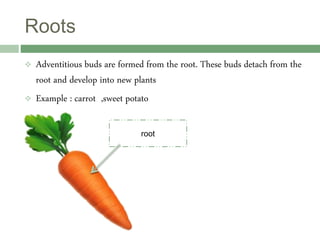
root
Roots
 Adventitious buds are formed from the root. These buds detach from the
root and develop into new plants
 Example : carrot ,sweet potato
vegetative reproduction or vegetative propagation
 Grow much faster than those
grow from seeds.
 Fruit are produced in shorter
period of time.
 Does not require agents of
pollination.
 Does not involve gametes
 No variation
 Overcrowding and competition
for space ,nutrients and sunlight
between the new plants and the
parent plants
advantages disadvantages
THE APPLICATION OF
RESEARCH ON
VEGETATIVE
REPRODUCTION IN
ALGRICULTURE
Stem cuttings (切茎法)
 Most commonly used method of vegetative propagation.
 A stem cutting is a portion of a stem that includes one or more nodes
removed from a parent plant and capable of rooting.
 The cutting is then planted in the soil. Adventitious roots will grow from
the nodes after a few weeks.
 A stem cutting is used to grow a whole new plant ,which is know as
cloning.
 Example : rose ,sugar cane ,hibiscus ,tapioca
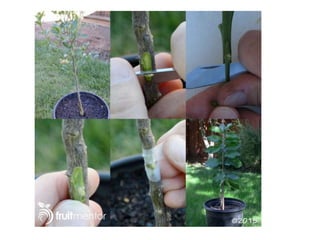
Marcotting
 A ring of bark of a healthy plant with internodes and buds is cut and
removed.
 The removed part is covered with moist soil and then wrapped with a
sheet of plastic ,cloth or coconut husk.
 When roots are formed ,the branch is cut from the parent plant and then
planted in the ground.
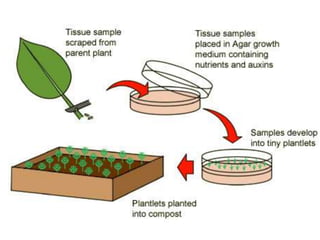
Tissue culture
 It is a technique in which new plants are produced from the tissues of
parent plants.
 The plant tissues are cultured in a petri dish (in vitro) containing
nutrients and rooting hormones. All preparations are done in a sterilised
condition.
 This technique produces plenty of new plants in a short time ,using
minimal space and can be carried out at anytime throughout the year.
 The young plant produced is genetically alike as the parent and is known
as clone.
 Example : paddy ,banana , orchid ,tomato ,oil palm
Science form 3 chapter4.12 vegetative reproduction

Science form 3 chapter4.12 vegetative reproduction

  • 1.
    SCIENCE FORM 3CHAPTER 4.12 VEGETATIVE REPRODUCTION Group member: Nikkie Koh Ong Siew Fong Chin Ying Zhen Koay Jia Xuan
  • 2.
    definition  Vegetative reproductionin plants is defined as a type of asexual reproduction.  Does not involve gametes  Vegetative reproduction is also defined as the production of new plantlets from the vegetative parts (leaf, stem, roots) of a parent plant.
  • 3.
  • 4.
    Leaves  Buds thatgrow at the edge of the leaf will grow into new plants  Example : Begonia ,Bryophyllum Begonia leaves
  • 5.
  • 6.
    Runners (runner isalso call stolon)  A stem that sprouts from an existing stem and grows horizontally on the surface of the soil.  New plants grow from the node tip.  Example : Grass , strawberry
  • 7.
    Rhizome  A root-likestem, which is the main stem/ underground stem, that can grow horizontally or other directions underground.  Example : lotus , ginger
  • 8.
     Underground stemthat produce new shoots from buds or eyes.  Example : potato ,dahlia Tubers Dahlia pinnata is the national flower of Mexico
  • 9.
    Corms  A short,vertical ,swollen underground stem. New shoots from the buds located on the top of the corm.  Example : cocoyam ,banana
  • 10.
    Suckers (吸芽)  Newshoots that grow from underground stems  Producing upright shoots  Example : banana ,pineapple
  • 11.
    Onion bulb Lily bulb tulipbulb Bulbs  A short stem with fleshy leaves. New shoots arise from buds in the axils of the fleshy leaves.  Example : Onions ,lily ,tulip
  • 12.
  • 13.
    root Roots  Adventitious budsare formed from the root. These buds detach from the root and develop into new plants  Example : carrot ,sweet potato
  • 14.
    vegetative reproduction orvegetative propagation  Grow much faster than those grow from seeds.  Fruit are produced in shorter period of time.  Does not require agents of pollination.  Does not involve gametes  No variation  Overcrowding and competition for space ,nutrients and sunlight between the new plants and the parent plants advantages disadvantages
  • 15.
    THE APPLICATION OF RESEARCHON VEGETATIVE REPRODUCTION IN ALGRICULTURE
  • 16.
    Stem cuttings (切茎法) Most commonly used method of vegetative propagation.  A stem cutting is a portion of a stem that includes one or more nodes removed from a parent plant and capable of rooting.  The cutting is then planted in the soil. Adventitious roots will grow from the nodes after a few weeks.  A stem cutting is used to grow a whole new plant ,which is know as cloning.  Example : rose ,sugar cane ,hibiscus ,tapioca
  • 17.
    Marcotting  A ringof bark of a healthy plant with internodes and buds is cut and removed.  The removed part is covered with moist soil and then wrapped with a sheet of plastic ,cloth or coconut husk.  When roots are formed ,the branch is cut from the parent plant and then planted in the ground.
  • 19.
    Tissue culture  Itis a technique in which new plants are produced from the tissues of parent plants.  The plant tissues are cultured in a petri dish (in vitro) containing nutrients and rooting hormones. All preparations are done in a sterilised condition.  This technique produces plenty of new plants in a short time ,using minimal space and can be carried out at anytime throughout the year.  The young plant produced is genetically alike as the parent and is known as clone.  Example : paddy ,banana , orchid ,tomato ,oil palm