PLANTS  Structure and Function LEAVES
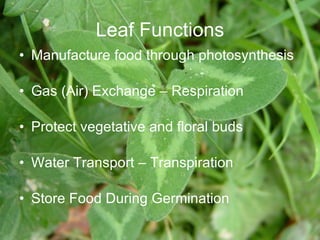
Leaf Functions Manufacture food through photosynthesis Gas (Air) Exchange – Respiration Protect vegetative and floral buds Water Transport – Transpiration Store Food During Germination
 
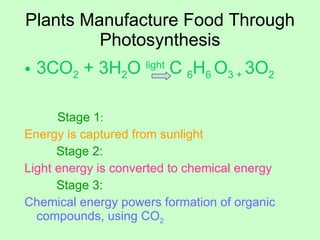
Plants Manufacture Food Through Photosynthesis 3CO 2  + 3H 2 O  light  C  6 H 6  O 3 +  3O 2   Stage 1 : Energy is captured from sunlight Stage 2: Light energy is converted to chemical energy Stage 3: Chemical energy powers formation of organic compounds, using CO 2
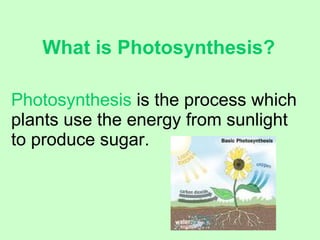
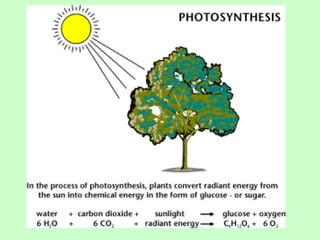
What is Photosynthesis? Photosynthesis  is the process which plants use the energy from sunlight to produce sugar.
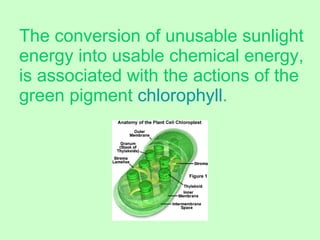
The conversion of unusable sunlight energy into usable chemical energy, is associated with the actions of the green pigment  chlorophyll .
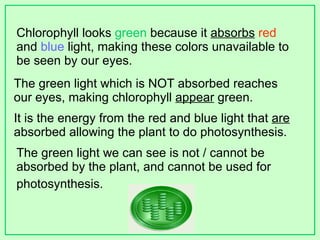
Chlorophyll looks  green  because it  absorbs   red  and  blue  light, making these colors unavailable to be seen by our eyes.  The green light which is NOT absorbed reaches our eyes, making chlorophyll  appear  green.  It is the energy from the red and blue light that  are  absorbed allowing the plant to do photosynthesis. The green light we can see is not / cannot be absorbed by the plant, and cannot be used for photosynthesis.
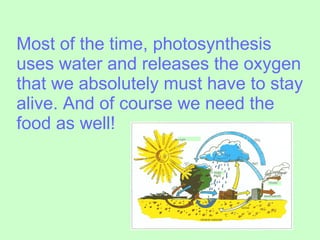
Most of the time, photosynthesis uses water and releases the oxygen that we absolutely must have to stay alive. And of course we need the food as well!
The overall chemical reaction of this process is: 6H2O + 6CO2 ----> C6H12O6+ 6O2 Translated it reads: six molecules of water plus six molecules of carbon dioxide produce one molecule of sugar plus six molecules of oxygen
 
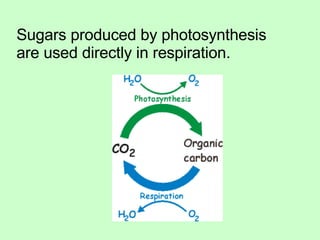
Sugars produced by photosynthesis are used directly in respiration.
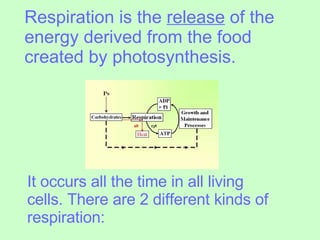
Respiration is the  release  of the energy derived from the food created by photosynthesis.  It occurs all the time in all living cells. There are 2 different kinds of respiration:
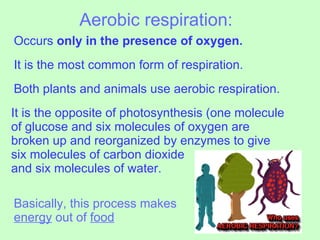
Aerobic respiration: Occurs  only in the presence of oxygen. It is the most common form of respiration. Both plants and animals use aerobic respiration. It is the opposite of photosynthesis (one molecule of glucose and six molecules of oxygen are broken up and reorganized by enzymes to give six molecules of carbon dioxide  and six molecules of water. Basically, this process makes  energy  out of  food
Anaerobic respiration: occurs only under special circumstances   occurs in the absence of oxygen (for example: during the fermentation process)
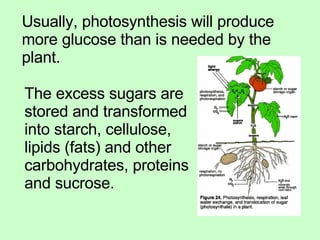
Usually, photosynthesis will produce more glucose than is needed by the plant.  The excess sugars are stored and transformed into starch, cellulose, lipids (fats) and other carbohydrates, proteins and sucrose.
Other Functions of Leaves While Photosynthesis is a very important part of the function of leaves, they have other responsibilities to the plant
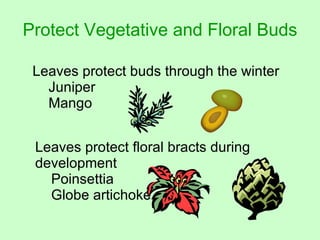
Protect Vegetative and Floral Buds Leaves protect buds through the winter  Juniper Mango Leaves protect floral bracts during development Poinsettia Globe artichoke
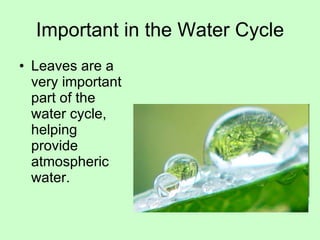
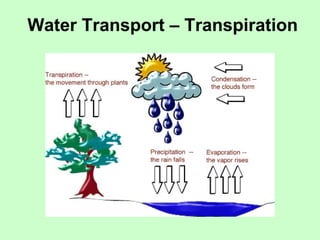
Important in the Water Cycle Leaves are a very important part of the water cycle, helping provide atmospheric water.
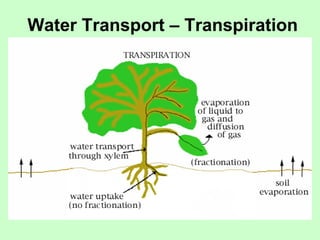
Water Transport – Transpiration
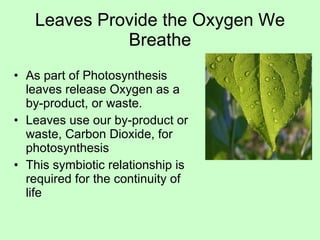
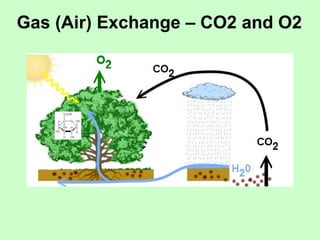
Leaves Provide the Oxygen We Breathe As part of Photosynthesis leaves release Oxygen as a by-product, or waste. Leaves use our by-product or waste, Carbon Dioxide, for photosynthesis This symbiotic relationship is required for the continuity of life
Gas (Air) Exchange – CO2 and O2
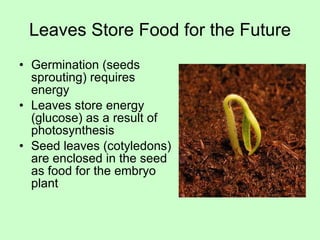
Leaves Store Food for the Future Germination (seeds sprouting) requires energy Leaves store energy (glucose) as a result of photosynthesis Seed leaves (cotyledons) are enclosed in the seed as food for the embryo plant
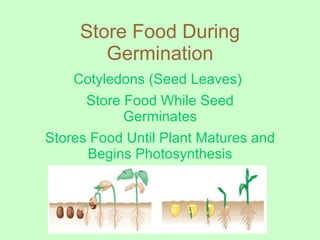
Store Food During Germination Cotyledons (Seed Leaves)   Store Food While Seed Germinates Stores Food Until Plant Matures and Begins Photosynthesis
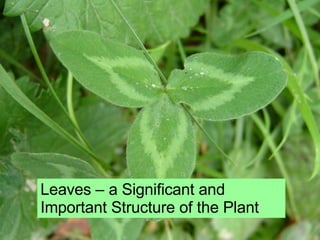
Leaves – a Significant and Important Structure of the Plant

Leaves, Structure and Function

  • 1.
    PLANTS Structureand Function LEAVES
  • 2.
    Leaf Functions Manufacturefood through photosynthesis Gas (Air) Exchange – Respiration Protect vegetative and floral buds Water Transport – Transpiration Store Food During Germination
  • 3.
  • 4.
    Plants Manufacture FoodThrough Photosynthesis 3CO 2 + 3H 2 O light C 6 H 6 O 3 + 3O 2 Stage 1 : Energy is captured from sunlight Stage 2: Light energy is converted to chemical energy Stage 3: Chemical energy powers formation of organic compounds, using CO 2
  • 5.
    What is Photosynthesis?Photosynthesis is the process which plants use the energy from sunlight to produce sugar.
  • 6.
    The conversion ofunusable sunlight energy into usable chemical energy, is associated with the actions of the green pigment chlorophyll .
  • 7.
    Chlorophyll looks green because it absorbs red and blue light, making these colors unavailable to be seen by our eyes. The green light which is NOT absorbed reaches our eyes, making chlorophyll appear green. It is the energy from the red and blue light that are absorbed allowing the plant to do photosynthesis. The green light we can see is not / cannot be absorbed by the plant, and cannot be used for photosynthesis.
  • 8.
    Most of thetime, photosynthesis uses water and releases the oxygen that we absolutely must have to stay alive. And of course we need the food as well!
  • 9.
    The overall chemicalreaction of this process is: 6H2O + 6CO2 ----> C6H12O6+ 6O2 Translated it reads: six molecules of water plus six molecules of carbon dioxide produce one molecule of sugar plus six molecules of oxygen
  • 10.
  • 11.
    Sugars produced byphotosynthesis are used directly in respiration.
  • 12.
    Respiration is the release of the energy derived from the food created by photosynthesis. It occurs all the time in all living cells. There are 2 different kinds of respiration:
  • 13.
    Aerobic respiration: Occurs only in the presence of oxygen. It is the most common form of respiration. Both plants and animals use aerobic respiration. It is the opposite of photosynthesis (one molecule of glucose and six molecules of oxygen are broken up and reorganized by enzymes to give six molecules of carbon dioxide and six molecules of water. Basically, this process makes energy out of food
  • 14.
    Anaerobic respiration: occursonly under special circumstances occurs in the absence of oxygen (for example: during the fermentation process)
  • 15.
    Usually, photosynthesis willproduce more glucose than is needed by the plant. The excess sugars are stored and transformed into starch, cellulose, lipids (fats) and other carbohydrates, proteins and sucrose.
  • 16.
    Other Functions ofLeaves While Photosynthesis is a very important part of the function of leaves, they have other responsibilities to the plant
  • 17.
    Protect Vegetative andFloral Buds Leaves protect buds through the winter Juniper Mango Leaves protect floral bracts during development Poinsettia Globe artichoke
  • 18.
    Important in theWater Cycle Leaves are a very important part of the water cycle, helping provide atmospheric water.
  • 19.
    Water Transport –Transpiration
  • 20.
    Water Transport –Transpiration
  • 21.
    Leaves Provide theOxygen We Breathe As part of Photosynthesis leaves release Oxygen as a by-product, or waste. Leaves use our by-product or waste, Carbon Dioxide, for photosynthesis This symbiotic relationship is required for the continuity of life
  • 22.
    Gas (Air) Exchange– CO2 and O2
  • 23.
    Leaves Store Foodfor the Future Germination (seeds sprouting) requires energy Leaves store energy (glucose) as a result of photosynthesis Seed leaves (cotyledons) are enclosed in the seed as food for the embryo plant
  • 24.
    Store Food DuringGermination Cotyledons (Seed Leaves) Store Food While Seed Germinates Stores Food Until Plant Matures and Begins Photosynthesis
  • 25.
    Leaves – aSignificant and Important Structure of the Plant