It is an acute and chronic disease that is caused by a parasitic
worm. Other names include: Bilharzia, snail fever and katayama
fever. This may affect the intestinal or urinary system.
 It is next to malaria among parasitic diseases in
tropical areas.
 More than 210 million people are infected worldwide
and 85% of these people are in Africa.
 Children are mostly at risk because they are fond of
playing in water.
 Over 200,000 people die of the disease every year.
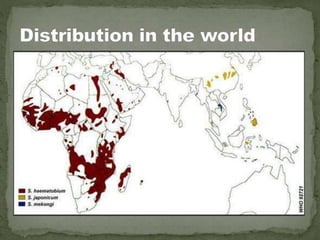
 It is endemic in Africa and also found in Asia, South
America and the Caribbean.
 Nigeria has the highest burden of the disease
worldwide.
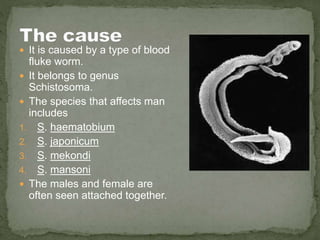
 It is caused by a type of blood
fluke worm.
 It belongs to genus
Schistosoma.
 The species that affects man
includes
1. S. haematobium
2. S. japonicum
3. S. mekondi
4. S. mansoni
 The males and female are
often seen attached together.
 Swimming or using water infected with cercaria.
 Poor Sanitation
 Presence of implicated host such as the fresh water
snail and a right condition.
 Presence of infected reservoir host like pigs.
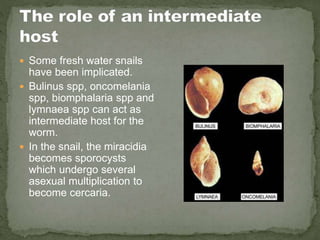
 Some fresh water snails
have been implicated.
 Bulinus spp, oncomelania
spp, biomphalaria spp and
lymnaea spp can act as
intermediate host for the
worm.
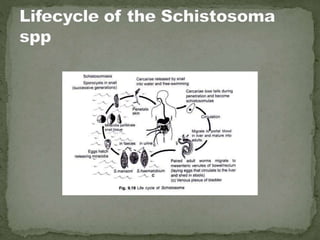
 In the snail, the miracidia
becomes sporocysts
which undergo several
asexual multiplication to
become cercaria.
 Two type of Schistosomiasis occurs, though both
may occur simultaneously.
1. Intestinal Schistosomiasis(IS)
2. Urinary Schistosomiasis(US)
 During IS the schistomulae find their way into the
mesenteric venuoles around the intestine and inside
the intestinal wall.
 The matured Schistosoma lay eggs with sharp
spines in the inner walls of the intestine.
 As the young and adult worms move within the
lumen and venuoles the cause damage to the lining
of these body tissues
 The eggs has spikes that can compromise the
tissues where they are embedded.
 During US the young adult find its way to the veins
around the bladder and the within the bladder tissue
where it develops to adult worm.
 The adult worms lay spiky eggs within the inner walls
of the bladder.
 Their movement also compromise the bladder
tissues.
 All these have an adverse effect on the infected
individual’s system and so he comes down with the
disease.
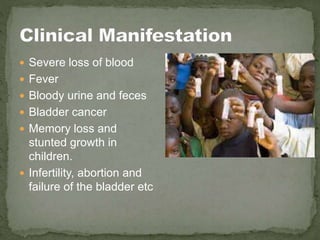
 Severe loss of blood
 Fever
 Bloody urine and feces
 Bladder cancer
 Memory loss and
stunted growth in
children.
 Infertility, abortion and
failure of the bladder etc
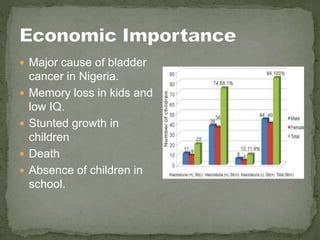
 Major cause of bladder
cancer in Nigeria.
 Memory loss in kids and
low IQ.
 Stunted growth in
children
 Death
 Absence of children in
school.
 There is treatment for the disease.
 Control of snail population is paramount
 Proper sanitation is important
 Practice of good hygiene is important
 There is need to raise awareness about the disease
especially in the rural areas.
 Staying away from dirty water or rivers where the
snails could be present.

Schistosomiasis slide show

  • 1.
    It is anacute and chronic disease that is caused by a parasitic worm. Other names include: Bilharzia, snail fever and katayama fever. This may affect the intestinal or urinary system.
  • 2.
     It isnext to malaria among parasitic diseases in tropical areas.  More than 210 million people are infected worldwide and 85% of these people are in Africa.  Children are mostly at risk because they are fond of playing in water.  Over 200,000 people die of the disease every year.  It is endemic in Africa and also found in Asia, South America and the Caribbean.  Nigeria has the highest burden of the disease worldwide.
  • 4.
     It iscaused by a type of blood fluke worm.  It belongs to genus Schistosoma.  The species that affects man includes 1. S. haematobium 2. S. japonicum 3. S. mekondi 4. S. mansoni  The males and female are often seen attached together.
  • 5.
     Swimming orusing water infected with cercaria.  Poor Sanitation  Presence of implicated host such as the fresh water snail and a right condition.  Presence of infected reservoir host like pigs.
  • 6.
     Some freshwater snails have been implicated.  Bulinus spp, oncomelania spp, biomphalaria spp and lymnaea spp can act as intermediate host for the worm.  In the snail, the miracidia becomes sporocysts which undergo several asexual multiplication to become cercaria.
  • 8.
     Two typeof Schistosomiasis occurs, though both may occur simultaneously. 1. Intestinal Schistosomiasis(IS) 2. Urinary Schistosomiasis(US)  During IS the schistomulae find their way into the mesenteric venuoles around the intestine and inside the intestinal wall.  The matured Schistosoma lay eggs with sharp spines in the inner walls of the intestine.
  • 9.
     As theyoung and adult worms move within the lumen and venuoles the cause damage to the lining of these body tissues  The eggs has spikes that can compromise the tissues where they are embedded.  During US the young adult find its way to the veins around the bladder and the within the bladder tissue where it develops to adult worm.
  • 10.
     The adultworms lay spiky eggs within the inner walls of the bladder.  Their movement also compromise the bladder tissues.  All these have an adverse effect on the infected individual’s system and so he comes down with the disease.
  • 11.
     Severe lossof blood  Fever  Bloody urine and feces  Bladder cancer  Memory loss and stunted growth in children.  Infertility, abortion and failure of the bladder etc
  • 12.
     Major causeof bladder cancer in Nigeria.  Memory loss in kids and low IQ.  Stunted growth in children  Death  Absence of children in school.
  • 13.
     There istreatment for the disease.  Control of snail population is paramount  Proper sanitation is important  Practice of good hygiene is important  There is need to raise awareness about the disease especially in the rural areas.  Staying away from dirty water or rivers where the snails could be present.