Urinary Schistosomiasis
Literature Review
Mahmoud Alameddine, MBBS
Associate Consultant Urology
International Medical Center
Urinary Schistosomiasis
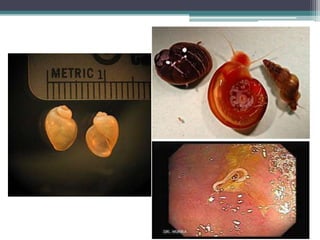
• Schistosomiasis is a chronic infection caused by the parasitic
trematodes of the genus Schistosoma.
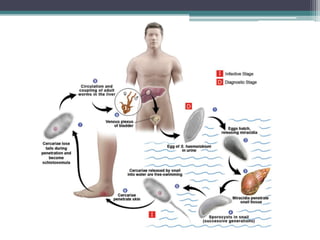
• Human infection begins with free-swimming cercariae penetrating the
skin and eventual development of the adult male and female worms.
• The paired adult worms reside in the venous plexuses of the abdominal
viscera.
• S. mansoni and S. japonicum reside in the mesenteric veins,
leading to gastrointestinal and/or hepatic disease.
• S. haematobium dwells principally in the perivesical venous plexus,
resulting in urinary schistosomiasis
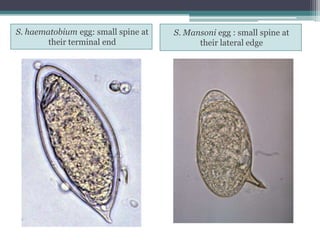
S. haematobium egg: small spine at
their terminal end
S. Mansoni egg : small spine at
their lateral edge
Epidemiology
• Of the 200 million persons affected with schistosomiasis, 80 to 90
million are infected with S. haematobium. Engels et al, 2002
• As many as 10 to 40 million have obstructive uropathy or other
complications secondary to this parasitic disease. Engels et al, 2002
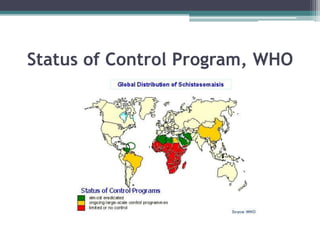
Status of Control Program, WHO
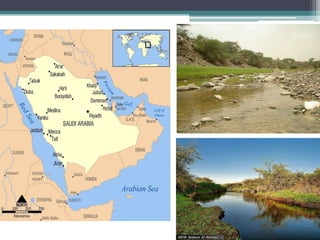
Progress achieved in the elimination of schistosomiasis from the
Jazan region of Saudi Arabia.
Al Ghahtani AG, Amin MA. Ann Trop Med Parasitol. 2005
• Prevalence and intensity of Schistosoma haematobium infection in
Jizan have been kept very low for several years.
• No infected snails can now be found in the region and new cases of
human infection with S. haematobium are only being detected in
border villages.
• The strategy to eliminate human infection based on:
i. Case finding
ii. Treatment of infected individuals
iii. Chemical and environmental control of freshwater snails
iv. Health education
v. Screening at primary-healthcare centres, by mobile teams and at
diagnostic units
Pathogenesis and Pathology
• Schistosomal disease results directly from the granulomatous
host response to schistosome eggs
• Microscopic examination of tissue shows edematous
granulation tissue diffusely infiltrated by eosinophils,
lymphocytes, and plasma cells
• On gross examination, the areas exhibit in large, bulky,
hyperemic, and polypoid masses projecting into the lumen
• In the active stage of disease, schistosomiasis is characterized by
presence of viable eggs in urine or biopsy and multiple large
inflammatory polyps.
• Inactive disease occurs after adult worms have died, and is
characterized by the presence of “sandy patches” which is destroyed
or calcified eggs and the tissues that undergo fibrotic reaction.
Chronic Schistosomiasis
• Is often complicated with obstructive uropathy
• The obstructive uropathy is usually asymmetric.
• The location of the obstruction varies from:
i. The urethral meatus (1%),
ii. Interstitial ureter (10% to 30%)
iii. Juxtavesical ureter (20% to 60%)
iv. Lower third of the ureter (15% to 50%)
v. Combination of these areas (30% to 60%)
• Left untreated, schistosomal hydronephrosis advances to
progressive renal impairemnt.
Bladder cancer
• Is the final pathologic sequelae of schistosomiasis
• High frequency of squamous cell carcinomas (60% to 90%), with 5%
to 15% adenocarcinomas
• More than 40% of schistosomiasis-associated squamous cell
carcinomas of the bladder are well-differentiated that are exophytic
and carry an overall good prognosis
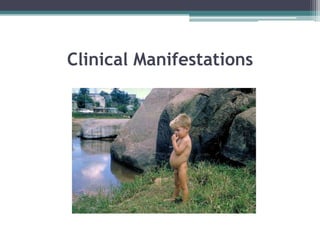
Clinical Manifestations
• Hematuria and terminal dysuria is the first sign of
established S. haematobium infection, often appearing 10 to 12
weeks after infection
• Katayama fever (in S. Japonicum): fever, lymphadenopathy,
splenomegaly, eosinophilia, urticaria.
• Involvement of these genital structures often present with scrotal
pain or a testicular mass
• Over time, a late, chronic, active stage developes “schistosomal
contracted bladder” consistent with pelvic pain with associated
urinary urgency, frequency, and incontinence.
• Patients finally enter a chronic inactive phase, in which viable
eggs are no longer detected in urine or tissues
• This stage are caused by sequelae of the immune reaction to the eggs
rather than the schistosomal infection itself
• Silent obstructive uropathy may develop throughout this phase
as fibrosis replaces polypoid lesions and the bladder and ureters
undergo irreversible damage
• Unfortunately, 40% to 60% present to us at this stage of their
disease
Diagnosis
• The presence of eggs in the urinary sediment is diagnostic.
• If eggs are not found in the urine, a bladder biopsy should be
attempted.
• Serology tests of the blood that combine a FAST-ELISA followed by
Western blot analysis are available.
• But they do not distinguish between acute and chronic disease.
Antibody titers can remain positive even after curative treatment.
• Real-time PCR of the urine is in developmental testing, and may
hold some promise in the future
• Since early diagnosis of pre-cancerous conditions associated
with urinary schistosomiasis could save countless lives, studies are
being carried out to find non-invasive methods to detect
schistosome-based bladder cancer
• A variety of tumor markers have been studied in urine specimens.
e.g. Aberrant Methylation of RARb2 and APC Genes in Voided
Urine
Medical Treatment
• All patients with schistosomiasis should be treated regardless of the
intensity or apparent activity of their infection
• Praziquantel is the drug of choice for all schistosoma species.
• The recommendation is 2 oral doses of 20 mg/kg (or a single
40 mg/kg dose)
• Cure rates are from 73% to 100%
• Praziquantel is extremely well tolerated
• The lack of serious side effects has made it an excellent agent of
choice in mass chemotherapy campaigns
Surgical Treatment
• Anatomic ureteral stenosis, with or without calculi, has been
identified in up to 80% of obstructions. (El-Nahas et al, 2003)
• when there is residual ureteral stenosis after successful
chemotherapy it is usually amenable to surgical intervention.
• Depending on the extent and location of the stricture (excision or
dilatation)
• Balloon dilatation has reportedly proved effective but frequently
followed by repeat stenosis.
• The best outcome is ureteral reimplantation (Leadbetter -Politano
operation)
• In long or multisegmental lesions, excision of the affected portion
leaves an inadequate residual ureter for reimplantation.
• Boari flap, ileal interposition or long-term nephrostomy drainage
can be done
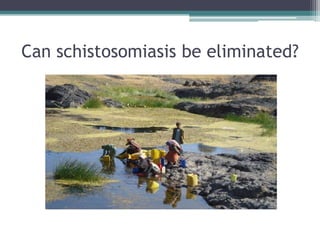
Can schistosomiasis be eliminated?
• Schistosomiasis is being successfully controlled in many countries
but remains a major public health problem, with an estimated 200
million people infected, mostly in Africa.
• Constraints to control include, the lack of political commitment and
infrastructure for public health interventions in some countries.
• Anti-schistosomal drugs are expensive and the cost of individual
treatment is a high proportion of the per capita drug budgets.
Urinary schistosomiasis

Urinary schistosomiasis

  • 1.
    Urinary Schistosomiasis Literature Review MahmoudAlameddine, MBBS Associate Consultant Urology International Medical Center
  • 2.
    Urinary Schistosomiasis • Schistosomiasisis a chronic infection caused by the parasitic trematodes of the genus Schistosoma. • Human infection begins with free-swimming cercariae penetrating the skin and eventual development of the adult male and female worms. • The paired adult worms reside in the venous plexuses of the abdominal viscera. • S. mansoni and S. japonicum reside in the mesenteric veins, leading to gastrointestinal and/or hepatic disease. • S. haematobium dwells principally in the perivesical venous plexus, resulting in urinary schistosomiasis
  • 4.
    S. haematobium egg:small spine at their terminal end S. Mansoni egg : small spine at their lateral edge
  • 6.
    Epidemiology • Of the200 million persons affected with schistosomiasis, 80 to 90 million are infected with S. haematobium. Engels et al, 2002 • As many as 10 to 40 million have obstructive uropathy or other complications secondary to this parasitic disease. Engels et al, 2002
  • 8.
    Status of ControlProgram, WHO
  • 10.
    Progress achieved inthe elimination of schistosomiasis from the Jazan region of Saudi Arabia. Al Ghahtani AG, Amin MA. Ann Trop Med Parasitol. 2005 • Prevalence and intensity of Schistosoma haematobium infection in Jizan have been kept very low for several years. • No infected snails can now be found in the region and new cases of human infection with S. haematobium are only being detected in border villages. • The strategy to eliminate human infection based on: i. Case finding ii. Treatment of infected individuals iii. Chemical and environmental control of freshwater snails iv. Health education v. Screening at primary-healthcare centres, by mobile teams and at diagnostic units
  • 11.
    Pathogenesis and Pathology •Schistosomal disease results directly from the granulomatous host response to schistosome eggs • Microscopic examination of tissue shows edematous granulation tissue diffusely infiltrated by eosinophils, lymphocytes, and plasma cells • On gross examination, the areas exhibit in large, bulky, hyperemic, and polypoid masses projecting into the lumen
  • 12.
    • In theactive stage of disease, schistosomiasis is characterized by presence of viable eggs in urine or biopsy and multiple large inflammatory polyps. • Inactive disease occurs after adult worms have died, and is characterized by the presence of “sandy patches” which is destroyed or calcified eggs and the tissues that undergo fibrotic reaction.
  • 13.
    Chronic Schistosomiasis • Isoften complicated with obstructive uropathy • The obstructive uropathy is usually asymmetric. • The location of the obstruction varies from: i. The urethral meatus (1%), ii. Interstitial ureter (10% to 30%) iii. Juxtavesical ureter (20% to 60%) iv. Lower third of the ureter (15% to 50%) v. Combination of these areas (30% to 60%) • Left untreated, schistosomal hydronephrosis advances to progressive renal impairemnt.
  • 14.
    Bladder cancer • Isthe final pathologic sequelae of schistosomiasis • High frequency of squamous cell carcinomas (60% to 90%), with 5% to 15% adenocarcinomas • More than 40% of schistosomiasis-associated squamous cell carcinomas of the bladder are well-differentiated that are exophytic and carry an overall good prognosis
  • 15.
  • 16.
    • Hematuria andterminal dysuria is the first sign of established S. haematobium infection, often appearing 10 to 12 weeks after infection • Katayama fever (in S. Japonicum): fever, lymphadenopathy, splenomegaly, eosinophilia, urticaria. • Involvement of these genital structures often present with scrotal pain or a testicular mass • Over time, a late, chronic, active stage developes “schistosomal contracted bladder” consistent with pelvic pain with associated urinary urgency, frequency, and incontinence.
  • 17.
    • Patients finallyenter a chronic inactive phase, in which viable eggs are no longer detected in urine or tissues • This stage are caused by sequelae of the immune reaction to the eggs rather than the schistosomal infection itself • Silent obstructive uropathy may develop throughout this phase as fibrosis replaces polypoid lesions and the bladder and ureters undergo irreversible damage • Unfortunately, 40% to 60% present to us at this stage of their disease
  • 18.
    Diagnosis • The presenceof eggs in the urinary sediment is diagnostic. • If eggs are not found in the urine, a bladder biopsy should be attempted. • Serology tests of the blood that combine a FAST-ELISA followed by Western blot analysis are available. • But they do not distinguish between acute and chronic disease. Antibody titers can remain positive even after curative treatment. • Real-time PCR of the urine is in developmental testing, and may hold some promise in the future
  • 19.
    • Since earlydiagnosis of pre-cancerous conditions associated with urinary schistosomiasis could save countless lives, studies are being carried out to find non-invasive methods to detect schistosome-based bladder cancer • A variety of tumor markers have been studied in urine specimens. e.g. Aberrant Methylation of RARb2 and APC Genes in Voided Urine
  • 21.
    Medical Treatment • Allpatients with schistosomiasis should be treated regardless of the intensity or apparent activity of their infection • Praziquantel is the drug of choice for all schistosoma species. • The recommendation is 2 oral doses of 20 mg/kg (or a single 40 mg/kg dose) • Cure rates are from 73% to 100% • Praziquantel is extremely well tolerated • The lack of serious side effects has made it an excellent agent of choice in mass chemotherapy campaigns
  • 22.
    Surgical Treatment • Anatomicureteral stenosis, with or without calculi, has been identified in up to 80% of obstructions. (El-Nahas et al, 2003) • when there is residual ureteral stenosis after successful chemotherapy it is usually amenable to surgical intervention. • Depending on the extent and location of the stricture (excision or dilatation) • Balloon dilatation has reportedly proved effective but frequently followed by repeat stenosis. • The best outcome is ureteral reimplantation (Leadbetter -Politano operation)
  • 23.
    • In longor multisegmental lesions, excision of the affected portion leaves an inadequate residual ureter for reimplantation. • Boari flap, ileal interposition or long-term nephrostomy drainage can be done
  • 24.
  • 25.
    • Schistosomiasis isbeing successfully controlled in many countries but remains a major public health problem, with an estimated 200 million people infected, mostly in Africa. • Constraints to control include, the lack of political commitment and infrastructure for public health interventions in some countries. • Anti-schistosomal drugs are expensive and the cost of individual treatment is a high proportion of the per capita drug budgets.

Editor's Notes

  • #5 S. haematobium eggs have a small spine at their terminal end. This differentiates them from the laterally spined S. mansoni eggs.The spined eggs are used for diagnosis and can be found in the urine, feces, or human tissue especially intestinal or bladder wall biopsy. 
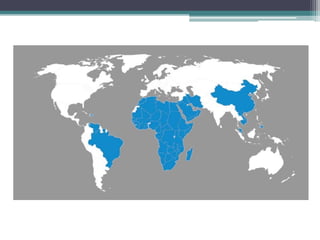
  • #8 The disease is found in many countries in the Middle East (Yemen, Saudi Arabia, Lebanon, Syria, Turkey, Iraq, and Iran) and most of the African continent as well as some countries in far east
  • #11 A study from Jizan published in 2005 states that