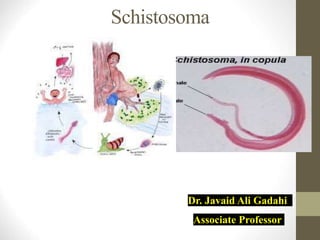
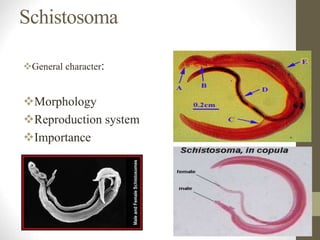
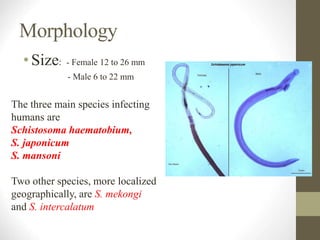
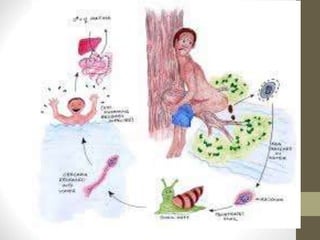
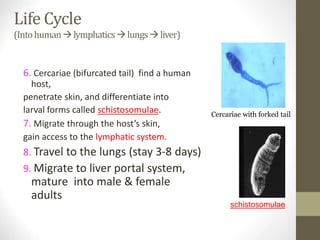
This document discusses Schistosoma, the parasite that causes schistosomiasis. It covers the morphology and life cycle of Schistosoma, which involves snail intermediate hosts and human definitive hosts. The clinical manifestations of schistosomiasis depend on the species and include symptoms caused by the body's immune response to eggs trapped in tissues. Schistosomiasis remains a major public health problem in many developing countries. Diagnosis is via identification of eggs in stool or urine samples, with praziquantel being the treatment of choice. Control relies on treating humans and reservoir hosts as well as reducing contact between people and infected waters.