BY
AMRIT KAUR
ASST.PROFESSOR
NDMVP COLLEGE OF
PHYSIOTHERAPY,
Nasik
INTRODUCTION
 Abdominal muscles form an elaborate
corset which supports your stomach
contents and your back. The central set
of abdominal muscles are the rectus
muscles. These are divided into right
and left halves, joined together by a
thin, fibrous band of connective tissue.
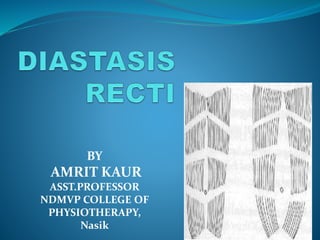
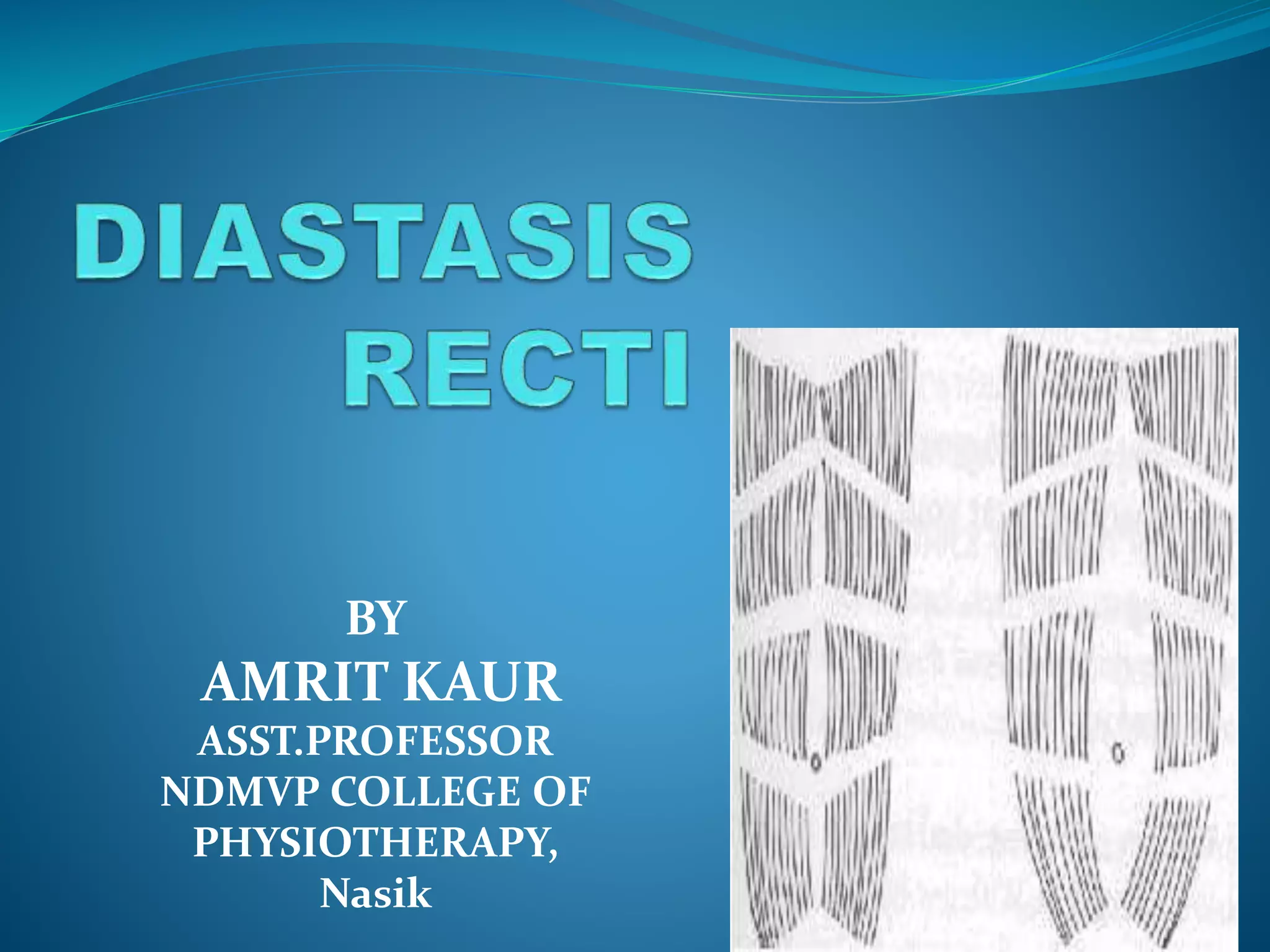
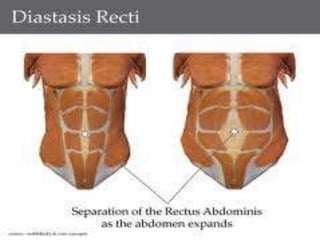
 Diastasis recti is a separation of the
rectus abdominis in the midline at the
linea alba.
 The etiology of this separation is
unknown; however the continuity and
integrity of the abdominal musculature
are disrupted.
 Any separation larger than 2 cm or two
finger widths is considered significant
INCIDENCES
 Diastasis recti may occur in pregnancy
as a result of hormonal effects on the
connective tissue and the biomechanical
changes of pregnancy; it may also
develop during labor, especially while
excessive breath holding during the
second stage.
 It can occur above, below, or at the
level of the umbilicus but appear to
be les common below umbilicus
 It appear to be less common in
women with good abdominal tone
before pregnancy.
SIGNIFICANCE
 May produce musculoskeletal complaints,
such as low back pain, possibly as a result
of decrease ability of the abdominal
musculature to stabilize the pelvis and
lumbar spine.
 Functional limitations
 Decreased fetal protection
 Potential for herniation.
EXAMINATION
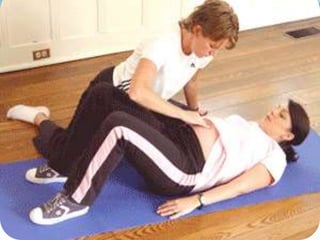
 Test the pregnant patients for presence
of diastasis recti before performing any
abdominal exercises.
 wait until three days after delivery to
perform the diastasis check, as the
muscles will be too slack for a reliable
result.
 If you had a C-section, you should wait
approximately six weeks or until your
incision has healed.
INTERVENTION
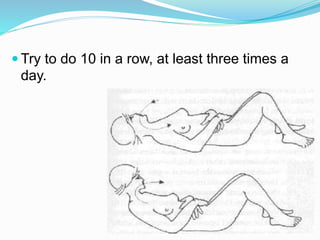
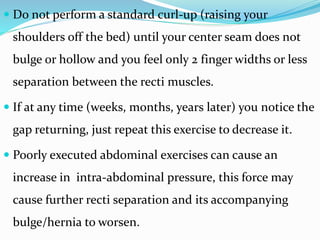
 Lie on your back, knees bent.
 Cross your hands at your waist and guide your recti
muscles toward the midline to stabilize them.
 Take in a deep breath.
 As you slowly exhale, perform a pelvic muscle
contraction and raise your head off the bed (keep
your shoulders on the bed).
While you lift, gently pull your underlying
muscles together with your hands. If your
tummy is too large, wrap a sheet or large
towel around your body, and grasp the
ends with opposite hands. Apply same
pull.
Slowly return to the starting position as
you breathe in.
 Try to do 10 in a row, at least three times a
day.
 Do not perform a standard curl-up (raising your
shoulders off the bed) until your center seam does not
bulge or hollow and you feel only 2 finger widths or less
separation between the recti muscles.
 If at any time (weeks, months, years later) you notice the
gap returning, just repeat this exercise to decrease it.
 Poorly executed abdominal exercises can cause an
increase in intra-abdominal pressure, this force may
cause further recti separation and its accompanying
bulge/hernia to worsen.
 Hence, it is important to monitor DRA (and the hernia if
any) before prescribing any abdominal exercises. Unsuitable
abdominal exercises include sit ups, straight leg raises,
Pilates movements, especially trunk rotation activities, such
as criss-cross sit ups which target the obliques, can strain the
abdominals excessively.
 Weakness in the core muscles contributes to insufficient
force closure of the sacroiliac joint leading to pelvic
instability, which can eventually lead to lower-back and hip
pain. In the worst-case scenario, this recti separation can
result in a hernia.
 At the initial visit, the patient is given instructions on i)
correct body mechanics, ii) proper posture, iii) appropriate
exercises to activate the abdominal musculature, and iv)
appropriate exercises to re-approximate the recti bellies
without increasing intra- abdominal pressure
progression
 Head lift with pelvic tilt
 Pelvic tilt exercise
 Leg sliding
 Trunk curls
 Modified bicycle
 Core muscle strengthening
SPECIAL PRECAUTIONS
Avoid all activities that place stress on the midline, that stretch
or overly expand the abdominal wall.i.e
 Repetitive trunk movements or diagonal twists i.e. during a
tennis serve.
 Exercises that require lying backward over a large exercise
ball.
 Yoga postures that stretch the abs, such as “cow pose,” “up-
dog,” all back-bends, and “belly breathing.”
 Abdominal exercises that work the exterior abdominal
muscles, such as crunches and oblique curls.
 Exercises that cause the abdominal wall to bulge out upon
exertion.
 Lifting and carrying very heavy objects.
 Intense coughing while abdominal muscles are unsupported.

Diastasis recti

  • 1.
  • 2.
    INTRODUCTION  Abdominal musclesform an elaborate corset which supports your stomach contents and your back. The central set of abdominal muscles are the rectus muscles. These are divided into right and left halves, joined together by a thin, fibrous band of connective tissue.
  • 3.
     Diastasis rectiis a separation of the rectus abdominis in the midline at the linea alba.  The etiology of this separation is unknown; however the continuity and integrity of the abdominal musculature are disrupted.  Any separation larger than 2 cm or two finger widths is considered significant
  • 5.
    INCIDENCES  Diastasis rectimay occur in pregnancy as a result of hormonal effects on the connective tissue and the biomechanical changes of pregnancy; it may also develop during labor, especially while excessive breath holding during the second stage.
  • 6.
     It canoccur above, below, or at the level of the umbilicus but appear to be les common below umbilicus  It appear to be less common in women with good abdominal tone before pregnancy.
  • 7.
    SIGNIFICANCE  May producemusculoskeletal complaints, such as low back pain, possibly as a result of decrease ability of the abdominal musculature to stabilize the pelvis and lumbar spine.  Functional limitations  Decreased fetal protection  Potential for herniation.
  • 8.
    EXAMINATION  Test thepregnant patients for presence of diastasis recti before performing any abdominal exercises.  wait until three days after delivery to perform the diastasis check, as the muscles will be too slack for a reliable result.  If you had a C-section, you should wait approximately six weeks or until your incision has healed.
  • 10.
    INTERVENTION  Lie onyour back, knees bent.  Cross your hands at your waist and guide your recti muscles toward the midline to stabilize them.  Take in a deep breath.  As you slowly exhale, perform a pelvic muscle contraction and raise your head off the bed (keep your shoulders on the bed).
  • 11.
    While you lift,gently pull your underlying muscles together with your hands. If your tummy is too large, wrap a sheet or large towel around your body, and grasp the ends with opposite hands. Apply same pull. Slowly return to the starting position as you breathe in.
  • 12.
     Try todo 10 in a row, at least three times a day.
  • 13.
     Do notperform a standard curl-up (raising your shoulders off the bed) until your center seam does not bulge or hollow and you feel only 2 finger widths or less separation between the recti muscles.  If at any time (weeks, months, years later) you notice the gap returning, just repeat this exercise to decrease it.  Poorly executed abdominal exercises can cause an increase in intra-abdominal pressure, this force may cause further recti separation and its accompanying bulge/hernia to worsen.
  • 14.
     Hence, itis important to monitor DRA (and the hernia if any) before prescribing any abdominal exercises. Unsuitable abdominal exercises include sit ups, straight leg raises, Pilates movements, especially trunk rotation activities, such as criss-cross sit ups which target the obliques, can strain the abdominals excessively.  Weakness in the core muscles contributes to insufficient force closure of the sacroiliac joint leading to pelvic instability, which can eventually lead to lower-back and hip pain. In the worst-case scenario, this recti separation can result in a hernia.  At the initial visit, the patient is given instructions on i) correct body mechanics, ii) proper posture, iii) appropriate exercises to activate the abdominal musculature, and iv) appropriate exercises to re-approximate the recti bellies without increasing intra- abdominal pressure
  • 15.
    progression  Head liftwith pelvic tilt  Pelvic tilt exercise  Leg sliding  Trunk curls  Modified bicycle  Core muscle strengthening
  • 16.
    SPECIAL PRECAUTIONS Avoid allactivities that place stress on the midline, that stretch or overly expand the abdominal wall.i.e  Repetitive trunk movements or diagonal twists i.e. during a tennis serve.  Exercises that require lying backward over a large exercise ball.  Yoga postures that stretch the abs, such as “cow pose,” “up- dog,” all back-bends, and “belly breathing.”  Abdominal exercises that work the exterior abdominal muscles, such as crunches and oblique curls.  Exercises that cause the abdominal wall to bulge out upon exertion.  Lifting and carrying very heavy objects.  Intense coughing while abdominal muscles are unsupported.