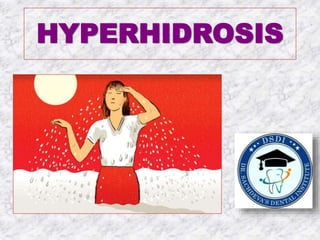
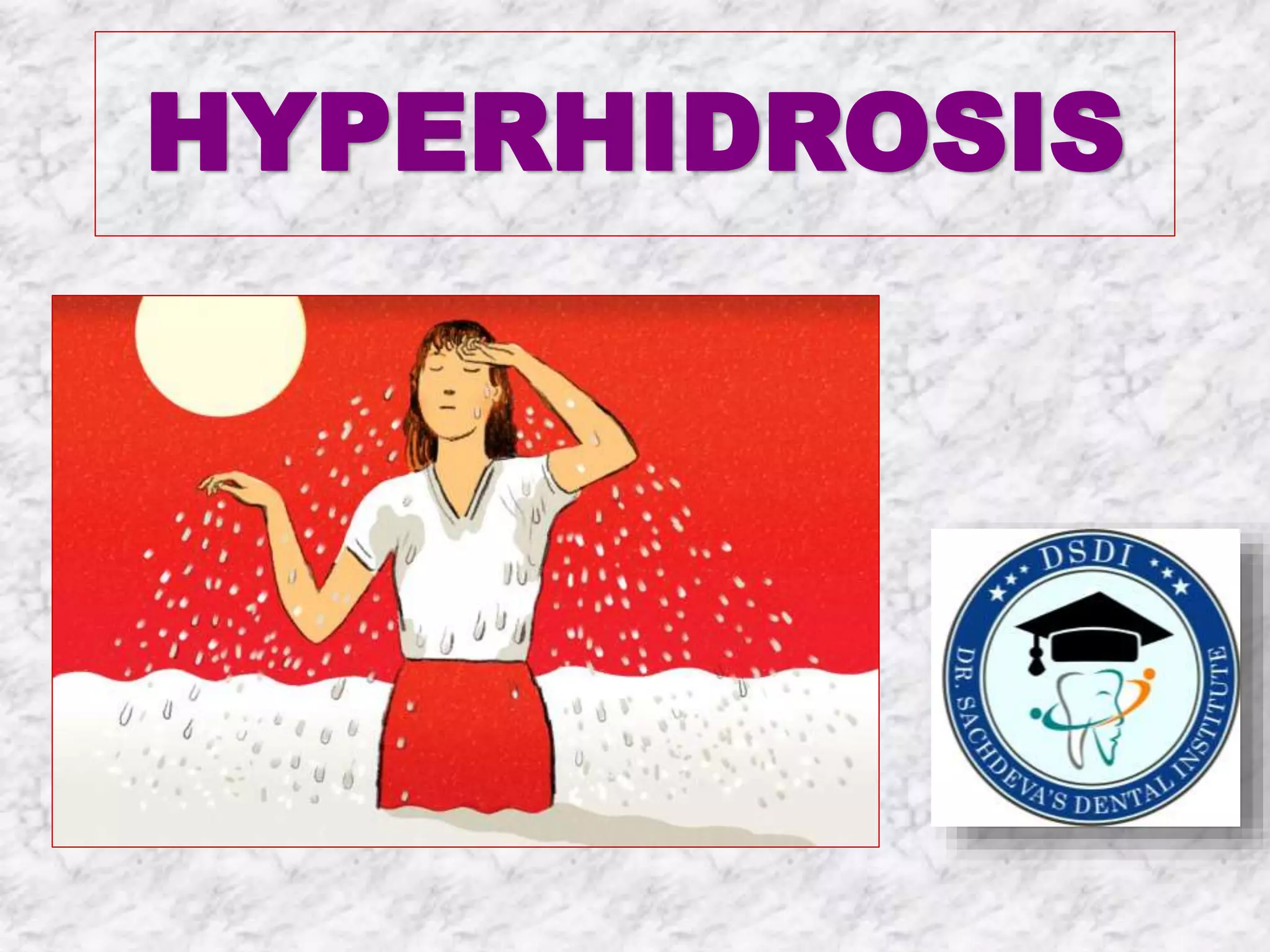


HYPERHIDROSIS
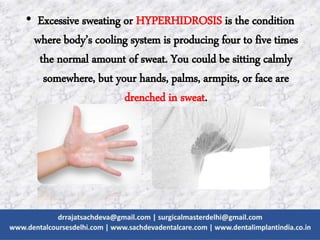
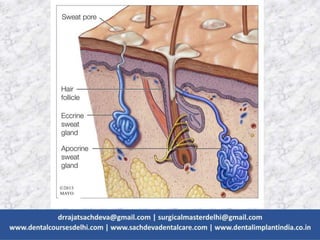
• Excessive sweating or HYPERHIDROSIS is the condition
where body’s cooling system is producing four to five times
the normal amount of sweat. You could be sitting calmly
somewhere, but your hands, palms, armpits, or face are
drenched in sweat.
• PRIMARY FOCAL HYPERHIDROSIS
• Chronic sweating concentrated in one area of your body is
known as primary focal hyperhidrosis. It affects 2 percent to
3 percent of the population, has no known cause, although it
seems to run in families.
• SECONDARY GENERAL HYPERHIDROSIS
• Chronic sweating due to an underlying medical condition.
You must cure the condition to reduce sweating
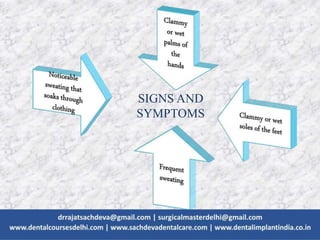
SIGNS AND
SYMPTOMS
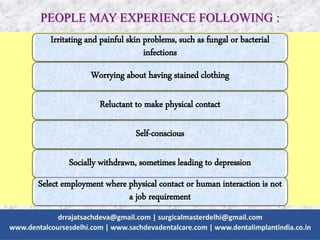
PEOPLE MAY EXPERIENCE FOLLOWING :
Irritating and painful skin problems, such as fungal or bacterial
infections
Worrying about having stained clothing
Reluctant to make physical contact
Self-conscious
Socially withdrawn, sometimes leading to depression
Select employment where physical contact or human interaction is not
a job requirement
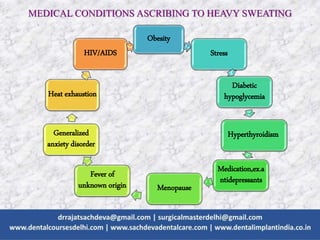
MEDICAL CONDITIONS ASCRIBING TO HEAVY SWEATING
Obesity
Stress
Diabetic
hypoglycemia
Hyperthyroidism
Medication,ex.a
ntidepressants
Menopause
Fever of
unknown origin
Generalized
anxiety disorder
Heat exhaustion
HIV/AIDS
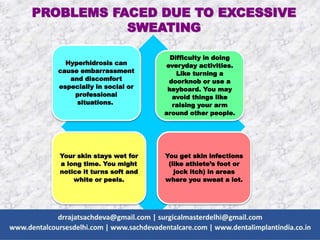
PROBLEMS FACED DUE TO EXCESSIVE
SWEATING
Hyperhidrosis can
cause embarrassment
and discomfort
especially in social or
professional
situations.
Difficulty in doing
everyday activities.
Like turning a
doorknob or use a
keyboard. You may
avoid things like
raising your arm
around other people.
Your skin stays wet for
a long time. You might
notice it turns soft and
white or peels.
You get skin infections
(like athlete’s foot or
jock itch) in areas
where you sweat a lot.
COMPLICATIONS, IF NOT TREATED
 Nail infections: Especially toe , nail infections.
 Warts: Skin growths caused by the HPV (human
papillomavirus).
 Bacterial infections: Especially around hair follicles
and between the toes.
 Heat rash (prickly heat, miliaria): An itchy, red skin rash
that often causes a stinging or prickling sensation. Heat
rash develops when sweat ducts become blocked and
perspiration is trapped under the skin.
 Psychological impact: Excessive sweating can affect the
patient's self-confidence, job, and relationships. Some
individuals may become anxious, emotionally stressed,
socially withdrawn, and even depressed.
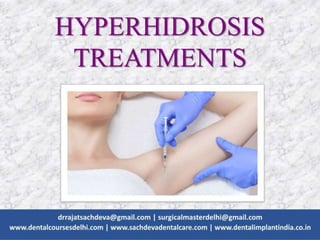
HYPERHIDROSIS
TREATMENTS
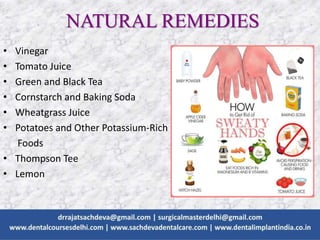
• Vinegar
• Tomato Juice
• Green and Black Tea
• Cornstarch and Baking Soda
• Wheatgrass Juice
• Potatoes and Other Potassium-Rich
Foods
• Thompson Tee
• Lemon
NATURAL REMEDIES
Some alterations in daily activity and lifestyle
• Armpit shields - pads worn in the armpit to protect a garment from
perspiration.
• Clothing - certain synthetic fibers, such as nylon, may worsen
symptoms. Loose clothing is better.
• Shoes - synthetic materials are more likely to worsen symptoms.
Natural materials, such as leather, are recommended.
• Socks - some socks are better at absorbing moisture, such as thick, soft
ones made of natural fibers.
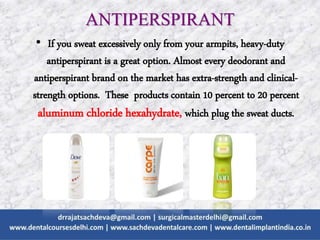
• If you sweat excessively only from your armpits, heavy-duty
antiperspirant is a great option. Almost every deodorant and
antiperspirant brand on the market has extra-strength and clinical-
strength options. These products contain 10 percent to 20 percent
aluminum chloride hexahydrate, which plug the sweat ducts.
ANTIPERSPIRANT
MEDICATIONS
• Anticholinergics drugs, such as Glycopyrrolate and beta
blockers are the medications most commonly used to treat
excessive sweat.
• Anti-cholinergics help prevent the stimulation of sweat
glands. Beta-blockers or benzodiazepines may help reduce
stress-related sweating
• These medications inhibit the transmission of
parasympathetic nerve impulses. Patients generally notice an
improvement in symptoms within about 2 weeks.
• Though they have some side effects. Therefore, they can,
however, be useful for those people who want to
temporarily treat their facial sweating in order to prevent
discomfort or embarrassment at an important event.
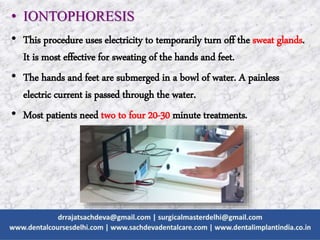
• IONTOPHORESIS
• This procedure uses electricity to temporarily turn off the sweat glands.
It is most effective for sweating of the hands and feet.
• The hands and feet are submerged in a bowl of water. A painless
electric current is passed through the water.
• Most patients need two to four 20-30 minute treatments.
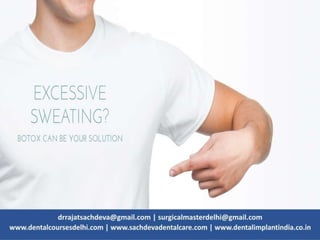
• BOTOX
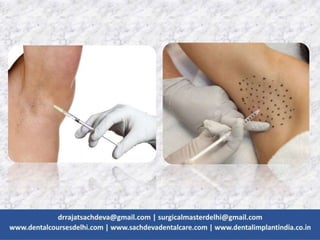
• Many people have success with Botox or to treat hyperhidrosis.
Small doses of purified botulinum toxin injected into the underarm
temporarily block the nerves that stimulate sweating.
• Botox is 80-90 percent effective, but you need to get repeat
injections every six months to keep sweat away. Botox injections
block the nerves that trigger the sweat glands. Patients with
hyperhidrosis may need several injections for effective results
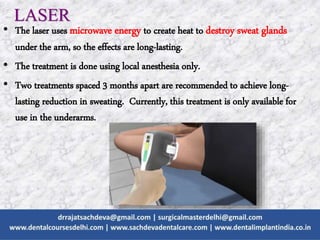
LASER
• The laser uses microwave energy to create heat to destroy sweat glands
under the arm, so the effects are long-lasting.
• The treatment is done using local anesthesia only.
• Two treatments spaced 3 months apart are recommended to achieve long-
lasting reduction in sweating. Currently, this treatment is only available for
use in the underarms.
CONNECT WITH US AT
@dentalcoursesdelhi
drrajatsachdeva
drrajatsachdeva
drrajatsachdeva@surgicalmasterrajat
To book an appmt. contact
Dr.Rajat Sachdeva
Dr Sachdeva’s Dental
Aesthetic & Implant
Institute
I 101, Ashok Vihar Phase 1,
Delhi- 110052
Contact us at
Phone : +919818894041
01142464041
THANK YOU

Hyperhidrosis | Excessive Sweating

  • 1.
  • 2.
    • Excessive sweatingor HYPERHIDROSIS is the condition where body’s cooling system is producing four to five times the normal amount of sweat. You could be sitting calmly somewhere, but your hands, palms, armpits, or face are drenched in sweat.
  • 3.
    • PRIMARY FOCALHYPERHIDROSIS • Chronic sweating concentrated in one area of your body is known as primary focal hyperhidrosis. It affects 2 percent to 3 percent of the population, has no known cause, although it seems to run in families. • SECONDARY GENERAL HYPERHIDROSIS • Chronic sweating due to an underlying medical condition. You must cure the condition to reduce sweating
  • 5.
  • 6.
    PEOPLE MAY EXPERIENCEFOLLOWING : Irritating and painful skin problems, such as fungal or bacterial infections Worrying about having stained clothing Reluctant to make physical contact Self-conscious Socially withdrawn, sometimes leading to depression Select employment where physical contact or human interaction is not a job requirement
  • 7.
    MEDICAL CONDITIONS ASCRIBINGTO HEAVY SWEATING Obesity Stress Diabetic hypoglycemia Hyperthyroidism Medication,ex.a ntidepressants Menopause Fever of unknown origin Generalized anxiety disorder Heat exhaustion HIV/AIDS
  • 8.
    PROBLEMS FACED DUETO EXCESSIVE SWEATING Hyperhidrosis can cause embarrassment and discomfort especially in social or professional situations. Difficulty in doing everyday activities. Like turning a doorknob or use a keyboard. You may avoid things like raising your arm around other people. Your skin stays wet for a long time. You might notice it turns soft and white or peels. You get skin infections (like athlete’s foot or jock itch) in areas where you sweat a lot.
  • 9.
    COMPLICATIONS, IF NOTTREATED  Nail infections: Especially toe , nail infections.  Warts: Skin growths caused by the HPV (human papillomavirus).  Bacterial infections: Especially around hair follicles and between the toes.
  • 10.
     Heat rash(prickly heat, miliaria): An itchy, red skin rash that often causes a stinging or prickling sensation. Heat rash develops when sweat ducts become blocked and perspiration is trapped under the skin.  Psychological impact: Excessive sweating can affect the patient's self-confidence, job, and relationships. Some individuals may become anxious, emotionally stressed, socially withdrawn, and even depressed.
  • 12.
  • 13.
    • Vinegar • TomatoJuice • Green and Black Tea • Cornstarch and Baking Soda • Wheatgrass Juice • Potatoes and Other Potassium-Rich Foods • Thompson Tee • Lemon NATURAL REMEDIES
  • 14.
    Some alterations indaily activity and lifestyle • Armpit shields - pads worn in the armpit to protect a garment from perspiration. • Clothing - certain synthetic fibers, such as nylon, may worsen symptoms. Loose clothing is better. • Shoes - synthetic materials are more likely to worsen symptoms. Natural materials, such as leather, are recommended. • Socks - some socks are better at absorbing moisture, such as thick, soft ones made of natural fibers.
  • 15.
    • If yousweat excessively only from your armpits, heavy-duty antiperspirant is a great option. Almost every deodorant and antiperspirant brand on the market has extra-strength and clinical- strength options. These products contain 10 percent to 20 percent aluminum chloride hexahydrate, which plug the sweat ducts. ANTIPERSPIRANT
  • 16.
    MEDICATIONS • Anticholinergics drugs,such as Glycopyrrolate and beta blockers are the medications most commonly used to treat excessive sweat. • Anti-cholinergics help prevent the stimulation of sweat glands. Beta-blockers or benzodiazepines may help reduce stress-related sweating
  • 17.
    • These medicationsinhibit the transmission of parasympathetic nerve impulses. Patients generally notice an improvement in symptoms within about 2 weeks. • Though they have some side effects. Therefore, they can, however, be useful for those people who want to temporarily treat their facial sweating in order to prevent discomfort or embarrassment at an important event.
  • 18.
    • IONTOPHORESIS • Thisprocedure uses electricity to temporarily turn off the sweat glands. It is most effective for sweating of the hands and feet. • The hands and feet are submerged in a bowl of water. A painless electric current is passed through the water. • Most patients need two to four 20-30 minute treatments.
  • 20.
    • BOTOX • Manypeople have success with Botox or to treat hyperhidrosis. Small doses of purified botulinum toxin injected into the underarm temporarily block the nerves that stimulate sweating. • Botox is 80-90 percent effective, but you need to get repeat injections every six months to keep sweat away. Botox injections block the nerves that trigger the sweat glands. Patients with hyperhidrosis may need several injections for effective results
  • 22.
    LASER • The laseruses microwave energy to create heat to destroy sweat glands under the arm, so the effects are long-lasting. • The treatment is done using local anesthesia only. • Two treatments spaced 3 months apart are recommended to achieve long- lasting reduction in sweating. Currently, this treatment is only available for use in the underarms.
  • 23.
    CONNECT WITH USAT @dentalcoursesdelhi drrajatsachdeva drrajatsachdeva drrajatsachdeva@surgicalmasterrajat
  • 24.
    To book anappmt. contact Dr.Rajat Sachdeva Dr Sachdeva’s Dental Aesthetic & Implant Institute I 101, Ashok Vihar Phase 1, Delhi- 110052 Contact us at Phone : +919818894041 01142464041
  • 25.