Download as PDF, PPTX

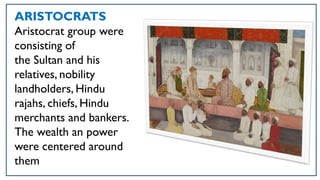
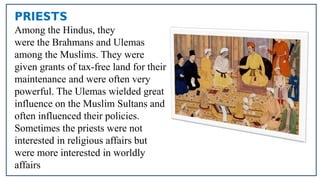
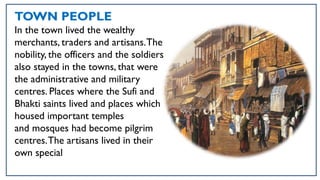
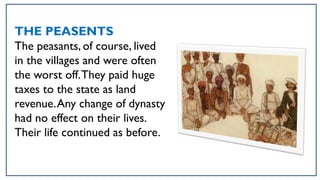
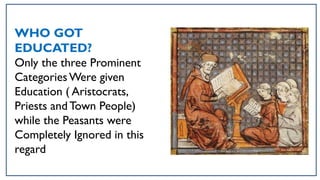



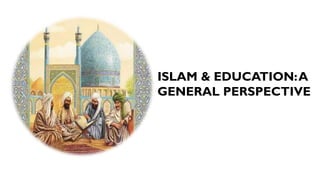
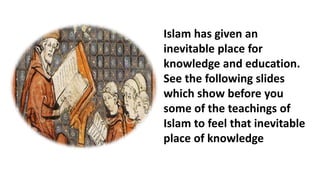
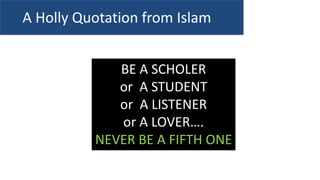
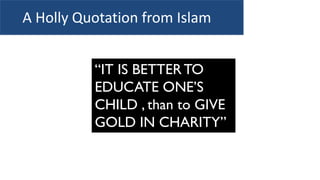
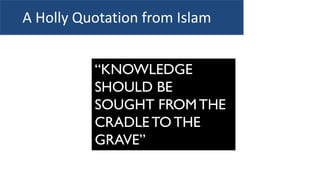
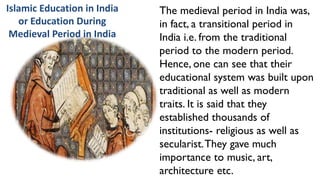
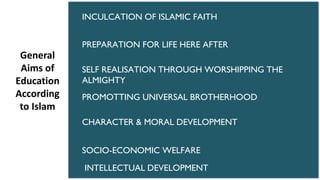
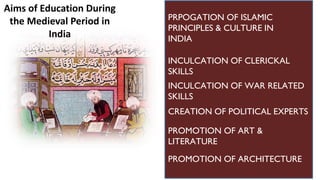
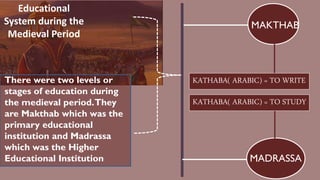
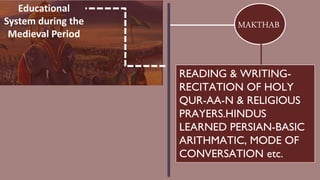
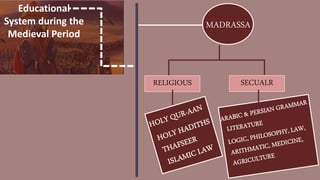
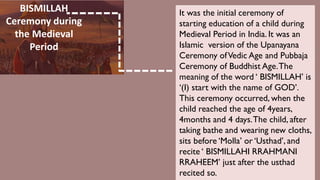
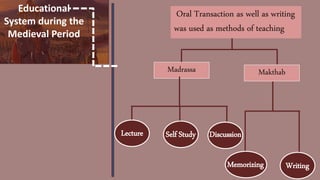
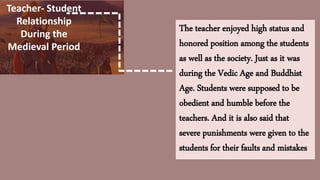

Islamic education in medieval India was structured around societal strata, with education primarily accessible to aristocrats, priests, and town dwellers, while peasants were largely excluded. The educational system emphasized religious and secular learning, with significant cultural contributions in arts and architecture, and established institutions such as makthab for primary education and madrassa for higher studies. Islamic teachings stressed the importance of knowledge and education, advocating for character development and socio-economic welfare.


![Traditional And Contemporary Islamic Scholarship[Slideshare]](https://cdn.slidesharecdn.com/ss_thumbnails/traditionalandcontemporaryislamicscholarshipslideshare-090815090915-phpapp02-thumbnail.jpg?width=640&height=640&fit=bounds)


