




GOVERNMENT POLYTECNIC
DAHOD
SUB : Water Supply & Sanitary
Engineering
(3350603)
SANITARY
FITTING &
HOUSE
DRAINAGE
SYSTEM
PREPARED BY:
1) Labana Pritesh (156300306523)
2) Bhavesh Hathila (156300306047)
INDEX :
What is house drainage system?
Sanitary fitting in house
Point to be remember for house drainage plan
WHAT IS HOUSE DRAINAGE
SYSTEM ?
It is necessary to construct a system of
conveyance of wastewater from W.C,
bathrooms, kitchen & washbasins &
disposal to the municipal sewer. This
system is known as HOUSE DRAINAGE
SYSTEM.
TYPES OF SANITARY FITTING
IN HOUSE
1. Wash basins
2. Sinks
3. Bath tubs
4. Water closets
5. Urinals
6. Flashing cisterns
WASH BASINS
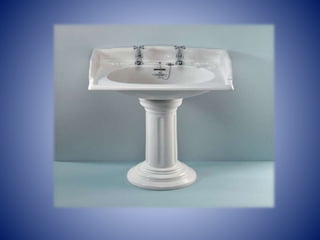
These are plumbing fixtures mainly used for
hand washing
These are normally made up of glazed
earthenware or vitreous china.
Sometimes they are also made from iron
stainless steel or plastic, specially for the
places where users are more.
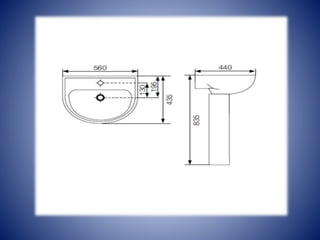
Wash basins may be either flat back pattern or
angle back pattern.
Standard sizes for flat back wash basins are
• 630 x 450 mm
• 550 x 400 mm
• 450 x 300 mm
Standard sizes for angle back wash basins are -
• 600 x 480 mm
• 400 x 400 mm
It has oval shaped bowl. with overflow slot at the
top, The waste pipe with a metallic strainer is
provided at the bottom of the bowl
Sinks
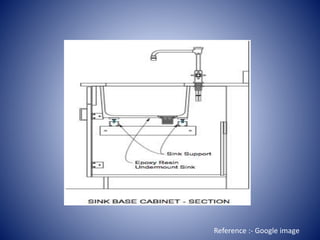
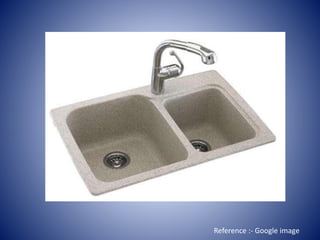
A sink is a rectangular basin used in kitchen or
laboratory for cleaning utensils, and
glasswares.
over a floor trap or nahni trap.
SINKS
These are plumbing fixtures provide in kitchens
for cleaning utensils.
These are also provided in the laboratories for
cleaning glassware etc.
These may be made of glazed earthware stainless
steel or enameled pressed steel.
The sink has an outlet usually of about 40 mm
diameter.
The outlet pipe discharges water.
The mouth of outlet pipe is provided with grating
of bras or nickel so that the entry of coarse solid
substances is prevented.
Common sizes of kitchen sinks:
600 x 400 x 150 mm
600 x 450 x 250 mm
750 x 450 x 250 mm
Common sizes for laboratory sinks:
400 x 250 x 150 mm
450 x 300 x 150 mm
600 x 400 x 200 mm
Reference :- Google image
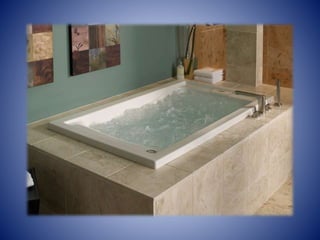
Bath tubs
Bath tub is the plumbing fixtures provided in
the bathroom for taking bath.
Bath tubs are usually made of iron or steel
coated with enamel, enamelled porcelain or of
plastic. They may be parallel sides or with
tapering sides.
A circular waste hole at the bottom of bath tub
is provided for drainage purpose.
The hole is provided with a metallic waste fitting
also called waste coupling
Waste coupling having a strainer & clean opening
of about 40mm to 50 mm
The bath tub is provided with tap or shower and
overflow pipe of 40mm located at 40 to 50mm
below the top edge of the tub.
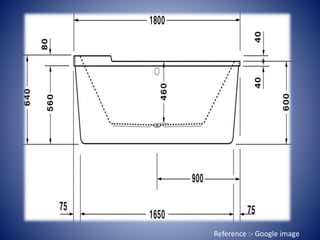
the usual dimensions of both tub are:
• length : 1.7 to 1.85 m
• width : 0.70 to 0.75 m
• depth : 0.6 m
Reference :- Google image
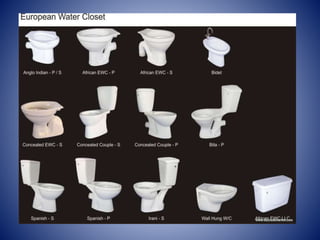
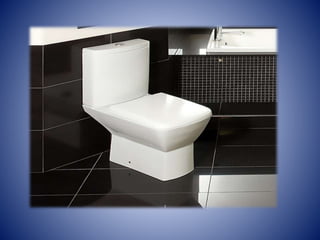
Water closets (W/C)
A water closet is a sanitary fitting which is
designed to receive human excreta directly and
convey to the septic tank or underground sewer
through a trap.
It is made f vitreous china or proclain and
connected to soil pipe through the trap.
The inside surface of water closet and trap are
glazed so that the flushing is smooth and
efficient.
The water closet are of three types:
• Indian type
• European type
• Anglo Indian type
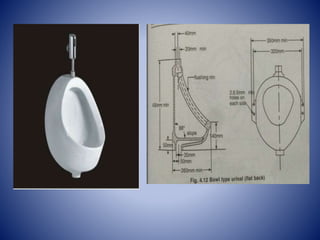
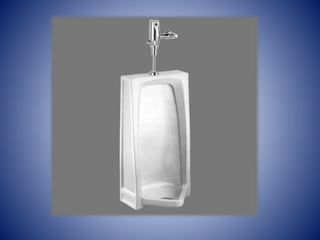
Urinals
Urinals mostly in use are of two types:
• Bowl type
• Stall type
 Standard size of these urinals as follows:
• Flat back pattern : 430 x 260 x 350 mm
• Angle back pattern : 340 x 430 x 265 mm
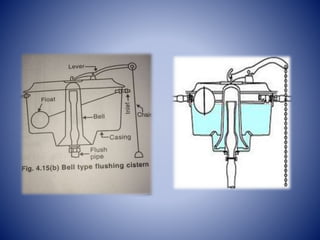
Flushing cistern
It is installed to flush the water closet and urinal.
It is made of cast iron, glazed earthenware or
vitreous china or plastic.
For Indian w/c, flushing cistern are made from
cast iron and fixed at a height of about 1.75 m
above the top of the closest pan 7 they are called
high level flushing cistern
 Flushing cisterns are classified as:
• Siphonic without valve
• Siphonic with valve
HOUSE DRAINAGE PLAN
Important points to be considered while
preparing plan for house drainage plan
Drainage layout plan should be as simple as
possible
Both vertical 7 horizontal pipes shall be laid in
straight lines as far as possible
Where there is change in direction of pipe,
inspection chamber or manhole should be
provided
Sewers should not be laid under a building to
avoid the risk of decrease in bearing capacity
in case of continuous leakage of sewage from
joints.
Pipes should be laid at proper gradient and of
proper size.
The usual size of house sewer are 100mm,
150mm, & 300mm.
Thank you

Sanitary fitting & house drainage system

  • 1.
    GOVERNMENT POLYTECNIC DAHOD SUB :Water Supply & Sanitary Engineering (3350603)
  • 2.
  • 3.
    PREPARED BY: 1) LabanaPritesh (156300306523) 2) Bhavesh Hathila (156300306047)
  • 4.
    INDEX : What ishouse drainage system? Sanitary fitting in house Point to be remember for house drainage plan
  • 5.
    WHAT IS HOUSEDRAINAGE SYSTEM ? It is necessary to construct a system of conveyance of wastewater from W.C, bathrooms, kitchen & washbasins & disposal to the municipal sewer. This system is known as HOUSE DRAINAGE SYSTEM.
  • 6.
    TYPES OF SANITARYFITTING IN HOUSE 1. Wash basins 2. Sinks 3. Bath tubs 4. Water closets 5. Urinals 6. Flashing cisterns
  • 7.
    WASH BASINS These areplumbing fixtures mainly used for hand washing These are normally made up of glazed earthenware or vitreous china. Sometimes they are also made from iron stainless steel or plastic, specially for the places where users are more.
  • 8.
    Wash basins maybe either flat back pattern or angle back pattern. Standard sizes for flat back wash basins are • 630 x 450 mm • 550 x 400 mm • 450 x 300 mm Standard sizes for angle back wash basins are - • 600 x 480 mm • 400 x 400 mm It has oval shaped bowl. with overflow slot at the top, The waste pipe with a metallic strainer is provided at the bottom of the bowl
  • 11.
    Sinks A sink isa rectangular basin used in kitchen or laboratory for cleaning utensils, and glasswares. over a floor trap or nahni trap.
  • 12.
    SINKS These are plumbingfixtures provide in kitchens for cleaning utensils. These are also provided in the laboratories for cleaning glassware etc. These may be made of glazed earthware stainless steel or enameled pressed steel. The sink has an outlet usually of about 40 mm diameter. The outlet pipe discharges water.
  • 13.
    The mouth ofoutlet pipe is provided with grating of bras or nickel so that the entry of coarse solid substances is prevented. Common sizes of kitchen sinks: 600 x 400 x 150 mm 600 x 450 x 250 mm 750 x 450 x 250 mm Common sizes for laboratory sinks: 400 x 250 x 150 mm 450 x 300 x 150 mm 600 x 400 x 200 mm
  • 14.
  • 15.
  • 16.
    Bath tubs Bath tubis the plumbing fixtures provided in the bathroom for taking bath. Bath tubs are usually made of iron or steel coated with enamel, enamelled porcelain or of plastic. They may be parallel sides or with tapering sides. A circular waste hole at the bottom of bath tub is provided for drainage purpose.
  • 17.
    The hole isprovided with a metallic waste fitting also called waste coupling Waste coupling having a strainer & clean opening of about 40mm to 50 mm The bath tub is provided with tap or shower and overflow pipe of 40mm located at 40 to 50mm below the top edge of the tub. the usual dimensions of both tub are: • length : 1.7 to 1.85 m • width : 0.70 to 0.75 m • depth : 0.6 m
  • 19.
  • 20.
    Water closets (W/C) Awater closet is a sanitary fitting which is designed to receive human excreta directly and convey to the septic tank or underground sewer through a trap. It is made f vitreous china or proclain and connected to soil pipe through the trap. The inside surface of water closet and trap are glazed so that the flushing is smooth and efficient. The water closet are of three types: • Indian type • European type • Anglo Indian type
  • 22.
    Urinals Urinals mostly inuse are of two types: • Bowl type • Stall type  Standard size of these urinals as follows: • Flat back pattern : 430 x 260 x 350 mm • Angle back pattern : 340 x 430 x 265 mm
  • 25.
    Flushing cistern It isinstalled to flush the water closet and urinal. It is made of cast iron, glazed earthenware or vitreous china or plastic. For Indian w/c, flushing cistern are made from cast iron and fixed at a height of about 1.75 m above the top of the closest pan 7 they are called high level flushing cistern  Flushing cisterns are classified as: • Siphonic without valve • Siphonic with valve
  • 28.
    HOUSE DRAINAGE PLAN Importantpoints to be considered while preparing plan for house drainage plan Drainage layout plan should be as simple as possible Both vertical 7 horizontal pipes shall be laid in straight lines as far as possible Where there is change in direction of pipe, inspection chamber or manhole should be provided
  • 29.
    Sewers should notbe laid under a building to avoid the risk of decrease in bearing capacity in case of continuous leakage of sewage from joints. Pipes should be laid at proper gradient and of proper size. The usual size of house sewer are 100mm, 150mm, & 300mm.
  • 30.