

GOVERNMENT POLYTECHNIC COLLEGE, DAHOD
CIVIL ENGINEERING DEPARTMENT
SUBJECT : BUILDING SERVICE
TOPIC. : SOUND INSULATION
Prepared by : BARIYAWALA BURHAN
INDEX
• Noise
• Sound Insulation
• General Consideration in sound Insulation
• Sound Insulation Materials
• Wall Insulation. : Vartical Barriers
• Noise Control in Residential Building
NOISE
 Noise is unpleasant and unwanted sound.
The difference between sound and noise
depends upon the listener and the
circumstance.
Effect of noise:
I. Physical
II. Physiological
III. psychological
SOUND INSULATION
 Sound Insulation is the measure
by which the transmission of
sound/noise from inside to outside
or vice-versa or from one room to
the other is prevented.
SOUND INSULATION
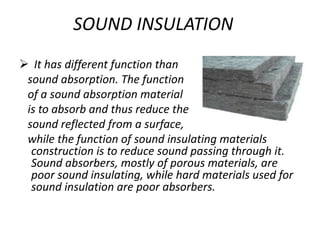
 It has different function than
sound absorption. The function
of a sound absorption material
is to absorb and thus reduce the
sound reflected from a surface,
while the function of sound insulating materials
construction is to reduce sound passing through it.
Sound absorbers, mostly of porous materials, are
poor sound insulating, while hard materials used for
sound insulation are poor absorbers.
General considerations in sound insulation
 The following general considerations should be made
for sound insulation in buildings :
 The first and foremost way of insulating against air-
borne noise is to isolate it at source. Air tight
casements and rooms for machinery would achieve this
purpose to some extent.
 The residential buildings should be properly located in
a quiet area away from the noisy surroundings. The
building should be properly oriented with respect to
road the doors and windows should not face the source
of noise.
 The different units (i.e. rooms) of a building should be
properly planned so as to reduce the noise to a
minimum.
 The control of impact sound to some extent is possible
by either providing resilient materials like carpet,
linoleum, cork under layers, etc. or carries the whole
surface or resilient materials, like a floating floor.
 The structure borne noises can be prevented by
introducing discontinuities in the path of vibrating
waves and by using sound absorbing materials. The
construction of expansion joints in large frame
structures acts in this manner.
 The personal protective devices, such as ear plugs,
head, phones etc. can be used to reduce the noise to
the extent of 20 to 30 dB.
 The transmission of noise by vibrations can be
prevented by making the walls, floors, partitions very
rigid and massive or heavy.
Sound Insulating Materials
 Sound insulating materials
can be broadly classified into
three groups :
 Non-porous rigid materials
 Porous rigid materials
Non rigid (flexible) porous
materials
Non-porous rigid materials :
 The sound insulation of non-porous, homogeneous,
rigid constructions, such as plastered solid brick
masonry walls varies as the logarithms of the weight
per unit area. The relation between the weight of a
rigid partition and its sound insulation is
approximately such that every time the weight is
doubled there is increase in sound insulation of about
4 to 5 dB.
Porous rigid materials
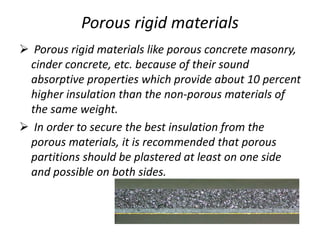
 Porous rigid materials like porous concrete masonry,
cinder concrete, etc. because of their sound
absorptive properties which provide about 10 percent
higher insulation than the non-porous materials of
the same weight.
 In order to secure the best insulation from the
porous materials, it is recommended that porous
partitions should be plastered at least on one side
and possible on both sides.
Non-rigid (Flexible) porous materials :
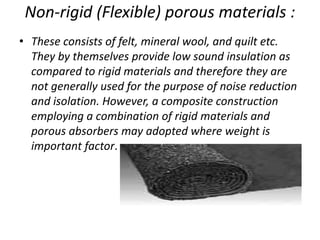
• These consists of felt, mineral wool, and quilt etc.
They by themselves provide low sound insulation as
compared to rigid materials and therefore they are
not generally used for the purpose of noise reduction
and isolation. However, a composite construction
employing a combination of rigid materials and
porous absorbers may adopted where weight is
important factor.
Wall insulation: vertical barriers
 Wall and partitions are the vertical barriers to the
noise. Their proper design construction may insulate
the sound to the desired level.
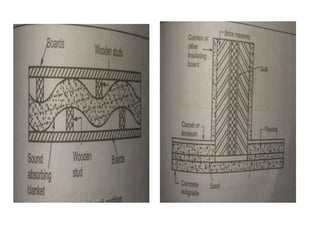
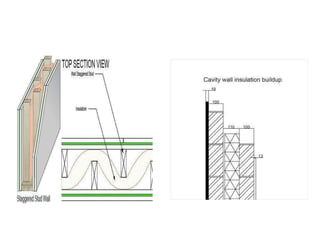
wall construction used for sound insulation are:
I. Rigid homogeneous walls
II. Partition wall of porous materials
III. Double wall partition
IV. Cavity wall construction
Noise control in residential building
The most desirable method is to locate the residential
building in a quite area away from the noisy sources like
the industrial area, rail track, road carrying heavy
traffic.
The dwellings should be surrounded by the maxi
amount of planting and grassed area.
Avoiding hard surfacing around the building
Provide false ceiling.
Roads with through traffic should be excluded from ‘re
hrd e grdv ebesidential areas.
Plumbing pipes should be isolated from the structures.
7. Lift motors should be mounted on resilient supports.
8. Reduce number of openings in wall.
9. Use personal protection devices like ear phone,ear
plug etc.
10. Construct cavity wall construction.
11. Cover walls, ceiling and floor with sound absorbent
material.
12. Construct floating floor over the existing floor.
Sound  insulation

Sound insulation

  • 1.
    GOVERNMENT POLYTECHNIC COLLEGE,DAHOD CIVIL ENGINEERING DEPARTMENT SUBJECT : BUILDING SERVICE TOPIC. : SOUND INSULATION
  • 2.
    Prepared by :BARIYAWALA BURHAN
  • 3.
    INDEX • Noise • SoundInsulation • General Consideration in sound Insulation • Sound Insulation Materials • Wall Insulation. : Vartical Barriers • Noise Control in Residential Building
  • 4.
    NOISE  Noise isunpleasant and unwanted sound. The difference between sound and noise depends upon the listener and the circumstance. Effect of noise: I. Physical II. Physiological III. psychological
  • 5.
    SOUND INSULATION  SoundInsulation is the measure by which the transmission of sound/noise from inside to outside or vice-versa or from one room to the other is prevented.
  • 6.
    SOUND INSULATION  Ithas different function than sound absorption. The function of a sound absorption material is to absorb and thus reduce the sound reflected from a surface, while the function of sound insulating materials construction is to reduce sound passing through it. Sound absorbers, mostly of porous materials, are poor sound insulating, while hard materials used for sound insulation are poor absorbers.
  • 7.
    General considerations insound insulation  The following general considerations should be made for sound insulation in buildings :  The first and foremost way of insulating against air- borne noise is to isolate it at source. Air tight casements and rooms for machinery would achieve this purpose to some extent.  The residential buildings should be properly located in a quiet area away from the noisy surroundings. The building should be properly oriented with respect to road the doors and windows should not face the source of noise.  The different units (i.e. rooms) of a building should be properly planned so as to reduce the noise to a minimum.
  • 8.
     The controlof impact sound to some extent is possible by either providing resilient materials like carpet, linoleum, cork under layers, etc. or carries the whole surface or resilient materials, like a floating floor.  The structure borne noises can be prevented by introducing discontinuities in the path of vibrating waves and by using sound absorbing materials. The construction of expansion joints in large frame structures acts in this manner.  The personal protective devices, such as ear plugs, head, phones etc. can be used to reduce the noise to the extent of 20 to 30 dB.  The transmission of noise by vibrations can be prevented by making the walls, floors, partitions very rigid and massive or heavy.
  • 9.
    Sound Insulating Materials Sound insulating materials can be broadly classified into three groups :  Non-porous rigid materials  Porous rigid materials Non rigid (flexible) porous materials
  • 10.
    Non-porous rigid materials:  The sound insulation of non-porous, homogeneous, rigid constructions, such as plastered solid brick masonry walls varies as the logarithms of the weight per unit area. The relation between the weight of a rigid partition and its sound insulation is approximately such that every time the weight is doubled there is increase in sound insulation of about 4 to 5 dB.
  • 11.
    Porous rigid materials Porous rigid materials like porous concrete masonry, cinder concrete, etc. because of their sound absorptive properties which provide about 10 percent higher insulation than the non-porous materials of the same weight.  In order to secure the best insulation from the porous materials, it is recommended that porous partitions should be plastered at least on one side and possible on both sides.
  • 12.
    Non-rigid (Flexible) porousmaterials : • These consists of felt, mineral wool, and quilt etc. They by themselves provide low sound insulation as compared to rigid materials and therefore they are not generally used for the purpose of noise reduction and isolation. However, a composite construction employing a combination of rigid materials and porous absorbers may adopted where weight is important factor.
  • 13.
    Wall insulation: verticalbarriers  Wall and partitions are the vertical barriers to the noise. Their proper design construction may insulate the sound to the desired level. wall construction used for sound insulation are: I. Rigid homogeneous walls II. Partition wall of porous materials III. Double wall partition IV. Cavity wall construction
  • 16.
    Noise control inresidential building The most desirable method is to locate the residential building in a quite area away from the noisy sources like the industrial area, rail track, road carrying heavy traffic. The dwellings should be surrounded by the maxi amount of planting and grassed area. Avoiding hard surfacing around the building Provide false ceiling. Roads with through traffic should be excluded from ‘re hrd e grdv ebesidential areas. Plumbing pipes should be isolated from the structures.
  • 17.
    7. Lift motorsshould be mounted on resilient supports. 8. Reduce number of openings in wall. 9. Use personal protection devices like ear phone,ear plug etc. 10. Construct cavity wall construction. 11. Cover walls, ceiling and floor with sound absorbent material. 12. Construct floating floor over the existing floor.