Sampling and Non-
Sampling Error
Dr. V. Singh
There are various types of , including and
. Each type affects the validity of results differently. Identifying
these errors is key in designing effective research methodologies.
Understanding Sampling Error
Sampling error arises when a
sample doesn't perfectly represent
the entire population. It's the
difference between a sample
statistic and the corresponding
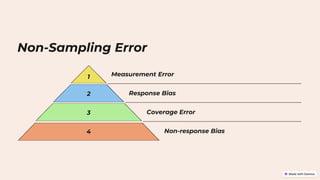
population parameter.
Imagine trying to determine the average
height of all students in a university.
Taking a small sample of students might
not perfectly reflect the overall height
distribution of the entire student body.
What is Sampling Error?
occurs when a sample
does not represent the population
accurately. This can lead to incorrect
conclusions. It is essential to understand
how to minimize this error to improve the
reliability of research results.
Sampling Error
Definition
Sampling error occurs when a
sample doesn't perfectly represent
the population.
Cause
Deviation between the sample
mean and the population
mean.
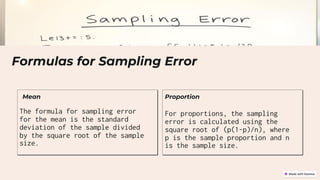
Formulas for Sampling Error
Mean
The formula for sampling error
for the mean is the standard
deviation of the sample divided
by the square root of the sample
size.
Proportion
For proportions, the sampling
error is calculated using the
square root of (p(1-p)/n), where
p is the sample proportion and n
is the sample size.
Causes of Sampling
Error
Randomness
Even with random sampling,
there's inherent
variability. Some samples
might over-represent
certain characteristics,
leading to error.
Sample Size
Smaller sample sizes tend
to have higher sampling
error. Larger samples are
generally better, though
the cost of data collection
should be considered.
Population Variability
A population with greater diversity in a measured
characteristic will have more potential for sampling error.
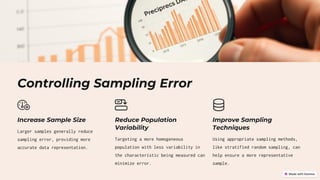
Controlling Sampling Error
Increase Sample Size
Larger samples generally reduce
sampling error, providing more
accurate data representation.
Reduce Population
Variability
Targeting a more homogeneous
population with less variability in
the characteristic being measured can
minimize error.
Improve Sampling
Techniques
Using appropriate sampling methods,
like stratified random sampling, can
help ensure a more representative
sample.
To minimize , researchers
should employ strategies such as
, appropriate sample sizes, and
stratification. These techniques enhance
the representativeness of the sample,
leading to more reliable results.
Minimising Sampling Errors
Understanding Non-Sampling Error
1
This type of error
arises from mistakes or
inaccuracies in the data
collection process,
unrelated to the
sampling method itself.
2
Examples include
recording errors,
faulty equipment,
biased questions, and
incomplete data.
3
It's important to
distinguish between
sampling error, which
stems from sample
selection, and non-
sampling error, which
arises from data
collection flaws.
Non-Sampling Error
Definition
Non-sampling error arises
from sources other than
sampling, like human error
or data analysis issues.
Cause
Deficiencies and inappropriate
analysis of data.
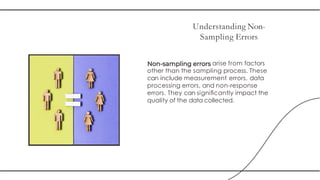
arise from factors
other than the sampling process. These
can include measurement errors, data
processing errors, and non-response
errors. They can significantly impact the
quality of the data collected.
Understanding Non-
Sampling Errors
Non-Sampling Error
1 Measurement Error
2 Response Bias
3 Coverage Error
4 Non-response Bias
Common
Non-Sampling
Errors
Some common
include in survey questions,
misinterpretation of data, and inadequate
follow-up with participants. Awareness of
these errors can help researchers improve
their data collection methods.
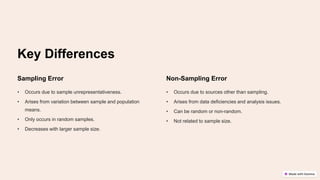
Key Differences
Sampling Error
• Occurs due to sample unrepresentativeness.
• Arises from variation between sample and population
means.
• Only occurs in random samples.
• Decreases with larger sample size.
Non-Sampling Error
• Occurs due to sources other than sampling.
• Arises from data deficiencies and analysis issues.
• Can be random or non-random.
• Not related to sample size.
Causes of Non-Sampling Error
Data Entry Errors
Mistakes during data input can introduce errors.
Double-checking data entry is crucial.
Measurement Errors
Inaccurate measurement tools or inconsistent application of
measurement procedures can affect results.
Response Bias
When respondents provide inaccurate answers due to factors like social
desirability or misunderstanding questions, it can introduce error.
Coverage Error
This occurs when the sampling frame doesn't adequately represent
the target population, leading to exclusion of certain groups.
Non-response Bias
When individuals decline to participate in the survey, their characteristics
might differ from those who respond, leading to bias.
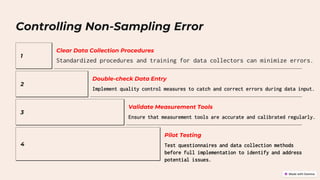
Controlling Non-Sampling Error
1
Clear Data Collection Procedures
Standardized procedures and training for data collectors can minimize errors.
2
Double-check Data Entry
Implement quality control measures to catch and correct errors during data input.
3
Validate Measurement Tools
Ensure that measurement tools are accurate and calibrated regularly.
4
Pilot Testing
Test questionnaires and data collection methods
before full implementation to identify and address
potential issues.
Addressing Non-Sampling
Error
Clear Definitions
Ensure precise definitions and
instructions to avoid ambiguity.
Trained Interviewers
Use experienced and well-
trained interviewers to minimize
data collection errors.
Data Validation
Implement thorough data validation processes to identify and correct
errors.
Sampling errors can lead to
and affect the overall
credibility of research. Understanding their
impact helps researchers make informed
decisions about data interpretation and
reporting.
Impact of Sampling Errors
Non-sampling errors can distort the
of research findings. They can
lead to flawed analyses and affect policy
decisions based on incorrect data.
Addressing these errors is critical for valid
research outcomes.
Impact of Non-Sampling Error
Impact on Research
Both sampling and non-sampling errors can significantly impact research
findings. It's crucial to understand and address these errors to ensure data
accuracy and reliability.
Conclusion: Managing
Errors for Reliable Data
1
Sampling Error
Results from random variation in
sample selection.
2
Non-Sampling Error
Stems from inaccuracies in the data
collection process.
3
Combined Efforts
Managing both types of error is
crucial for collecting accurate and
reliable data.
Conclusion
Sampling error is controllable through sample size, while non-sampling error
requires careful planning and execution. Both types of error must be
considered to ensure accurate and reliable research results.

Thanks!

Sampling and Non Sampling-Error- Concept and Uses

  • 1.
    Sampling and Non- SamplingError Dr. V. Singh
  • 2.
    There are varioustypes of , including and . Each type affects the validity of results differently. Identifying these errors is key in designing effective research methodologies.
  • 3.
    Understanding Sampling Error Samplingerror arises when a sample doesn't perfectly represent the entire population. It's the difference between a sample statistic and the corresponding population parameter. Imagine trying to determine the average height of all students in a university. Taking a small sample of students might not perfectly reflect the overall height distribution of the entire student body.
  • 4.
    What is SamplingError? occurs when a sample does not represent the population accurately. This can lead to incorrect conclusions. It is essential to understand how to minimize this error to improve the reliability of research results.
  • 5.
    Sampling Error Definition Sampling erroroccurs when a sample doesn't perfectly represent the population. Cause Deviation between the sample mean and the population mean.
  • 6.
    Formulas for SamplingError Mean The formula for sampling error for the mean is the standard deviation of the sample divided by the square root of the sample size. Proportion For proportions, the sampling error is calculated using the square root of (p(1-p)/n), where p is the sample proportion and n is the sample size.
  • 7.
    Causes of Sampling Error Randomness Evenwith random sampling, there's inherent variability. Some samples might over-represent certain characteristics, leading to error. Sample Size Smaller sample sizes tend to have higher sampling error. Larger samples are generally better, though the cost of data collection should be considered. Population Variability A population with greater diversity in a measured characteristic will have more potential for sampling error.
  • 8.
    Controlling Sampling Error IncreaseSample Size Larger samples generally reduce sampling error, providing more accurate data representation. Reduce Population Variability Targeting a more homogeneous population with less variability in the characteristic being measured can minimize error. Improve Sampling Techniques Using appropriate sampling methods, like stratified random sampling, can help ensure a more representative sample.
  • 9.
    To minimize ,researchers should employ strategies such as , appropriate sample sizes, and stratification. These techniques enhance the representativeness of the sample, leading to more reliable results. Minimising Sampling Errors
  • 10.
    Understanding Non-Sampling Error 1 Thistype of error arises from mistakes or inaccuracies in the data collection process, unrelated to the sampling method itself. 2 Examples include recording errors, faulty equipment, biased questions, and incomplete data. 3 It's important to distinguish between sampling error, which stems from sample selection, and non- sampling error, which arises from data collection flaws.
  • 11.
    Non-Sampling Error Definition Non-sampling errorarises from sources other than sampling, like human error or data analysis issues. Cause Deficiencies and inappropriate analysis of data.
  • 12.
    arise from factors otherthan the sampling process. These can include measurement errors, data processing errors, and non-response errors. They can significantly impact the quality of the data collected. Understanding Non- Sampling Errors
  • 13.
    Non-Sampling Error 1 MeasurementError 2 Response Bias 3 Coverage Error 4 Non-response Bias
  • 14.
    Common Non-Sampling Errors Some common include insurvey questions, misinterpretation of data, and inadequate follow-up with participants. Awareness of these errors can help researchers improve their data collection methods.
  • 15.
    Key Differences Sampling Error •Occurs due to sample unrepresentativeness. • Arises from variation between sample and population means. • Only occurs in random samples. • Decreases with larger sample size. Non-Sampling Error • Occurs due to sources other than sampling. • Arises from data deficiencies and analysis issues. • Can be random or non-random. • Not related to sample size.
  • 16.
    Causes of Non-SamplingError Data Entry Errors Mistakes during data input can introduce errors. Double-checking data entry is crucial. Measurement Errors Inaccurate measurement tools or inconsistent application of measurement procedures can affect results. Response Bias When respondents provide inaccurate answers due to factors like social desirability or misunderstanding questions, it can introduce error. Coverage Error This occurs when the sampling frame doesn't adequately represent the target population, leading to exclusion of certain groups. Non-response Bias When individuals decline to participate in the survey, their characteristics might differ from those who respond, leading to bias.
  • 17.
    Controlling Non-Sampling Error 1 ClearData Collection Procedures Standardized procedures and training for data collectors can minimize errors. 2 Double-check Data Entry Implement quality control measures to catch and correct errors during data input. 3 Validate Measurement Tools Ensure that measurement tools are accurate and calibrated regularly. 4 Pilot Testing Test questionnaires and data collection methods before full implementation to identify and address potential issues.
  • 18.
    Addressing Non-Sampling Error Clear Definitions Ensureprecise definitions and instructions to avoid ambiguity. Trained Interviewers Use experienced and well- trained interviewers to minimize data collection errors. Data Validation Implement thorough data validation processes to identify and correct errors.
  • 19.
    Sampling errors canlead to and affect the overall credibility of research. Understanding their impact helps researchers make informed decisions about data interpretation and reporting. Impact of Sampling Errors
  • 20.
    Non-sampling errors candistort the of research findings. They can lead to flawed analyses and affect policy decisions based on incorrect data. Addressing these errors is critical for valid research outcomes. Impact of Non-Sampling Error
  • 21.
    Impact on Research Bothsampling and non-sampling errors can significantly impact research findings. It's crucial to understand and address these errors to ensure data accuracy and reliability.
  • 22.
    Conclusion: Managing Errors forReliable Data 1 Sampling Error Results from random variation in sample selection. 2 Non-Sampling Error Stems from inaccuracies in the data collection process. 3 Combined Efforts Managing both types of error is crucial for collecting accurate and reliable data.
  • 23.
    Conclusion Sampling error iscontrollable through sample size, while non-sampling error requires careful planning and execution. Both types of error must be considered to ensure accurate and reliable research results.
  • 24.