

EXCITING FUTURE OF CARBON 
NANOTUBES
What Are They? 
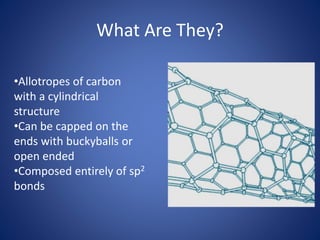
•Allotropes of carbon 
with a cylindrical 
structure 
•Can be capped on the 
ends with buckyballs or 
open ended 
•Composed entirely of sp2 
bonds
Why Should We Care? 
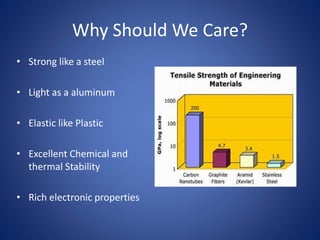
• Strong like a steel 
• Light as a aluminum 
• Elastic like Plastic 
• Excellent Chemical and 
thermal Stability 
• Rich electronic properties
CNT 
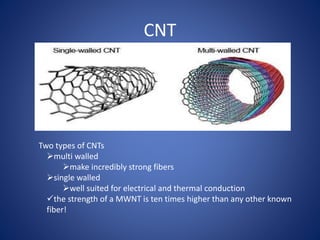
Two types of CNTs 
multi walled 
make incredibly strong fibers 
single walled 
well suited for electrical and thermal conduction 
the strength of a MWNT is ten times higher than any other known 
fiber!
PROPERTIES 
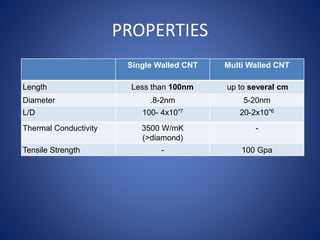
Single Walled CNT Multi Walled CNT 
Length Less than 100nm up to several cm 
Diameter .8-2nm 5-20nm 
L/D 100- 4x10^7 20-2x10^6 
Thermal Conductivity 3500 W/mK 
(>diamond) 
- 
Tensile Strength - 100 Gpa
Synthesis of CNTs 
 Arc discharge 
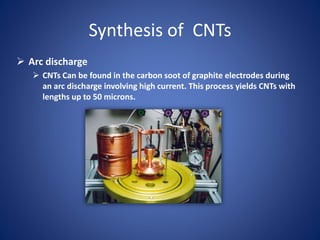
 CNTs Can be found in the carbon soot of graphite electrodes during 
an arc discharge involving high current. This process yields CNTs with 
lengths up to 50 microns.
 Laser Ablation 
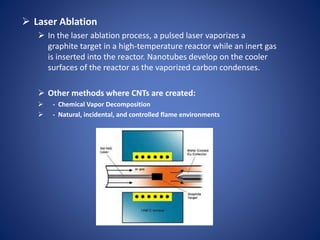
 In the laser ablation process, a pulsed laser vaporizes a 
graphite target in a high-temperature reactor while an inert gas 
is inserted into the reactor. Nanotubes develop on the cooler 
surfaces of the reactor as the vaporized carbon condenses. 
 Other methods where CNTs are created: 
 - Chemical Vapor Decomposition 
 - Natural, incidental, and controlled flame environments
Emerging application 
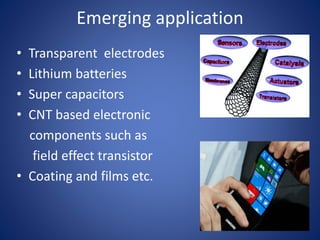
• Transparent electrodes 
• Lithium batteries 
• Super capacitors 
• CNT based electronic 
components such as 
field effect transistor 
• Coating and films etc.
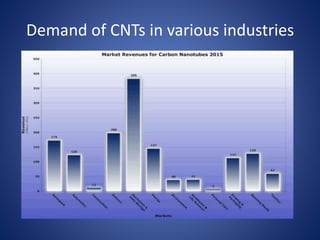
Demand of CNTs in various industries
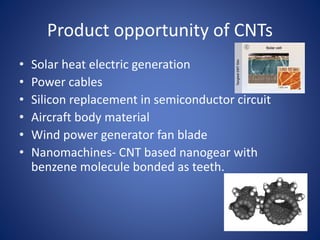
Product opportunity of CNTs 
• Solar heat electric generation 
• Power cables 
• Silicon replacement in semiconductor circuit 
• Aircraft body material 
• Wind power generator fan blade 
• Nanomachines- CNT based nanogear with 
benzene molecule bonded as teeth.
Challenges and potential 
 Potentials : 
– the new wonder material, can useful in many types of industry 
,especially in electronics applications 
– The field of research for CNTs has become so broad over the past 
20 years that they are being tested for use in fields . 
 Challenges : 
– Too expensive . 
– toxicological issues.
Solutions 
• Driving down CNTs prices by mass production 
• Using waste materials for CNTs production such 
as polyethylene which are good carbonaceous 
feed for CNTs production. 
• Develop exposure standards for 
Inhalation 
Ingestion 
Skin contact 
Injection
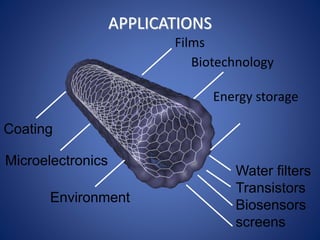
APPLICATIONS 
Biotechnology 
Coating 
Environment 
Energy storage 
Microelectronics 
Films 
Water filters 
Transistors 
Biosensors 
screens
carbon nano tube in future

carbon nano tube in future

  • 1.
    EXCITING FUTURE OFCARBON NANOTUBES
  • 2.
    What Are They? •Allotropes of carbon with a cylindrical structure •Can be capped on the ends with buckyballs or open ended •Composed entirely of sp2 bonds
  • 3.
    Why Should WeCare? • Strong like a steel • Light as a aluminum • Elastic like Plastic • Excellent Chemical and thermal Stability • Rich electronic properties
  • 4.
    CNT Two typesof CNTs multi walled make incredibly strong fibers single walled well suited for electrical and thermal conduction the strength of a MWNT is ten times higher than any other known fiber!
  • 5.
    PROPERTIES Single WalledCNT Multi Walled CNT Length Less than 100nm up to several cm Diameter .8-2nm 5-20nm L/D 100- 4x10^7 20-2x10^6 Thermal Conductivity 3500 W/mK (>diamond) - Tensile Strength - 100 Gpa
  • 6.
    Synthesis of CNTs  Arc discharge  CNTs Can be found in the carbon soot of graphite electrodes during an arc discharge involving high current. This process yields CNTs with lengths up to 50 microns.
  • 7.
     Laser Ablation  In the laser ablation process, a pulsed laser vaporizes a graphite target in a high-temperature reactor while an inert gas is inserted into the reactor. Nanotubes develop on the cooler surfaces of the reactor as the vaporized carbon condenses.  Other methods where CNTs are created:  - Chemical Vapor Decomposition  - Natural, incidental, and controlled flame environments
  • 8.
    Emerging application •Transparent electrodes • Lithium batteries • Super capacitors • CNT based electronic components such as field effect transistor • Coating and films etc.
  • 9.
    Demand of CNTsin various industries
  • 10.
    Product opportunity ofCNTs • Solar heat electric generation • Power cables • Silicon replacement in semiconductor circuit • Aircraft body material • Wind power generator fan blade • Nanomachines- CNT based nanogear with benzene molecule bonded as teeth.
  • 11.
    Challenges and potential  Potentials : – the new wonder material, can useful in many types of industry ,especially in electronics applications – The field of research for CNTs has become so broad over the past 20 years that they are being tested for use in fields .  Challenges : – Too expensive . – toxicological issues.
  • 12.
    Solutions • Drivingdown CNTs prices by mass production • Using waste materials for CNTs production such as polyethylene which are good carbonaceous feed for CNTs production. • Develop exposure standards for Inhalation Ingestion Skin contact Injection
  • 13.
    APPLICATIONS Biotechnology Coating Environment Energy storage Microelectronics Films Water filters Transistors Biosensors screens

Editor's Notes