




Presentation on :
Carbon nanotube and its application
POWER STATION
Course instructor : FAIZ, RETHWAN
FALL 2015
• Group member : Id :
• 1. Md.Ashraful Islam 12-20872-1
• 2. Afrin Zenia 12-22505-3
• 3. Enam Md. Touhidul 10-17635-3
• 4. Haque Tahsin ,Shamsul Arefin 12-21353-2
Carbon nanotube and its application
• The history of carbon nanotubes is not entirely clear even for those in the science therefore giving
proper credit to the person that invented the carbon nanotube has been the subject of several high
tech debates among the scientific communities. The initial history of nanotubes started in the
1970s. A preparation of the planned carbon filaments was completed by Morinobu Endo who was
earning his Ph.D. at the University of Orleans, France.The growth of these carbon filaments were
initially thought to be the first carbon nanotubes. However, they failed to meet the measurement
requirements for width and thus were deemed, eventually, barrelenes.
•What is a Carbon Nanotube?
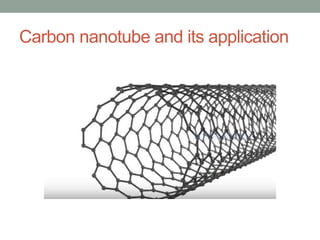
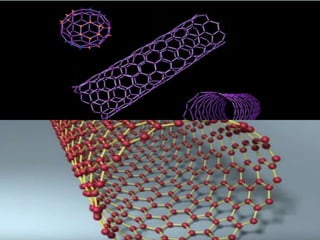
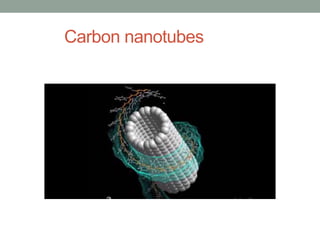
• A Carbon Nanotube is a tube-shaped material, made of carbon, having a diameter measuring on the
nanometer scale. A nanometer is one-billionth of a meter, or about one ten-thousandth of the thickness of a
human hair. The graphite layer appears somewhat like a rolled-up chicken wire with a continuous unbroken
hexagonal mesh and carbon molecules at the apexes of the hexagons.
• Carbon Nanotubes have many structures, differing in length, thickness, and in the type of helicity and
number of layers. Although they are formed from essentially the same graphite sheet, their electrical
characteristics differ depending on these variations, acting either as metals or as semiconductors.
• As a group, Carbon Nanotubes typically have diameters ranging from <1 nm up to 50 nm. Their lengths are
typically several microns, but recent advancements have made the nanotubes much longer, and measured
in centimeters.
• Carbon Nanotubes can be categorized by their structures:
• Single-wall Nanotubes (SWNT)
• Multi-wall Nanotubes (MWNT)
• Double-wall Nanotubes (DWNT)
History of Carbon Nanotubes:
Carbon nanotubes
Application of carbon nanotube:
•Electrical circuits:
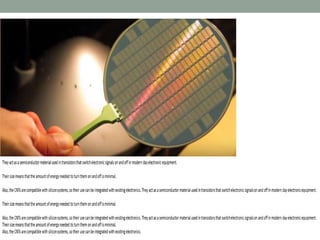
• Nanotube-based transistors, also known as carbon nanotube field-effect transistors (CNTFETs),
have been made that operate at room temperature and that are capable of digital switching using a
single electron.[ However, one major obstacle to realization of nanotubes has been the lack of
technology for mass production. In 2001 IBM researchers demonstrated how metallic nanotubes
can be destroyed, leaving semiconducting ones behind for use as transistors. Their process is
called "constructive destruction," which includes the automatic destruction of defective nanotubes
on the Wafer. This process, however, only gives control over the electrical properties on a
statistical scale.
• Electrical cables and wires:
• Wires for carrying electric current may be fabricated from pure nanotubes and nanotube-polymer
composites. It has already been demonstrated that carbon nanotube wires can successfully be
used for power or data transmission. Recently small wires have been fabricated with specific
conductivity exceeding copper and aluminum; these cables are the highest conductivity carbon
nanotube and also highest conductivity non-metal cables. Recently, composite of carbon nanotube
and copper have been shown to exhibit nearly one hundred times higher current-carrying-capacity
than pure copper or gold. Significantly, the electrical conductivity of such a composite is similar to
pure Cu. Thus, this Carbon nanotube-copper (CNT-Cu) composite possesses the highest observed
current-carrying capacity among electrical conductors.
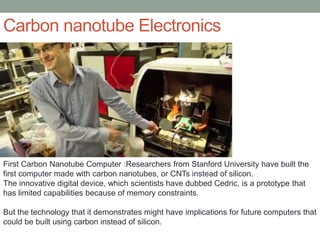
Carbon nanotube Electronics
First Carbon Nanotube Computer :Researchers from Stanford University have built the
first computer made with carbon nanotubes, or CNTs instead of silicon.
The innovative digital device, which scientists have dubbed Cedric, is a prototype that
has limited capabilities because of memory constraints.
But the technology that it demonstrates might have implications for future computers that
could be built using carbon instead of silicon.
Lead author of the study Subhasish Mitra said: "People have been talking about
a new era of carbon nanotube electronics, but there have been few
demonstrations. Here is the proof."
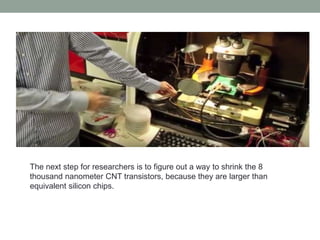
The next step for researchers is to figure out a way to shrink the 8
thousand nanometer CNT transistors, because they are larger than
equivalent silicon chips.
Carbon nanotube in medicine
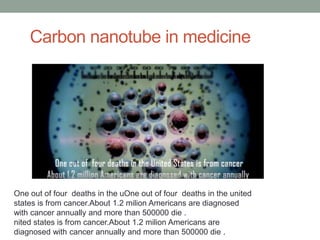
One out of four deaths in the uOne out of four deaths in the united
states is from cancer.About 1.2 milion Americans are diagnosed
with cancer annually and more than 500000 die .
nited states is from cancer.About 1.2 milion Americans are
diagnosed with cancer annually and more than 500000 die .
But targeted drug delivery using nanotechnology can
open a new era in cancer therapy.
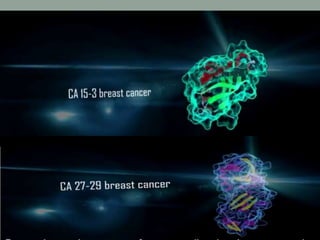
• A tumer marker is a substance in the body tissues that can be
elevated only on cancer cells.Oncomarkers is the signature of
a cancer cell,and modern nanoparticles developed to conjugate
to various molecular markers.DOXORUBICIN is the most
efficient anti cancer drug.but DOX can cause death of
unhealthy cells too.Thats why nanoscale capsula can deliver
dox only inside cancer cells using oncomarker signatures.it
consists of a DNA origami shell covered by immune factors
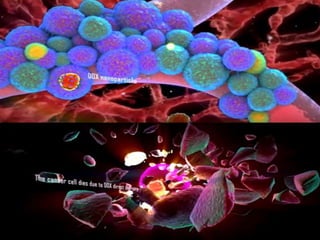
with molecular binding sites on its surface.Nanoperticle delivery
starts from bloodstream.DOX nanoperticles penetrate inside
the cancer cell due to cancer markers on its surface.When
nanocapsule Conjugated with several markers its dna origami
shell opens releasing DOX inside the cell.Dox successfully
delivered.
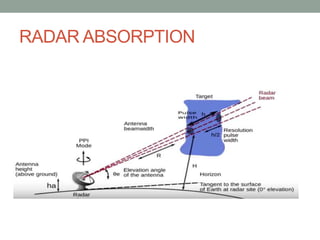
RADAR ABSORPTION
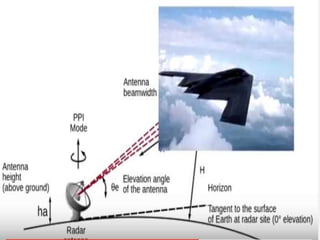
• Radar is a detection system is sense out by radio
waves.When the radio waves see the object,they turn
back to the detector and terminates the location of the
object.however if the object will be covered with carbon
nanotube it will start the radar because the carbon
nanotube absorved the radio wave.
• now that will bw perfect for military operation.
Futute perspective
Thank you

Carbon nanotube and its application

  • 1.
    Presentation on : Carbonnanotube and its application POWER STATION Course instructor : FAIZ, RETHWAN FALL 2015
  • 2.
    • Group member: Id : • 1. Md.Ashraful Islam 12-20872-1 • 2. Afrin Zenia 12-22505-3 • 3. Enam Md. Touhidul 10-17635-3 • 4. Haque Tahsin ,Shamsul Arefin 12-21353-2
  • 3.
    Carbon nanotube andits application
  • 5.
    • The historyof carbon nanotubes is not entirely clear even for those in the science therefore giving proper credit to the person that invented the carbon nanotube has been the subject of several high tech debates among the scientific communities. The initial history of nanotubes started in the 1970s. A preparation of the planned carbon filaments was completed by Morinobu Endo who was earning his Ph.D. at the University of Orleans, France.The growth of these carbon filaments were initially thought to be the first carbon nanotubes. However, they failed to meet the measurement requirements for width and thus were deemed, eventually, barrelenes. •What is a Carbon Nanotube? • A Carbon Nanotube is a tube-shaped material, made of carbon, having a diameter measuring on the nanometer scale. A nanometer is one-billionth of a meter, or about one ten-thousandth of the thickness of a human hair. The graphite layer appears somewhat like a rolled-up chicken wire with a continuous unbroken hexagonal mesh and carbon molecules at the apexes of the hexagons. • Carbon Nanotubes have many structures, differing in length, thickness, and in the type of helicity and number of layers. Although they are formed from essentially the same graphite sheet, their electrical characteristics differ depending on these variations, acting either as metals or as semiconductors. • As a group, Carbon Nanotubes typically have diameters ranging from <1 nm up to 50 nm. Their lengths are typically several microns, but recent advancements have made the nanotubes much longer, and measured in centimeters. • Carbon Nanotubes can be categorized by their structures: • Single-wall Nanotubes (SWNT) • Multi-wall Nanotubes (MWNT) • Double-wall Nanotubes (DWNT) History of Carbon Nanotubes:
  • 6.
  • 7.
    Application of carbonnanotube: •Electrical circuits: • Nanotube-based transistors, also known as carbon nanotube field-effect transistors (CNTFETs), have been made that operate at room temperature and that are capable of digital switching using a single electron.[ However, one major obstacle to realization of nanotubes has been the lack of technology for mass production. In 2001 IBM researchers demonstrated how metallic nanotubes can be destroyed, leaving semiconducting ones behind for use as transistors. Their process is called "constructive destruction," which includes the automatic destruction of defective nanotubes on the Wafer. This process, however, only gives control over the electrical properties on a statistical scale. • Electrical cables and wires: • Wires for carrying electric current may be fabricated from pure nanotubes and nanotube-polymer composites. It has already been demonstrated that carbon nanotube wires can successfully be used for power or data transmission. Recently small wires have been fabricated with specific conductivity exceeding copper and aluminum; these cables are the highest conductivity carbon nanotube and also highest conductivity non-metal cables. Recently, composite of carbon nanotube and copper have been shown to exhibit nearly one hundred times higher current-carrying-capacity than pure copper or gold. Significantly, the electrical conductivity of such a composite is similar to pure Cu. Thus, this Carbon nanotube-copper (CNT-Cu) composite possesses the highest observed current-carrying capacity among electrical conductors.
  • 8.
    Carbon nanotube Electronics FirstCarbon Nanotube Computer :Researchers from Stanford University have built the first computer made with carbon nanotubes, or CNTs instead of silicon. The innovative digital device, which scientists have dubbed Cedric, is a prototype that has limited capabilities because of memory constraints. But the technology that it demonstrates might have implications for future computers that could be built using carbon instead of silicon.
  • 9.
    Lead author ofthe study Subhasish Mitra said: "People have been talking about a new era of carbon nanotube electronics, but there have been few demonstrations. Here is the proof."
  • 11.
    The next stepfor researchers is to figure out a way to shrink the 8 thousand nanometer CNT transistors, because they are larger than equivalent silicon chips.
  • 12.
    Carbon nanotube inmedicine One out of four deaths in the uOne out of four deaths in the united states is from cancer.About 1.2 milion Americans are diagnosed with cancer annually and more than 500000 die . nited states is from cancer.About 1.2 milion Americans are diagnosed with cancer annually and more than 500000 die .
  • 13.
    But targeted drugdelivery using nanotechnology can open a new era in cancer therapy.
  • 14.
    • A tumermarker is a substance in the body tissues that can be elevated only on cancer cells.Oncomarkers is the signature of a cancer cell,and modern nanoparticles developed to conjugate to various molecular markers.DOXORUBICIN is the most efficient anti cancer drug.but DOX can cause death of unhealthy cells too.Thats why nanoscale capsula can deliver dox only inside cancer cells using oncomarker signatures.it consists of a DNA origami shell covered by immune factors with molecular binding sites on its surface.Nanoperticle delivery starts from bloodstream.DOX nanoperticles penetrate inside the cancer cell due to cancer markers on its surface.When nanocapsule Conjugated with several markers its dna origami shell opens releasing DOX inside the cell.Dox successfully delivered.
  • 19.
  • 20.
    • Radar isa detection system is sense out by radio waves.When the radio waves see the object,they turn back to the detector and terminates the location of the object.however if the object will be covered with carbon nanotube it will start the radar because the carbon nanotube absorved the radio wave. • now that will bw perfect for military operation.
  • 22.
  • 23.