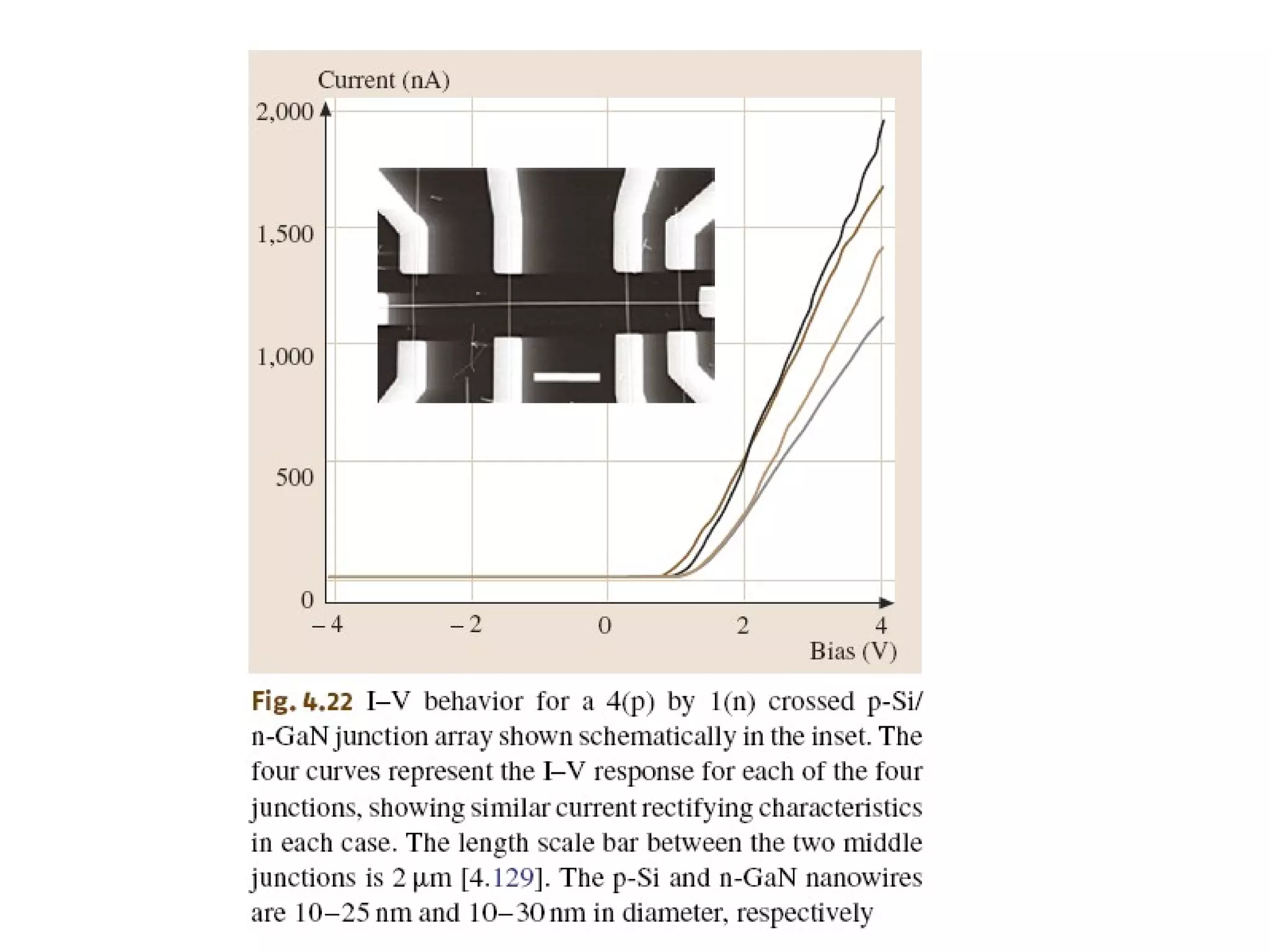
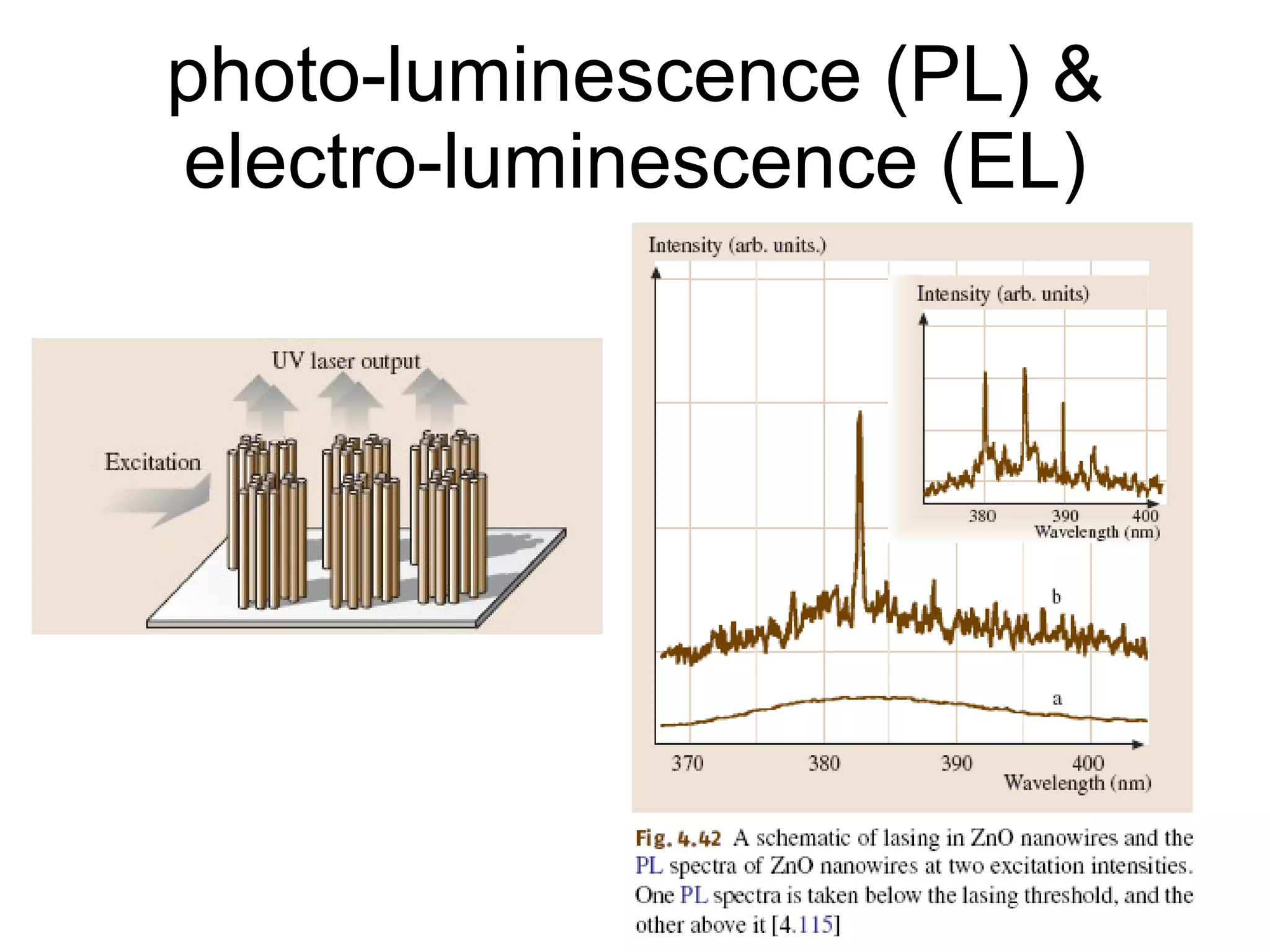
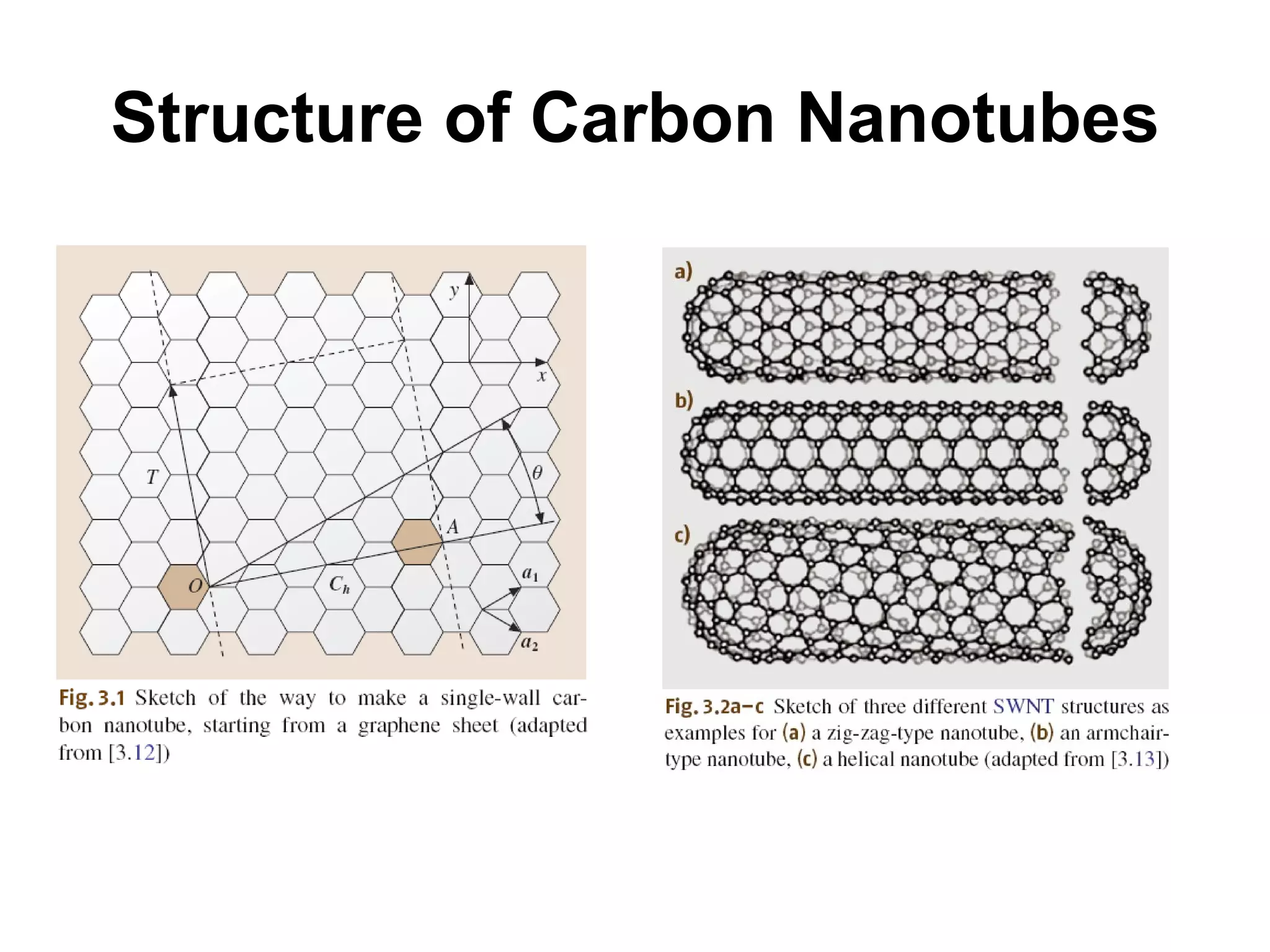
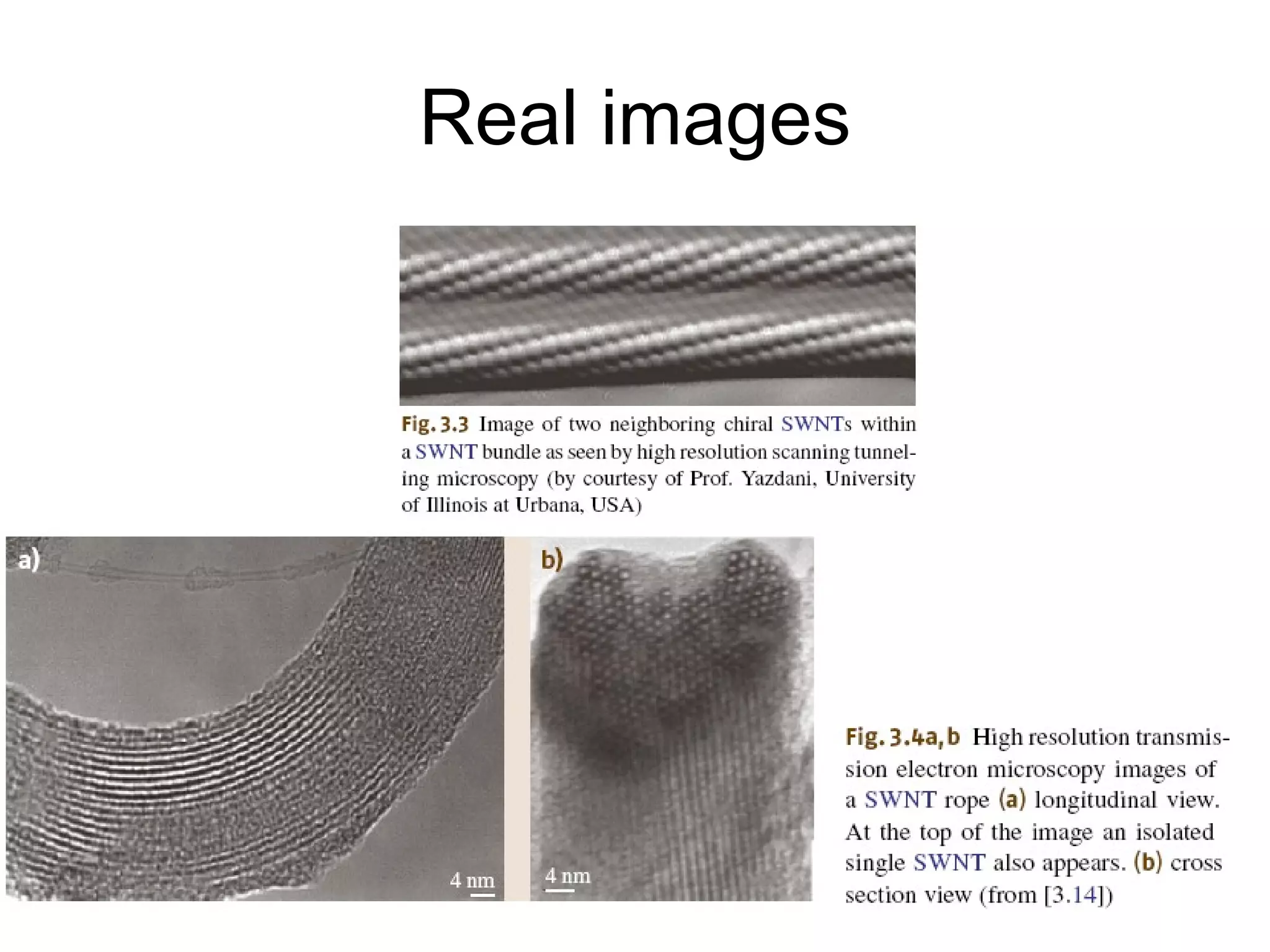
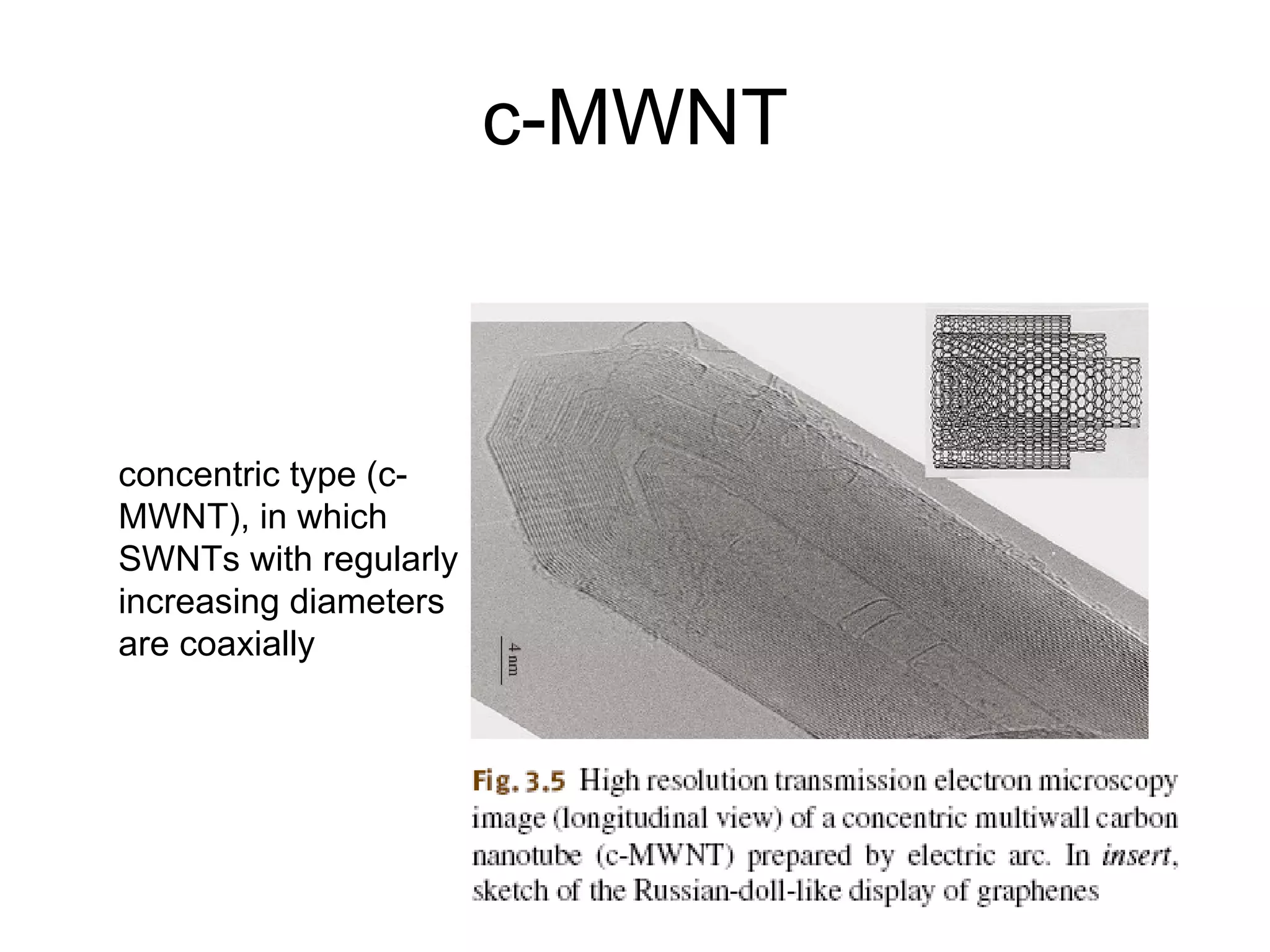
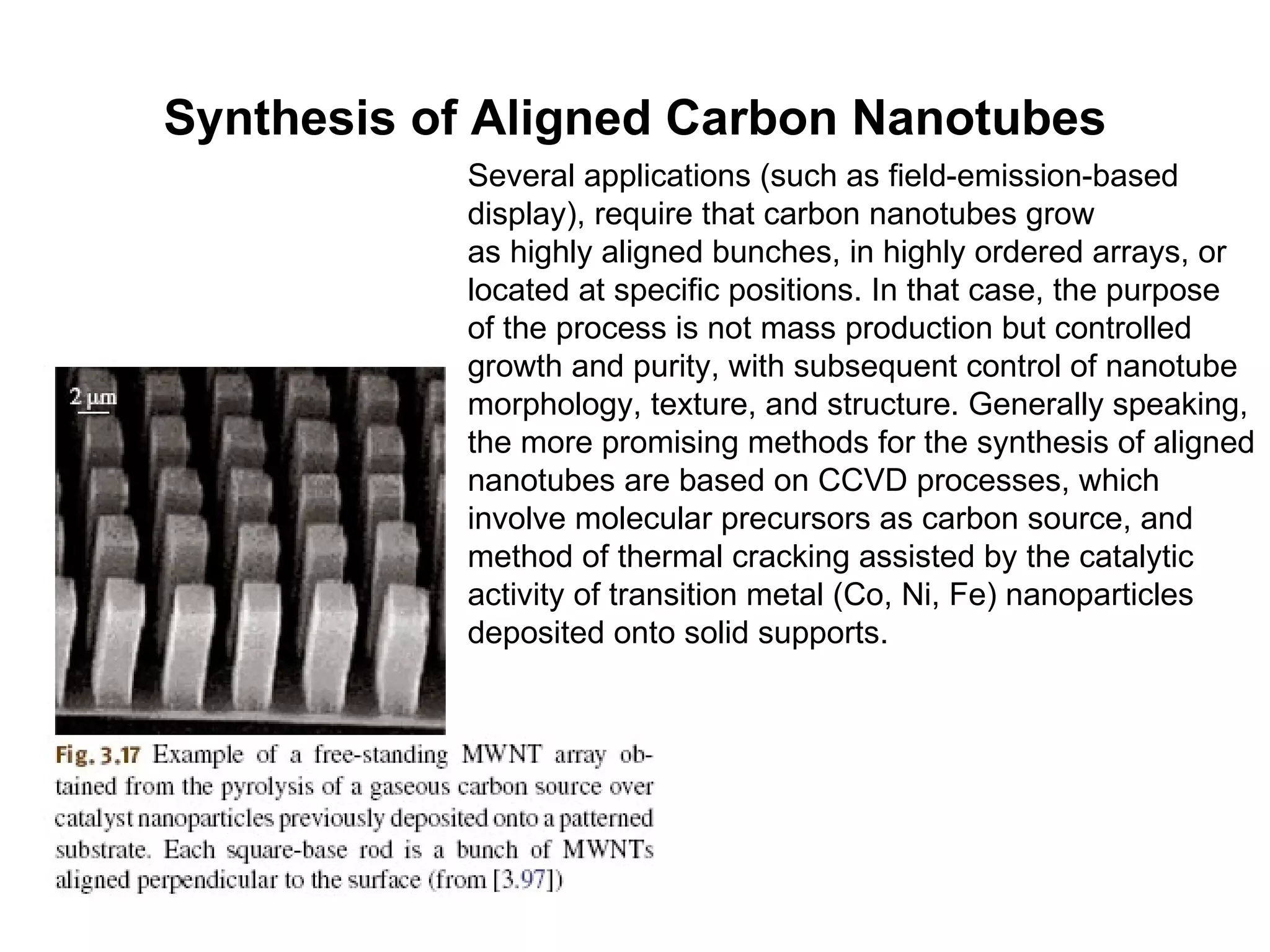
- Carbon nanotubes were discovered accidentally in the 1990s and have properties that could revolutionize technology. They are sheets of graphene rolled into cylindrical shapes that are only a few nanometers wide but can be hundreds of micrometers long.
- Carbon nanotubes are incredibly strong yet lightweight. A single-walled carbon nanotube can be up to 100 times stronger than steel relative to its thickness. They also conduct heat and electricity very well.
- Potential applications of carbon nanotubes include use in space elevators, hydrogen fuel cells, artificial muscles, electronics, sensors, and as reinforcements in composite materials. They are being researched for uses in fields like energy storage, medicine, and electronics.






















![SEM images of (a) 6-fold (b) 4-fold and (c) 2-fold symmetry nanobrushes made of an In2O3 core and ZnO nanowire brushes [4.107], and of (d) ZnO nanonails [4.108]](https://image.slidesharecdn.com/ete444lec4carbonnanotubesppt4932/75/ETE444-lec4-Carbon-Nanotubes-ppt-49-2048.jpg)