the coffee family


                Aloc. Caguimbal. Macarasig. Tuibeo
Para maalala natin...


                   +

       Okay. Joke. Let’s start with the report.
Plant Habit and Habitat
Leaves
Inflorescence
Flower
   Corolla
   Calyx
   Gynoecium
   Androecium
Placentation
Fruit
Seeds
                          Done with these? What’s NEXT?
 Habitat
   Terrestrial, rarely aquatic
 Habit
   Tree, shrub, herb, liana


                                  Back to INFORMATION.
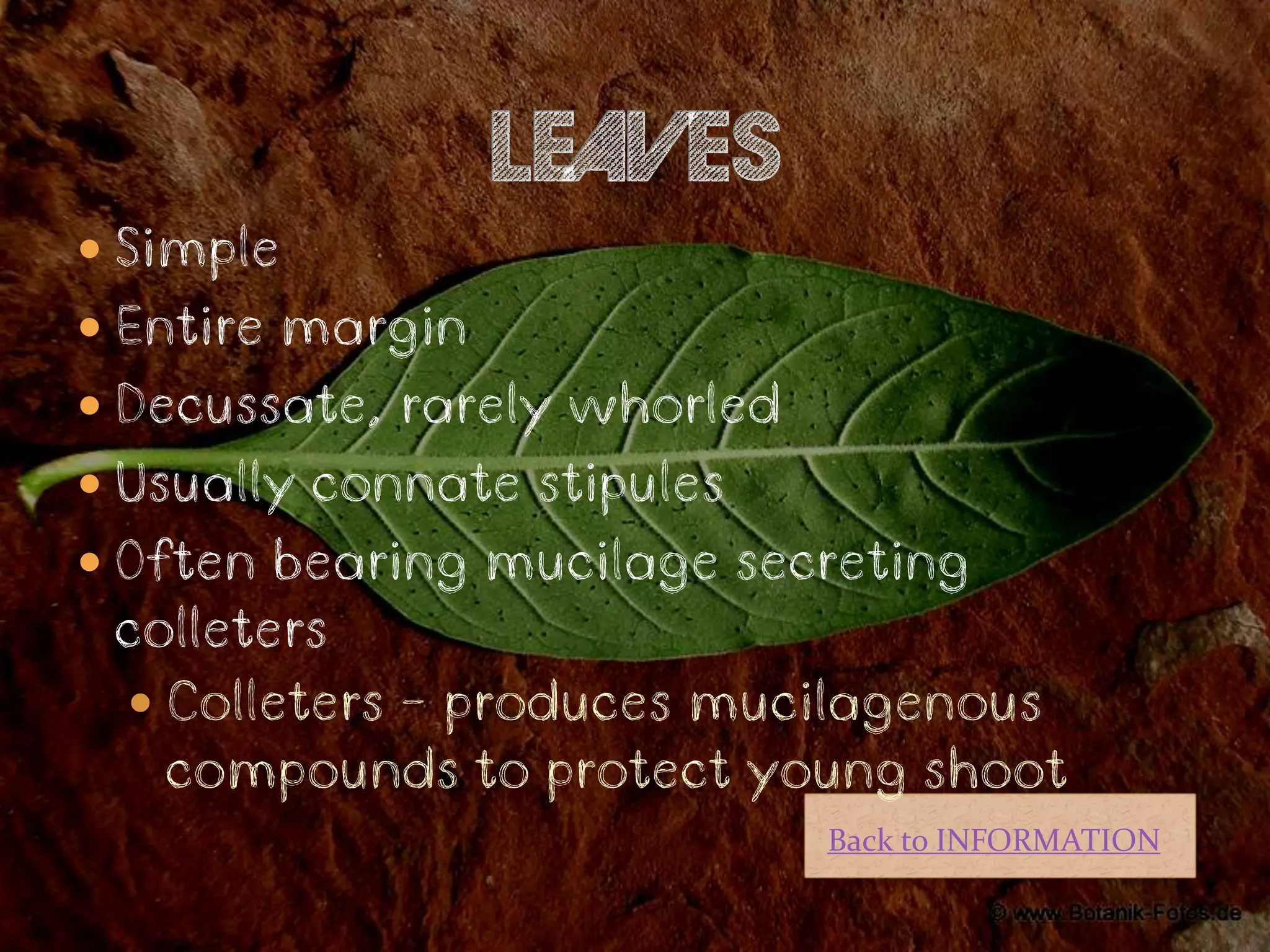
 Simple
 Entire margin
 Decussate, rarely whorled
 Usually connate stipules
 Often bearing mucilage secreting
 colleters
  Colleters – produces mucilagenous
   compounds to protect young shoot
                              Back to INFORMATION
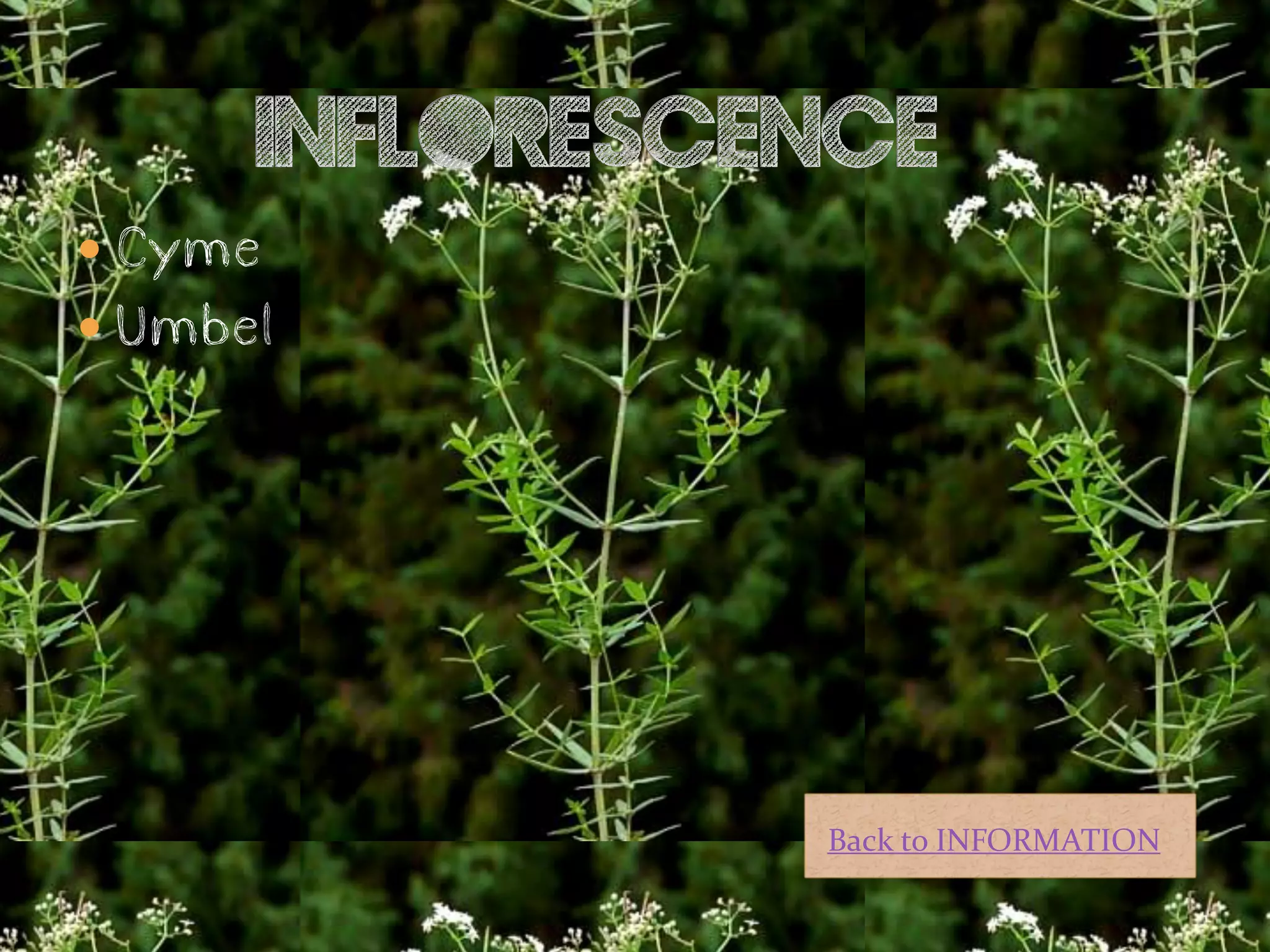
 Cyme
 Umbel


          Back to INFORMATION
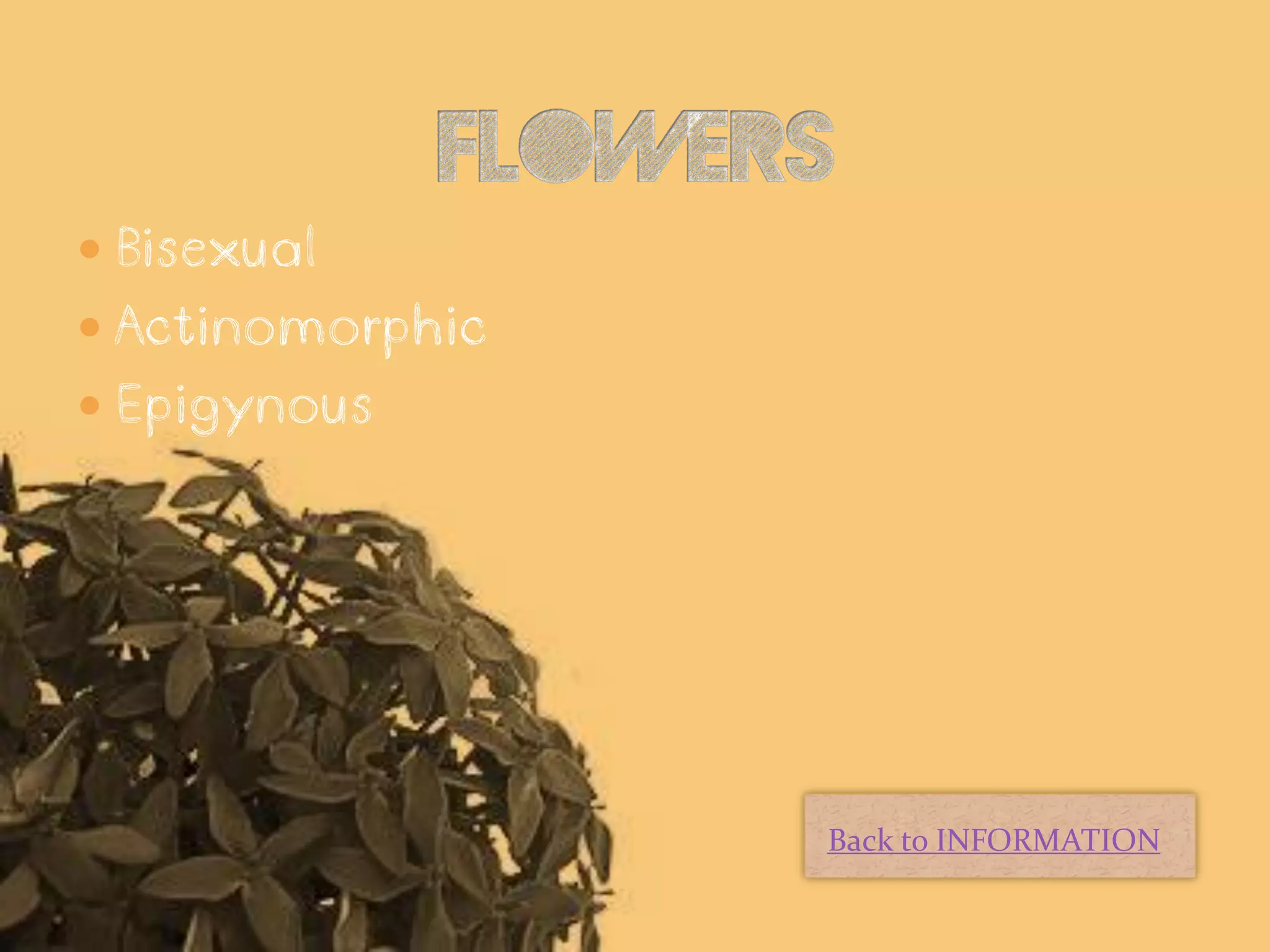
 Bisexual
 Actinomorphic
 Epigynous


                  Back to INFORMATION
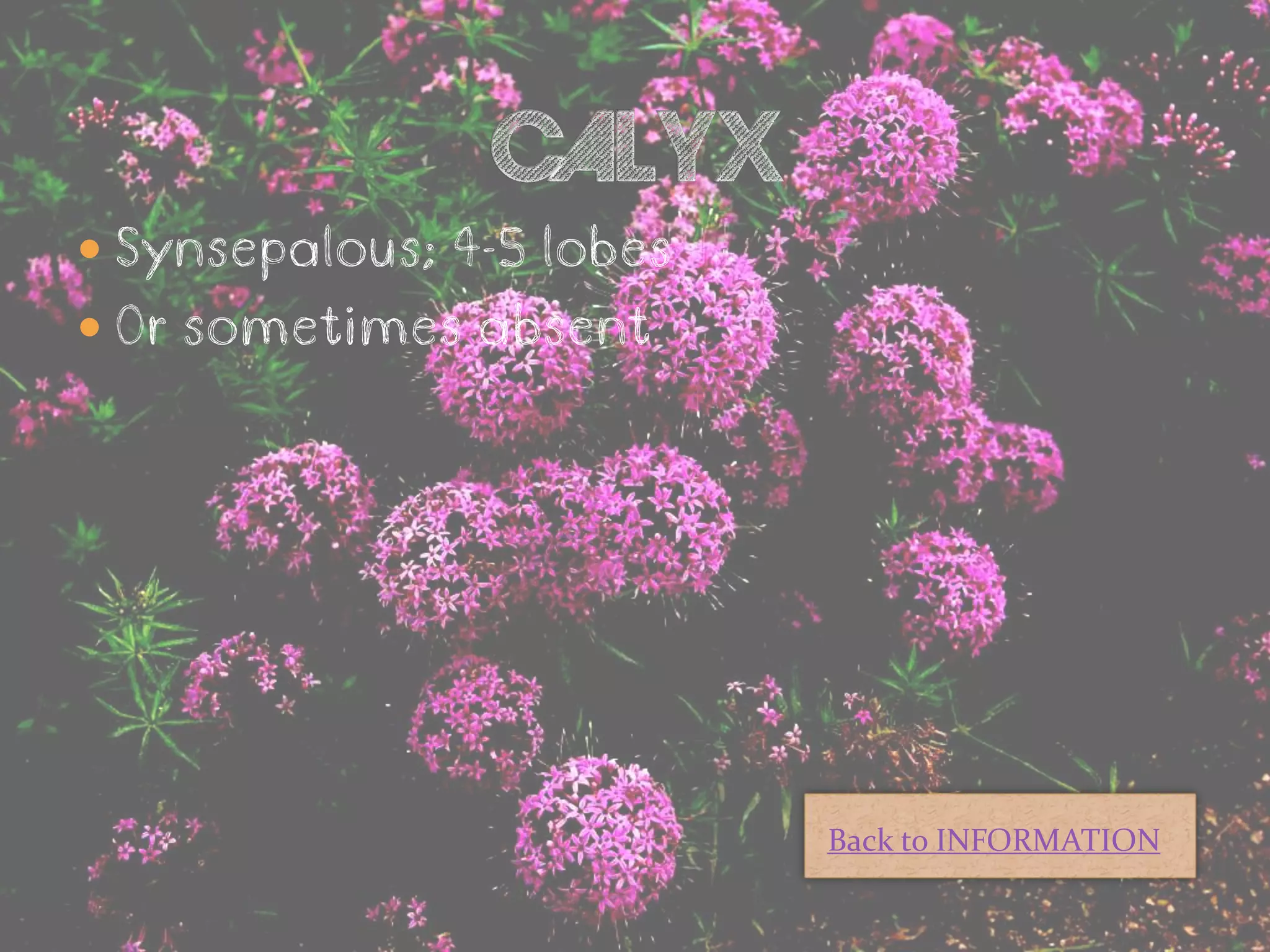
 Synsepalous; 4-5 lobes
 Or sometimes absent


                           Back to INFORMATION
 Sympetalous; 4-5 [rarely 3 or 8-10] lobes


                               Back to INFORMATION
 Syncarpous
 Inferior ovary
 Anatropous to hemitropous
 Unitegmic
 With funicular orburator
 1-many per carpel
 Nectaries present as disk atop ovary

                              Back to INFORMATION
 Anthers
  Longitudinal in dehiscence
 Stamens
  4-5[rarely 3 or 8-10]
  Alternipetalous & epipetalous


                             Back to INFORMATION
 Axile
 Rarely parietal


                    Back to INFORMATION
 Berry
 Capsule
 Drupe
 Schizocarp


               Back to INFORMATION
 Endospermous


                 Back to INFORMATION
 Worldwide distribution but more in tropical areas
 Economic importance:
   Cinchona- source of quinine used to treat
      malaria
   Coffea arabica - source of coffee
   Pausinystalia johimbe- source of sexual stimulant
      (yohimbine)
     Timber trees
     Fruiting plants
     Dye plants
     Ornamental cultivar
 Trees, shrubs, lianas, or herbs
 Simple, entire, usually decussate leaves
 Connate stipules, often with mucilage-secreting colleters
 Inflorescence usually a cyme
 Flowers usually bisexual
 Perianth dichlamydeous, 4-5 merous, calyx absent in some
 Androecium often 4 5-merous
 Ovary usually inferior (rarely superior)
 Often with an apical nectariferous disk, ovules with a funicular
  obturator,
 Fruit either a berry, capsule, drupe, or schizocarp.


 K (4-5) [0] C (4-5) [(3,8-10)] A 4-5 [3,8-10] G (2) [(3-5+)], usually inferior,
                                 rarely superior.

Rubiaceae

  • 1.
    the coffee family Aloc. Caguimbal. Macarasig. Tuibeo
  • 2.
    Para maalala natin... + Okay. Joke. Let’s start with the report.
  • 3.
    Plant Habit andHabitat Leaves Inflorescence Flower Corolla Calyx Gynoecium Androecium Placentation Fruit Seeds Done with these? What’s NEXT?
  • 4.
     Habitat  Terrestrial, rarely aquatic  Habit  Tree, shrub, herb, liana Back to INFORMATION.
  • 5.
     Simple  Entiremargin  Decussate, rarely whorled  Usually connate stipules  Often bearing mucilage secreting colleters  Colleters – produces mucilagenous compounds to protect young shoot Back to INFORMATION
  • 6.
     Cyme  Umbel Back to INFORMATION
  • 7.
     Bisexual  Actinomorphic Epigynous Back to INFORMATION
  • 8.
     Synsepalous; 4-5lobes  Or sometimes absent Back to INFORMATION
  • 9.
     Sympetalous; 4-5[rarely 3 or 8-10] lobes Back to INFORMATION
  • 10.
     Syncarpous  Inferiorovary  Anatropous to hemitropous  Unitegmic  With funicular orburator  1-many per carpel  Nectaries present as disk atop ovary Back to INFORMATION
  • 11.
     Anthers Longitudinal in dehiscence  Stamens  4-5[rarely 3 or 8-10]  Alternipetalous & epipetalous Back to INFORMATION
  • 12.
     Axile  Rarelyparietal Back to INFORMATION
  • 13.
     Berry  Capsule Drupe  Schizocarp Back to INFORMATION
  • 14.
     Endospermous Back to INFORMATION
  • 15.
     Worldwide distributionbut more in tropical areas  Economic importance:  Cinchona- source of quinine used to treat malaria  Coffea arabica - source of coffee  Pausinystalia johimbe- source of sexual stimulant (yohimbine)  Timber trees  Fruiting plants  Dye plants  Ornamental cultivar
  • 16.
     Trees, shrubs,lianas, or herbs  Simple, entire, usually decussate leaves  Connate stipules, often with mucilage-secreting colleters  Inflorescence usually a cyme  Flowers usually bisexual  Perianth dichlamydeous, 4-5 merous, calyx absent in some  Androecium often 4 5-merous  Ovary usually inferior (rarely superior)  Often with an apical nectariferous disk, ovules with a funicular obturator,  Fruit either a berry, capsule, drupe, or schizocarp. K (4-5) [0] C (4-5) [(3,8-10)] A 4-5 [3,8-10] G (2) [(3-5+)], usually inferior, rarely superior.