PLANT TAXONOMY
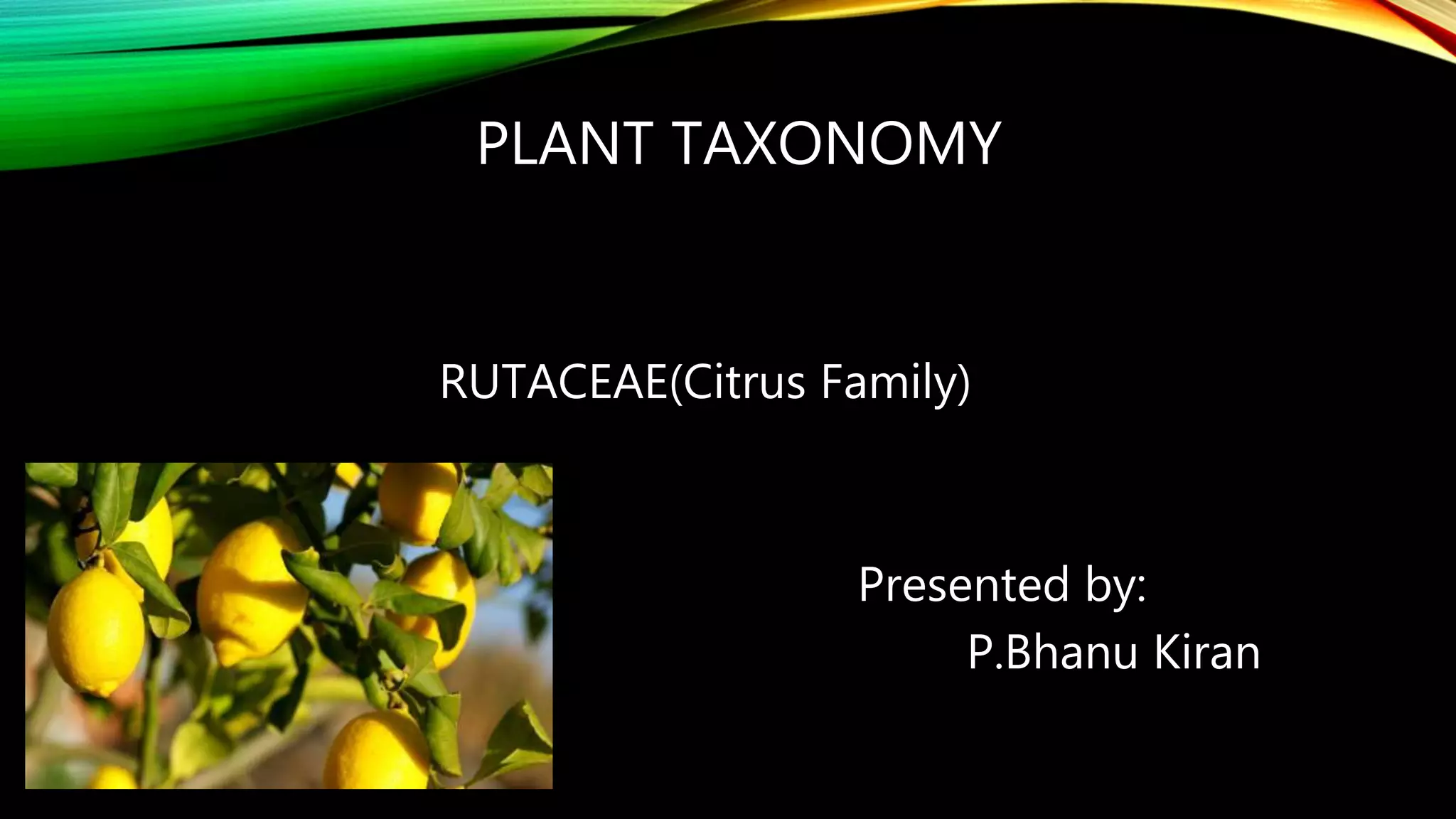
RUTACEAE(Citrus Family)
Presented by:
P.Bhanu Kiran
GENERAL INFORMATION
• The family is commonly is called orange family.
• The family comprises 150 genera and 1300 species out of which India
contributes 71 species.
• The members of the family are distributed in tropical and temperate regions
and they are predominant in South Africa and Australia.
CHARACTERS
• Leaves, simple or compound.
• Flower hermaphrodite, hypogynous, actinomorphic with a disc below the ovary.
• Corolla polypetalous.
• Stamens ten, obdiplostemonous.
• Carpels 5 or many, ovary superior, multilocular.
• Fruit capsule or berry.
• Aromatic odour is present.
AFFINITIES
• Engler and Prantl included the family in the Geraniales along with Zygophyllaceae,
Euphorbiaceae and Burseraceae.
• Hallier attached particular phylogenetic significance to the Rutaceae and derived it
from stocks ancestral to Berberidaceae.
• Rendle placed the family in a separate order between Geraniales and Sapindales.
• Wettstein included Rutaceae along with Meliaceae in the order as Terebinthales
• Rutaceae is related to the Meliaceae, Sapindaceae and Anacardiaceae in habit, leaf
structure, presence of disc around the ovary and obdiplostemonous condition of
androecium.
• The family Rutaceae is also related to Euphorbiaceae on account of the presence of
ventral raphe of the ovule in some genera.
• According to Tillson and Bamford (1938) the disc in the members of sub-family
Aurantioideae represents the vestigeal third whorl of stamens.
VEGETATIVE CHARACTERS
Habit:
• The plant are generally shrubs (Murray a, Limonia, Zanthoxylum), trees (Aegle,
Citrus, Feronia), rarely herbs (Ruta graveolens) with strong fragrance Paramignya is a
shrub but climbs by means of axillary thorns.
Root:
• Tap root, branched often infected with fungus.
Stem:
• Woody (Citrus, Feronia), erect, cylindrical, branched, solid often thorny (Citrus),
gland dotted.
Leaves:
• Alternate (Citrus, Murraya) or opposite (Evodia), petiolate, petiole may be winged
(Citrus aurantium), simple or compound-pinnate (Murraya), palmate (Aegle and
Citrus) smooth gland dotted, glands with essential oils, exstipulate, margin entire
serrate, unicostate reticulate venation. In Citrus petiole is winged.
FLORAL CHARACTERS
Inflorescence:
• Usually cyme or axillary or terminal corymb (Murraya paniculata) some times
racemose or solitary.
Flower:
• Pedicellate, ebracteate, hermaphrodite, or unisexual (Zanthoxylum, Evodia, Feronia),
actinomorphic rarely zygomorphic (Dictamnus and Correa), hypogynous, complete,
pentamerous or tetramerous (Acronychia and lateral flowers of Ruta).
Calyx:
• Sepals 5 or 4, free or fused; in zygomorphic flower it becomes gamosepalous and
tubular; imbricate; sometimes deciduous.
Corolla:
• Petals 5 or 4, polypetalous rarely gamopetalous (Correa speciosa) or absent
(Zanthoxylum), variously coloured, imbricate.
Androecium:
• In majority of cases the stamens are obdiplostemonous and 10 in number; in
numerous stamens with polyadelphous condition; in Zanthoxylum 3 stamens and
Skimmia 5 stamens; anthers introrse, dithecous, basifixed or versatile.
Gynoecium:
• Pentacarpellary and only slightly united at the base or the sides forming a deeply
lobed ovary with fused styles originating from the centre. In Citrus and Toddalia
carpels are fully united. In Feronia the carpel is only one celled with many parietal
placentae. In other genera the placentation is of the axile type. Topically the ovary
superior with a prominent nectariferous disc below it. Ovule anatropous.
Fruit:
• In Flindersioideae there is septicidal or loculicidal capsule; in Toddalioideae a
drupaceous fruit; hesperidium in Citrus and berry in Murraya.
Seed:
• Endospermic or exalbuminous.
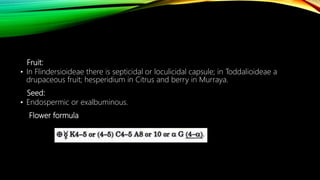
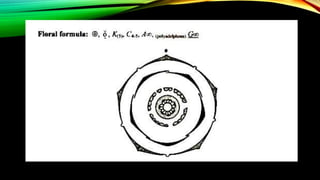
Flower formula
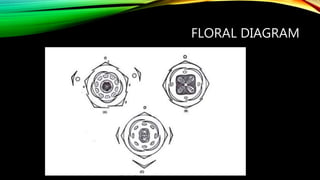
FLORAL DIAGRAM
ECONOMIC IMPORTANCE
• Fruits are rich in various vitamins, provide essential oils, purifies blood, reduces thirst
and various parts of some plants are used medicinally.
• Also used as ornamentals.
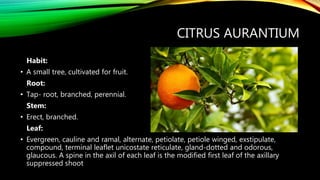
CITRUS AURANTIUM
Habit:
• A small tree, cultivated for fruit.
Root:
• Tap- root, branched, perennial.
Stem:
• Erect, branched.
Leaf:
• Evergreen, cauline and ramal, alternate, petiolate, petiole winged, exstipulate,
compound, terminal leaflet unicostate reticulate, gland-dotted and odorous,
glaucous. A spine in the axil of each leaf is the modified first leaf of the axillary
suppressed shoot
• Inflorescence:
• Raceme.
• Flower:
• Ebracteale, complete, hermaphrodite, regular, actinomorphic, hypogenous.
• Calyx:
• Five, gamosepalous, sepals gland-dotted, pentafid, greenish, inferior.
• Corolla:
• Five, polypetalous, petals lanceolate, gland-dotted, white imbricate, alternating
the sepals, inferior.
Androecium:
• Stamens numerous in one whorl, polyadelphous, filaments united into groups at
base, anthers dorsifixed, introse, inferior.
Gynoecium:
• Polycarpellary syncarpous, ovary superior, multilocular, ovules many; axile
Placentation; style short; stigma capitate a large honey- secreting disc below the
ovary.
Fruit:
• Berry
Seeds:
• Numerous, ex-albuminous, testa mucilaginous
Rutaceae

Rutaceae

  • 1.
  • 2.
    GENERAL INFORMATION • Thefamily is commonly is called orange family. • The family comprises 150 genera and 1300 species out of which India contributes 71 species. • The members of the family are distributed in tropical and temperate regions and they are predominant in South Africa and Australia.
  • 3.
    CHARACTERS • Leaves, simpleor compound. • Flower hermaphrodite, hypogynous, actinomorphic with a disc below the ovary. • Corolla polypetalous. • Stamens ten, obdiplostemonous. • Carpels 5 or many, ovary superior, multilocular. • Fruit capsule or berry. • Aromatic odour is present.
  • 4.
    AFFINITIES • Engler andPrantl included the family in the Geraniales along with Zygophyllaceae, Euphorbiaceae and Burseraceae. • Hallier attached particular phylogenetic significance to the Rutaceae and derived it from stocks ancestral to Berberidaceae. • Rendle placed the family in a separate order between Geraniales and Sapindales. • Wettstein included Rutaceae along with Meliaceae in the order as Terebinthales
  • 5.
    • Rutaceae isrelated to the Meliaceae, Sapindaceae and Anacardiaceae in habit, leaf structure, presence of disc around the ovary and obdiplostemonous condition of androecium. • The family Rutaceae is also related to Euphorbiaceae on account of the presence of ventral raphe of the ovule in some genera. • According to Tillson and Bamford (1938) the disc in the members of sub-family Aurantioideae represents the vestigeal third whorl of stamens.
  • 6.
    VEGETATIVE CHARACTERS Habit: • Theplant are generally shrubs (Murray a, Limonia, Zanthoxylum), trees (Aegle, Citrus, Feronia), rarely herbs (Ruta graveolens) with strong fragrance Paramignya is a shrub but climbs by means of axillary thorns. Root: • Tap root, branched often infected with fungus. Stem: • Woody (Citrus, Feronia), erect, cylindrical, branched, solid often thorny (Citrus), gland dotted.
  • 7.
    Leaves: • Alternate (Citrus,Murraya) or opposite (Evodia), petiolate, petiole may be winged (Citrus aurantium), simple or compound-pinnate (Murraya), palmate (Aegle and Citrus) smooth gland dotted, glands with essential oils, exstipulate, margin entire serrate, unicostate reticulate venation. In Citrus petiole is winged.
  • 8.
    FLORAL CHARACTERS Inflorescence: • Usuallycyme or axillary or terminal corymb (Murraya paniculata) some times racemose or solitary. Flower: • Pedicellate, ebracteate, hermaphrodite, or unisexual (Zanthoxylum, Evodia, Feronia), actinomorphic rarely zygomorphic (Dictamnus and Correa), hypogynous, complete, pentamerous or tetramerous (Acronychia and lateral flowers of Ruta). Calyx: • Sepals 5 or 4, free or fused; in zygomorphic flower it becomes gamosepalous and tubular; imbricate; sometimes deciduous.
  • 9.
    Corolla: • Petals 5or 4, polypetalous rarely gamopetalous (Correa speciosa) or absent (Zanthoxylum), variously coloured, imbricate. Androecium: • In majority of cases the stamens are obdiplostemonous and 10 in number; in numerous stamens with polyadelphous condition; in Zanthoxylum 3 stamens and Skimmia 5 stamens; anthers introrse, dithecous, basifixed or versatile.
  • 10.
    Gynoecium: • Pentacarpellary andonly slightly united at the base or the sides forming a deeply lobed ovary with fused styles originating from the centre. In Citrus and Toddalia carpels are fully united. In Feronia the carpel is only one celled with many parietal placentae. In other genera the placentation is of the axile type. Topically the ovary superior with a prominent nectariferous disc below it. Ovule anatropous.
  • 11.
    Fruit: • In Flindersioideaethere is septicidal or loculicidal capsule; in Toddalioideae a drupaceous fruit; hesperidium in Citrus and berry in Murraya. Seed: • Endospermic or exalbuminous. Flower formula
  • 12.
  • 13.
    ECONOMIC IMPORTANCE • Fruitsare rich in various vitamins, provide essential oils, purifies blood, reduces thirst and various parts of some plants are used medicinally. • Also used as ornamentals.
  • 14.
    CITRUS AURANTIUM Habit: • Asmall tree, cultivated for fruit. Root: • Tap- root, branched, perennial. Stem: • Erect, branched. Leaf: • Evergreen, cauline and ramal, alternate, petiolate, petiole winged, exstipulate, compound, terminal leaflet unicostate reticulate, gland-dotted and odorous, glaucous. A spine in the axil of each leaf is the modified first leaf of the axillary suppressed shoot
  • 15.
    • Inflorescence: • Raceme. •Flower: • Ebracteale, complete, hermaphrodite, regular, actinomorphic, hypogenous. • Calyx: • Five, gamosepalous, sepals gland-dotted, pentafid, greenish, inferior. • Corolla: • Five, polypetalous, petals lanceolate, gland-dotted, white imbricate, alternating the sepals, inferior.
  • 16.
    Androecium: • Stamens numerousin one whorl, polyadelphous, filaments united into groups at base, anthers dorsifixed, introse, inferior. Gynoecium: • Polycarpellary syncarpous, ovary superior, multilocular, ovules many; axile Placentation; style short; stigma capitate a large honey- secreting disc below the ovary. Fruit: • Berry Seeds: • Numerous, ex-albuminous, testa mucilaginous