ANGIOSPERMS
Overview of Angiosperms
• Angiosperms are plants that produce flowers, fruits and seed; and
have their ovules enclosed in an ovary
• It comes from two Greek words ‘angion’ (container) and ‘Sperma’
(seed)
• The largest and most diverse group in the kingdom Plantae, with 68
orders, 416 families, approximately 13,164 known genera and about
400,000 species, and make up about 90% of all plant species on earth
• Angiosperms’ use of flowers to reproduce made them more
reproductively successful.
• The pollination of flowers by animals or bees in exchange for nectar
made angiosperms more reproductively successful.
• Angiosperms also began to encase their seeds in fruits, which
provide both extra nourishment and protection for their offspring.
• Produce flowers and fruits to aid in seed dispersal
• Can produce spores which are more stable than seeds from
gymnosperms
• Most importantly, they have vessels that can promote their growth
• Angiosperms appeared on earth during the Cretaceous period.
• Their common ancestor is the gymnosperms
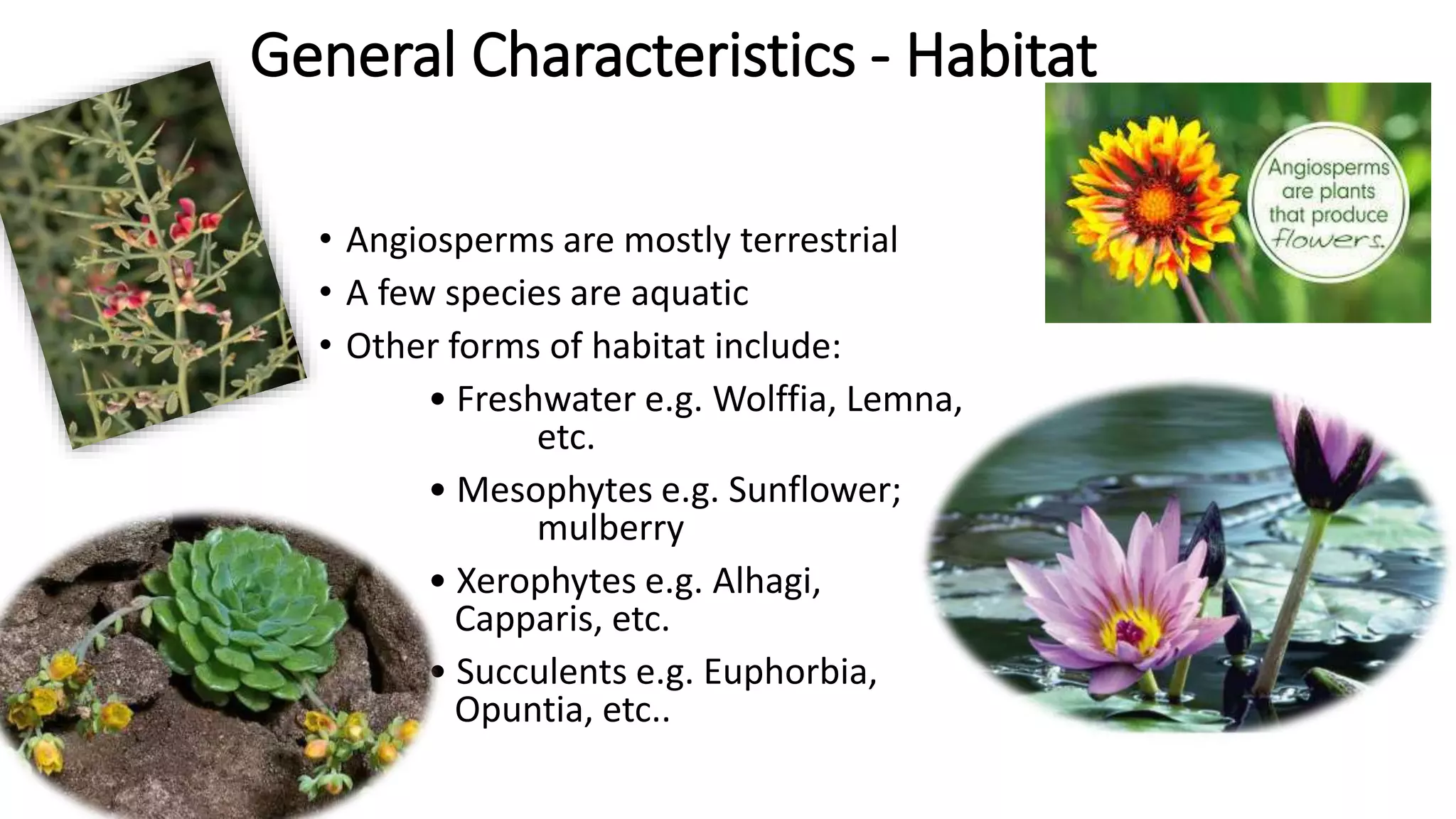
General Characteristics - Habitat
• Angiosperms are mostly terrestrial
• A few species are aquatic
• Other forms of habitat include:
• Freshwater e.g. Wolffia, Lemna,
etc.
• Mesophytes e.g. Sunflower;
mulberry
• Xerophytes e.g. Alhagi,
Capparis, etc.
• Succulents e.g. Euphorbia,
Opuntia, etc..
• Lithophytes
• Halophytes e.g. Suaeda
• Psammophytes e.g. Yellow
brown Rape
• Some may be found in
marshy habitats e.g.
Rhizophora
General Characteristics - Habits
• The habits of a flowering plant can
be determined by its height,
duration and nature of stems
• They are of three main types:
1. Herbs e.g. wheat
2. Shrubs e.g. Jasmine
3. Trees e.g. Dalbergia
• Other forms include:
• Trailers e.g. Tribulus
• Creepers e.g. Grass
• Twiners e.g. Ipomoea
• Climbers e.g. grape vine
• Lianas e.g. hiptage
• Epiphytes e.g. Vanda
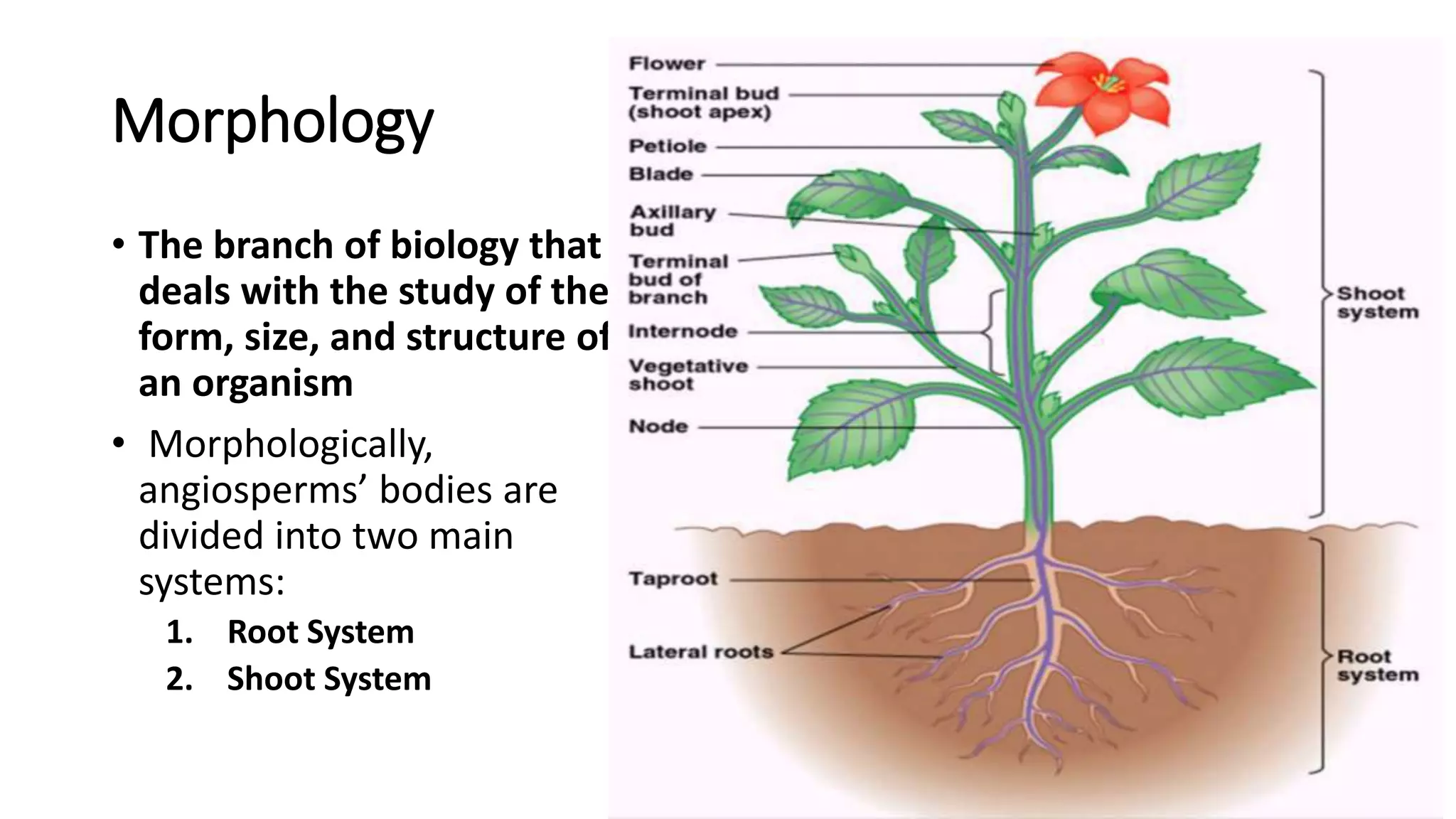
Morphology
• The branch of biology that
deals with the study of the
form, size, and structure of
an organism
• Morphologically,
angiosperms’ bodies are
divided into two main
systems:
1. Root System
2. Shoot System
Types of roots
• In flowering plants, there are three
main types of roots, which include:
• Tap roots
• Fibrous roots
• Adventitious roots
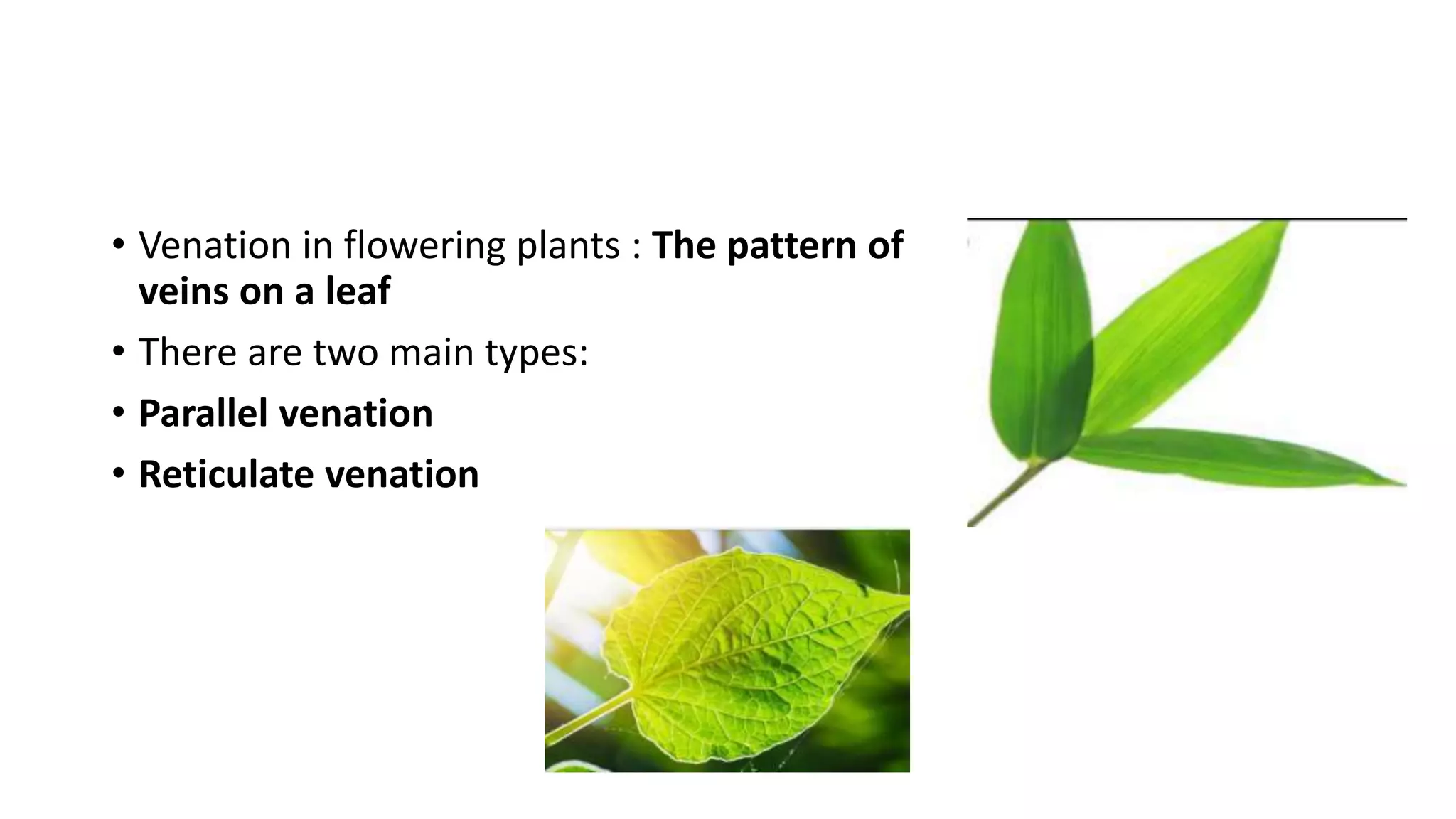
• Venation in flowering plants : The pattern of
veins on a leaf
• There are two main types:
• Parallel venation
• Reticulate venation
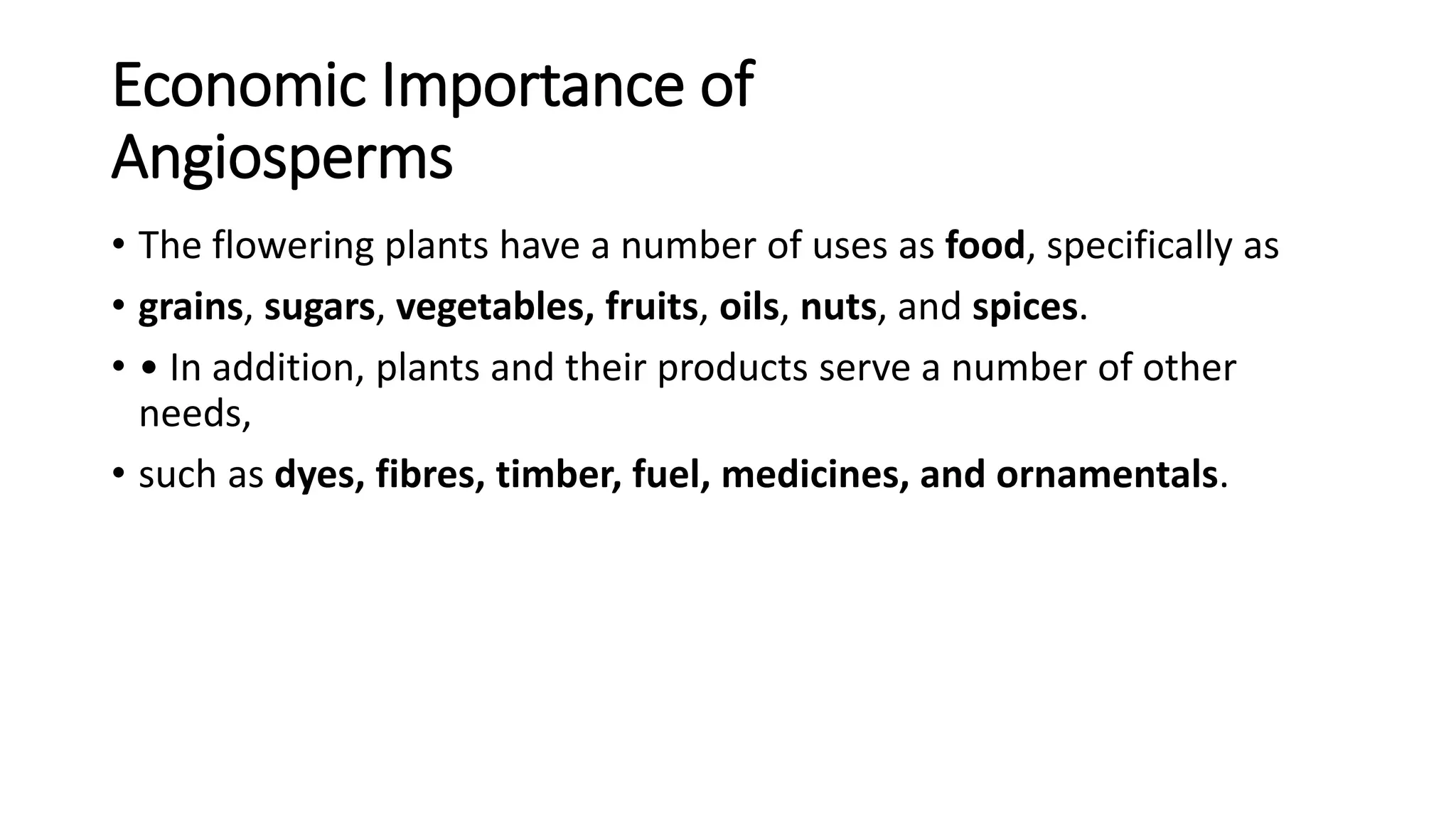
Nutrition
• Angiosperms are mostly
autotrophic plants, though a few
are heterotrophic
• The heterotrophic angiosperms
are of three types:
Saprophytes
Parasites
Insectivores
Reproduction in angiosperms – Sexual
Reproduction
• This involves the production of male and female gametes
• It is the transfer of the male gamete to the female ovule through the
process of pollination
• Unlike bryophytes and seedless vascular plants, angiosperms and
gymnosperms have a larger, photosynthetic and dominant
sporophyte
• However, the ovules of flowering plants develop into fruits inside the
ovaries
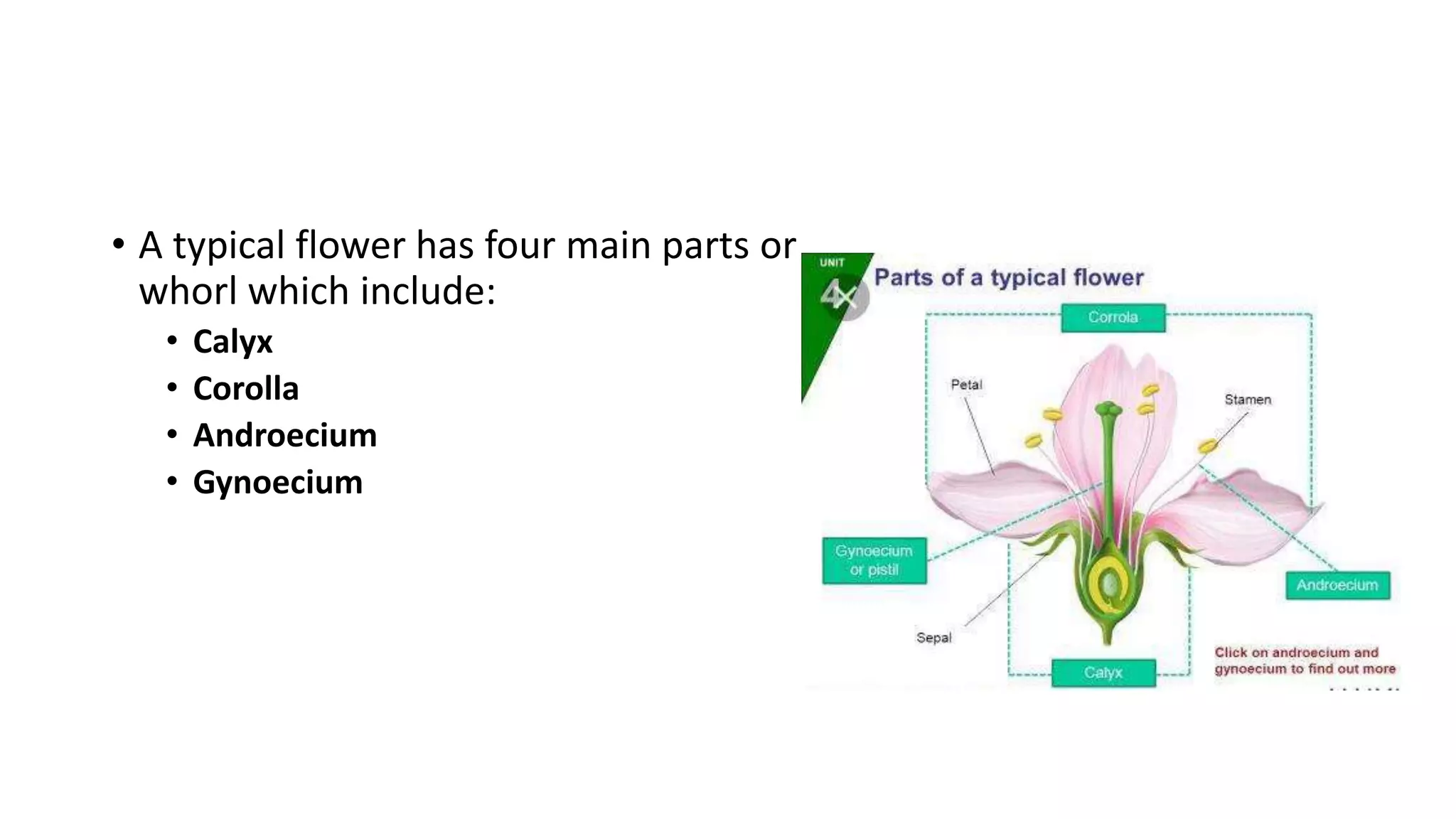
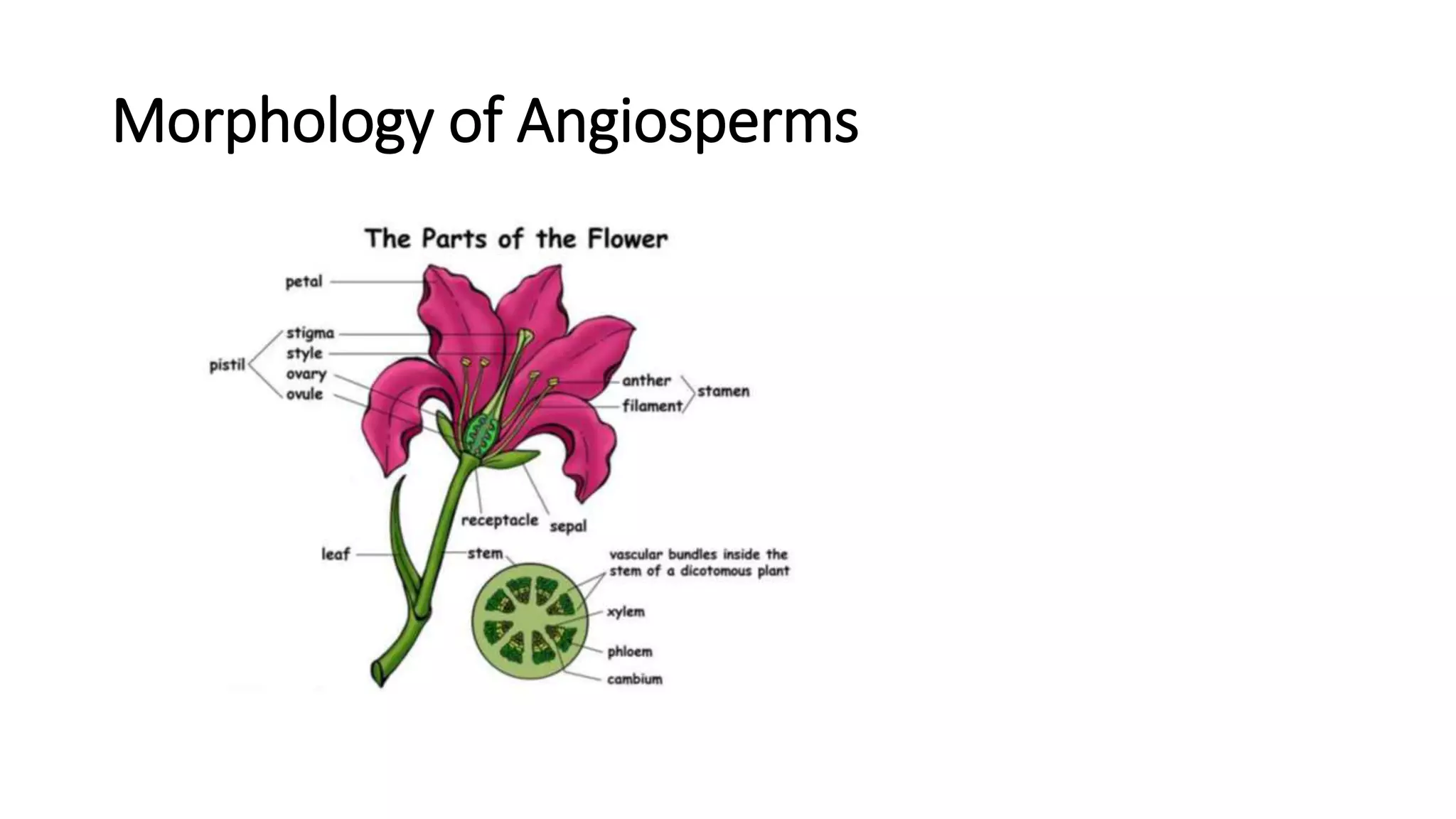
• A typical flower has four main parts or
whorl which include:
• Calyx
• Corolla
• Androecium
• Gynoecium
• The calyx is composed of green leafy structures known as sepals. It
protects the inner part of the flower, and is the outer most whorl
• The corolla is comprised of petals which are usually brightly colored.
Its function is to attract insects to the flower
• Together, the calyx and corolla are known as the perianth.
• The number of sepals and petals varies depending on the plant;
whether it is a monocot or a dicot.
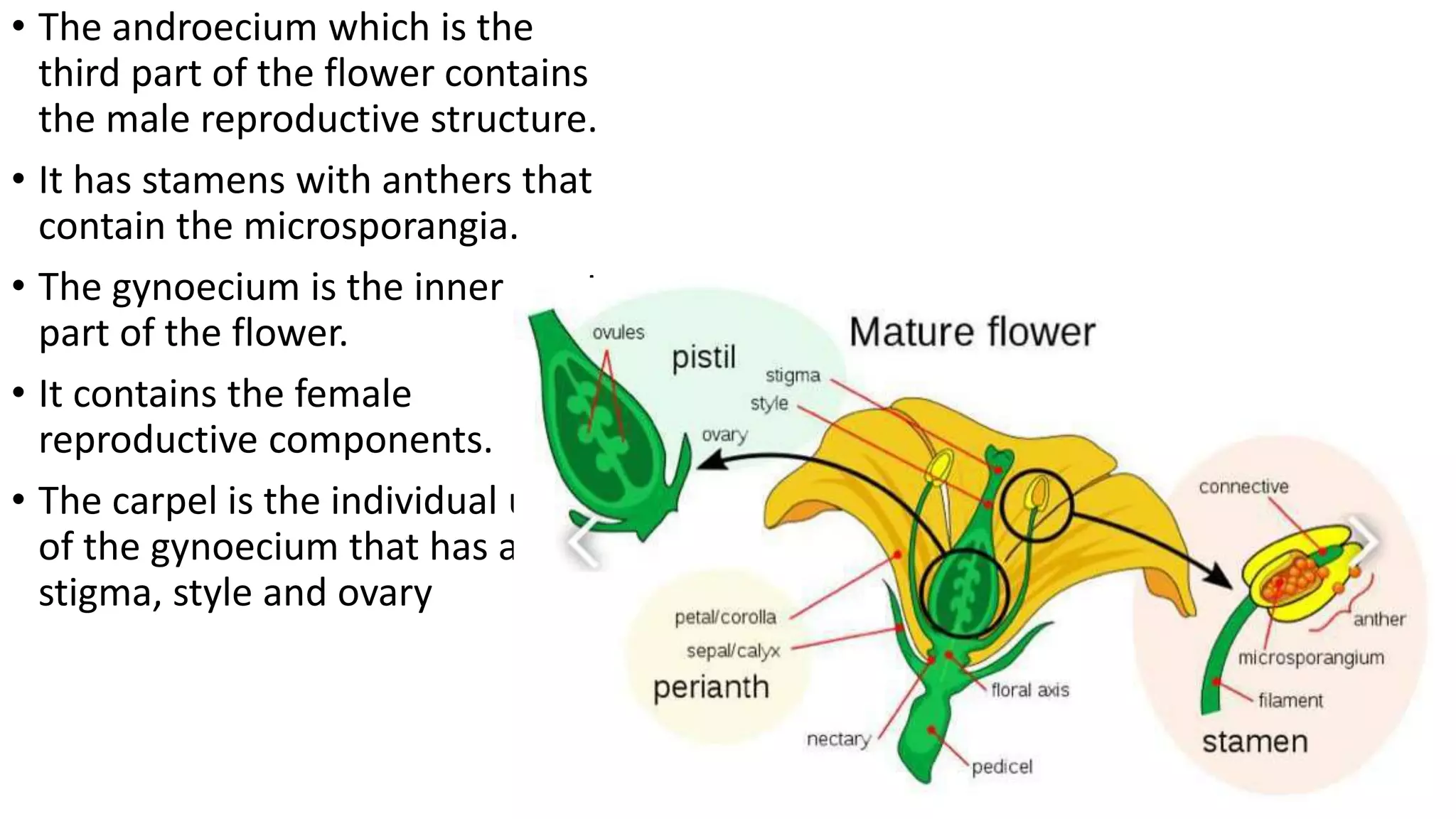
• The androecium which is the
third part of the flower contains
the male reproductive structure.
• It has stamens with anthers that
contain the microsporangia.
• The gynoecium is the inner most
part of the flower.
• It contains the female
reproductive components.
• The carpel is the individual unit
of the gynoecium that has a
stigma, style and ovary
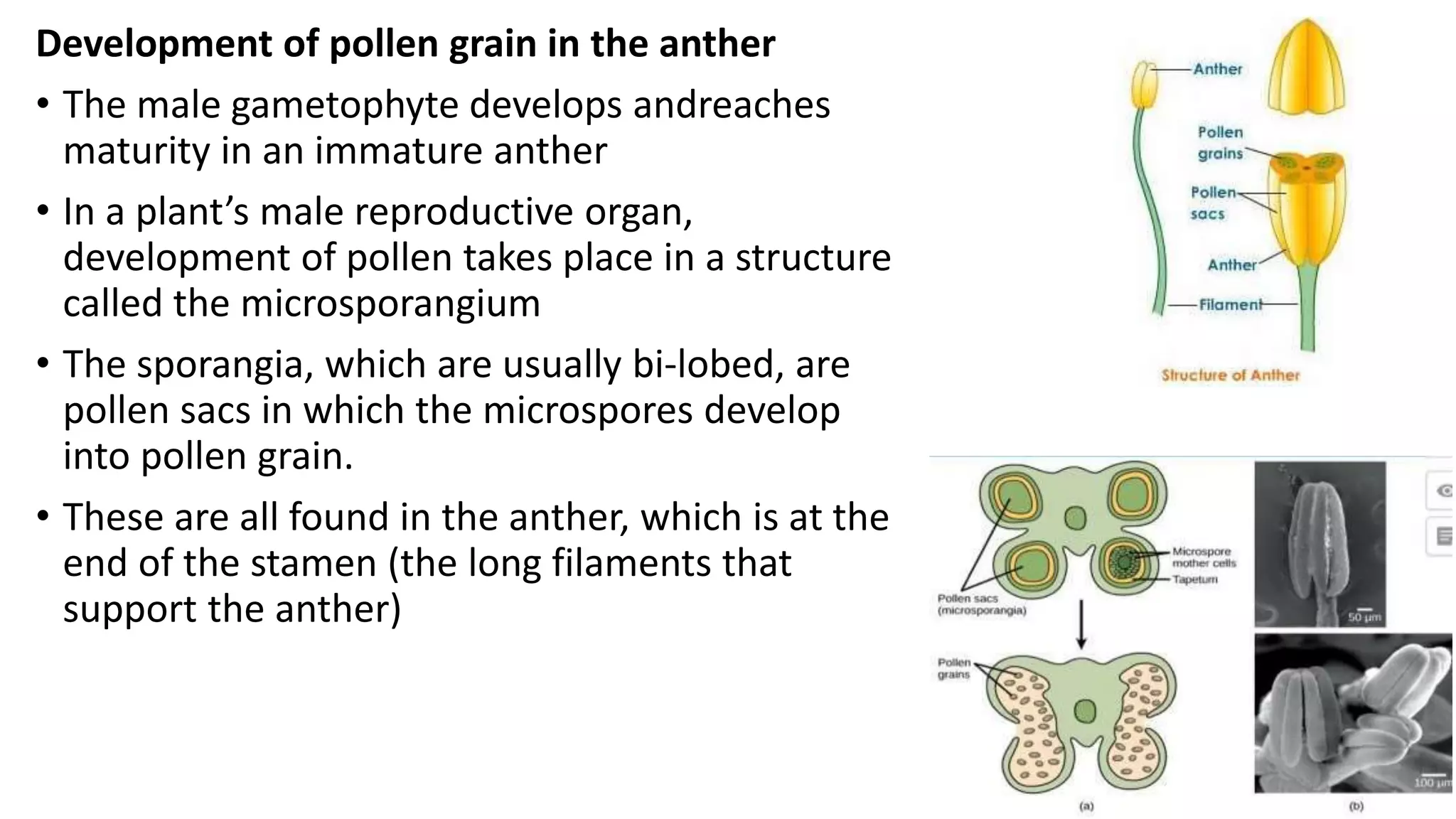
Development of pollen grain in the anther
• The male gametophyte develops andreaches
maturity in an immature anther
• In a plant’s male reproductive organ,
development of pollen takes place in a structure
called the microsporangium
• The sporangia, which are usually bi-lobed, are
pollen sacs in which the microspores develop
into pollen grain.
• These are all found in the anther, which is at the
end of the stamen (the long filaments that
support the anther)
Pollination : The process by which pollen grains are transferred from the
anther to the stigma of flowers.
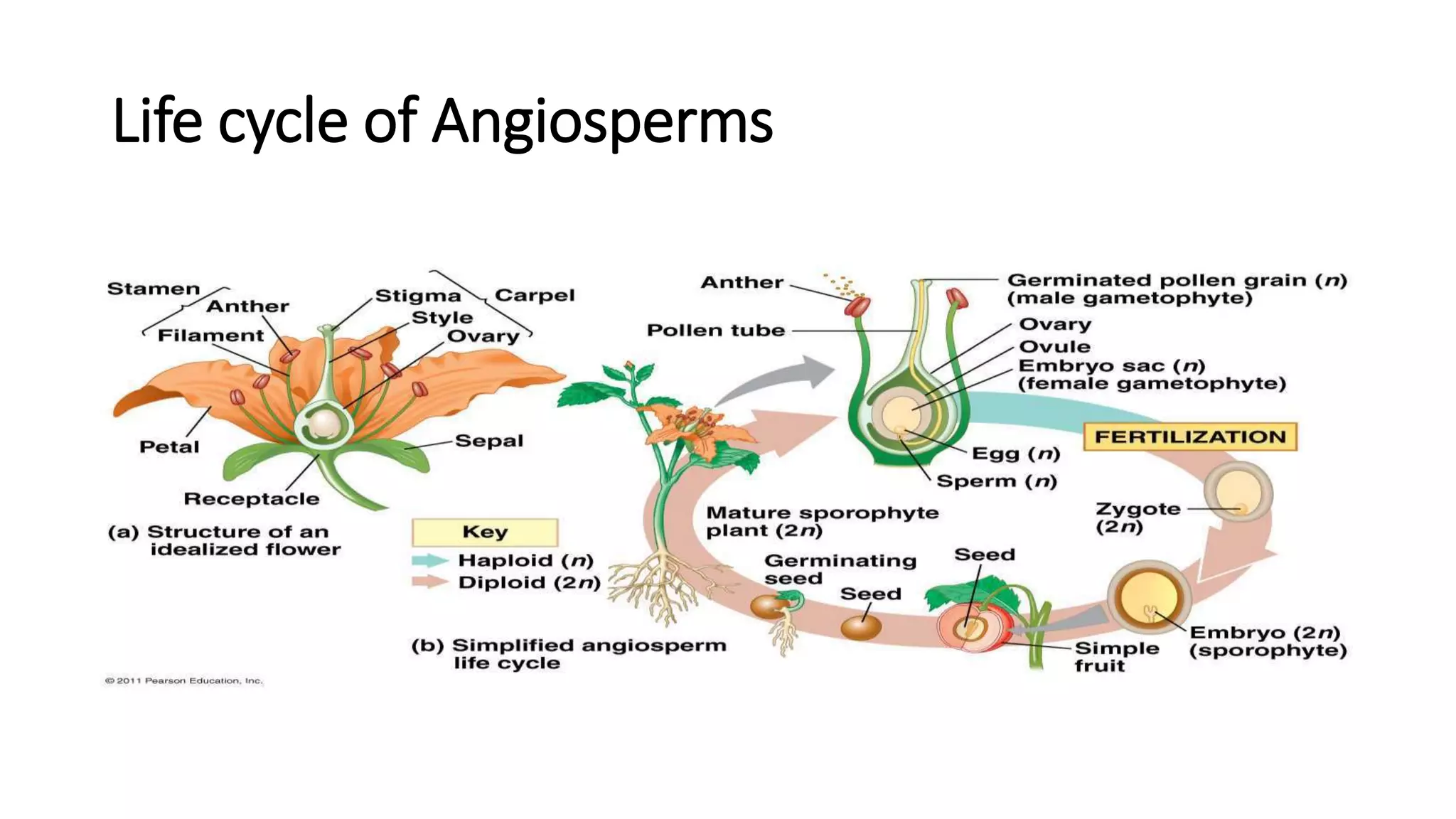
Life Cycle of a Typical Flowering Plant
• They carry out a unique process known as double fertilization
Life Span of a Flowering Plant
• Life span is the time taken by an organism to complete its lifecycle
• On the basis of their lifespan, plants are of four types, which include:
• Ephemerals e.g. Anagalis arvensis
• Annuals e.g. maize, wheat, etc.
• Biennials e.g. henbane, Radish, carrot,etc.
• Perennials e.g. Bamboos, agave, cotton, etc.
Distribution of Angiosperms
• One reason for this dominance is the relatively high photosynthetic
• capacity of their leaves.
• • They occupy every habitat on Earth except extreme environments
• such as the highest mountaintops, the regions immediately
• surrounding the poles, and the deepest oceans.
• • They live as epiphytes (i.e., living on other plants)
• They occur abundantly in;
• • shallows of rivers and fresh-water lakes
• • to a lesser extent, in salt lakes and in the sea
• Over 250,000 species of flowering plants have been described, within about 460
• families.
Characteristics of Angiosperms
• Angiosperms have developed flowers and fruits.
• • Flower serves as the reproductive organs for the plant.
• • Flowers have a wide array of colors, shapes, and smells, all of which
• are for the purpose of attracting pollinators.
• • Roots, stems, and leaves
• • Xylem & phloem
• Xylem conveys water & dissolved minerals from the roots
• to the shoots
• • Phloem transports food made in the leaves to the roots
• and developing leaves and fruits
• Two Classes of Angiosperms
• 1. Monocotyledons (monocots) have a single cotyledon
2. Dicotyledons (dicots) have two cotyledons
Morphology of Angiosperms
Life cycle of Angiosperms
Economic Importance of
Angiosperms
• The flowering plants have a number of uses as food, specifically as
• grains, sugars, vegetables, fruits, oils, nuts, and spices.
• • In addition, plants and their products serve a number of other
needs,
• such as dyes, fibres, timber, fuel, medicines, and ornamentals.
angiosperms.pptx

  • 1.
  • 2.
    Overview of Angiosperms •Angiosperms are plants that produce flowers, fruits and seed; and have their ovules enclosed in an ovary • It comes from two Greek words ‘angion’ (container) and ‘Sperma’ (seed) • The largest and most diverse group in the kingdom Plantae, with 68 orders, 416 families, approximately 13,164 known genera and about 400,000 species, and make up about 90% of all plant species on earth
  • 3.
    • Angiosperms’ useof flowers to reproduce made them more reproductively successful. • The pollination of flowers by animals or bees in exchange for nectar made angiosperms more reproductively successful. • Angiosperms also began to encase their seeds in fruits, which provide both extra nourishment and protection for their offspring. • Produce flowers and fruits to aid in seed dispersal • Can produce spores which are more stable than seeds from gymnosperms • Most importantly, they have vessels that can promote their growth • Angiosperms appeared on earth during the Cretaceous period. • Their common ancestor is the gymnosperms
  • 4.
    General Characteristics -Habitat • Angiosperms are mostly terrestrial • A few species are aquatic • Other forms of habitat include: • Freshwater e.g. Wolffia, Lemna, etc. • Mesophytes e.g. Sunflower; mulberry • Xerophytes e.g. Alhagi, Capparis, etc. • Succulents e.g. Euphorbia, Opuntia, etc..
  • 5.
    • Lithophytes • Halophytese.g. Suaeda • Psammophytes e.g. Yellow brown Rape • Some may be found in marshy habitats e.g. Rhizophora
  • 6.
    General Characteristics -Habits • The habits of a flowering plant can be determined by its height, duration and nature of stems • They are of three main types: 1. Herbs e.g. wheat 2. Shrubs e.g. Jasmine 3. Trees e.g. Dalbergia
  • 7.
    • Other formsinclude: • Trailers e.g. Tribulus • Creepers e.g. Grass • Twiners e.g. Ipomoea • Climbers e.g. grape vine • Lianas e.g. hiptage • Epiphytes e.g. Vanda
  • 8.
    Morphology • The branchof biology that deals with the study of the form, size, and structure of an organism • Morphologically, angiosperms’ bodies are divided into two main systems: 1. Root System 2. Shoot System
  • 9.
    Types of roots •In flowering plants, there are three main types of roots, which include: • Tap roots • Fibrous roots • Adventitious roots
  • 10.
    • Venation inflowering plants : The pattern of veins on a leaf • There are two main types: • Parallel venation • Reticulate venation
  • 11.
    Nutrition • Angiosperms aremostly autotrophic plants, though a few are heterotrophic • The heterotrophic angiosperms are of three types: Saprophytes Parasites Insectivores
  • 12.
    Reproduction in angiosperms– Sexual Reproduction • This involves the production of male and female gametes • It is the transfer of the male gamete to the female ovule through the process of pollination • Unlike bryophytes and seedless vascular plants, angiosperms and gymnosperms have a larger, photosynthetic and dominant sporophyte • However, the ovules of flowering plants develop into fruits inside the ovaries
  • 13.
    • A typicalflower has four main parts or whorl which include: • Calyx • Corolla • Androecium • Gynoecium
  • 14.
    • The calyxis composed of green leafy structures known as sepals. It protects the inner part of the flower, and is the outer most whorl • The corolla is comprised of petals which are usually brightly colored. Its function is to attract insects to the flower • Together, the calyx and corolla are known as the perianth. • The number of sepals and petals varies depending on the plant; whether it is a monocot or a dicot.
  • 15.
    • The androeciumwhich is the third part of the flower contains the male reproductive structure. • It has stamens with anthers that contain the microsporangia. • The gynoecium is the inner most part of the flower. • It contains the female reproductive components. • The carpel is the individual unit of the gynoecium that has a stigma, style and ovary
  • 16.
    Development of pollengrain in the anther • The male gametophyte develops andreaches maturity in an immature anther • In a plant’s male reproductive organ, development of pollen takes place in a structure called the microsporangium • The sporangia, which are usually bi-lobed, are pollen sacs in which the microspores develop into pollen grain. • These are all found in the anther, which is at the end of the stamen (the long filaments that support the anther)
  • 18.
    Pollination : Theprocess by which pollen grains are transferred from the anther to the stigma of flowers.
  • 19.
    Life Cycle ofa Typical Flowering Plant • They carry out a unique process known as double fertilization
  • 20.
    Life Span ofa Flowering Plant • Life span is the time taken by an organism to complete its lifecycle • On the basis of their lifespan, plants are of four types, which include: • Ephemerals e.g. Anagalis arvensis • Annuals e.g. maize, wheat, etc. • Biennials e.g. henbane, Radish, carrot,etc. • Perennials e.g. Bamboos, agave, cotton, etc.
  • 21.
    Distribution of Angiosperms •One reason for this dominance is the relatively high photosynthetic • capacity of their leaves. • • They occupy every habitat on Earth except extreme environments • such as the highest mountaintops, the regions immediately • surrounding the poles, and the deepest oceans. • • They live as epiphytes (i.e., living on other plants) • They occur abundantly in; • • shallows of rivers and fresh-water lakes • • to a lesser extent, in salt lakes and in the sea • Over 250,000 species of flowering plants have been described, within about 460 • families.
  • 22.
    Characteristics of Angiosperms •Angiosperms have developed flowers and fruits. • • Flower serves as the reproductive organs for the plant. • • Flowers have a wide array of colors, shapes, and smells, all of which • are for the purpose of attracting pollinators. • • Roots, stems, and leaves • • Xylem & phloem • Xylem conveys water & dissolved minerals from the roots • to the shoots • • Phloem transports food made in the leaves to the roots • and developing leaves and fruits
  • 23.
    • Two Classesof Angiosperms • 1. Monocotyledons (monocots) have a single cotyledon 2. Dicotyledons (dicots) have two cotyledons
  • 24.
  • 25.
    Life cycle ofAngiosperms
  • 26.
    Economic Importance of Angiosperms •The flowering plants have a number of uses as food, specifically as • grains, sugars, vegetables, fruits, oils, nuts, and spices. • • In addition, plants and their products serve a number of other needs, • such as dyes, fibres, timber, fuel, medicines, and ornamentals.