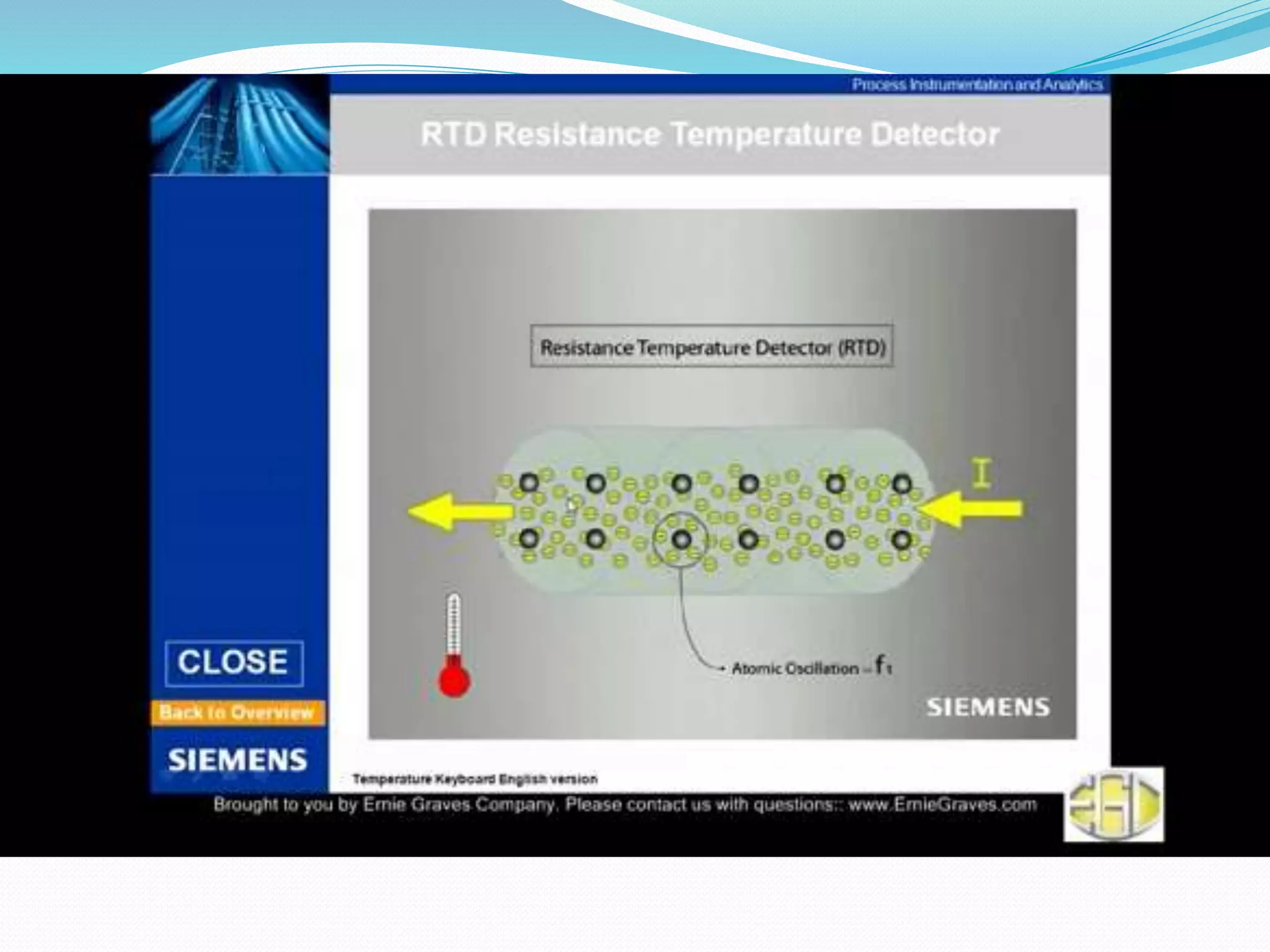
Resistance temperature detectors (RTDs) measure temperature changes by detecting corresponding changes in electrical resistance of a conductor. Platinum is commonly used as the conductor. When temperature increases, the conductor expands, altering its electrical resistance. RTDs have a sensing element connected by leads to a Wheatstone bridge circuit. A constant current is passed through the sensing element, and its changing resistance is measured by the bridge to determine the temperature. RTDs provide accurate, reproducible temperature measurements for remote or continuous monitoring applications. Their main limitation is slower response time due to protective casings around the sensing element.