Downloaded 86 times


















![Smoking
Higher Risk of Cuff Disease
Inferior Outcome
Baumgarten KM, Gerlach D, Galatz LM, et al. Cigarette smoking increases the risk for rotator cuff tears. Clinical
orthopaedics and related research. Jun 2010;468(6):1534-1541.
Mallon WJ, Misamore G, Snead DS, Denton P. The impact of preoperative smoking habits on the results of rotator cuff
repair. Journal of shoulder and elbow surgery / American Shoulder and Elbow Surgeons ... [et al.]. Mar-Apr
2004;13(2):129-132.](https://image.slidesharecdn.com/rotatorcuffevidenceupdatetacnov2016-161115082054/85/Rotator-Cuff-Evidence-Update-47-320.jpg)
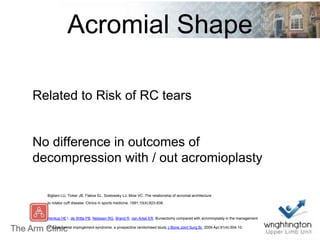
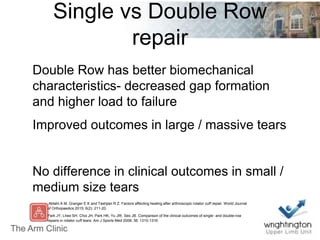

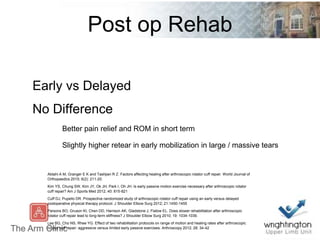



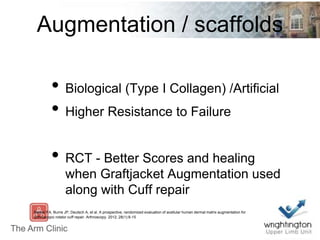


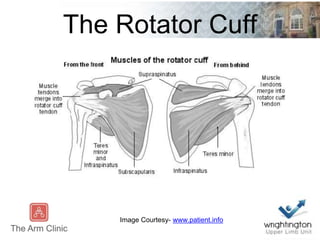
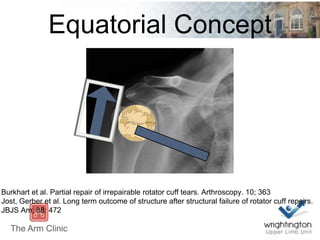
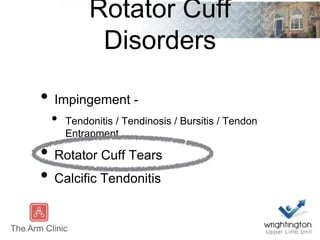
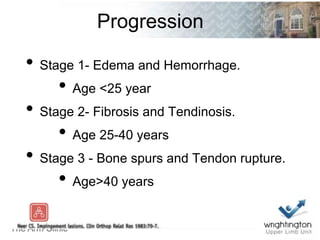
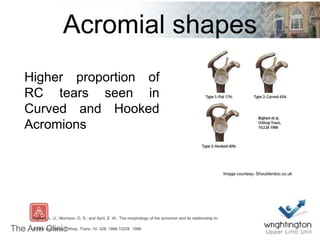
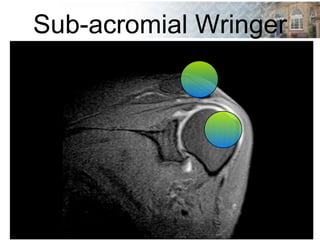
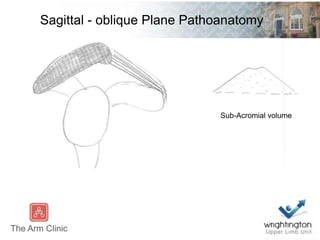
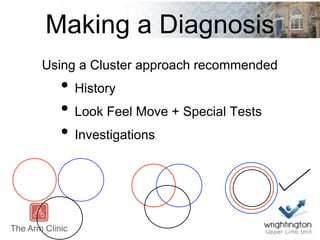
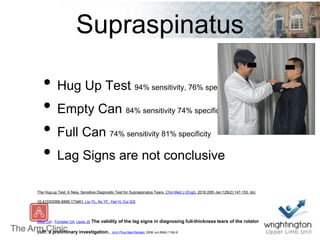
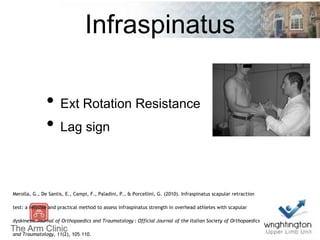
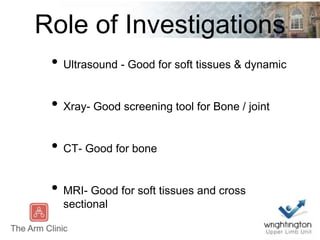
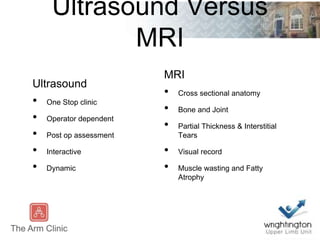
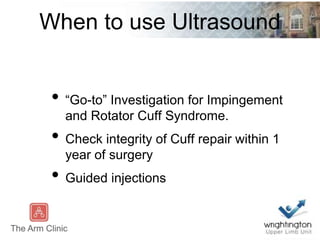
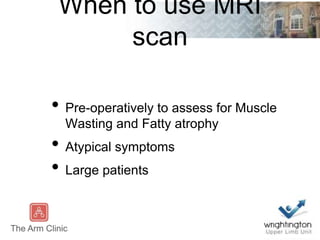
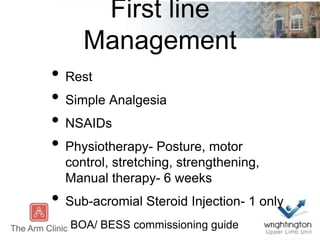
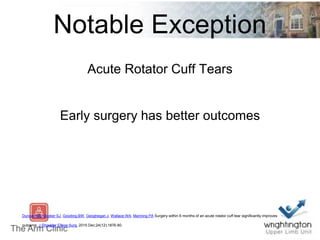
This document provides an overview of rotator cuff disorders and evidence related to diagnosis and management. Key points include: - Rotator cuff tears can be caused by mechanical or degenerative factors and progress from tendinosis to partial or full thickness tears. - Physical exams have low diagnostic accuracy for tears but clusters of tests may help. Investigations like ultrasound and MRI can better identify soft tissue pathology. - Factors like age, tear size, tendon retraction and fatty infiltration affect outcomes, with larger/retracted tears and more fatty changes correlating to poorer prognosis. - Initial management focuses on rest, analgesics and physiotherapy, with surgery for failed non-operative treatment. Surgical techniques like


![ROTATOR CUFF[4273].pptx](https://cdn.slidesharecdn.com/ss_thumbnails/rotatorcuff4273-221222051719-751991ae-thumbnail.jpg?width=640&height=640&fit=bounds)


