SHOULDER IMPINGEMENTSHOULDER IMPINGEMENT
SYNDROMESYNDROME
Dr HARDEV SINGHDr HARDEV SINGH
MODERATOR Dr D. K. GUPTAMODERATOR Dr D. K. GUPTA
MS, Mch, PhdMS, Mch, Phd
Department Of OrthopaedicsDepartment Of Orthopaedics
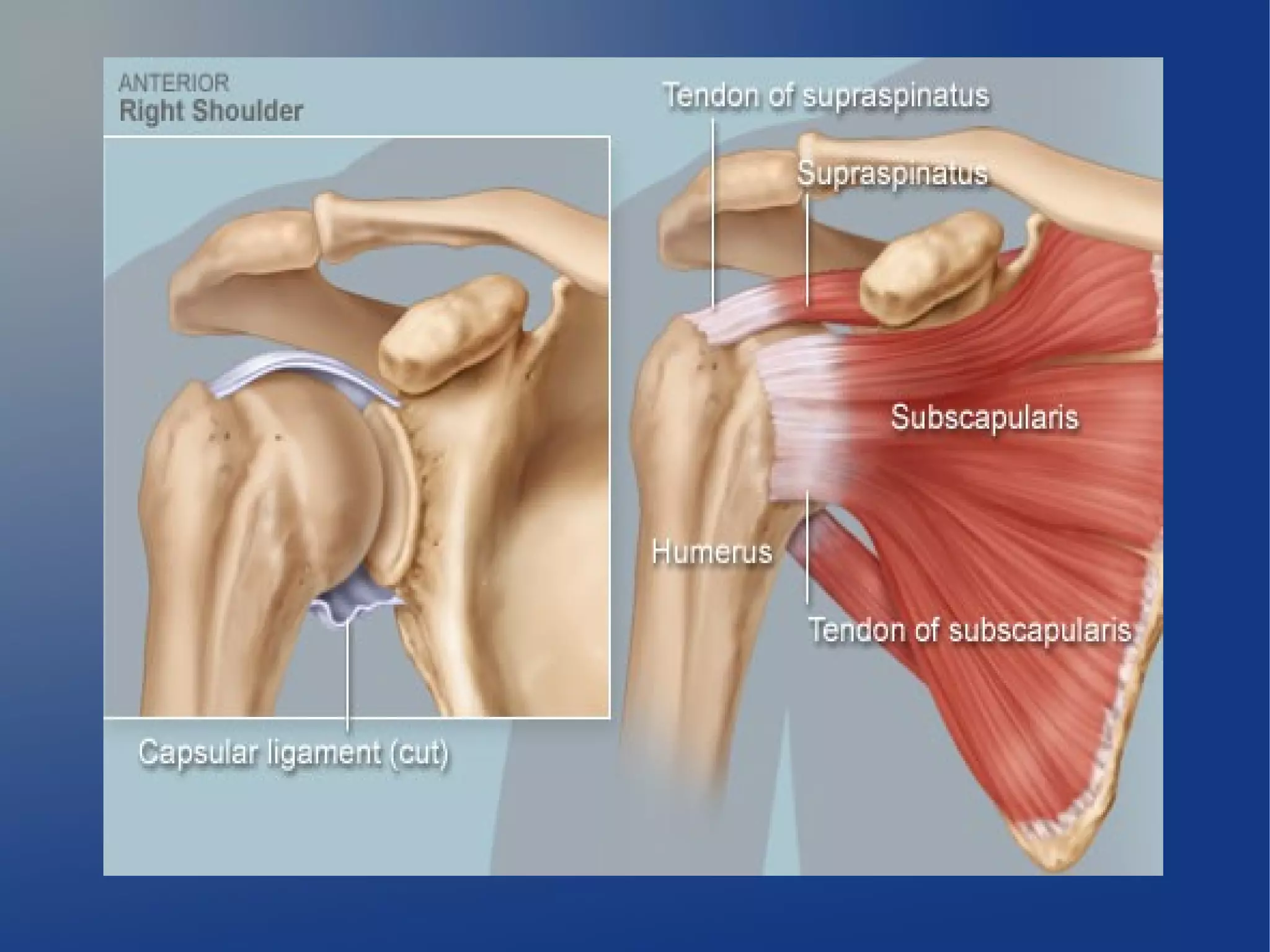
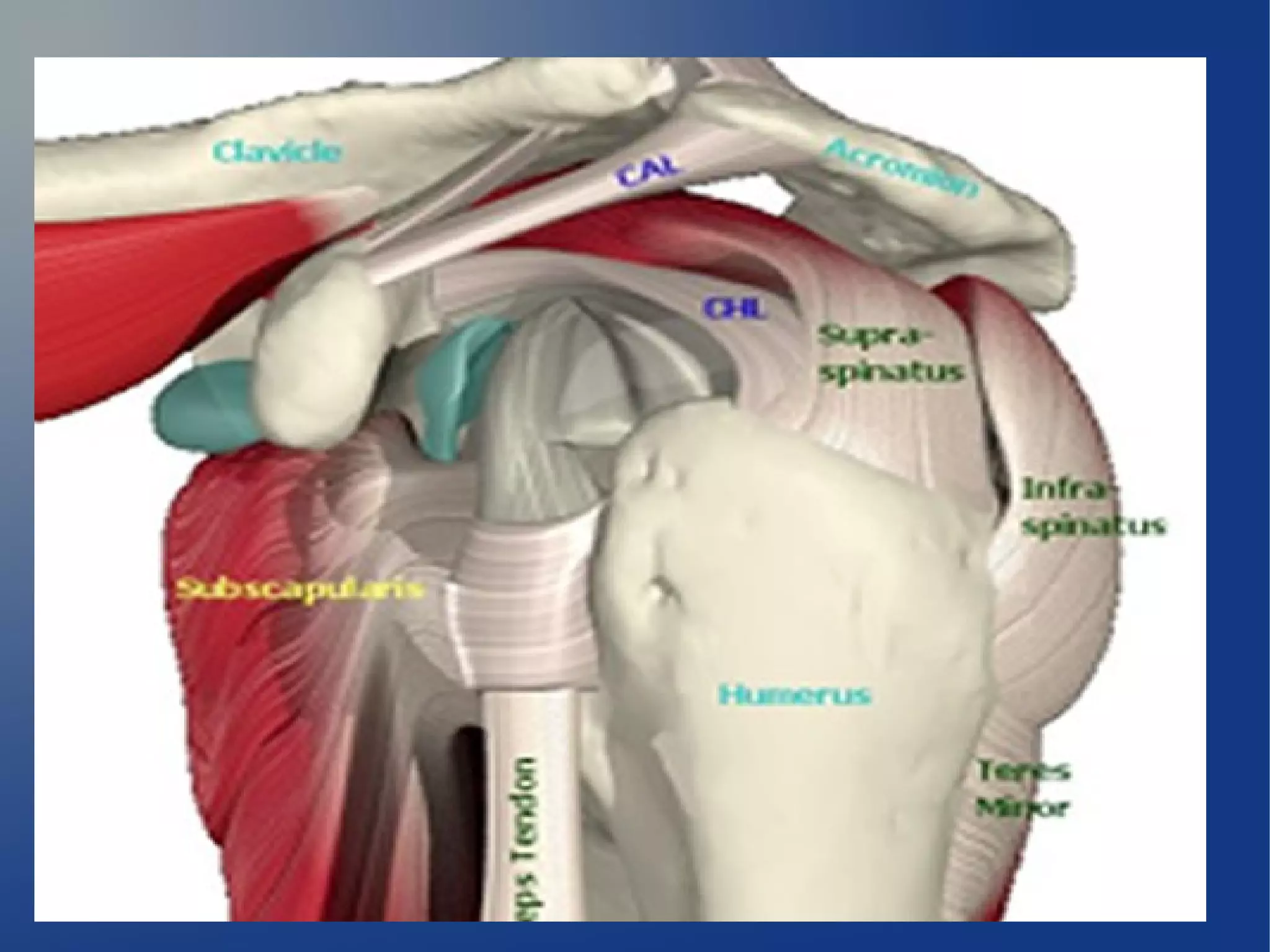
THE SHOULDER JOINT
ROTATOR CUFF MUSCLE
● SUPRASPINATUS
● INFRASPINATUS
● SUBSCAPULARIS
● TERES MINOR
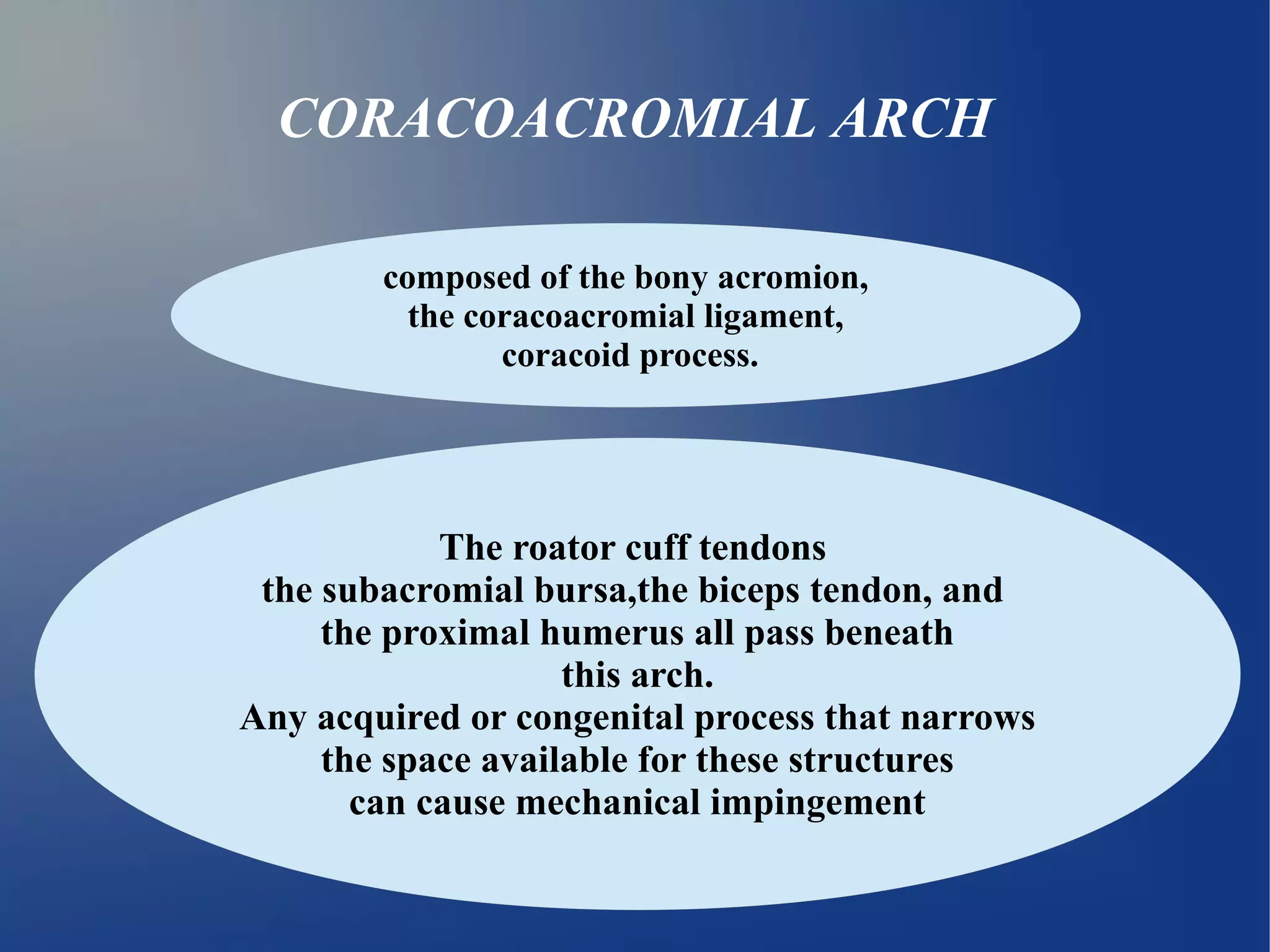
CORACOACROMIAL ARCH
composed of the bony acromion,
the coracoacromial ligament,
coracoid process.
The roator cuff tendons
the subacromial bursa,the biceps tendon, and
the proximal humerus all pass beneath
this arch.
Any acquired or congenital process that narrows
the space available for these structures
can cause mechanical impingement
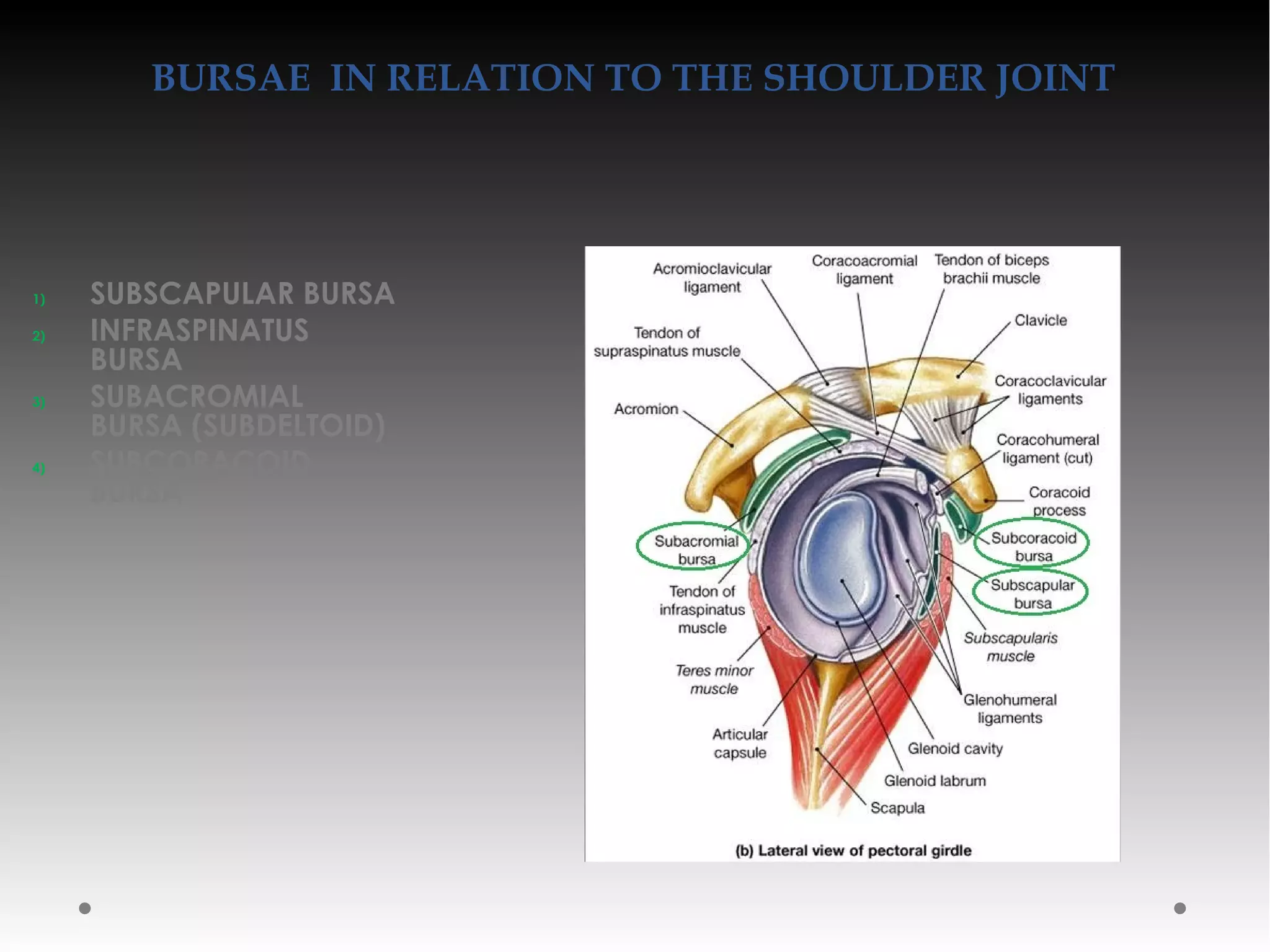
BURSAE IN RELATION TO THE SHOULDER JOINT
1) SUBSCAPULAR BURSA
2) INFRASPINATUS
BURSA
3) SUBACROMIAL
BURSA (SUBDELTOID)
4) SUBCORACOID
BURSA
In 1972, Neer described impingement
Shoulder impingement has been defined as
compression and mechanical abrasion of the
supraspinatus as they pass beneath the
coracoacromial arch during elevation of the
arm.
A characteristic ridge of proliferative spurs
and excrescences on the undersurface of the
anterior process of the acromion, apparently
caused by repeated impingement of the rotator
cuff and the humeral head with traction of the
coracoacromial ligament.
Neer also noted that the anterior third of the acromion
and its anterior lip seemed to be the offending structure
in most cases.
The supraspinatus insertion into the greater tuberosity
that passes beneath the coracoacromial arch during
forward flexion of the shoulder is susceptible to
impingement
Developmental Stages of Impingement
Syndrome
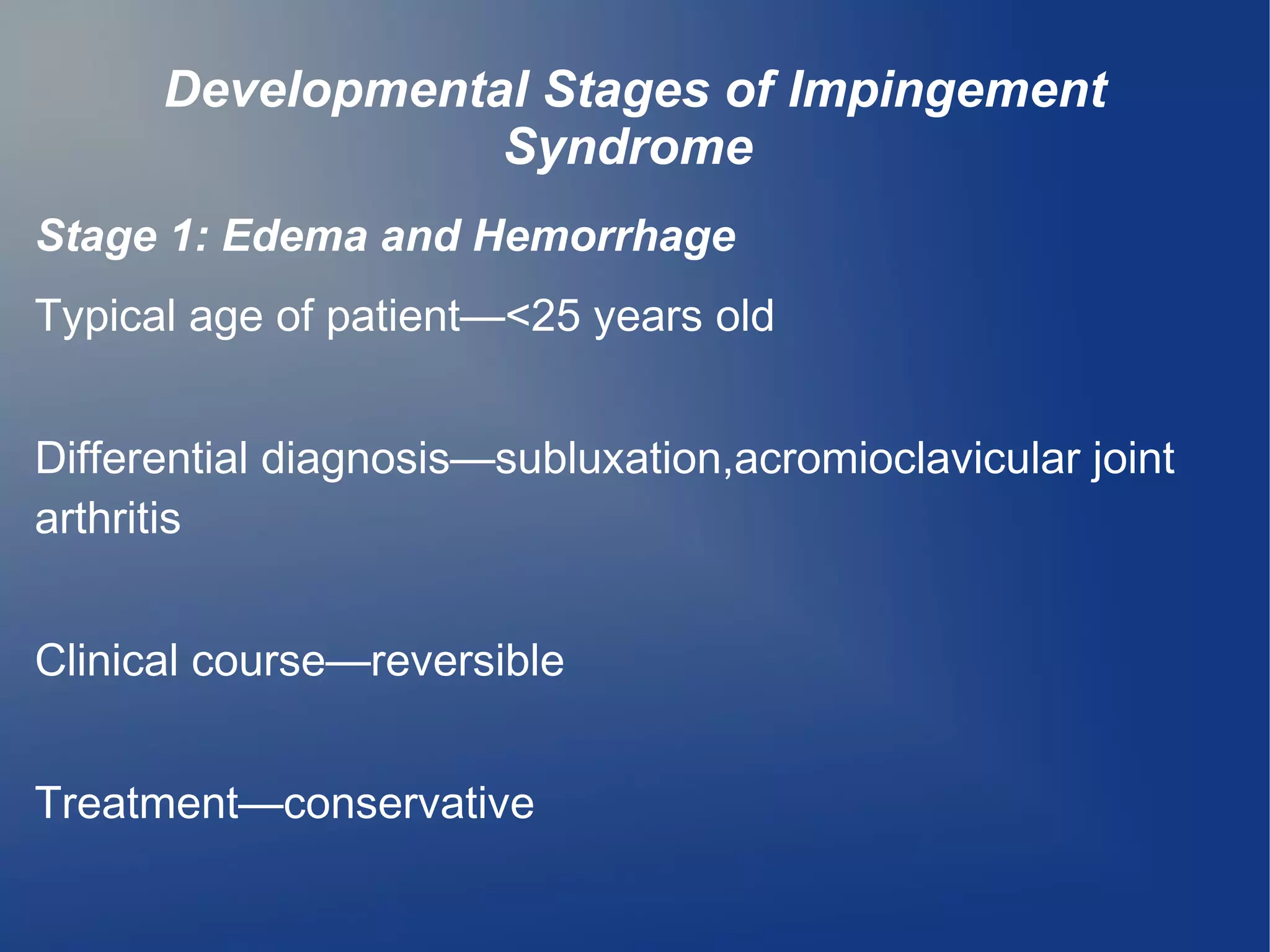
Stage 1: Edema and Hemorrhage
Typical age of patient—<25 years old
Differential diagnosis—subluxation,acromioclavicular joint
arthritis
Clinical course—reversible
Treatment—conservative
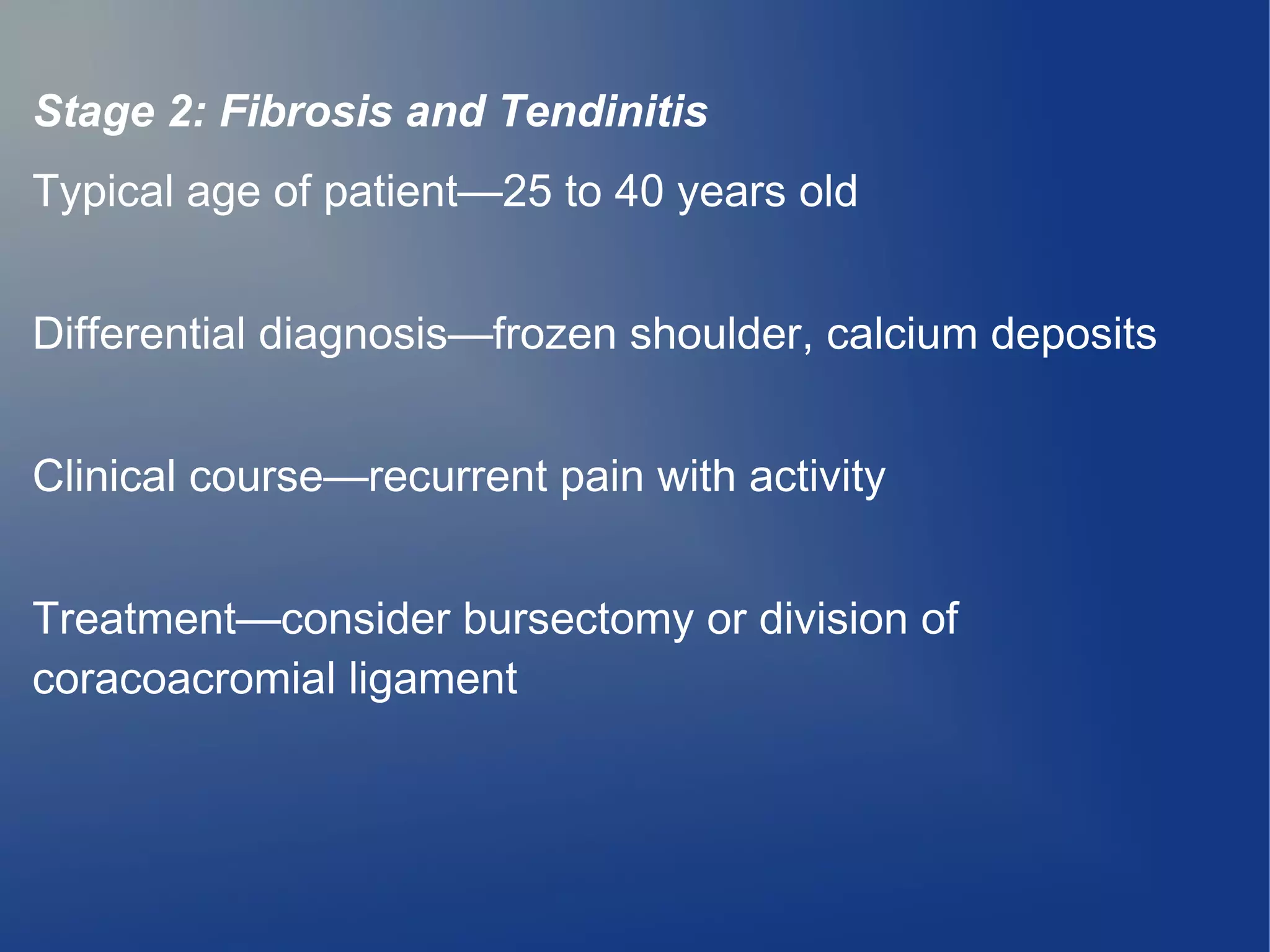
Stage 2: Fibrosis and Tendinitis
Typical age of patient—25 to 40 years old
Differential diagnosis—frozen shoulder, calcium deposits
Clinical course—recurrent pain with activity
Treatment—consider bursectomy or division of
coracoacromial ligament
Stage 3: Bone Spurs and Tendon Rupture
Typical age of patient—>40 years old
Differential diagnosis—cervical radiculitis, neoplasm
Clinical course—progressive disability
Treatment—anterior acromioplasty, rotator cuff repair
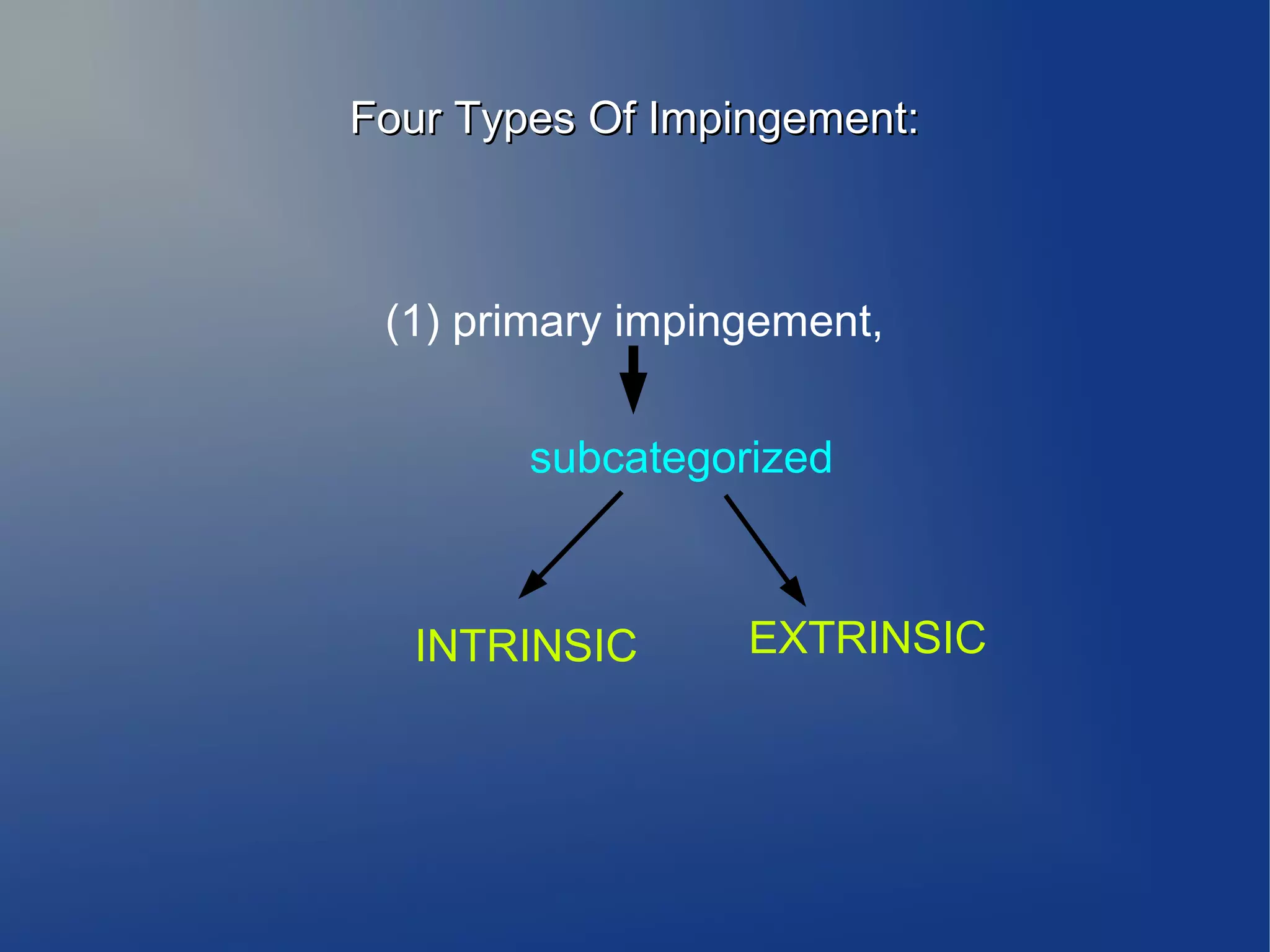
Four Types Of Impingement:Four Types Of Impingement:
(1) primary impingement,
subcategorized
INTRINSIC EXTRINSIC
(2) secondary impingement,
(3) subcoracoid impingement,
(4) internal impingement.
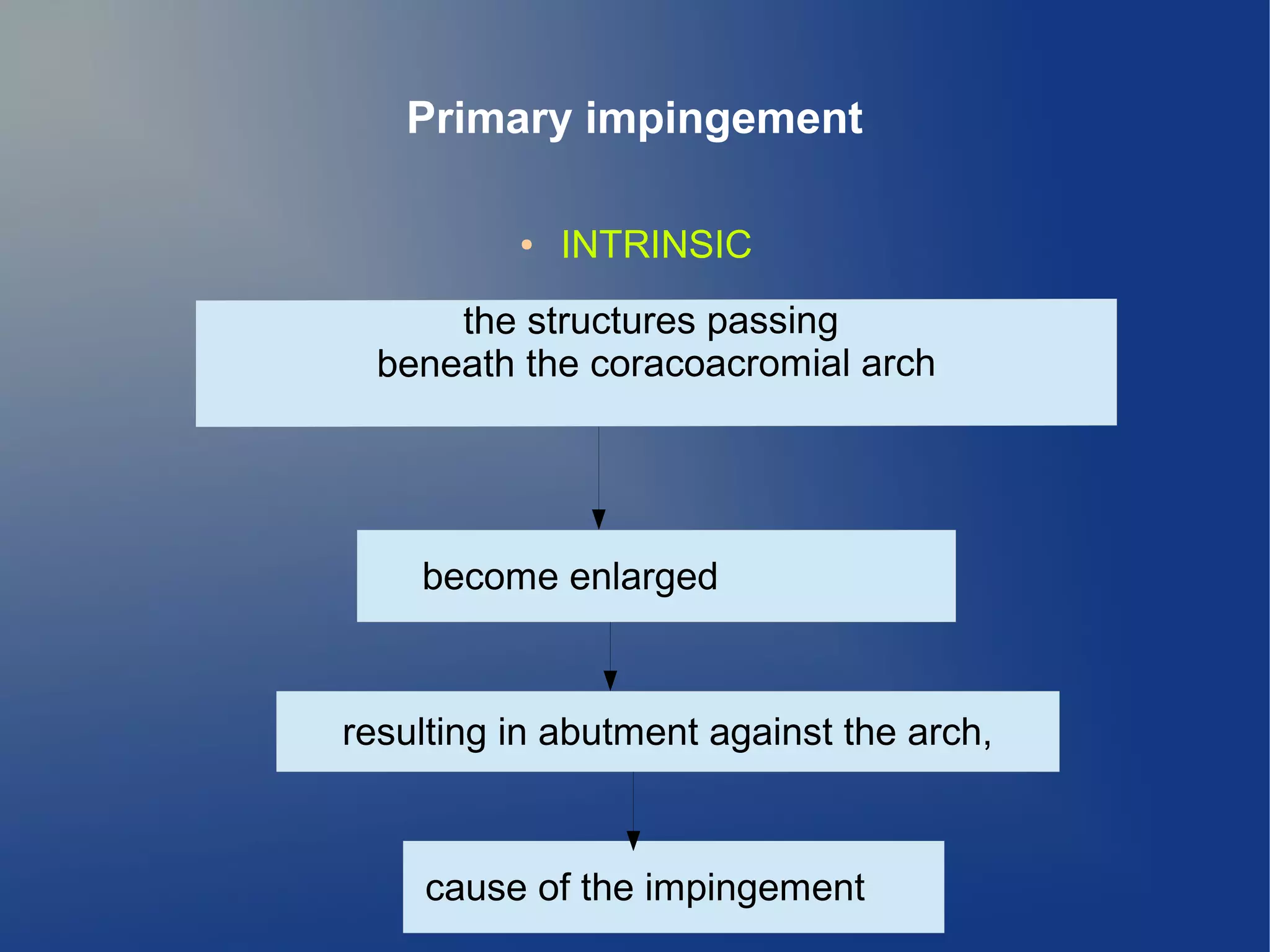
Primary impingement
● INTRINSIC
become enlarged
resulting in abutment against the arch,
cause of the impingement
Examples of this condition include
i. Thickening of the rotator cuff,
ii. Calcium deposits within the rotator cuff,
iii.Thickening of the subacromial bursa.
EXTRINSIC
When the space available for the rotator cuff is
diminished; examples include
i. Subacromial spurring
ii. Acromial fracture or pathological os acrominale
iii.Osteophytes off the undersurface of the
acromioclavicular joint
iv.Exostoses at the greater tuberosity
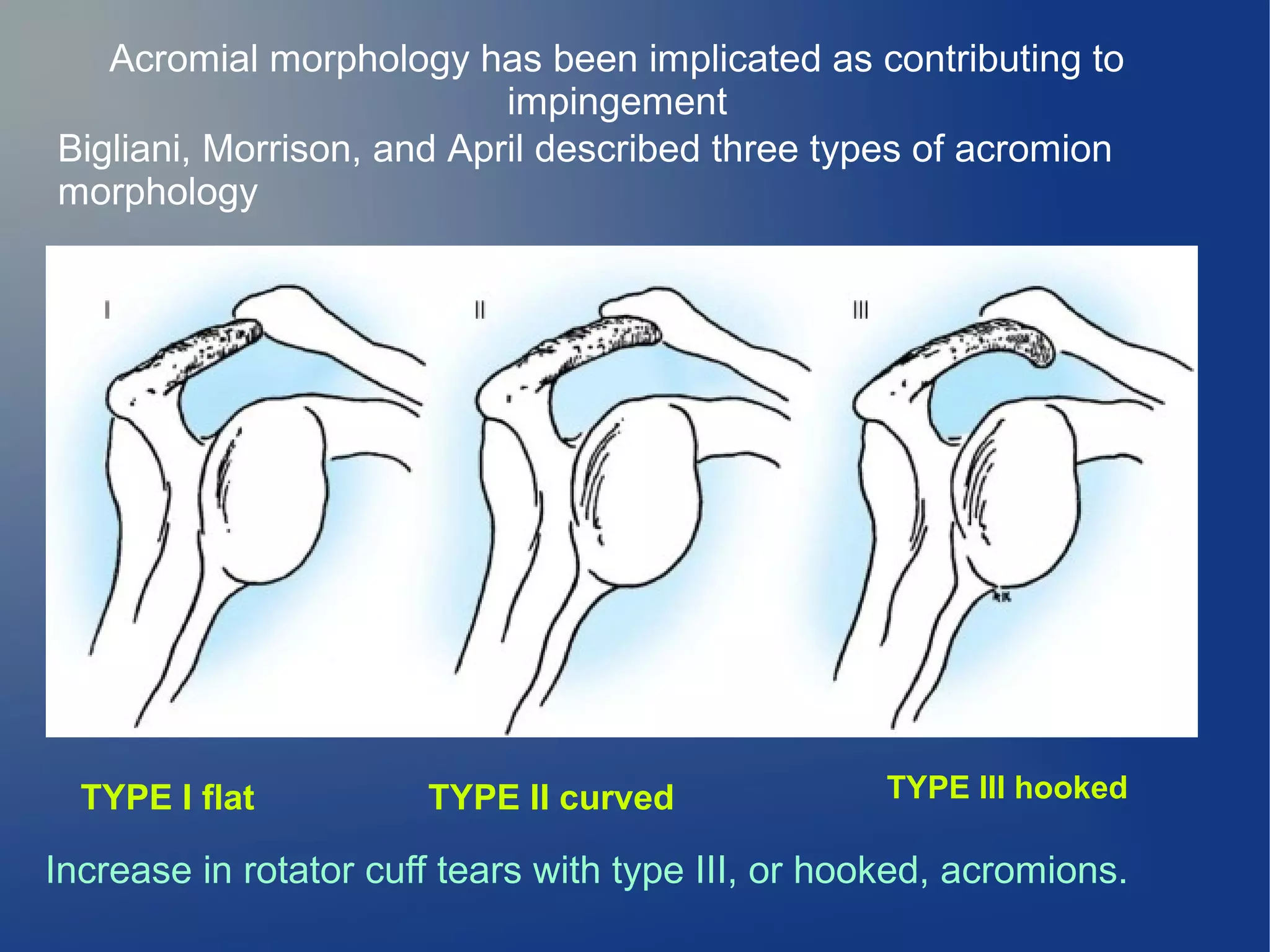
Acromial morphology has been implicated as contributing to
impingement
Bigliani, Morrison, and April described three types of acromion
morphology
TYPE I flat TYPE II curved TYPE III hooked
Increase in rotator cuff tears with type III, or hooked, acromions.
Secondary impingement
Secondary impingement occurs when there is instability of the
glenohumeral joint allowing translation of the humeral head,
typically anteriorly, resulting in contact of the rotator cuff
against the coracoacromial arch.
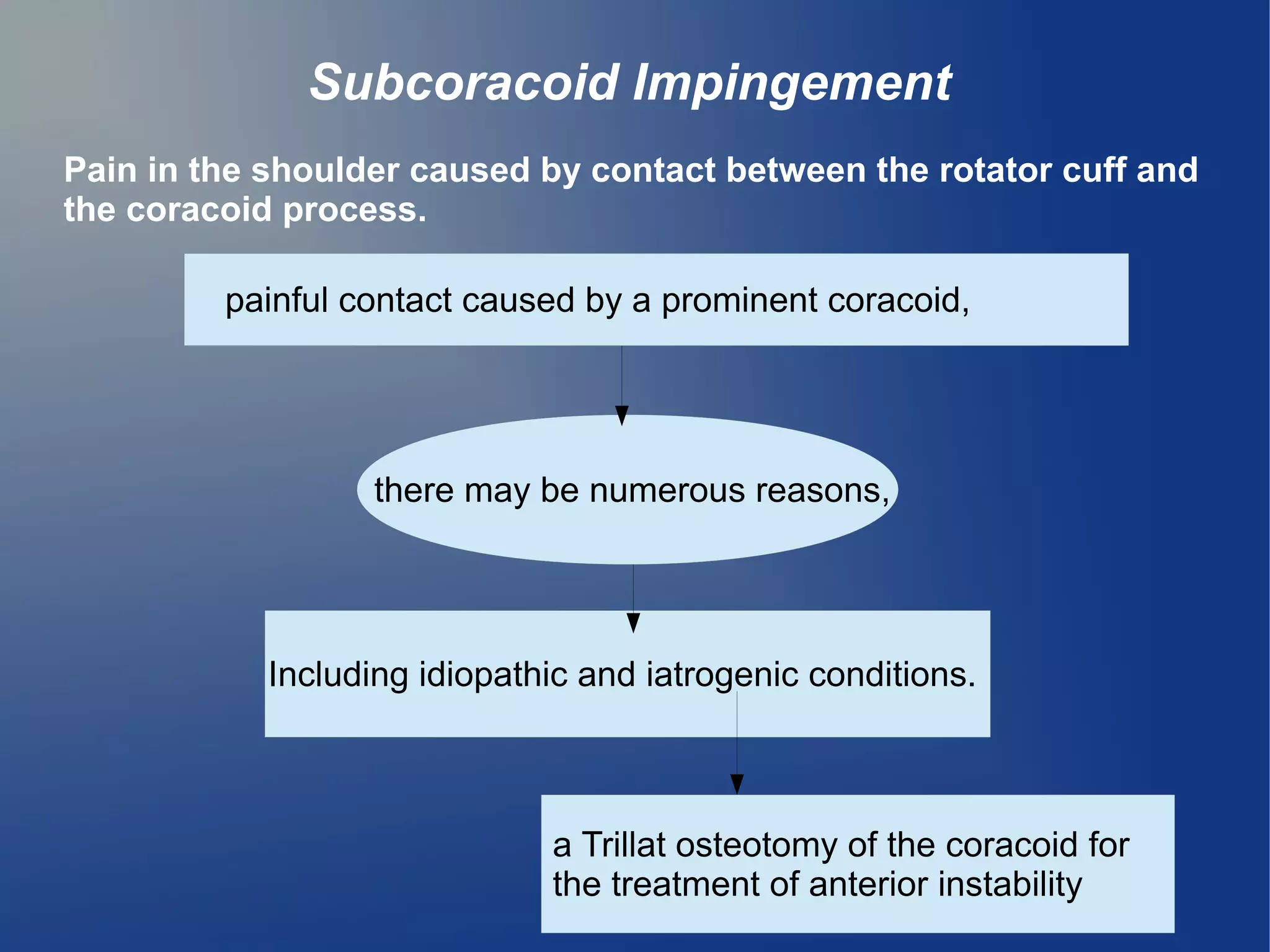
Subcoracoid Impingement
Pain in the shoulder caused by contact between the rotator cuff and
the coracoid process.
there may be numerous reasons,
painful contact caused by a prominent coracoid,
Including idiopathic and iatrogenic conditions.
a Trillat osteotomy of the coracoid for
the treatment of anterior instability
Physical findings attributed to this condition
include tenderness over the coracoid and a
positive coracoid impingement test .
An injection of lidocaine into the subcoracoid
region similar to the Neer impingement test has
been used to evaluate patients for coracoid
impingement.
Relief of pain suggests the diagnosis
CT has been used in the diagnosis of coracoid
impingement
a suggested distance of 6.8 mm between the
coracoid tip and the closest portion of the
proximal humerus indicates impingement.
Internal Impingement
In this condition, internal contact of the rotator cuff occurs with
the posterosuperior aspect of the glenoid when the arm is
abducted, extended, and externally rotated as in the cocked
position of the throwing motion.
This contact probably is a normal phenomenon, but becomes
pathological in certain patients.
It often occurs in throwers who have lost internal rotation of
the shoulder.
Arthroscopic findings include partial rotator cuff tears,
posterior and superior labral tears, and anterior shoulder
laxity
Clinical presentation
● PAIN
Awaken the patient from sleep
More in active than passive motion
● WEAKNESS
● LOSS OF MOTION
● CLICKS AND CREPITUS
Not specific
ON EXAMINATION
INSPECTION
Comparison of both the shoulder
Atrophy
Swelling
Deformity
Ecchymosis suggest
Contusion or rupture of structure like rotator cuff or long head of the bicdps tendon
● PALPATION
Acromioclavicular joint
Sterno clavicular jonit
Clavice
Acromian
SPECIAL TEST
Neer Impingement Sign and Impingement TestNeer Impingement Sign and Impingement Test
With the patient seated, the examiner raises the affected arm
in forced forward elevation while stabilizing the scapula,
causing the greater tuberosity to impinge against the
acromion.
This maneuver produces pain with impingement lesions of all
stages.
It also produces pain in many other shoulder conditions
i. Adhesive capsulitis,
ii. Osteoarthritis,
iii. Calcific tendinitis, and bone lesions.
Neer also described the impingement test with the use of a
subacromial injection of 10 mL of 1% lidocaine (Xylocaine).
Pain caused by impingement usually is significantly reduced
or eliminated, but pain caused by other conditions (with the
exception perhaps of calcific tendinitis) is not relieved.
Hawkins-Kennedy Test
The test is performed by forward flexing the
humerus to 90 degrees and forcibly internally
rotating the shoulder.
This maneuver drives the greater tuberosity
farther under the coracoacromial ligament,
reproducing the impingement pain
Jobe Test
The test is performed by placing the shoulder in 90
degrees of abduction and 30 degrees of forward flexion
and internally rotated so that the thumb is pointing toward
the floor.
Muscle testing against resistance shows weakness or
insufficiency of the supraspinatus owing to a tear or pain
associated with rotator cuff impingement.
Gerber Subcoracoid Impingement Test
The Gerber test is designed to identify impingement
between the rotator cuff and the coracoid process.
It is performed in a manner similar to the Hawkins-
Kennedy impingement test.
The arm is forward flexed 90 degrees and adducted 10 to
20 degrees across the body to bring the lesser tuberosity
into contact with the coracoid.
Pain with the maneuver indicates coracoid impingement
Jobe Apprehension-Relocation Test
To distinguish between primary impingement and secondary
impingement owing to subtle anterior instability .
With the patient supine, the arm is abducted 90 degrees and
externally rotated, which produces pain from impingement.
Application of a posteriorly directed force to the humeral
head, relocating it in the glenoid, does not change the pain in
patients with primary impingement, but relieves the pain in
patients with instability (subluxation) and secondary
impingement, who tolerate maximal external rotation with the
humeral head maintained in a reduced position.
IMAGING
● 1) X RAYS
AP VIEW
AXILLARY VIEW
SUPRASPINATUS VIEW
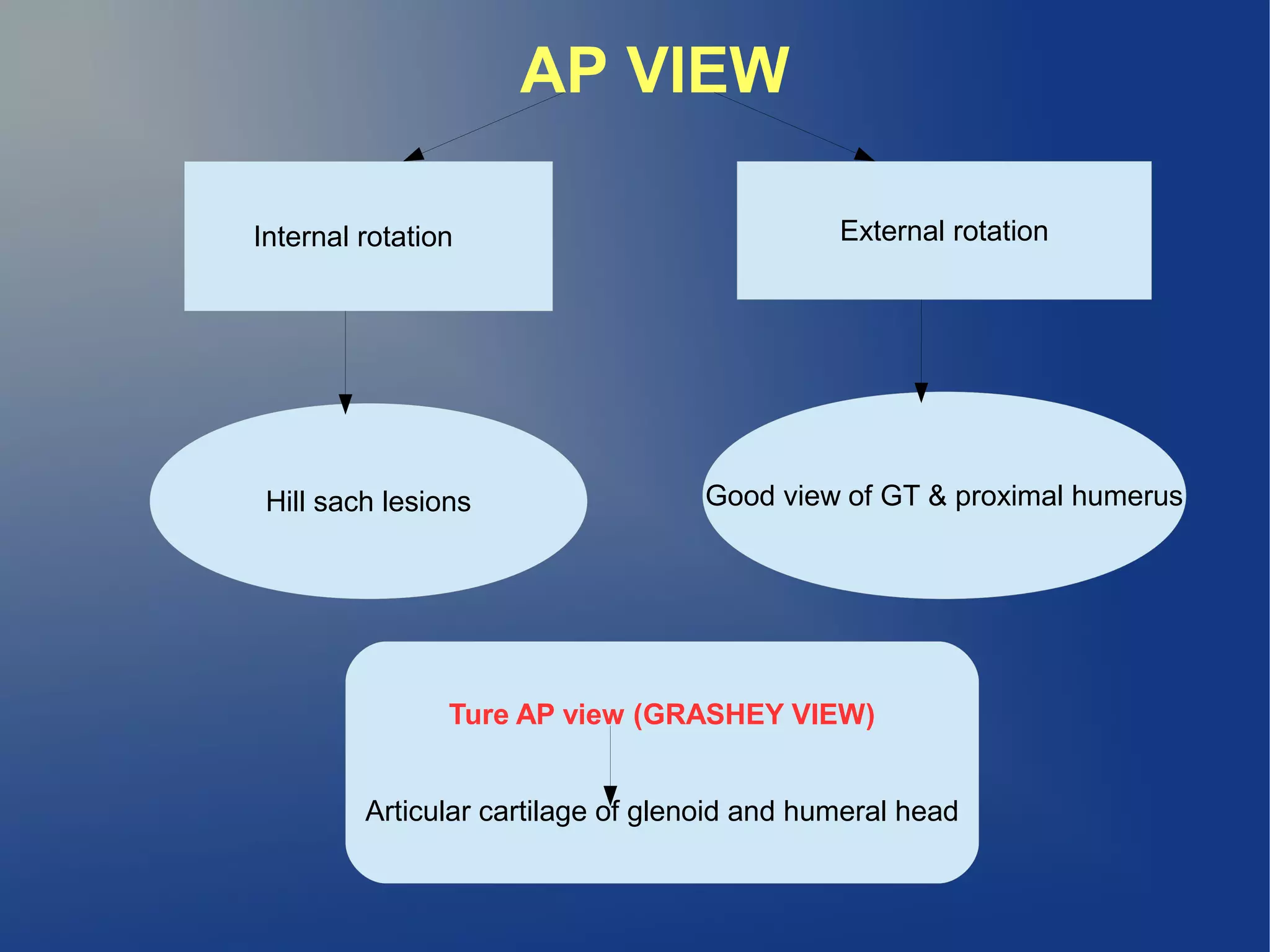
AP VIEW
Internal rotation External rotation
Hill sach lesions Good view of GT & proximal humerus
Ture AP view (GRASHEY VIEW)
Articular cartilage of glenoid and humeral head
–
–
–
– Axillary lateral view
Glenoid labrum
Coracoid
Acromian
Proximal humerus
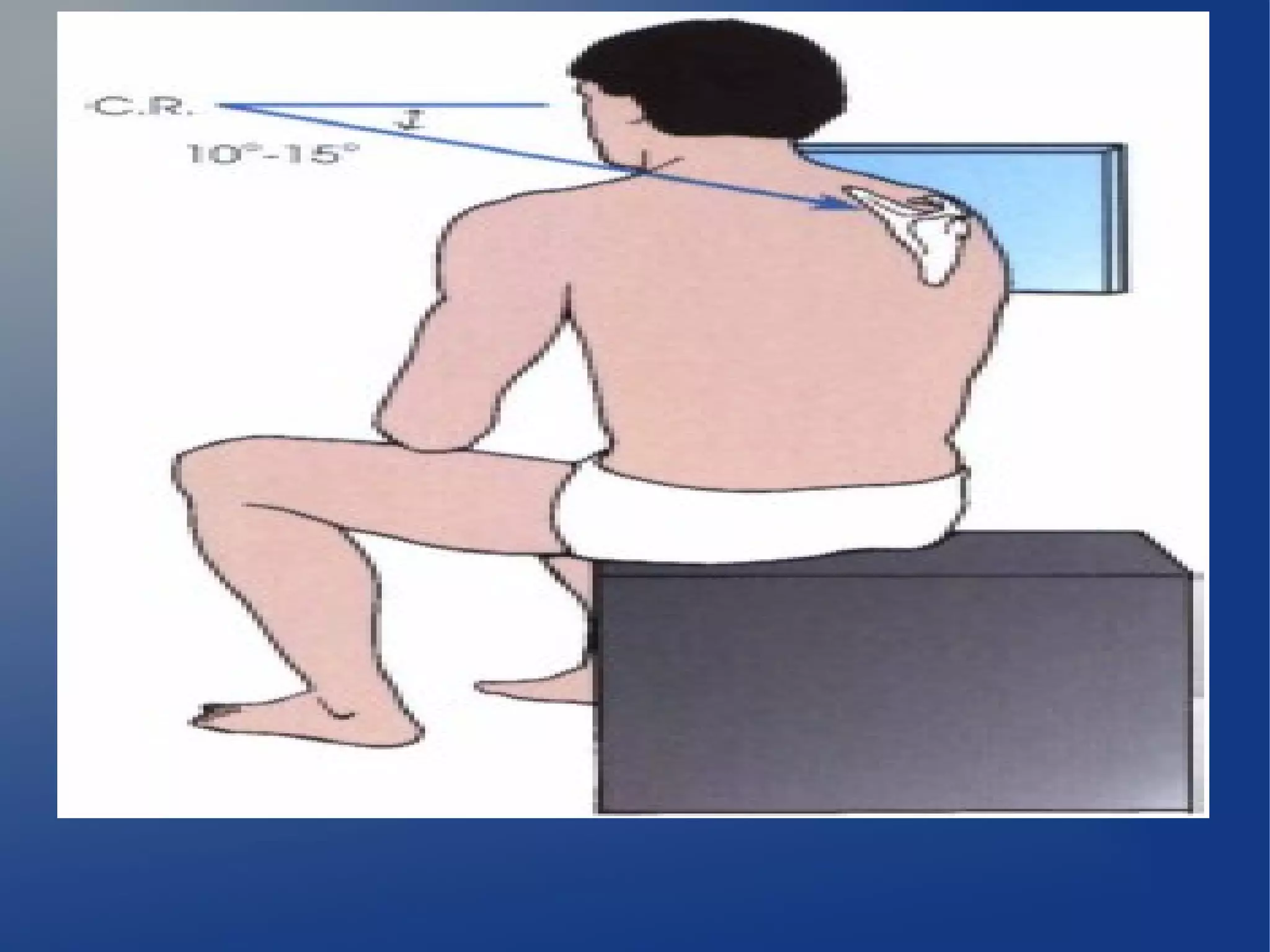
An outlet view assists in the evaluation of patients with
rotator cuff disease.
This view is a lateral view of the scapula with the tube
angled 10 degrees caudad.
On this radiograph, the acromion can be classified into
one of three types
1)flat
2)curved
3)hooked An association between a hooked
acromion and rotator cuff disease
Radiographs may reveal
1)Exostoses,
2)greater tuberosity cysts or sclerosis,
3)subacromial sclerosis (sourcil sign), which indicate
chronic cuff tears.
4)Additionally, superior migration of the humeral head
with narrowing of the acromiohumeral space to less
than 7 mm suggests a rotator cuff tear,
5)a space less than 5 mm suggests a massive tear.
ARTHROGRAM
Traditionally, an arthrogram has been used to document full-
thickness rotator cuff tears.
Leakage of contrast material into the subacromial and
subdeltoid spaces after injection into the glenohumeral joint
indicates a full-thickness tear.
Arthrography is still useful for patients in whom MRI is
contraindicated,
Arthrography can be combined with MRI to improve the
diagnostic accuracy
MRI
MRI is now the most commonly used test for evaluation for
rotator cuff pathology.
It is highly accurate and shows detailed anatomical information,
including the size of rotator cuff tears and the status of the rotator
cuff muscles.
In addition, partial tears and tendinopathy are well visualized by
MRI.
A patient with symptoms of subacromial impingement may show
increased signal in the supraspinatus tendon on T2-weighted MRI
consistent with tendinopathy; increased fluid in the subacromial
bursa also is a sign of subacromial impingement.
Fatty replacement of the supraspinatus muscle and the
supraspinatus fossa indicates chronic pathology.
The initial treatment of a patient with tendinopathy caused by
classic primary extrinsic impingement
TREATMENT
Nonoperative regimen
Antiinflammatory medications.
one or at most two subacromial
cortisone injections,
A physical therapy program focusing on
stretching for full shoulder motion and
strengthening the rotator cuff.
PLUS
If the patient fails to respond after 3 to 4 months
of conservative therapy.
Operative intervention may be indicated and should be
directed to the specific lesion.
The surgical treatment of choice for impingement syndrome.
Arthroscopic or open acromioplasty
Acromioplasty
Place the patient in a semi upright position with
the head elevated 30 to 35 degrees.
Place a towel or an intravenous bag medial to
the scapula to stabilize it.
This degree of head elevation usually places the
superior acromial surface perpendicular to the
floor, allowing the acromial osteotomy to be
made perpendicular to the floor.
Outline the proposed skin incision approximately
6 cm long.
Make the incision from lateral to the anterior
After mobilization of the subcutaneous tissue,
identify the raphe between the anterior and
middle deltoid, and split it from a point 5 cm or
less distal to the acromial border (to avoid
axillary nerve injury) toward the anterolateral
acromion.
To use this approach, elevate a flap of deltoid
with its periosteal attachment and the periosteal
attachment of the trapezius approximately 2 cm
onto the superior acromial surface.
The importance of correct deltoid detachment
cannot be overemphasized.
A secure cuff of tissue must be maintained for
later defect closure or reattachment to the
acromion.
Without secure deltoid attachment, the results
of the acromioplasty would be compromised by
lack of deltoid function.
After completing the anterior limb of the
elevation, resect the coracoacromial ligament.
With the subacromial space exposed, resect the
bursa along with all adhesions and soft-tissue
coverage from the acromial undersurface.
The bursa can be identified by its continuity with
the acromial undersurface and its unilaminar
appearance as opposed to the multilaminar
appearance of the rotator cuff.
After bursal resection, use an oscillating saw to
remove the portion of the acromion that projects
anterior to the anterior border of the clavicle.
This removes a portion of the offending acromial
hook and squares off the surface, allowing easier
completion of the acromioplasty with an oscillating
saw or an osteotome.
Begin the osteotomy at the anterosuperior aspect of
the acromion, and continue it through the junction
of the anterior and middle thirds of the acromion,
including the entire anterior acromion from medial
to lateral.
Carefully inspect the entire rotator cuff for tears
before closure.
The area just proximal to the supraspinatus
insertion is the most common site for tears.
Suture the deltoid cuff from side to side or, if
necessary, through drill holes into the acromion with
nonabsorbable sutures, ensuring that the
reattachment is secure.
• Include repair of the coracoacromial ligament to
the acromion with repair of the deltoid to prevent
subsequent anterosuperior subluxation of the
humeral head.
Either open or arthroscopic acromioplasty isEither open or arthroscopic acromioplasty is
satisfactory if the main principles of the originalsatisfactory if the main principles of the original
procedure as described by Neer are kept in mind,procedure as described by Neer are kept in mind,
as follows:as follows:
1)Release (but not resection) of the coracoacromial1)Release (but not resection) of the coracoacromial
ligamentligament
2)Removal of the anterior lip of the acromion2)Removal of the anterior lip of the acromion
3)Removal of part of the acromion anterior to the3)Removal of part of the acromion anterior to the
anterior border of the clavicleanterior border of the clavicle
4)Removal of the distal 1 to 1.5 cm of clavicle if4)Removal of the distal 1 to 1.5 cm of clavicle if
significant degenerative changes are foundsignificant degenerative changes are found
The arm is supported by a sling.
Pendulum exercises are started the day after
surgery.
Passive abduction and internal and external
rotation exercises are started at the end of 1
week.
At 3 weeks, active exercises are begun.
The sling is discarded as soon as the patient
feels comfortable.
Complications
Complications after acromioplasty include, but are not limited
to, infection,
i. Seroma formation,
ii. Hematoma,
iii.Synovial fistula,
iv.Biceps rupture,
v. Pulmonary embolus,
vi. Acromial fracture, and
Adequate bone must be removed to alleviate outlet stenosis.Adequate bone must be removed to alleviate outlet stenosis.
Inadequate bone removal seems to occur more often inInadequate bone removal seems to occur more often in
arthroscopic than open acromioplasties.arthroscopic than open acromioplasties.
Shoulder impingement syndrome

Shoulder impingement syndrome

  • 2.
    SHOULDER IMPINGEMENTSHOULDER IMPINGEMENT SYNDROMESYNDROME DrHARDEV SINGHDr HARDEV SINGH MODERATOR Dr D. K. GUPTAMODERATOR Dr D. K. GUPTA MS, Mch, PhdMS, Mch, Phd Department Of OrthopaedicsDepartment Of Orthopaedics
  • 3.
  • 5.
    ROTATOR CUFF MUSCLE ●SUPRASPINATUS ● INFRASPINATUS ● SUBSCAPULARIS ● TERES MINOR
  • 9.
    CORACOACROMIAL ARCH composed ofthe bony acromion, the coracoacromial ligament, coracoid process. The roator cuff tendons the subacromial bursa,the biceps tendon, and the proximal humerus all pass beneath this arch. Any acquired or congenital process that narrows the space available for these structures can cause mechanical impingement
  • 12.
    BURSAE IN RELATIONTO THE SHOULDER JOINT 1) SUBSCAPULAR BURSA 2) INFRASPINATUS BURSA 3) SUBACROMIAL BURSA (SUBDELTOID) 4) SUBCORACOID BURSA
  • 13.
    In 1972, Neerdescribed impingement Shoulder impingement has been defined as compression and mechanical abrasion of the supraspinatus as they pass beneath the coracoacromial arch during elevation of the arm. A characteristic ridge of proliferative spurs and excrescences on the undersurface of the anterior process of the acromion, apparently caused by repeated impingement of the rotator cuff and the humeral head with traction of the coracoacromial ligament.
  • 14.
    Neer also notedthat the anterior third of the acromion and its anterior lip seemed to be the offending structure in most cases. The supraspinatus insertion into the greater tuberosity that passes beneath the coracoacromial arch during forward flexion of the shoulder is susceptible to impingement
  • 15.
    Developmental Stages ofImpingement Syndrome Stage 1: Edema and Hemorrhage Typical age of patient—<25 years old Differential diagnosis—subluxation,acromioclavicular joint arthritis Clinical course—reversible Treatment—conservative
  • 16.
    Stage 2: Fibrosisand Tendinitis Typical age of patient—25 to 40 years old Differential diagnosis—frozen shoulder, calcium deposits Clinical course—recurrent pain with activity Treatment—consider bursectomy or division of coracoacromial ligament
  • 17.
    Stage 3: BoneSpurs and Tendon Rupture Typical age of patient—>40 years old Differential diagnosis—cervical radiculitis, neoplasm Clinical course—progressive disability Treatment—anterior acromioplasty, rotator cuff repair
  • 18.
    Four Types OfImpingement:Four Types Of Impingement: (1) primary impingement, subcategorized INTRINSIC EXTRINSIC
  • 19.
    (2) secondary impingement, (3)subcoracoid impingement, (4) internal impingement.
  • 20.
    Primary impingement ● INTRINSIC becomeenlarged resulting in abutment against the arch, cause of the impingement
  • 21.
    Examples of thiscondition include i. Thickening of the rotator cuff, ii. Calcium deposits within the rotator cuff, iii.Thickening of the subacromial bursa.
  • 22.
    EXTRINSIC When the spaceavailable for the rotator cuff is diminished; examples include i. Subacromial spurring ii. Acromial fracture or pathological os acrominale iii.Osteophytes off the undersurface of the acromioclavicular joint iv.Exostoses at the greater tuberosity
  • 23.
    Acromial morphology hasbeen implicated as contributing to impingement Bigliani, Morrison, and April described three types of acromion morphology TYPE I flat TYPE II curved TYPE III hooked Increase in rotator cuff tears with type III, or hooked, acromions.
  • 24.
    Secondary impingement Secondary impingementoccurs when there is instability of the glenohumeral joint allowing translation of the humeral head, typically anteriorly, resulting in contact of the rotator cuff against the coracoacromial arch.
  • 25.
    Subcoracoid Impingement Pain inthe shoulder caused by contact between the rotator cuff and the coracoid process. there may be numerous reasons, painful contact caused by a prominent coracoid, Including idiopathic and iatrogenic conditions. a Trillat osteotomy of the coracoid for the treatment of anterior instability
  • 26.
    Physical findings attributedto this condition include tenderness over the coracoid and a positive coracoid impingement test . An injection of lidocaine into the subcoracoid region similar to the Neer impingement test has been used to evaluate patients for coracoid impingement. Relief of pain suggests the diagnosis CT has been used in the diagnosis of coracoid impingement a suggested distance of 6.8 mm between the coracoid tip and the closest portion of the proximal humerus indicates impingement.
  • 27.
    Internal Impingement In thiscondition, internal contact of the rotator cuff occurs with the posterosuperior aspect of the glenoid when the arm is abducted, extended, and externally rotated as in the cocked position of the throwing motion. This contact probably is a normal phenomenon, but becomes pathological in certain patients. It often occurs in throwers who have lost internal rotation of the shoulder. Arthroscopic findings include partial rotator cuff tears, posterior and superior labral tears, and anterior shoulder laxity
  • 28.
    Clinical presentation ● PAIN Awakenthe patient from sleep More in active than passive motion ● WEAKNESS ● LOSS OF MOTION ● CLICKS AND CREPITUS Not specific
  • 29.
    ON EXAMINATION INSPECTION Comparison ofboth the shoulder Atrophy Swelling Deformity Ecchymosis suggest Contusion or rupture of structure like rotator cuff or long head of the bicdps tendon
  • 30.
    ● PALPATION Acromioclavicular joint Sternoclavicular jonit Clavice Acromian
  • 31.
    SPECIAL TEST Neer ImpingementSign and Impingement TestNeer Impingement Sign and Impingement Test With the patient seated, the examiner raises the affected arm in forced forward elevation while stabilizing the scapula, causing the greater tuberosity to impinge against the acromion. This maneuver produces pain with impingement lesions of all stages. It also produces pain in many other shoulder conditions i. Adhesive capsulitis, ii. Osteoarthritis, iii. Calcific tendinitis, and bone lesions.
  • 33.
    Neer also describedthe impingement test with the use of a subacromial injection of 10 mL of 1% lidocaine (Xylocaine). Pain caused by impingement usually is significantly reduced or eliminated, but pain caused by other conditions (with the exception perhaps of calcific tendinitis) is not relieved.
  • 34.
    Hawkins-Kennedy Test The testis performed by forward flexing the humerus to 90 degrees and forcibly internally rotating the shoulder. This maneuver drives the greater tuberosity farther under the coracoacromial ligament, reproducing the impingement pain
  • 36.
    Jobe Test The testis performed by placing the shoulder in 90 degrees of abduction and 30 degrees of forward flexion and internally rotated so that the thumb is pointing toward the floor. Muscle testing against resistance shows weakness or insufficiency of the supraspinatus owing to a tear or pain associated with rotator cuff impingement.
  • 38.
    Gerber Subcoracoid ImpingementTest The Gerber test is designed to identify impingement between the rotator cuff and the coracoid process. It is performed in a manner similar to the Hawkins- Kennedy impingement test. The arm is forward flexed 90 degrees and adducted 10 to 20 degrees across the body to bring the lesser tuberosity into contact with the coracoid. Pain with the maneuver indicates coracoid impingement
  • 40.
    Jobe Apprehension-Relocation Test Todistinguish between primary impingement and secondary impingement owing to subtle anterior instability . With the patient supine, the arm is abducted 90 degrees and externally rotated, which produces pain from impingement. Application of a posteriorly directed force to the humeral head, relocating it in the glenoid, does not change the pain in patients with primary impingement, but relieves the pain in patients with instability (subluxation) and secondary impingement, who tolerate maximal external rotation with the humeral head maintained in a reduced position.
  • 42.
    IMAGING ● 1) XRAYS AP VIEW AXILLARY VIEW SUPRASPINATUS VIEW
  • 43.
    AP VIEW Internal rotationExternal rotation Hill sach lesions Good view of GT & proximal humerus Ture AP view (GRASHEY VIEW) Articular cartilage of glenoid and humeral head
  • 44.
    – – – – Axillary lateralview Glenoid labrum Coracoid Acromian Proximal humerus
  • 46.
    An outlet viewassists in the evaluation of patients with rotator cuff disease. This view is a lateral view of the scapula with the tube angled 10 degrees caudad. On this radiograph, the acromion can be classified into one of three types 1)flat 2)curved 3)hooked An association between a hooked acromion and rotator cuff disease
  • 51.
    Radiographs may reveal 1)Exostoses, 2)greatertuberosity cysts or sclerosis, 3)subacromial sclerosis (sourcil sign), which indicate chronic cuff tears. 4)Additionally, superior migration of the humeral head with narrowing of the acromiohumeral space to less than 7 mm suggests a rotator cuff tear, 5)a space less than 5 mm suggests a massive tear.
  • 58.
    ARTHROGRAM Traditionally, an arthrogramhas been used to document full- thickness rotator cuff tears. Leakage of contrast material into the subacromial and subdeltoid spaces after injection into the glenohumeral joint indicates a full-thickness tear. Arthrography is still useful for patients in whom MRI is contraindicated, Arthrography can be combined with MRI to improve the diagnostic accuracy
  • 59.
    MRI MRI is nowthe most commonly used test for evaluation for rotator cuff pathology. It is highly accurate and shows detailed anatomical information, including the size of rotator cuff tears and the status of the rotator cuff muscles. In addition, partial tears and tendinopathy are well visualized by MRI. A patient with symptoms of subacromial impingement may show increased signal in the supraspinatus tendon on T2-weighted MRI consistent with tendinopathy; increased fluid in the subacromial bursa also is a sign of subacromial impingement. Fatty replacement of the supraspinatus muscle and the supraspinatus fossa indicates chronic pathology.
  • 64.
    The initial treatmentof a patient with tendinopathy caused by classic primary extrinsic impingement TREATMENT Nonoperative regimen Antiinflammatory medications. one or at most two subacromial cortisone injections, A physical therapy program focusing on stretching for full shoulder motion and strengthening the rotator cuff. PLUS
  • 65.
    If the patientfails to respond after 3 to 4 months of conservative therapy. Operative intervention may be indicated and should be directed to the specific lesion.
  • 66.
    The surgical treatmentof choice for impingement syndrome. Arthroscopic or open acromioplasty
  • 67.
    Acromioplasty Place the patientin a semi upright position with the head elevated 30 to 35 degrees. Place a towel or an intravenous bag medial to the scapula to stabilize it. This degree of head elevation usually places the superior acromial surface perpendicular to the floor, allowing the acromial osteotomy to be made perpendicular to the floor. Outline the proposed skin incision approximately 6 cm long. Make the incision from lateral to the anterior
  • 69.
    After mobilization ofthe subcutaneous tissue, identify the raphe between the anterior and middle deltoid, and split it from a point 5 cm or less distal to the acromial border (to avoid axillary nerve injury) toward the anterolateral acromion. To use this approach, elevate a flap of deltoid with its periosteal attachment and the periosteal attachment of the trapezius approximately 2 cm onto the superior acromial surface.
  • 70.
    The importance ofcorrect deltoid detachment cannot be overemphasized. A secure cuff of tissue must be maintained for later defect closure or reattachment to the acromion. Without secure deltoid attachment, the results of the acromioplasty would be compromised by lack of deltoid function.
  • 71.
    After completing theanterior limb of the elevation, resect the coracoacromial ligament. With the subacromial space exposed, resect the bursa along with all adhesions and soft-tissue coverage from the acromial undersurface. The bursa can be identified by its continuity with the acromial undersurface and its unilaminar appearance as opposed to the multilaminar appearance of the rotator cuff. After bursal resection, use an oscillating saw to remove the portion of the acromion that projects anterior to the anterior border of the clavicle.
  • 72.
    This removes aportion of the offending acromial hook and squares off the surface, allowing easier completion of the acromioplasty with an oscillating saw or an osteotome. Begin the osteotomy at the anterosuperior aspect of the acromion, and continue it through the junction of the anterior and middle thirds of the acromion, including the entire anterior acromion from medial to lateral.
  • 74.
    Carefully inspect theentire rotator cuff for tears before closure. The area just proximal to the supraspinatus insertion is the most common site for tears. Suture the deltoid cuff from side to side or, if necessary, through drill holes into the acromion with nonabsorbable sutures, ensuring that the reattachment is secure. • Include repair of the coracoacromial ligament to the acromion with repair of the deltoid to prevent subsequent anterosuperior subluxation of the humeral head.
  • 77.
    Either open orarthroscopic acromioplasty isEither open or arthroscopic acromioplasty is satisfactory if the main principles of the originalsatisfactory if the main principles of the original procedure as described by Neer are kept in mind,procedure as described by Neer are kept in mind, as follows:as follows: 1)Release (but not resection) of the coracoacromial1)Release (but not resection) of the coracoacromial ligamentligament 2)Removal of the anterior lip of the acromion2)Removal of the anterior lip of the acromion 3)Removal of part of the acromion anterior to the3)Removal of part of the acromion anterior to the anterior border of the clavicleanterior border of the clavicle 4)Removal of the distal 1 to 1.5 cm of clavicle if4)Removal of the distal 1 to 1.5 cm of clavicle if significant degenerative changes are foundsignificant degenerative changes are found
  • 78.
    The arm issupported by a sling. Pendulum exercises are started the day after surgery. Passive abduction and internal and external rotation exercises are started at the end of 1 week. At 3 weeks, active exercises are begun. The sling is discarded as soon as the patient feels comfortable.
  • 79.
    Complications Complications after acromioplastyinclude, but are not limited to, infection, i. Seroma formation, ii. Hematoma, iii.Synovial fistula, iv.Biceps rupture, v. Pulmonary embolus, vi. Acromial fracture, and
  • 80.
    Adequate bone mustbe removed to alleviate outlet stenosis.Adequate bone must be removed to alleviate outlet stenosis. Inadequate bone removal seems to occur more often inInadequate bone removal seems to occur more often in arthroscopic than open acromioplasties.arthroscopic than open acromioplasties.