DR. MANAL ELSAYED ABDELAZIZ
B.Sc.Pharm, CPHQ, DTQM, CLSSGB
TeamSTEPPS Master Trainer
WHAT IS YOUR REACTION?
STOP IT
(PERMANENTLY)
MOP IT
(TEMPORARY)
ROOT CAUSES
• If the root cause of a problem is
not identified, then one is merely
addressing the symptoms and the
problem will continue to exist.
• Three basic types of causes:
• Physical
• Human
• Latent/Organizational
ROOT CAUSE ANALYSIS
• It is a systematic process used for
identifying the most causal
factors underlying variation in performance.
• Used for intensive/in-depth analysis of an
event.
• Is a retrospective (reactive) attempt to
determine the cause of a sentinel event,
such as an unexpected death.
THE RCA SEEKS TO ANSWER FOUR
QUESTIONS:
1. What happened?
2. Why did it happen?
3. What are we going to do to prevent it
from happening again?
4. How will we know that the changes we
make actually improve the safety of the
system?
HOW RCA TAKE PLACE?
1- Form a team
2- Define the problem: What happened?
3- Analyze the process
4- Perform safeguard analysis
5- Ask WHY?
6- Recommend actions
7- Action plan
8- Report your findings
9- Evaluate effectiveness
FORM AN RCA TEAM
• It’s hard, if not impossible, to answer these questions
alone. Health care is complex, and understanding what
led to an error requires diverse perspectives on how the
system really works.
• In an RCA, an interprofessional team approach is used to
understand the specific error that occurred.
FORM AN RCA TEAM
• Including senior leaders of the organization is not
necessary.
• In fact, it is better to include people on the team
who have direct involvement in the processes
under study.
• If senior leaders are on the team, people may feel
intimidated when asked about what happened.
• And that might in turn limit participation in the
RCA!
DEFINE THE PROBLEM: WHAT
HAPPENED?
• This step is the information-gathering phase of the
root cause analysis. Within this step, the team
must try to describe what happened accurately
and completely.
• During the interviews, the team focuses on
identifying what happened, not why it happened.
They encourage the different staff members to
speak freely and emphasize that the purpose of the
RCA is to learn from the event and not place blame.
ANALYZE THE PROCESS HIGH LEVEL
FLOWCHART (AS-IS)
PERFORM SAFEGUARD ANALYSIS
DETERMINE WHAT SHOULD HAVE HAPPENED.
PERFORM SAFEGUARD ANALYSIS
DETERMINE WHAT SHOULD HAVE HAPPENED.
• Once the team has clearly identified what
happened, they must now move on to
determining what would have happened.
• This may involve reading through hospital
policies, reviewing medical literature, or
interviewing department directors to find out
about barriers to safe practice.
DETERMINE CAUSES :ASK WHY!
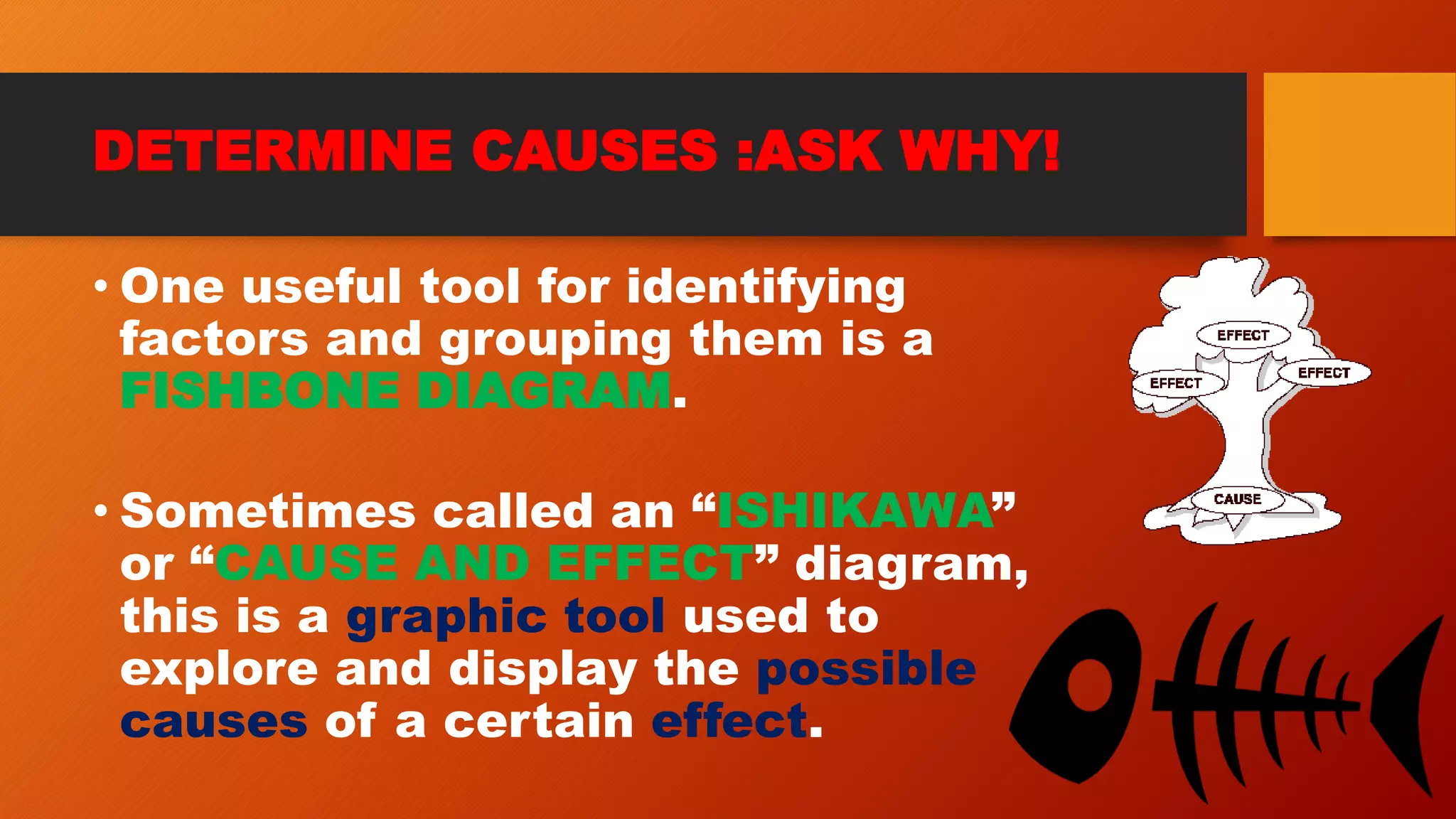
• One useful tool for identifying
factors and grouping them is a
FISHBONE DIAGRAM.
• Sometimes called an “ISHIKAWA”
or “CAUSE AND EFFECT” diagram,
this is a graphic tool used to
explore and display the possible
causes of a certain effect.
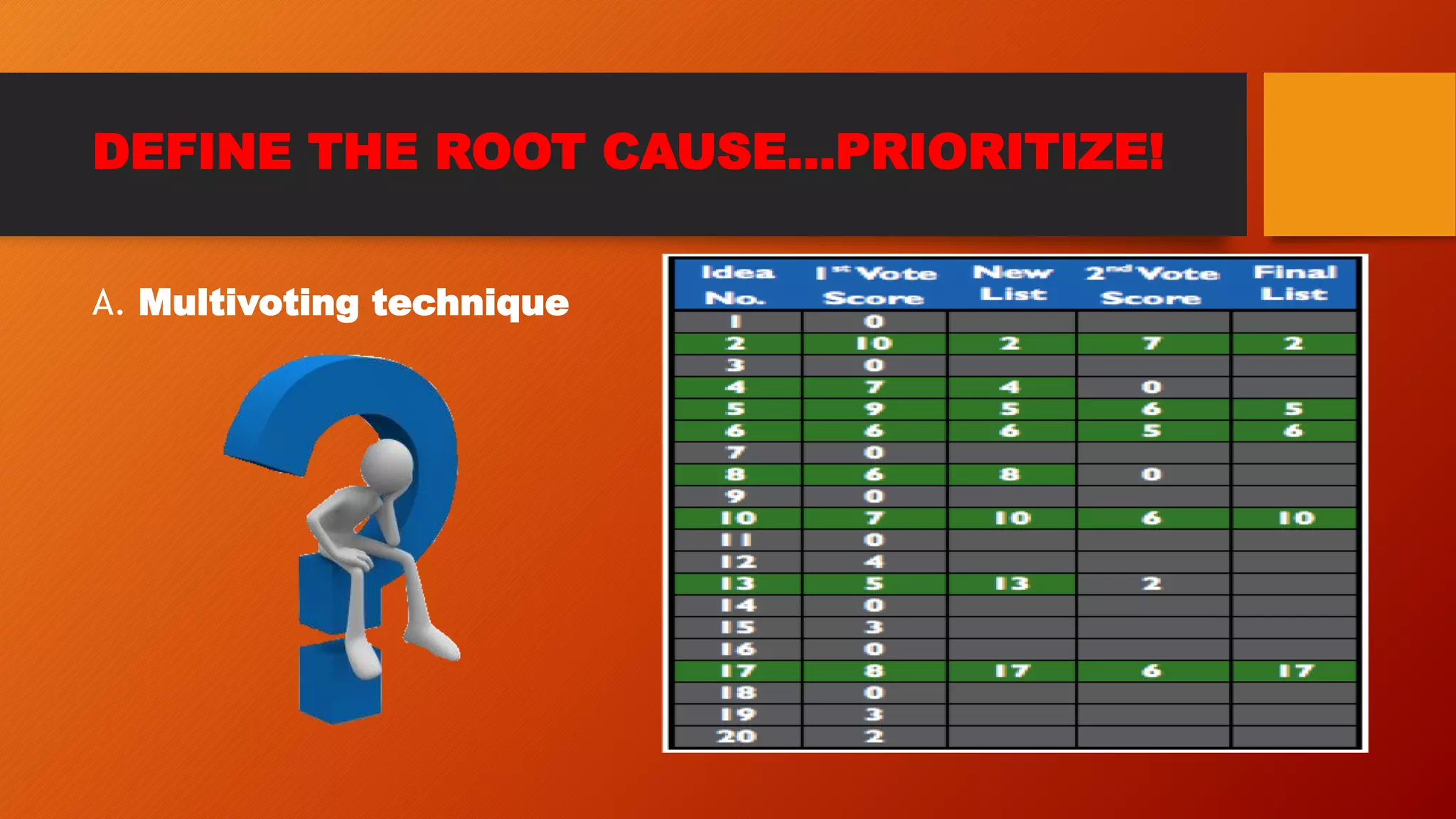
A. Multivoting technique
DEFINE THE ROOT CAUSE…PRIORITIZE!
B. Pareto diagram
RECOMMEND ACTIONS
•Identify all the countermeasure
options available against the root
causes in order to prevent or
minimize the probability of
recurrence due to the same root
cause.
DEVELOP YOUR ACTION PLAN
ACTION STEP
What needs to be done?
RESPONSIBLE
PERSON
Who should take
action to
complete this
step?
DEADLINE
When
should this
step be
completed?
NECESSARY
RESOURCES
What do you need in order
to complete this step?
POTENTIAL
CHALLENGES
Are there any potential
challenges that may
impede completion? How
will you overcome them?
RESULT
Was this step
successfully
completed? Were any
new steps identified
in the process?
REPORT YOUR FINDINGS
• Communicate findings and actions
required or already taken to resolve the
problem situation.
• Report to administration/management,
all involved parties, and regulatory
agencies as relevant .
EVALUATE YOUR ACTIONS
• Evaluate effectiveness of action
implementation and efficiency of RCA
• Find out: Has the risk of recurrence
actually been reduced?
Root cause analysis

Root cause analysis

  • 1.
    DR. MANAL ELSAYEDABDELAZIZ B.Sc.Pharm, CPHQ, DTQM, CLSSGB TeamSTEPPS Master Trainer
  • 3.
    WHAT IS YOURREACTION? STOP IT (PERMANENTLY) MOP IT (TEMPORARY)
  • 4.
    ROOT CAUSES • Ifthe root cause of a problem is not identified, then one is merely addressing the symptoms and the problem will continue to exist. • Three basic types of causes: • Physical • Human • Latent/Organizational
  • 5.
    ROOT CAUSE ANALYSIS •It is a systematic process used for identifying the most causal factors underlying variation in performance. • Used for intensive/in-depth analysis of an event. • Is a retrospective (reactive) attempt to determine the cause of a sentinel event, such as an unexpected death.
  • 6.
    THE RCA SEEKSTO ANSWER FOUR QUESTIONS: 1. What happened? 2. Why did it happen? 3. What are we going to do to prevent it from happening again? 4. How will we know that the changes we make actually improve the safety of the system?
  • 8.
    HOW RCA TAKEPLACE? 1- Form a team 2- Define the problem: What happened? 3- Analyze the process 4- Perform safeguard analysis 5- Ask WHY? 6- Recommend actions 7- Action plan 8- Report your findings 9- Evaluate effectiveness
  • 9.
    FORM AN RCATEAM • It’s hard, if not impossible, to answer these questions alone. Health care is complex, and understanding what led to an error requires diverse perspectives on how the system really works. • In an RCA, an interprofessional team approach is used to understand the specific error that occurred.
  • 10.
    FORM AN RCATEAM • Including senior leaders of the organization is not necessary. • In fact, it is better to include people on the team who have direct involvement in the processes under study. • If senior leaders are on the team, people may feel intimidated when asked about what happened. • And that might in turn limit participation in the RCA!
  • 11.
    DEFINE THE PROBLEM:WHAT HAPPENED? • This step is the information-gathering phase of the root cause analysis. Within this step, the team must try to describe what happened accurately and completely. • During the interviews, the team focuses on identifying what happened, not why it happened. They encourage the different staff members to speak freely and emphasize that the purpose of the RCA is to learn from the event and not place blame.
  • 13.
    ANALYZE THE PROCESSHIGH LEVEL FLOWCHART (AS-IS)
  • 14.
    PERFORM SAFEGUARD ANALYSIS DETERMINEWHAT SHOULD HAVE HAPPENED.
  • 15.
    PERFORM SAFEGUARD ANALYSIS DETERMINEWHAT SHOULD HAVE HAPPENED. • Once the team has clearly identified what happened, they must now move on to determining what would have happened. • This may involve reading through hospital policies, reviewing medical literature, or interviewing department directors to find out about barriers to safe practice.
  • 16.
    DETERMINE CAUSES :ASKWHY! • One useful tool for identifying factors and grouping them is a FISHBONE DIAGRAM. • Sometimes called an “ISHIKAWA” or “CAUSE AND EFFECT” diagram, this is a graphic tool used to explore and display the possible causes of a certain effect.
  • 17.
    A. Multivoting technique DEFINETHE ROOT CAUSE…PRIORITIZE!
  • 18.
    DEFINE THE ROOTCAUSE…PRIORITIZE! B. Pareto diagram
  • 19.
    RECOMMEND ACTIONS •Identify allthe countermeasure options available against the root causes in order to prevent or minimize the probability of recurrence due to the same root cause.
  • 20.
    DEVELOP YOUR ACTIONPLAN ACTION STEP What needs to be done? RESPONSIBLE PERSON Who should take action to complete this step? DEADLINE When should this step be completed? NECESSARY RESOURCES What do you need in order to complete this step? POTENTIAL CHALLENGES Are there any potential challenges that may impede completion? How will you overcome them? RESULT Was this step successfully completed? Were any new steps identified in the process?
  • 21.
    REPORT YOUR FINDINGS •Communicate findings and actions required or already taken to resolve the problem situation. • Report to administration/management, all involved parties, and regulatory agencies as relevant .
  • 22.
    EVALUATE YOUR ACTIONS •Evaluate effectiveness of action implementation and efficiency of RCA • Find out: Has the risk of recurrence actually been reduced?