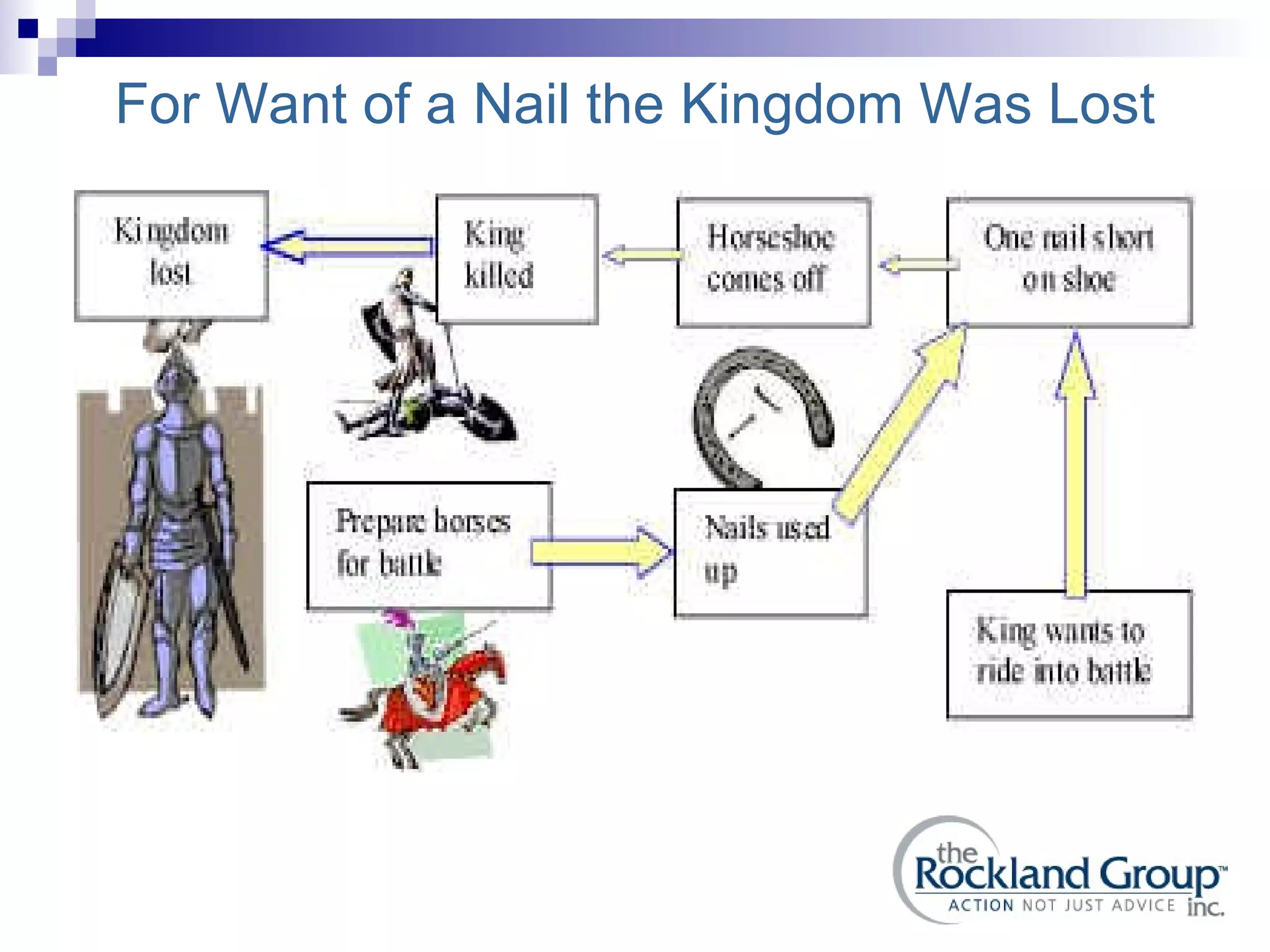
The document discusses root cause analysis methods and processes. It provides an overview of various analytical techniques like 5 Whys, fault trees, cause-and-effect diagrams. It outlines the basic steps of root cause analysis as understanding the process, identifying sources of errors, collecting and analyzing data, and working backwards. Key aspects are conducting the analysis methodically, getting outside objective advice, and carefully implementing solutions to avoid unintended consequences.
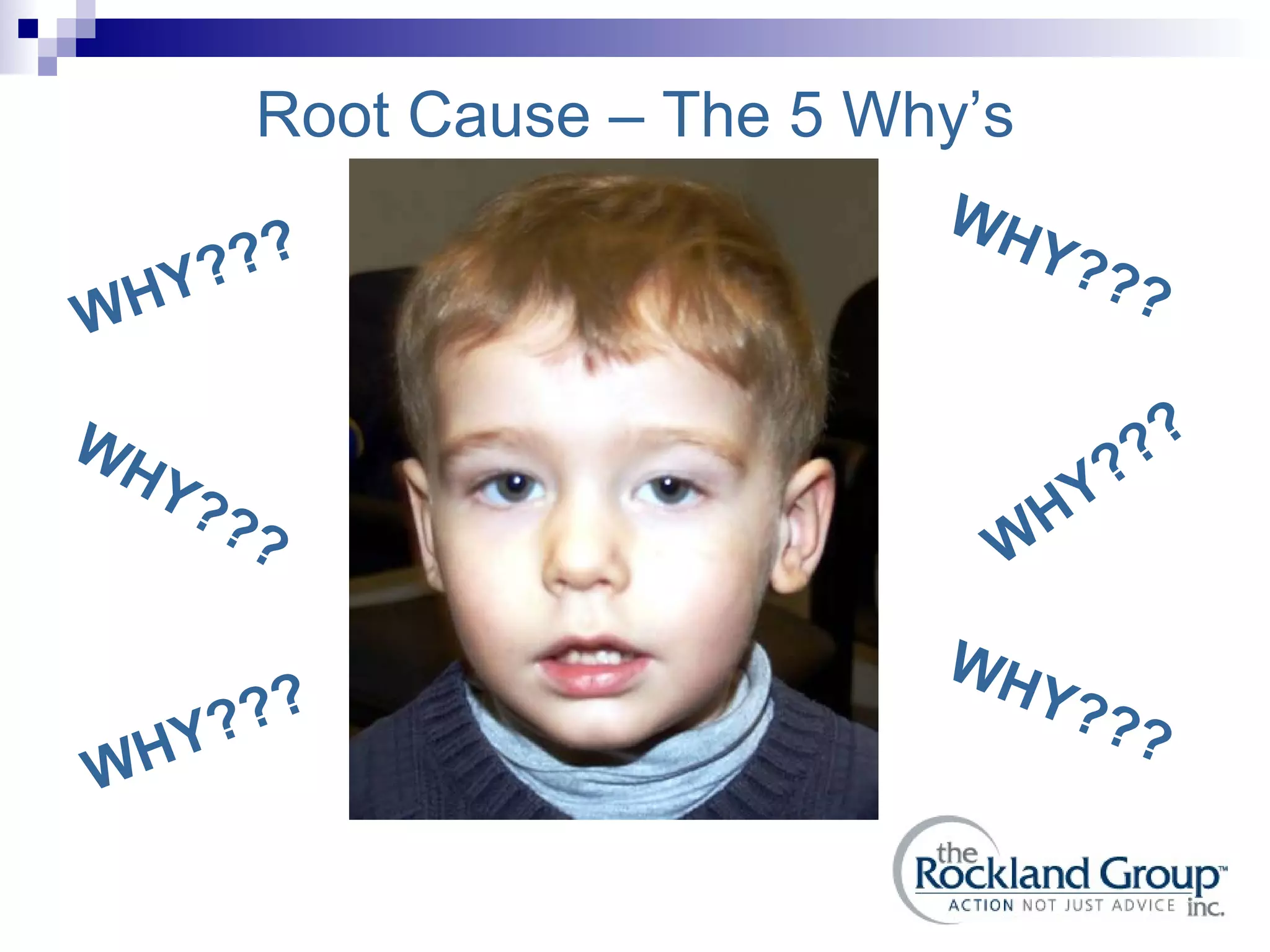
Root Cause AnalyticalMethods Numerous Analytical Methods (Six Sigma) 5 Why’s Fault tree Analysis Cause and Effect Diagrams (Ishikawa) Flow Diagrams and Process Maps Pareto Diagrams Trend Charts Histograms
3.
Root Cause Analysis Is A method for finding: An identified reason for the presence of a defect or problem (first principles) The most basic reason, which if eliminated, would prevent recurrence The source or origin of an event
4.
What Root CauseAnalysis Is Not Problem Solving. Plan, Do, Check, Act (PDCA). Does not require the application of some radically new skill Simply “common sense” Quick fix = status quo Insanity - doing the same thing over and over again and expecting different results
5.
Root Cause GuidelinesRequires a methodical and systematic approach Cannot randomly conduct the analysis Requires knowledge of the company’s processes It is not necessary to prevent the root cause from happening Just need to break the chain to avoid final failure Usually more than one root cause for any given problem
6.
Root Cause Guidelines(cont.) You must portray INTEGRITY in your approach: Focus on the clients needs, not yours Don’t talk “down’ to your client Never ask a client to act against their self-interest Project empathy Don’t try and fake it Stop talking - listen Find and assess the clients pain point Is this problem worth fixing?
7.
Root Cause AnalysisBasic Steps Understand the process Identify all possible sources of errors or variation Collect and analyze quantitative and/or qualitative data Requires a fundamental shift in attitudes and mindset Requires a supportive organization Work backwards Think proof read – read backwards one word at a time
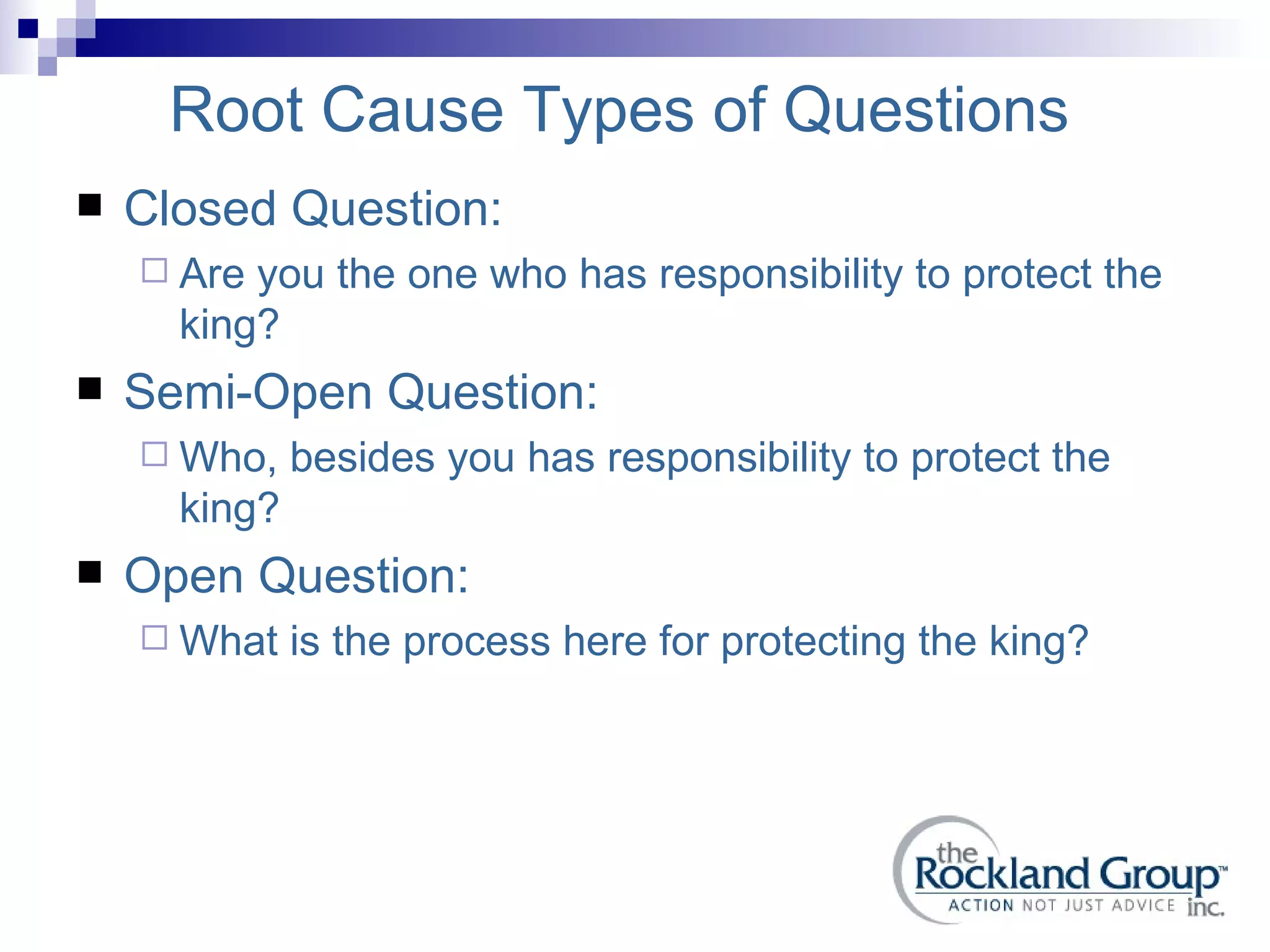
Root Cause Typesof Questions Closed Question: Are you the one who has responsibility to protect the king? Semi-Open Question: Who, besides you has responsibility to protect the king? Open Question: What is the process here for protecting the king?
11.
Root Cause AnalysisChallenges We tend to seek problems in our area of expertise Ready to ignore facts that do not correlate with our current perceptions Ready to accept those that do We see what we want to see Best to get OUTSIDE, OBJECTIVE advice
12.
Root Cause AnalysisChallenges (cont.) Stoutenburg Study (Apollo Root Cause Analysis, 1999) When presented with a corporate problem: 10% sought to place blame 26% expressed an immediate unsubstantiated opinion Only 20% examined the problem in sufficient detail to identify an effective solution Few organizations have adequate processes in place to monitor the effectiveness of solutions Be careful of linkage when intervening to fix a root cause Intervention at any point can cause a ripple effect
13.
Types of RootCause Physical (technical) cause Human cause Latent cause (lack of a system) Both of above can cause same result Common to find that technical problem has a human root cause Single event Repetitive event Look for patterns.
14.
Root Cause –Implementing the Solution Project Management Skills Identifying what actions should occur, when, and by whom Change Management Skills Identifies potential resistance and addresses this proactively Worst Outcome Great solution that no one will adopt Evaluate the impact Try to leave client with a standard model – must be understood by everyone Be gentle – don’t damage egos Is dealing with the symptoms cheaper than uncovering and removing the root cause? Beware “analysis paralysis”
15.
Root Cause Quotes“ If you don’t ask the right questions, you don’t get the right answers. A question asked the right way often points to its own answer. Asking questions is the ABC of diagnosis.” Edward Hodnett “ The most important numbers are unknown and unknowable.” W.E. Deming


![Vibe Coding vs. Spec-Driven Development [Free Meetup]](https://cdn.slidesharecdn.com/ss_thumbnails/vibecodingvsspecdrivendevelopment-251209105622-43f455e7-thumbnail.jpg?width=640&height=640&fit=bounds)


