ROOT CAUSE ANALYSIS
Identify, Eliminate, Prevent
By
Kazakia Akolde
Laboratory Field Officer-State
Lakes/WBG
27/9/2025
 Understanding Root Cause Analysis
 Relationship of problem, ,symtoms and causes
 What is the purpose/Benefits of Root Cause
Analysis?
 Core principle of RCA
 The RCA Process
 Tools /Techniques/Methods
 Fishborn, 5Whys etc
Objectives
Root Cause Analysis (RCA) is a systematic approach used to
identify the underlying, fundamental reasons for problems or
issues within a process or system.
It goes beyond addressing surface-level symptoms, aiming to
discover the primary causes to implement effective and
sustainable solution
It is used for intensive/In-depth analysis of the problem
ROOT CAUSE ANALYSIS
Cause 1
Cause 3
Cause 4
Cause 5
Cause 2
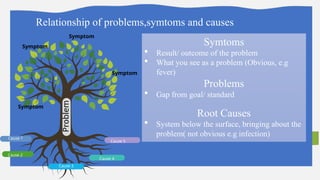
Symtoms
 Result/ outcome of the problem
 What you see as a problem (Obvious, e.g
fever)
Problems
 Gap from goal/ standard
Root Causes
 System below the surface, bringing about the
problem( not obvious e.g infection)
Relationship of problems,symtoms and causes
Problem
Symptom
Symptom
Symptom
Symptom
Benefits/Important of Root
Cause Analysis
 RCA is a highly effective tool. It
holds great significance for analysts
work to mitigate the risks
 To discover the root cause of a
problem or event
 To fully understand how to fix,
compensate, or learn from any
underlying issues within the root
cause
 To apply what we learn from this
analysis to systematically prevent
future issues
Core principles
 Focus on correcting and remedying root causes rather than just
symptoms.
 Realize there can be, and often are, multiple root causes.
 Focus on HOW and WHY something happened, not WHO was
responsible.
 Be methodical and find concrete cause-effect evidence to back up root
cause claims.
 Provide enough information to inform a corrective course of action.
 Consider how a root cause can be prevented (or replicated) in the
future
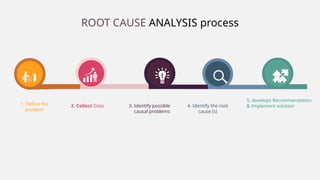
ROOT CAUSE ANALYSIS process
1. Define the
problem
2. Collect Data 3. Identify possible
causal problems
4. Identify the root
cause (s)
5. develops Recommendation
& Implement solution
Example of methodes/ Tools use to preform RCA
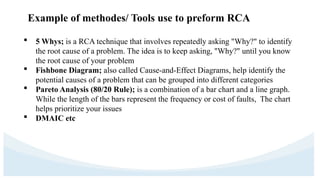
 5 Whys; is a RCA technique that involves repeatedly asking "Why?" to identify
the root cause of a problem. The idea is to keep asking, "Why?" until you know
the root cause of your problem
 Fishbone Diagram; also called Cause-and-Effect Diagrams, help identify the
potential causes of a problem that can be grouped into different categories
 Pareto Analysis (80/20 Rule); is a combination of a bar chart and a line graph.
While the length of the bars represent the frequency or cost of faults, The chart
helps prioritize your issues
 DMAIC etc
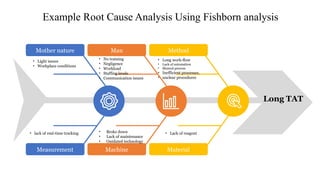
Long TAT
Mother nature Man Method
Measurement Machine Material
• Light issues
• Workplace conditions
• lack of real-time tracking
• No training
• Negligence
• Workload
• Staffing levels
• Communication issues
• Broke down
• Lack of maintenance
• Outdated technology
• Long work-flow
• Lack of automation
• Manual process
• Inefficient processes,
• unclear procedures
• Lack of reagent
Example Root Cause Analysis Using Fishborn analysis
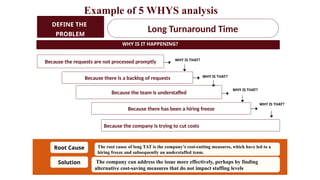
Because the company is trying to cut costs
WHY IS THAT?
Because there has been a hiring freeze
WHY IS THAT?
Because the team is understaffed
WHY IS THAT?
Because there is a backlog of requests
WHY IS THAT?
Because the requests are not processed promptly
WHY IS IT HAPPENING?
Long Turnaround Time
DEFINE THE
PROBLEM
Example of 5 WHYS analysis
Root Cause
Solution
. The root cause of long TAT is the company’s cost-cutting measures, which have led to a
hiring freeze and subsequently an understaffed team.
The company can address the issue more effectively, perhaps by finding
alternative cost-saving measures that do not impact staffing levels
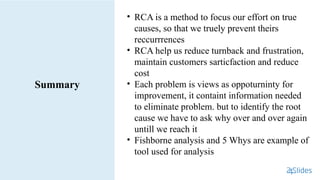
Summary
• RCA is a method to focus our effort on true
causes, so that we truely prevent theirs
reccurrrences
• RCA help us reduce turnback and frustration,
maintain customers sarticfaction and reduce
cost
• Each problem is views as oppoturninty for
improvement, it containt information needed
to eliminate problem. but to identify the root
cause we have to ask why over and over again
untill we reach it
• Fishborne analysis and 5 Whys are example of
tool used for analysis
THANK YOU

Kazakia Akolde presentation on Root Cause Analysis.pptx

  • 1.
    ROOT CAUSE ANALYSIS Identify,Eliminate, Prevent By Kazakia Akolde Laboratory Field Officer-State Lakes/WBG 27/9/2025
  • 2.
     Understanding RootCause Analysis  Relationship of problem, ,symtoms and causes  What is the purpose/Benefits of Root Cause Analysis?  Core principle of RCA  The RCA Process  Tools /Techniques/Methods  Fishborn, 5Whys etc Objectives
  • 3.
    Root Cause Analysis(RCA) is a systematic approach used to identify the underlying, fundamental reasons for problems or issues within a process or system. It goes beyond addressing surface-level symptoms, aiming to discover the primary causes to implement effective and sustainable solution It is used for intensive/In-depth analysis of the problem ROOT CAUSE ANALYSIS
  • 4.
    Cause 1 Cause 3 Cause4 Cause 5 Cause 2 Symtoms  Result/ outcome of the problem  What you see as a problem (Obvious, e.g fever) Problems  Gap from goal/ standard Root Causes  System below the surface, bringing about the problem( not obvious e.g infection) Relationship of problems,symtoms and causes Problem Symptom Symptom Symptom Symptom
  • 5.
    Benefits/Important of Root CauseAnalysis  RCA is a highly effective tool. It holds great significance for analysts work to mitigate the risks  To discover the root cause of a problem or event  To fully understand how to fix, compensate, or learn from any underlying issues within the root cause  To apply what we learn from this analysis to systematically prevent future issues
  • 6.
    Core principles  Focuson correcting and remedying root causes rather than just symptoms.  Realize there can be, and often are, multiple root causes.  Focus on HOW and WHY something happened, not WHO was responsible.  Be methodical and find concrete cause-effect evidence to back up root cause claims.  Provide enough information to inform a corrective course of action.  Consider how a root cause can be prevented (or replicated) in the future
  • 7.
    ROOT CAUSE ANALYSISprocess 1. Define the problem 2. Collect Data 3. Identify possible causal problems 4. Identify the root cause (s) 5. develops Recommendation & Implement solution
  • 8.
    Example of methodes/Tools use to preform RCA  5 Whys; is a RCA technique that involves repeatedly asking "Why?" to identify the root cause of a problem. The idea is to keep asking, "Why?" until you know the root cause of your problem  Fishbone Diagram; also called Cause-and-Effect Diagrams, help identify the potential causes of a problem that can be grouped into different categories  Pareto Analysis (80/20 Rule); is a combination of a bar chart and a line graph. While the length of the bars represent the frequency or cost of faults, The chart helps prioritize your issues  DMAIC etc
  • 9.
    Long TAT Mother natureMan Method Measurement Machine Material • Light issues • Workplace conditions • lack of real-time tracking • No training • Negligence • Workload • Staffing levels • Communication issues • Broke down • Lack of maintenance • Outdated technology • Long work-flow • Lack of automation • Manual process • Inefficient processes, • unclear procedures • Lack of reagent Example Root Cause Analysis Using Fishborn analysis
  • 10.
    Because the companyis trying to cut costs WHY IS THAT? Because there has been a hiring freeze WHY IS THAT? Because the team is understaffed WHY IS THAT? Because there is a backlog of requests WHY IS THAT? Because the requests are not processed promptly WHY IS IT HAPPENING? Long Turnaround Time DEFINE THE PROBLEM Example of 5 WHYS analysis Root Cause Solution . The root cause of long TAT is the company’s cost-cutting measures, which have led to a hiring freeze and subsequently an understaffed team. The company can address the issue more effectively, perhaps by finding alternative cost-saving measures that do not impact staffing levels
  • 11.
    Summary • RCA isa method to focus our effort on true causes, so that we truely prevent theirs reccurrrences • RCA help us reduce turnback and frustration, maintain customers sarticfaction and reduce cost • Each problem is views as oppoturninty for improvement, it containt information needed to eliminate problem. but to identify the root cause we have to ask why over and over again untill we reach it • Fishborne analysis and 5 Whys are example of tool used for analysis
  • 12.

Editor's Notes

  • #1 Photo by Olav Ahrens Røtne on Unsplash
  • #5 Minimize
  • #7 Define the Problem: Clearly describe the issue, including its symptoms and impact. Collect Data: Gather information about the problem, including when and where it occurred, and any other relevant details. Identify Possible Causes: Brainstorm potential causes of the problem. This can involve various techniques such as the 5 Whys, Fishbone Diagram Analyze the Causes: Evaluate the potential causes to identify the root cause. This often involves distinguishing between root causes and other contributing factors Develop Solutions: Once the root cause is identified, brainstorm and develop solutions to address it. Ensure that the solutions are feasible and effective Implement Solutions: Put the chosen solutions into action. This may involve changes to processes, training, or other interventions Monitor and Evaluate: After implementation, monitor the situation to ensure that the problem is resolved and does not recur. Document and Communicate: Document the entire process, findings, and solutions. Communicate the results to relevant stakeholders to ensure transparency and continuous improvement.
  • #12 Photo by Olav Ahrens Røtne on Unsplash