1
SUBMITTED BY
AYSHA SHAHANA M
Optional : English
Roll no: 9
Christ Nagar College of
Education
2
 INTRODUCTION
 William Wordsworth
 Mary Shelley
 John Keats
 William Blake
 George Byron
 Coleridge
 Mathew Arnold
 Percy Shelley
 Conclusion
3
4
5
6
 The romantics reacted
against the rationalism of
enlightment and culture.
 The major romantic
poets are William
Wordsworth , Shelley ,
John Keats , Coleridge ,
George Byron , Mathew
Arnold etc.
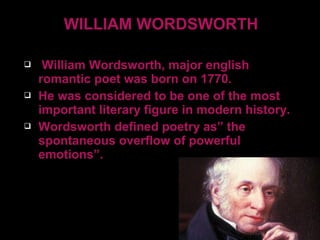
WILLIAM WORDSWORTH
 William Wordsworth, major english
romantic poet was born on 1770.
 He was considered to be one of the most
important literary figure in modern history.
 Wordsworth defined poetry as” the
spontaneous overflow of powerful
emotions”.
7
 Mary Shelley , born Mary Wollstonecraft
Godwin , was an English novalist , short
story writer , dramatist , essayist etc.
 She best known for her Gothic novel
Frankenstein or the modern prometheus
 She also edited and promoted the works
of her husband the romantic poet
Shelley. 8
 John Keats was an English poet who is now
regarded as being one of the greatest lyric poet
of his time.
 In his short life time he had written 54 poems
published in various magazines.
 Recognition of his achievements as one of the
leading poets of his time only came after his
death.
9
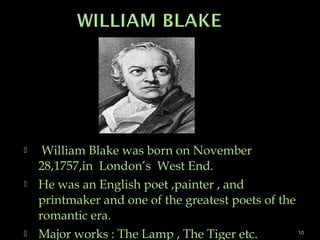
 William Blake was born on November
28,1757,in London’s West End.
 He was an English poet ,painter , and
printmaker and one of the greatest poets of the
romantic era.
 Major works : The Lamp , The Tiger etc. 10
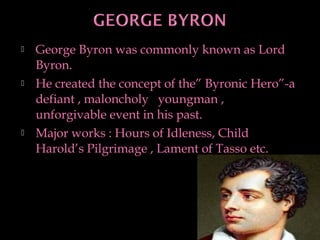
 George Byron was commonly known as Lord
Byron.
 He created the concept of the” Byronic Hero”-a
defiant , maloncholy youngman ,
unforgivable event in his past.
 Major works : Hours of Idleness, Child
Harold’s Pilgrimage , Lament of Tasso etc.
11
 Coleridge was the founder of romantic
movement in England and a member
of Lake poets.
 He coined many familiar words and
phrases including celebrated
suspension of disbelief.
 Major works : The Rime of the Ancient
Mariner, , Kubla khan ,Biographia
Literaria etc. 12
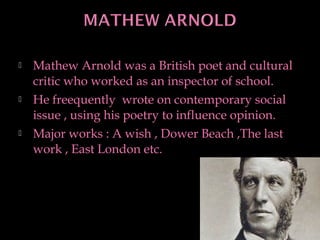
 Mathew Arnold was a British poet and cultural
critic who worked as an inspector of school.
 He freequently wrote on contemporary social
issue , using his poetry to influence opinion.
 Major works : A wish , Dower Beach ,The last
work , East London etc.
13
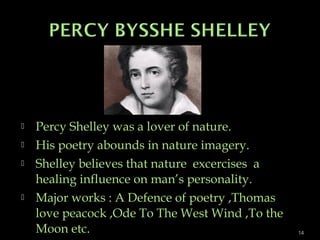
 Percy Shelley was a lover of nature.
 His poetry abounds in nature imagery.
 Shelley believes that nature excercises a
healing influence on man’s personality.
 Major works : A Defence of poetry ,Thomas
love peacock ,Ode To The West Wind ,To the
Moon etc. 14
 Romantic poets cultivated individuvalism ,
reverence for the natural world, idealism ,
physical and emotional passions.
 They set themselves in opposition to the order
rationality of classical and neo classical artistic
precepts to embrace freedom and revolution in
their art and politics.
 The romantic poets stated that nature has
bestowed , unwearied joy to mankind.
 They even believed that nature has answer for all
unanswered questions.
15
THANK YOU
16

Romantic poets

  • 1.
  • 2.
    SUBMITTED BY AYSHA SHAHANAM Optional : English Roll no: 9 Christ Nagar College of Education 2
  • 3.
     INTRODUCTION  WilliamWordsworth  Mary Shelley  John Keats  William Blake  George Byron  Coleridge  Mathew Arnold  Percy Shelley  Conclusion 3
  • 4.
  • 5.
  • 6.
    6  The romanticsreacted against the rationalism of enlightment and culture.  The major romantic poets are William Wordsworth , Shelley , John Keats , Coleridge , George Byron , Mathew Arnold etc.
  • 7.
    WILLIAM WORDSWORTH  WilliamWordsworth, major english romantic poet was born on 1770.  He was considered to be one of the most important literary figure in modern history.  Wordsworth defined poetry as” the spontaneous overflow of powerful emotions”. 7
  • 8.
     Mary Shelley, born Mary Wollstonecraft Godwin , was an English novalist , short story writer , dramatist , essayist etc.  She best known for her Gothic novel Frankenstein or the modern prometheus  She also edited and promoted the works of her husband the romantic poet Shelley. 8
  • 9.
     John Keatswas an English poet who is now regarded as being one of the greatest lyric poet of his time.  In his short life time he had written 54 poems published in various magazines.  Recognition of his achievements as one of the leading poets of his time only came after his death. 9
  • 10.
     William Blakewas born on November 28,1757,in London’s West End.  He was an English poet ,painter , and printmaker and one of the greatest poets of the romantic era.  Major works : The Lamp , The Tiger etc. 10
  • 11.
     George Byronwas commonly known as Lord Byron.  He created the concept of the” Byronic Hero”-a defiant , maloncholy youngman , unforgivable event in his past.  Major works : Hours of Idleness, Child Harold’s Pilgrimage , Lament of Tasso etc. 11
  • 12.
     Coleridge wasthe founder of romantic movement in England and a member of Lake poets.  He coined many familiar words and phrases including celebrated suspension of disbelief.  Major works : The Rime of the Ancient Mariner, , Kubla khan ,Biographia Literaria etc. 12
  • 13.
     Mathew Arnoldwas a British poet and cultural critic who worked as an inspector of school.  He freequently wrote on contemporary social issue , using his poetry to influence opinion.  Major works : A wish , Dower Beach ,The last work , East London etc. 13
  • 14.
     Percy Shelleywas a lover of nature.  His poetry abounds in nature imagery.  Shelley believes that nature excercises a healing influence on man’s personality.  Major works : A Defence of poetry ,Thomas love peacock ,Ode To The West Wind ,To the Moon etc. 14
  • 15.
     Romantic poetscultivated individuvalism , reverence for the natural world, idealism , physical and emotional passions.  They set themselves in opposition to the order rationality of classical and neo classical artistic precepts to embrace freedom and revolution in their art and politics.  The romantic poets stated that nature has bestowed , unwearied joy to mankind.  They even believed that nature has answer for all unanswered questions. 15
  • 16.