An overview of Neo-classical age
 Name: Raval Mital M.
 Roll no: 26
 Year: 2016 2018
 M.A.Sem: 1
 Enrolment no: 2069108429170026
 Paper no: (2) The Neo-classical Literature
 Presentation topic: An overview of Neo-classical age
 Submited to: Parth Bhatt
Smt.S.B. Gardi
Department of English
M.K.Bhavnagar University
Introduction
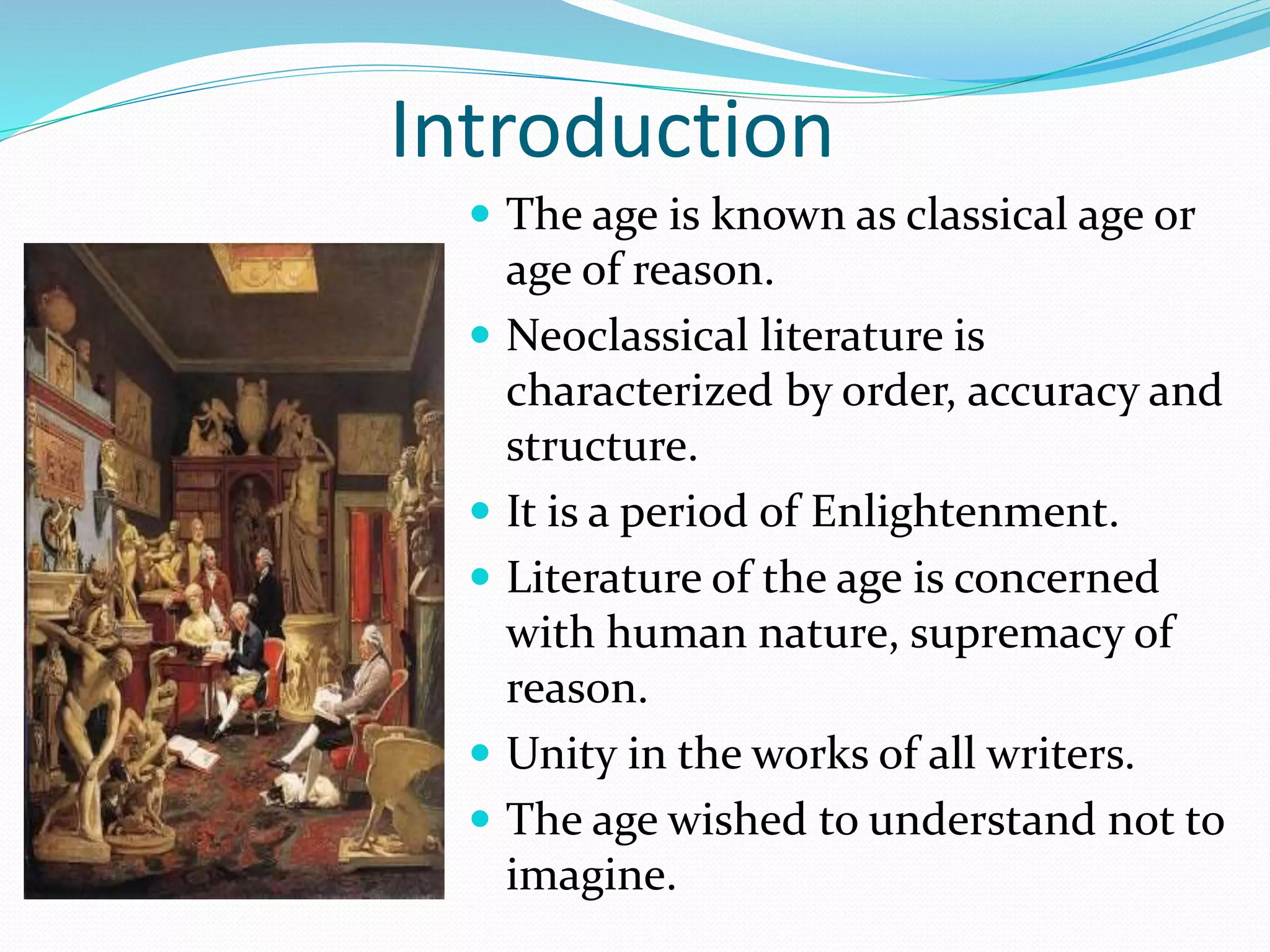
 The age is known as classical age or
age of reason.
 Neoclassical literature is
characterized by order, accuracy and
structure.
 It is a period of Enlightenment.
 Literature of the age is concerned
with human nature, supremacy of
reason.
 Unity in the works of all writers.
 The age wished to understand not to
imagine.
Definition of Neo-classical age
 The 18th century in English literature has been called the
neo-classical age, Augustan age and the age of reason.
 The term “the Augustan age” comes from the self
conscious imitation of the original Augustan writers,
Virgil and Horace by many of the writers of the period.
 Specifically, the Neo-classical age was the period after the
pest oration era of the death of Alexander Pope.
 The major writer of the age were Pope and Johnson,
Dryden in poetry and Jonathan swift and Joseph Addition
in prose.
 Neo-classical period ended in 1798 when Wordsworth
published the Romantic ‘Lyrical Ballads”.
Characteristics of Neoclassical
Literature
 Neo-classical literature is characterized by order,
accuracy, and structure.
 In direct opposition to Renaissance attitudes, where
man was see as basically good, the Neo-classical
writers portrayed man as inherently flawed.
 They emphasized restraint, self control and common
sense.
 This was a time when conservatism flourished in both
politics and literature.
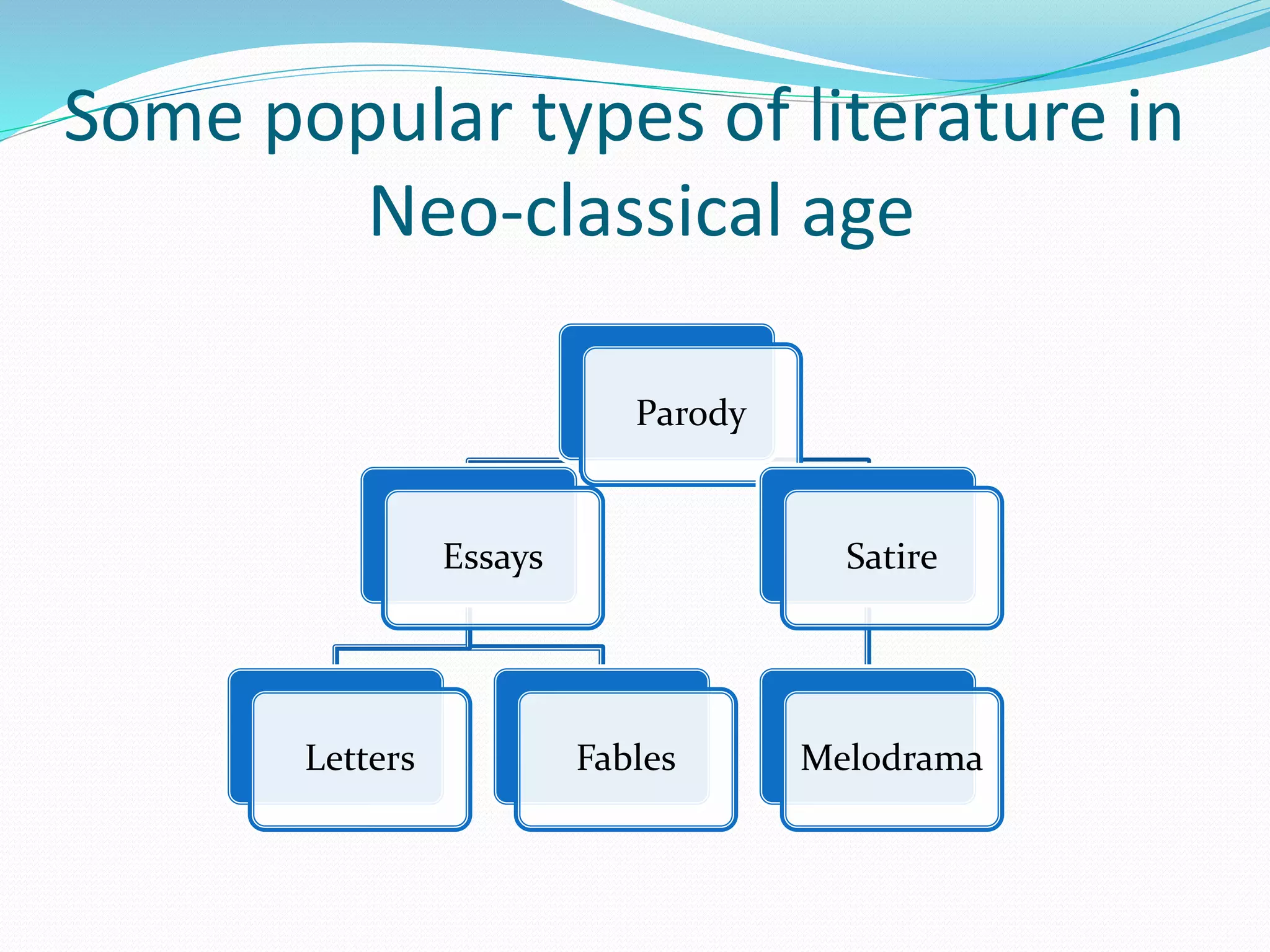
Some popular types of literature in
Neo-classical age
Parody
Essays
Letters Fables
Satire
Melodrama
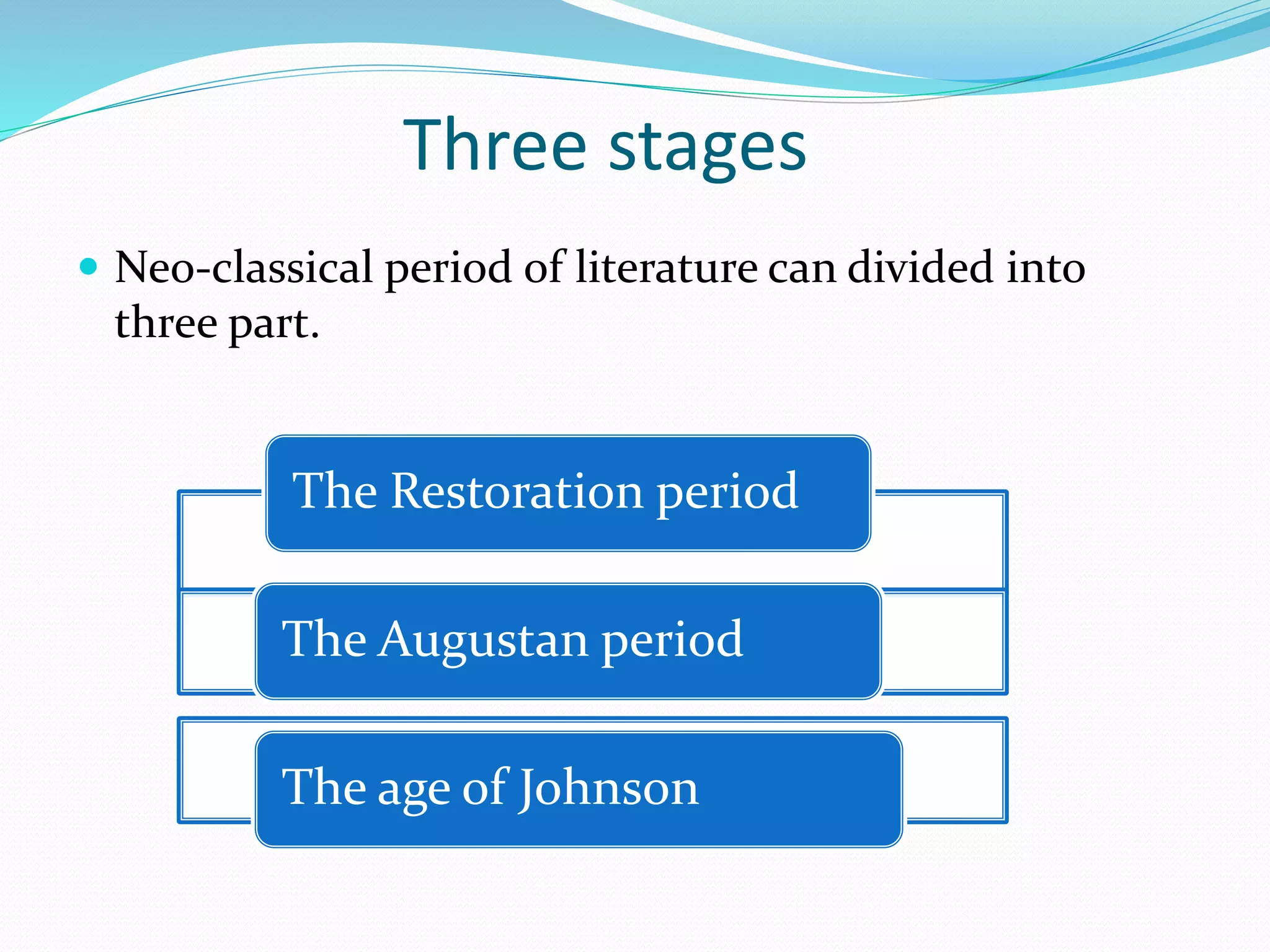
Three stages
 Neo-classical period of literature can divided into
three part.
The Restoration period
The Augustan period
The age of Johnson
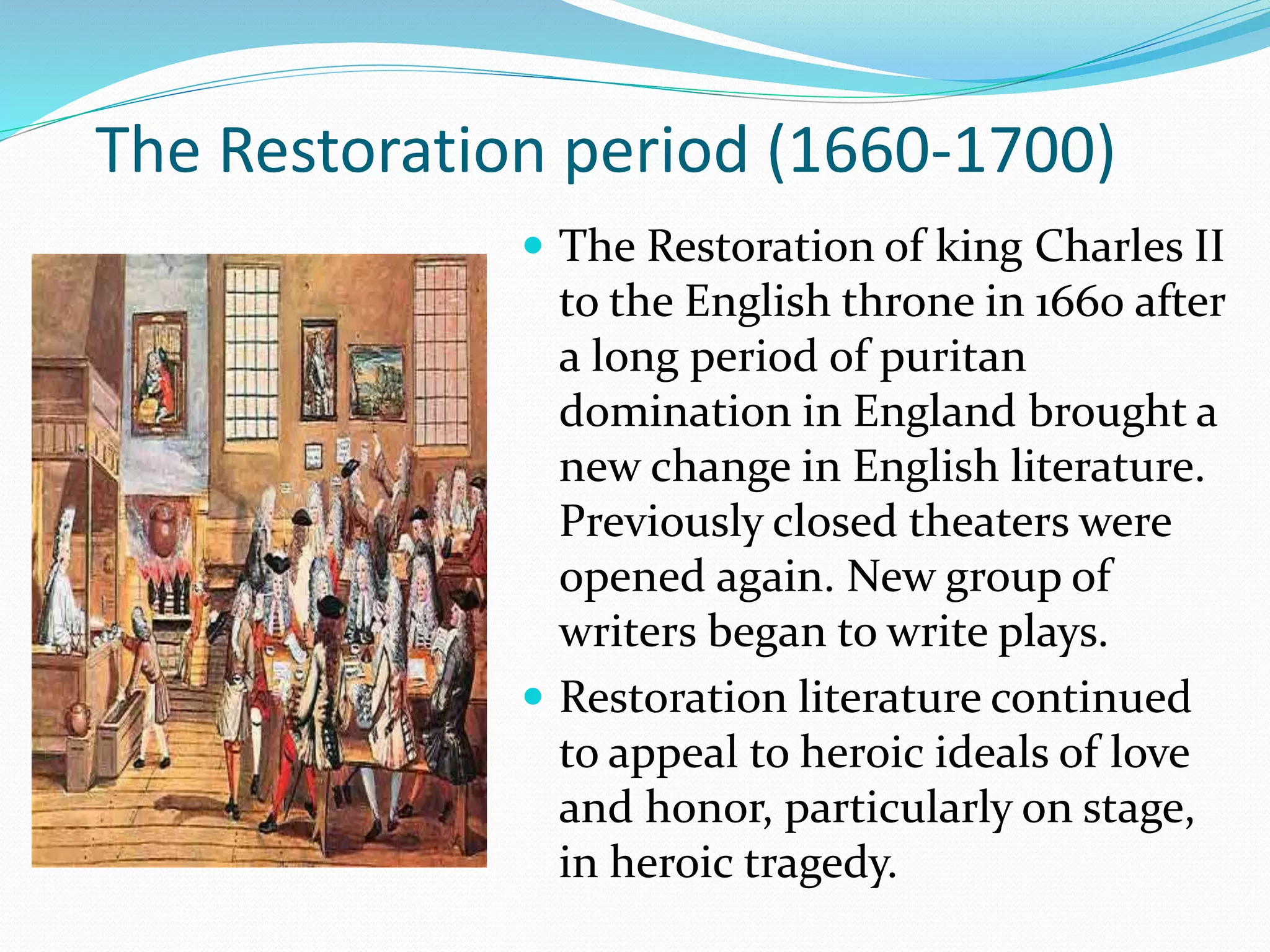
 The Restoration of king Charles II
to the English throne in 1660 after
a long period of puritan
domination in England brought a
new change in English literature.
Previously closed theaters were
opened again. New group of
writers began to write plays.
 Restoration literature continued
to appeal to heroic ideals of love
and honor, particularly on stage,
in heroic tragedy.
The Restoration period (1660-1700)
Famous writer
 John Dryden
 John Milton
 Sir William Temple
 John Locke
 Samuel Pepys
 Jean Racine
 Jean Baptiste
The Augustan period (1700-1750)
 It is called Augustan because
people was think like Augusts
Caesar.
 This period is marked by the
imitation of Virgil and Horace’s
literature in English letters.
Famous writer
 Alexander pope
 Jonathan swift
 Joseph Addison
 Francis Marie
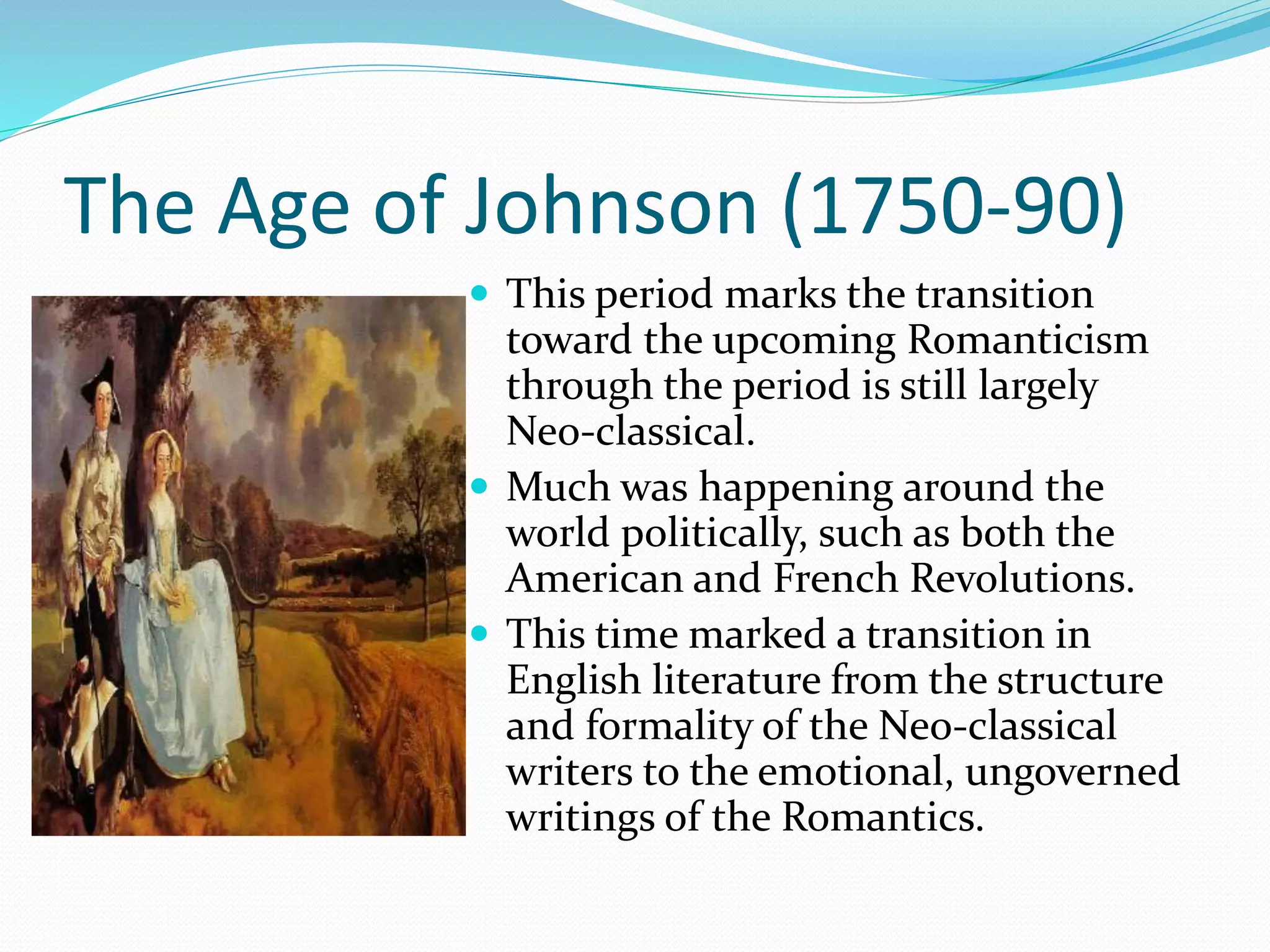
The Age of Johnson (1750-90)
 This period marks the transition
toward the upcoming Romanticism
through the period is still largely
Neo-classical.
 Much was happening around the
world politically, such as both the
American and French Revolutions.
 This time marked a transition in
English literature from the structure
and formality of the Neo-classical
writers to the emotional, ungoverned
writings of the Romantics.
Famous writer
 Samuel Johnson
 Edward Gibbon
 George Crabbe
 Robert Burns
 William Cowper
 Thomas Paine
 Thomas Jefferson
 Benjamin Franklin
Conclusion
 The neo-classical era in literature br0ught a sense of
decorum and stability to writes
 There were rules to be carefully followed and there
was structure to be uphold.
An Overview of Neo-classical age

An Overview of Neo-classical age

  • 1.
    An overview ofNeo-classical age  Name: Raval Mital M.  Roll no: 26  Year: 2016 2018  M.A.Sem: 1  Enrolment no: 2069108429170026  Paper no: (2) The Neo-classical Literature  Presentation topic: An overview of Neo-classical age  Submited to: Parth Bhatt Smt.S.B. Gardi Department of English M.K.Bhavnagar University
  • 2.
    Introduction  The ageis known as classical age or age of reason.  Neoclassical literature is characterized by order, accuracy and structure.  It is a period of Enlightenment.  Literature of the age is concerned with human nature, supremacy of reason.  Unity in the works of all writers.  The age wished to understand not to imagine.
  • 3.
    Definition of Neo-classicalage  The 18th century in English literature has been called the neo-classical age, Augustan age and the age of reason.  The term “the Augustan age” comes from the self conscious imitation of the original Augustan writers, Virgil and Horace by many of the writers of the period.  Specifically, the Neo-classical age was the period after the pest oration era of the death of Alexander Pope.  The major writer of the age were Pope and Johnson, Dryden in poetry and Jonathan swift and Joseph Addition in prose.  Neo-classical period ended in 1798 when Wordsworth published the Romantic ‘Lyrical Ballads”.
  • 4.
    Characteristics of Neoclassical Literature Neo-classical literature is characterized by order, accuracy, and structure.  In direct opposition to Renaissance attitudes, where man was see as basically good, the Neo-classical writers portrayed man as inherently flawed.  They emphasized restraint, self control and common sense.  This was a time when conservatism flourished in both politics and literature.
  • 5.
    Some popular typesof literature in Neo-classical age Parody Essays Letters Fables Satire Melodrama
  • 6.
    Three stages  Neo-classicalperiod of literature can divided into three part. The Restoration period The Augustan period The age of Johnson
  • 7.
     The Restorationof king Charles II to the English throne in 1660 after a long period of puritan domination in England brought a new change in English literature. Previously closed theaters were opened again. New group of writers began to write plays.  Restoration literature continued to appeal to heroic ideals of love and honor, particularly on stage, in heroic tragedy. The Restoration period (1660-1700)
  • 8.
    Famous writer  JohnDryden  John Milton  Sir William Temple  John Locke  Samuel Pepys  Jean Racine  Jean Baptiste
  • 9.
    The Augustan period(1700-1750)  It is called Augustan because people was think like Augusts Caesar.  This period is marked by the imitation of Virgil and Horace’s literature in English letters.
  • 10.
    Famous writer  Alexanderpope  Jonathan swift  Joseph Addison  Francis Marie
  • 11.
    The Age ofJohnson (1750-90)  This period marks the transition toward the upcoming Romanticism through the period is still largely Neo-classical.  Much was happening around the world politically, such as both the American and French Revolutions.  This time marked a transition in English literature from the structure and formality of the Neo-classical writers to the emotional, ungoverned writings of the Romantics.
  • 12.
    Famous writer  SamuelJohnson  Edward Gibbon  George Crabbe  Robert Burns  William Cowper  Thomas Paine  Thomas Jefferson  Benjamin Franklin
  • 13.
    Conclusion  The neo-classicalera in literature br0ught a sense of decorum and stability to writes  There were rules to be carefully followed and there was structure to be uphold.