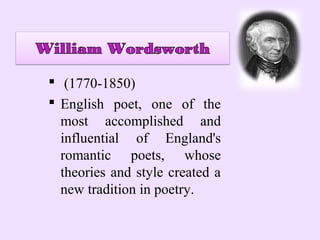
 (1770-1850)
 English poet, one of the
  most accomplished and
  influential of England's
  romantic poets, whose
  theories and style created a
  new tradition in poetry.
WORKS:
1. The Excursion (1814), a continuation of The Prelude
2. The White Doe of Rylstone (1815)
3. Peter Bell (1819)
4. Ecclesiastical Sonnets (1822)
5. Yarrow Revisited and Other Poems (1835)
6. The Borderers: A Tragedy (1796; published 1842)
7. Michael (1800)
8. The Recluse (1800; published 1888)
9. Laodamia (1815)
10.Memorials of a Tour on the Continent (1822).
                Wordsworth also wrote the prose works:
1. Convention of Cintra (1809)
2. A Description of the Scenery of the Lakes in the North of England
    (1810-1822).
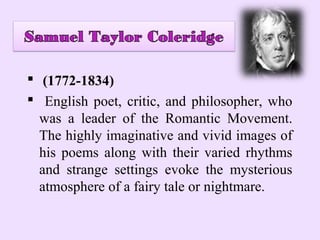
 (1772-1834)
 English poet, critic, and philosopher, who
  was a leader of the Romantic Movement.
  The highly imaginative and vivid images of
  his poems along with their varied rhythms
  and strange settings evoke the mysterious
  atmosphere of a fairy tale or nightmare.
WORKS:

1. CONVERSATIONAL POEMS
 “This Lime-Tree Bower My Prison” (1797)
 “The Nightingale” (1798)
 “Frost at Midnight” (1798)
2. THE RIME OF THE ANCIENT MARINER
3. CHRISTABEL (1798)
4. KUBLA KHAN (1798)
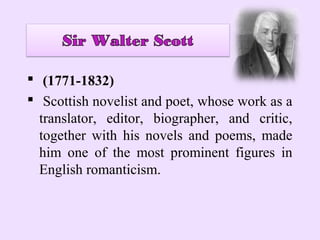
 (1771-1832)
 Scottish novelist and poet, whose work as a
  translator, editor, biographer, and critic,
  together with his novels and poems, made
  him one of the most prominent figures in
  English romanticism.
WORKS:
 BALLADS
1. The Minstrelsy of the Scottish Border (1802-1803)
2. The Lay of the Last Minstrel (1805)
3. Marmion (1808)
4. The Lady of the Lake (1810)
5. The Bridal of Triermain (1813)
6. The Lord of the Isles (1815)
 NOVELS
1. Waverley (1814) began a new series of triumphs.
2. Guy Mannering (1815)
3. Old Mortality (1816)
4. The Heart of Midlothian (1818)
5. Rob Roy (1818)
6. The Bride of Lammermoor (1819)
7. Ivanhoe (1819), Kenilworth (1821)
8. Quentin Durward (1823)
9. The Fair Maid of Perth (1828)
10. Life of Napoleon Buonaparte (1827)
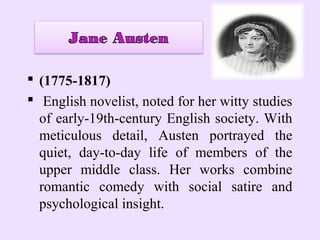
 (1775-1817)
 English novelist, noted for her witty studies
  of early-19th-century English society. With
  meticulous detail, Austen portrayed the
  quiet, day-to-day life of members of the
  upper middle class. Her works combine
  romantic comedy with social satire and
  psychological insight.
WORKS:
1. Sense and Sensibility
2. Pride and Prejudice
3. Mansfield Park (1814)
4. Emma, and Persuasion (1818)
5. Northanger Abbey
6. Persuasion
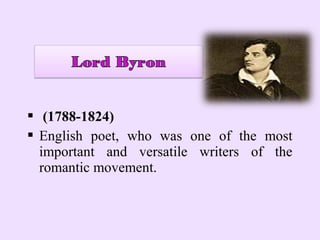
 (1788-1824)
 English poet, who was one of the most
  important and versatile writers of the
  romantic movement.
WORKS:
1. Hours of Idleness (1807)
2. English Bards and Scotch Reviewers (1809)
3. Childe Harold’s Pilgrimage (1812)
 Byron went on to develop this hero figure in the four Oriental tales:
1. The Giaour (1813)
2. The Bride of Abydos (1813)
3. The Corsair (1814)
4. Lara (1814)
5. Hebrew Melodies (1815)
6. The Prisoner of Chillon (1816)
7. Don Juan (1818-1819)
8. Manfred (1819)
9. Beppo (1818)
10. Mazeppa (1819)
11. Sardanapalus
12. Cain (1821)
13.The Vision of Judgment (1822)
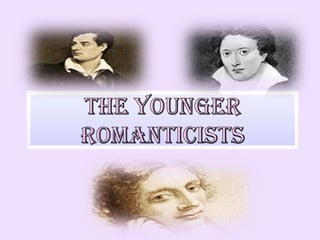
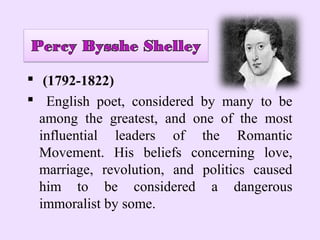
 (1792-1822)
 English poet, considered by many to be
  among the greatest, and one of the most
  influential leaders of the Romantic
  Movement. His beliefs concerning love,
  marriage, revolution, and politics caused
  him to be considered a dangerous
  immoralist by some.
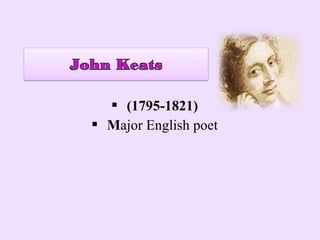
 (1795-1821)
 Major English poet

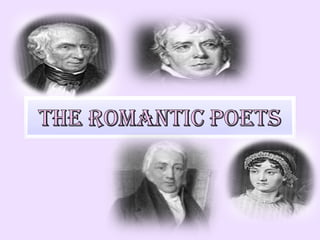
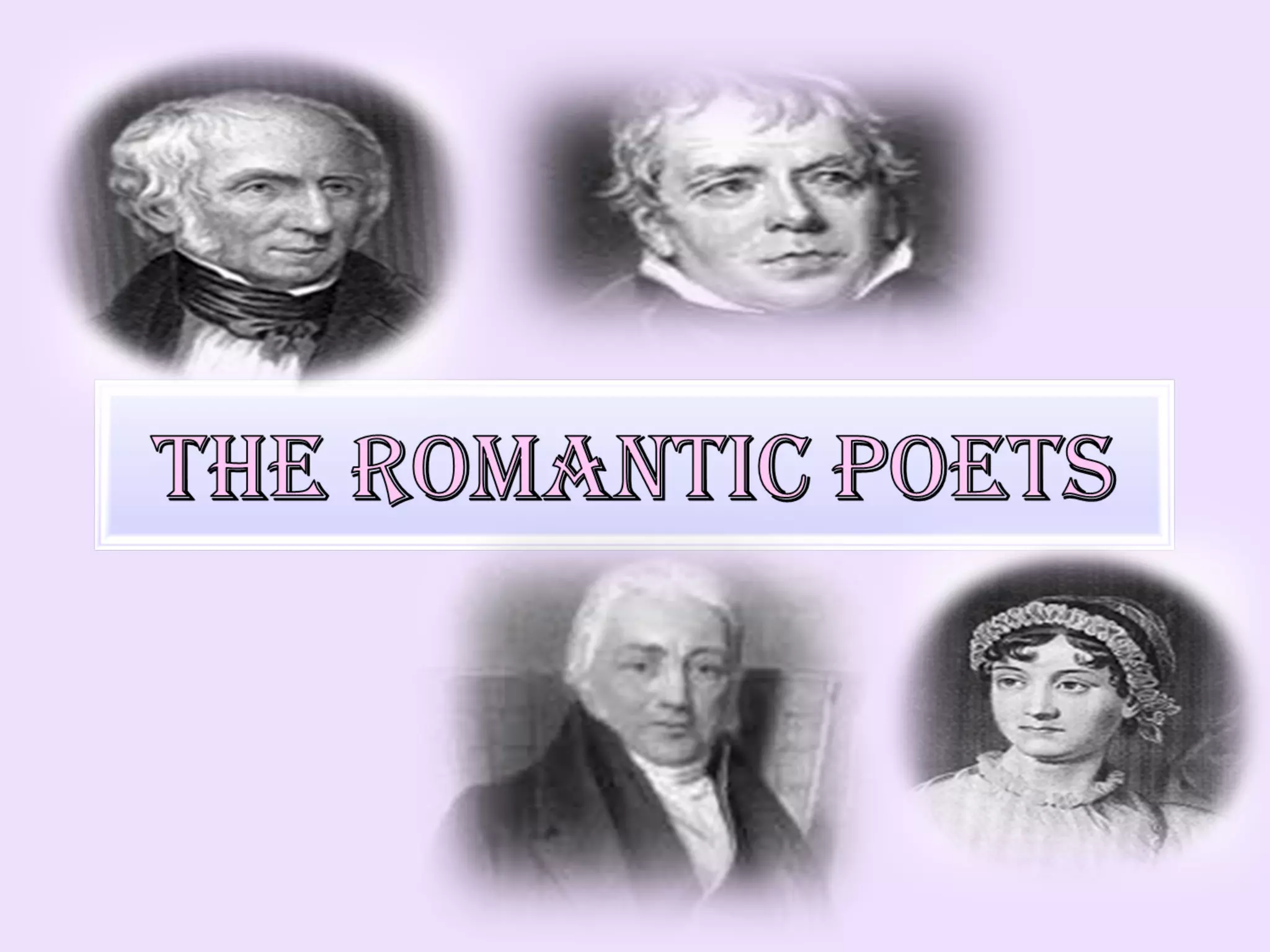
The romantic poets

  • 2.
     (1770-1850)  Englishpoet, one of the most accomplished and influential of England's romantic poets, whose theories and style created a new tradition in poetry.
  • 3.
    WORKS: 1. The Excursion(1814), a continuation of The Prelude 2. The White Doe of Rylstone (1815) 3. Peter Bell (1819) 4. Ecclesiastical Sonnets (1822) 5. Yarrow Revisited and Other Poems (1835) 6. The Borderers: A Tragedy (1796; published 1842) 7. Michael (1800) 8. The Recluse (1800; published 1888) 9. Laodamia (1815) 10.Memorials of a Tour on the Continent (1822). Wordsworth also wrote the prose works: 1. Convention of Cintra (1809) 2. A Description of the Scenery of the Lakes in the North of England (1810-1822).
  • 4.
     (1772-1834)  Englishpoet, critic, and philosopher, who was a leader of the Romantic Movement. The highly imaginative and vivid images of his poems along with their varied rhythms and strange settings evoke the mysterious atmosphere of a fairy tale or nightmare.
  • 5.
    WORKS: 1. CONVERSATIONAL POEMS “This Lime-Tree Bower My Prison” (1797)  “The Nightingale” (1798)  “Frost at Midnight” (1798) 2. THE RIME OF THE ANCIENT MARINER 3. CHRISTABEL (1798) 4. KUBLA KHAN (1798)
  • 6.
     (1771-1832)  Scottishnovelist and poet, whose work as a translator, editor, biographer, and critic, together with his novels and poems, made him one of the most prominent figures in English romanticism.
  • 7.
    WORKS:  BALLADS 1. TheMinstrelsy of the Scottish Border (1802-1803) 2. The Lay of the Last Minstrel (1805) 3. Marmion (1808) 4. The Lady of the Lake (1810) 5. The Bridal of Triermain (1813) 6. The Lord of the Isles (1815)  NOVELS 1. Waverley (1814) began a new series of triumphs. 2. Guy Mannering (1815) 3. Old Mortality (1816) 4. The Heart of Midlothian (1818) 5. Rob Roy (1818) 6. The Bride of Lammermoor (1819) 7. Ivanhoe (1819), Kenilworth (1821) 8. Quentin Durward (1823) 9. The Fair Maid of Perth (1828) 10. Life of Napoleon Buonaparte (1827)
  • 8.
     (1775-1817)  Englishnovelist, noted for her witty studies of early-19th-century English society. With meticulous detail, Austen portrayed the quiet, day-to-day life of members of the upper middle class. Her works combine romantic comedy with social satire and psychological insight.
  • 9.
    WORKS: 1. Sense andSensibility 2. Pride and Prejudice 3. Mansfield Park (1814) 4. Emma, and Persuasion (1818) 5. Northanger Abbey 6. Persuasion
  • 11.
     (1788-1824)  Englishpoet, who was one of the most important and versatile writers of the romantic movement.
  • 12.
    WORKS: 1. Hours ofIdleness (1807) 2. English Bards and Scotch Reviewers (1809) 3. Childe Harold’s Pilgrimage (1812)  Byron went on to develop this hero figure in the four Oriental tales: 1. The Giaour (1813) 2. The Bride of Abydos (1813) 3. The Corsair (1814) 4. Lara (1814) 5. Hebrew Melodies (1815) 6. The Prisoner of Chillon (1816) 7. Don Juan (1818-1819) 8. Manfred (1819) 9. Beppo (1818) 10. Mazeppa (1819) 11. Sardanapalus 12. Cain (1821) 13.The Vision of Judgment (1822)
  • 13.
     (1792-1822)  Englishpoet, considered by many to be among the greatest, and one of the most influential leaders of the Romantic Movement. His beliefs concerning love, marriage, revolution, and politics caused him to be considered a dangerous immoralist by some.
  • 14.