The role of Geography student 
in Disaster Management 
S.Mohanaraj 
CYCLONE 
Special in Geography 
Department of Geography 
SOUTH EASTERN UNIVERSITY OF SRI LANKA
CONTENTS 
 What is disaster 
 Types of disaster 
 Definitions of cyclone 
 Cyclone's are named variously in various regions 
 Before the cyclone 
 When the cyclone hit 
 After the cyclone 
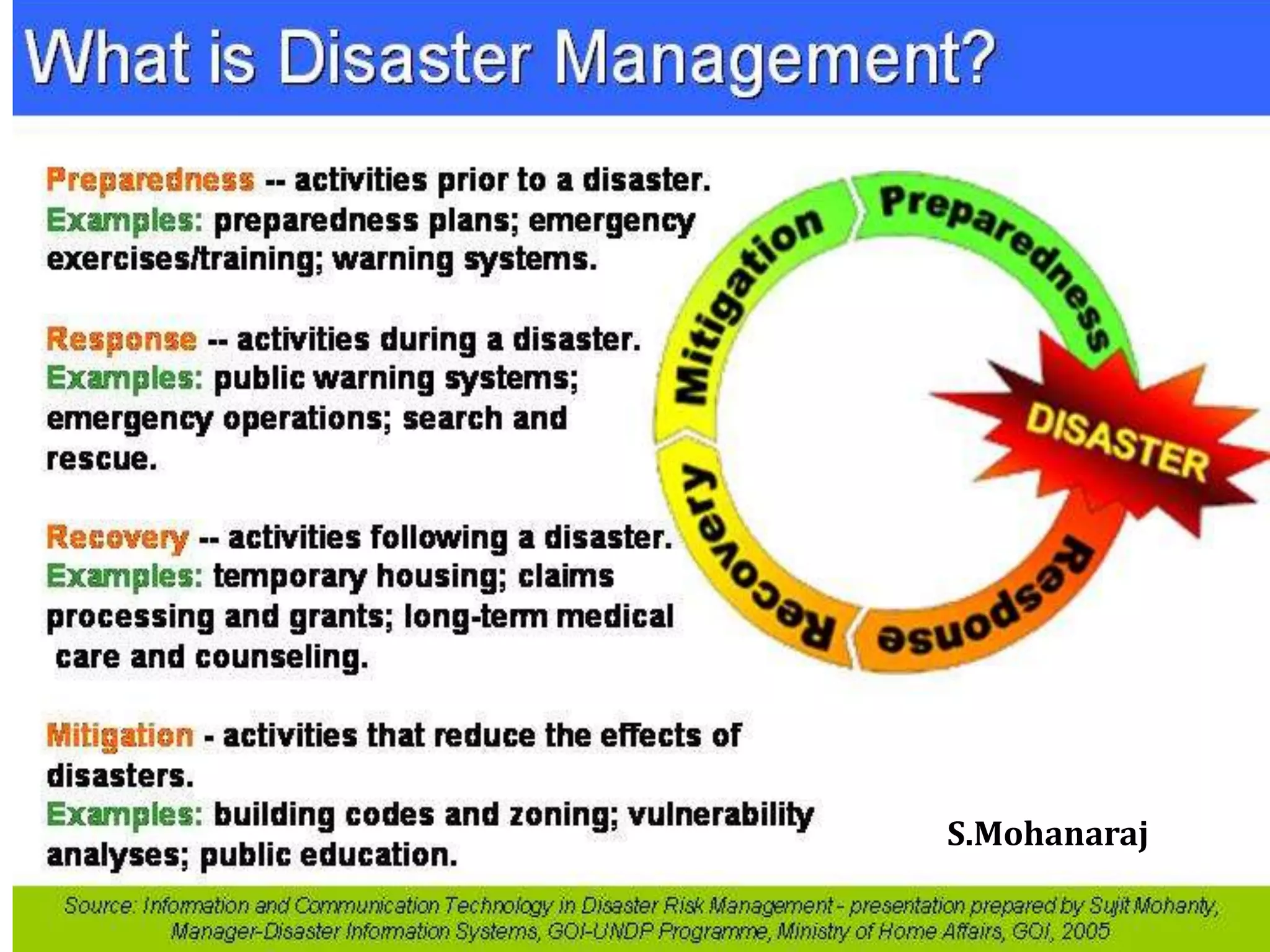
 What is disaster management 
 Role of the geography student in disaster management 
S.Mohanaraj
WHAT IS DISASTER 
Disaster is a sudden, calamitous event bringing great damage, loss, 
destruction and devastation to life and property. 
WHO defines Disaster as "any occurrence, that causes damage, 
ecological disruption, loss of human life, deterioration of health and 
health services, on a scale sufficient to warrant an extraordinary 
response from outside the affected community or area 
“a serious disruption of the functioning of society, causing widespread 
human, material or environmental losses which exceed the ability of the 
affected society to cope using its own resources” 
S.Mohanaraj
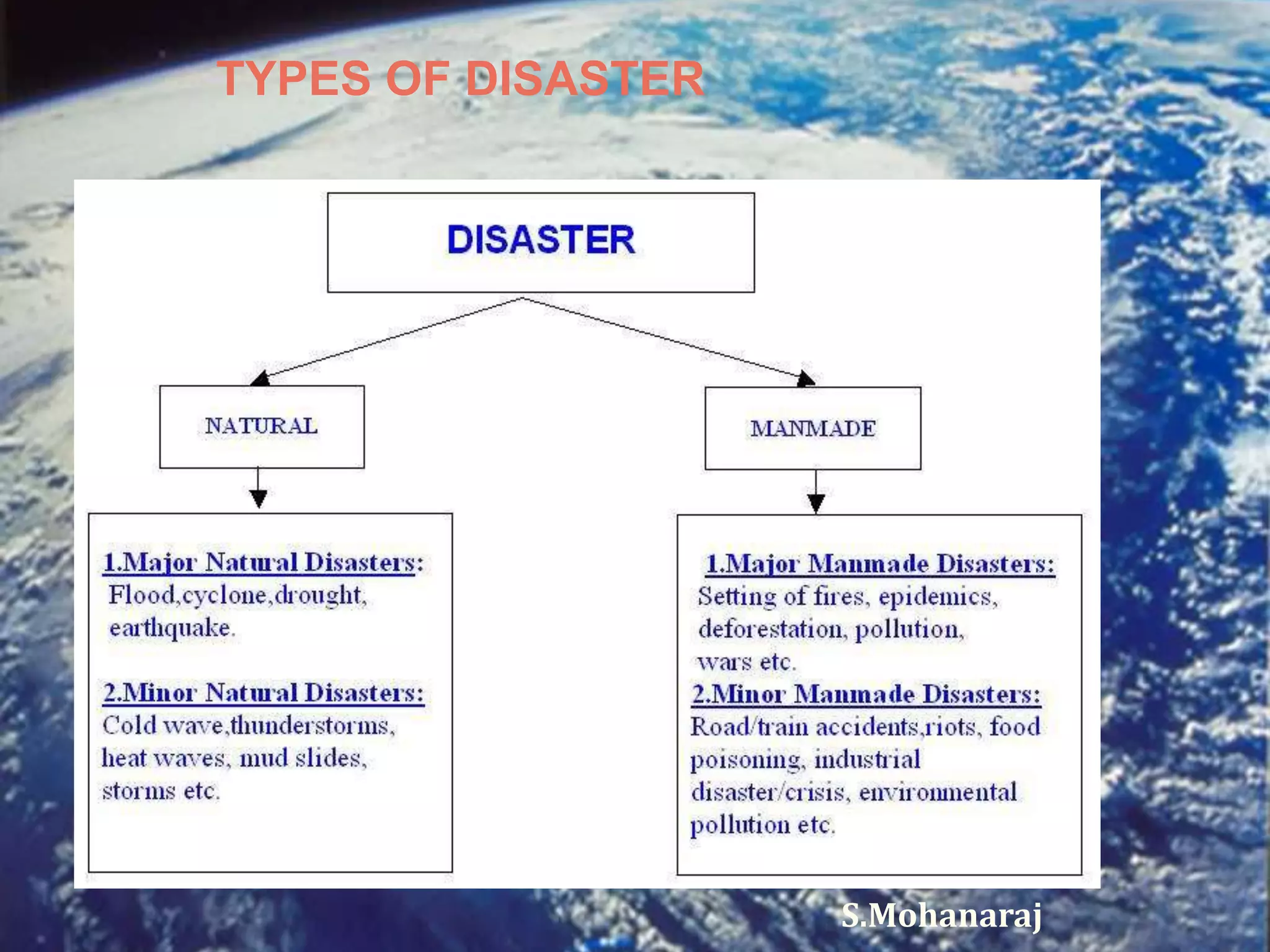
TYPES OF DISASTER 
S.Mohanaraj
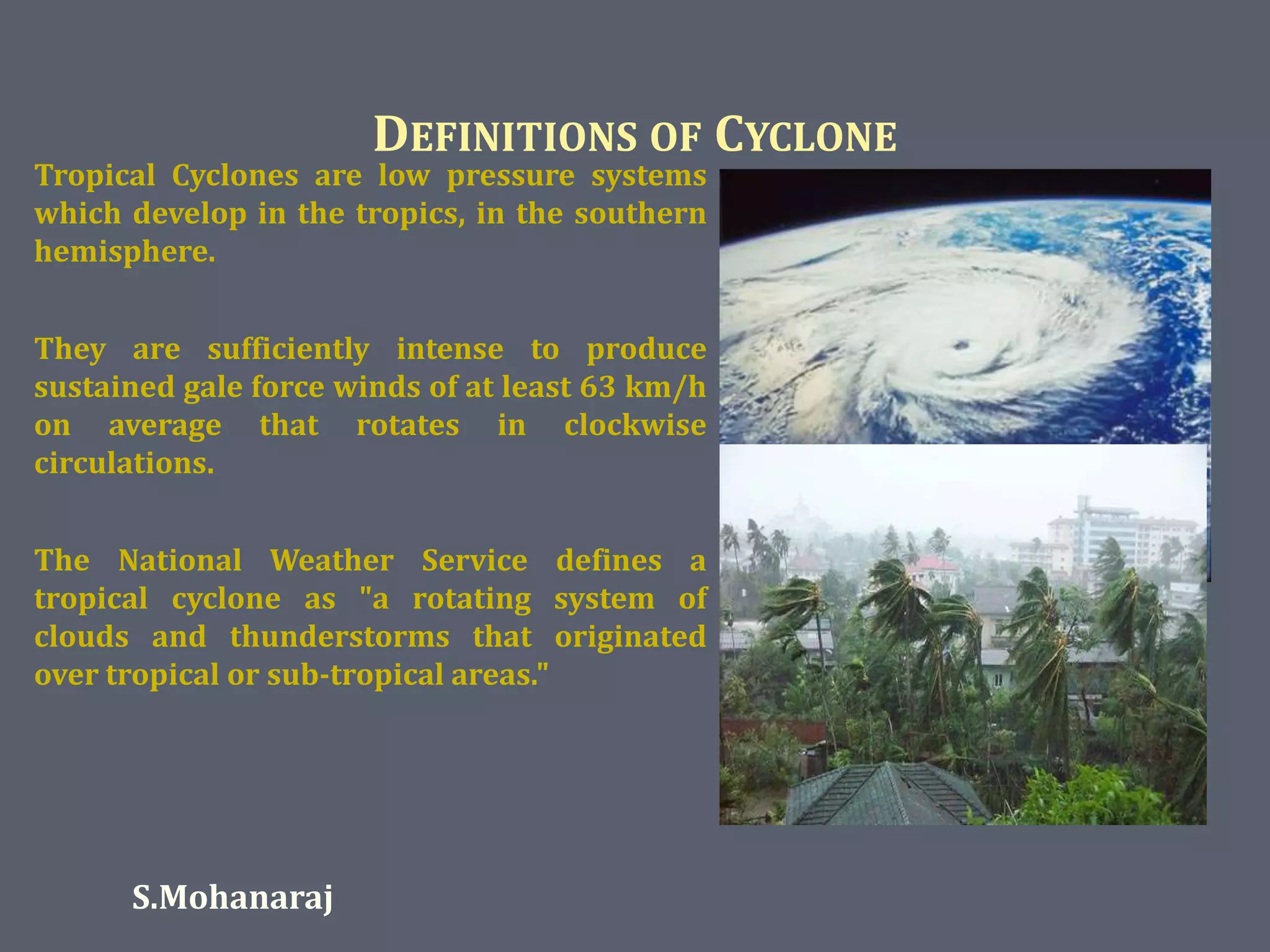
DEFINITIONS OF CYCLONE 
Tropical Cyclones are low pressure systems 
which develop in the tropics, in the southern 
hemisphere. 
They are sufficiently intense to produce 
sustained gale force winds of at least 63 km/h 
on average that rotates in clockwise 
circulations. 
The National Weather Service defines a 
tropical cyclone as "a rotating system of 
clouds and thunderstorms that originated 
over tropical or sub-tropical areas." 
S.Mohanaraj
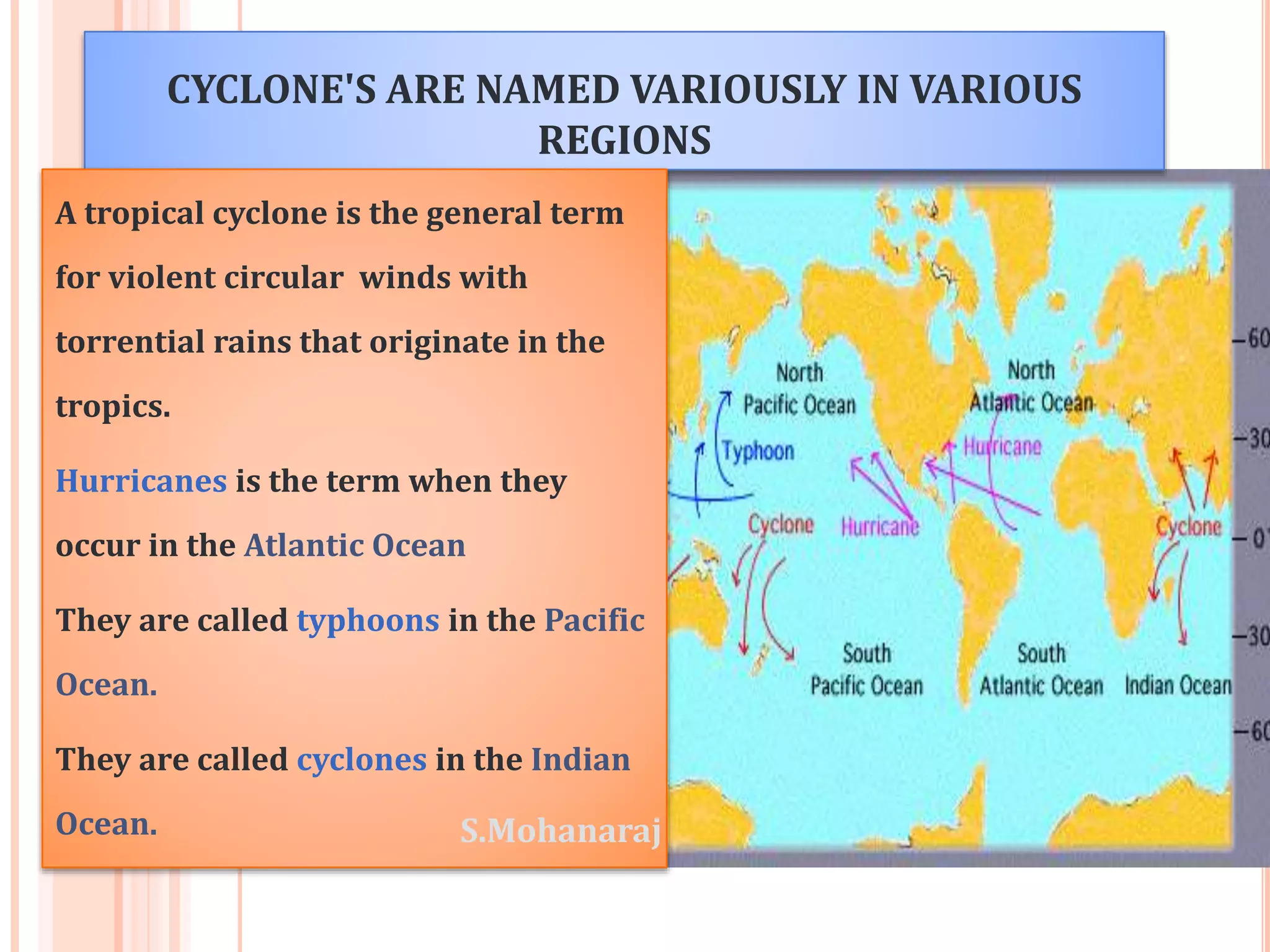
CYCLONE'S ARE NAMED VARIOUSLY IN VARIOUS 
REGIONS 
A tropical cyclone is the general term 
for violent circular winds with 
torrential rains that originate in the 
tropics. 
Hurricanes is the term when they 
occur in the Atlantic Ocean 
They are called typhoons in the Pacific 
Ocean. 
They are called cyclones in the Indian 
Ocean. S.Mohanaraj
BEFORE THE CYCLONE 
 Keep watch on weather and listen to 
radio or TV. 
 Keep alert about the community 
warning systems – loudspeakers, 
bells, drums or any traditional warning 
system. 
 Get to know the nearest cyclone 
shelter 
 Prepare an emergency kit containing 
 Keep important documents, 
passbook, etc. in a tight plastic bag 
and take it along with your emergency 
kits if you are evacuating 
 Keep a list of emergency addresses 
and phone numbers on display. Know 
the contact telephone number of the 
government offices /agencies, which 
are responsible for search, rescue 
and relief operations in your area. 
S.Mohanaraj
WHEN THE CYCLONE HIT 
 Disconnect all electrical 
appliances and turn off gas. 
 If the building starts crumbling, 
protect yourself with mattresses, 
rugs or blankets under a strong 
table or bench or hold on to a 
solid fixture (e.g. a water pipe) 
 Listen to your transistor radio for 
updates and advice. 
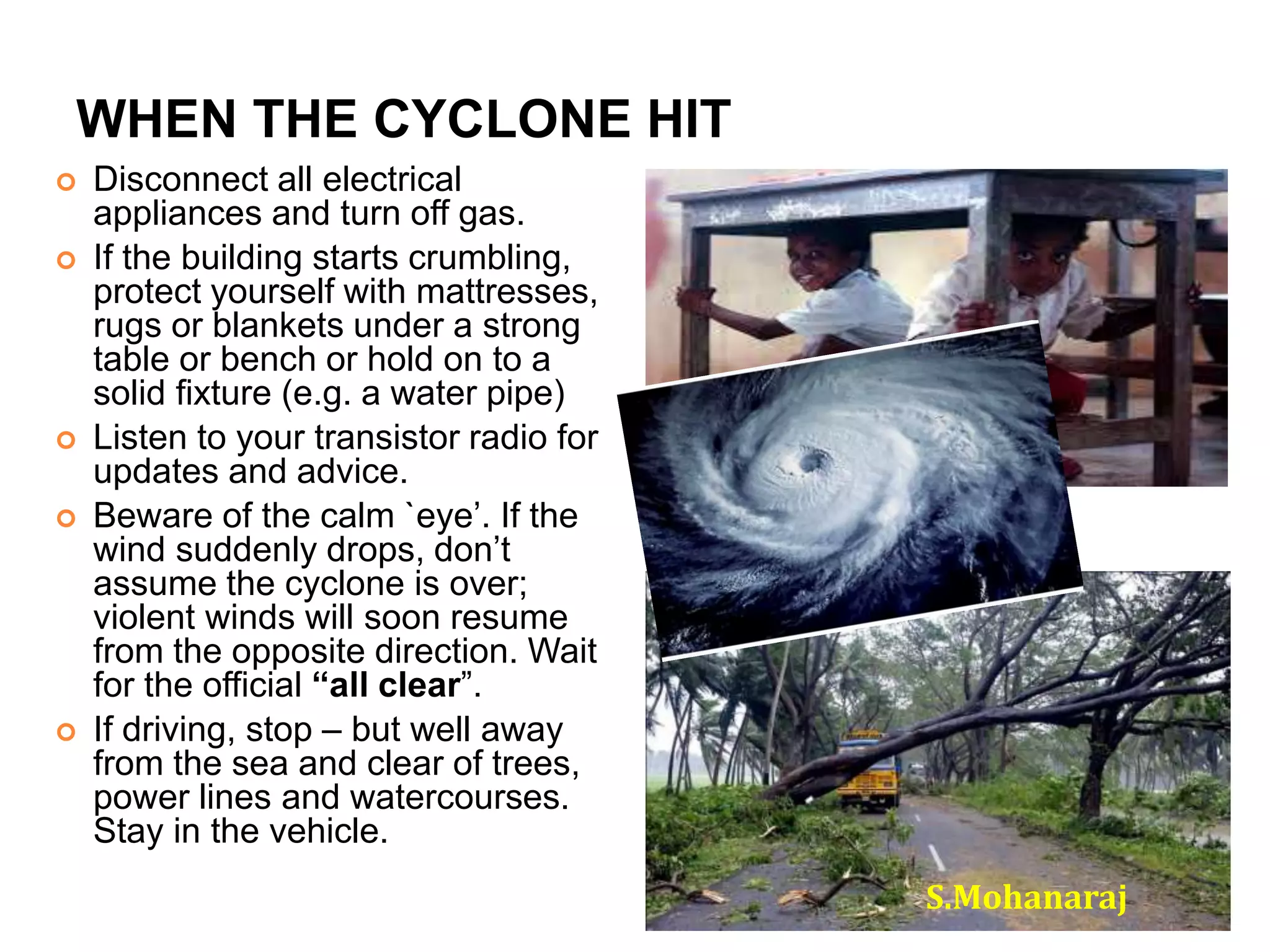
 Beware of the calm `eye’. If the 
wind suddenly drops, don’t 
assume the cyclone is over; 
violent winds will soon resume 
from the opposite direction. Wait 
for the official “all clear”. 
 If driving, stop – but well away 
from the sea and clear of trees, 
power lines and watercourses. 
Stay in the vehicle. 
S.Mohanaraj
AFTER THE CYCLONE 
 Do not go outside until 
officially advised it is safe. 
 Check for gas leaks. Do not 
use electric appliances, if 
wet. 
 Listen to local radio for 
official warnings and 
advice. 
 If you have to evacuate, or 
did so earlier, do not return 
until advised. Use a 
recommended route for 
returning and do not rush. 
 Be careful of snake bites 
and carry a stick or 
bamboo 
 Beware of fallen power 
lines, damaged bridges 
 Heed all warnings and do 
not got sightseeing. 
S.Mohanaraj
S.Mohanaraj
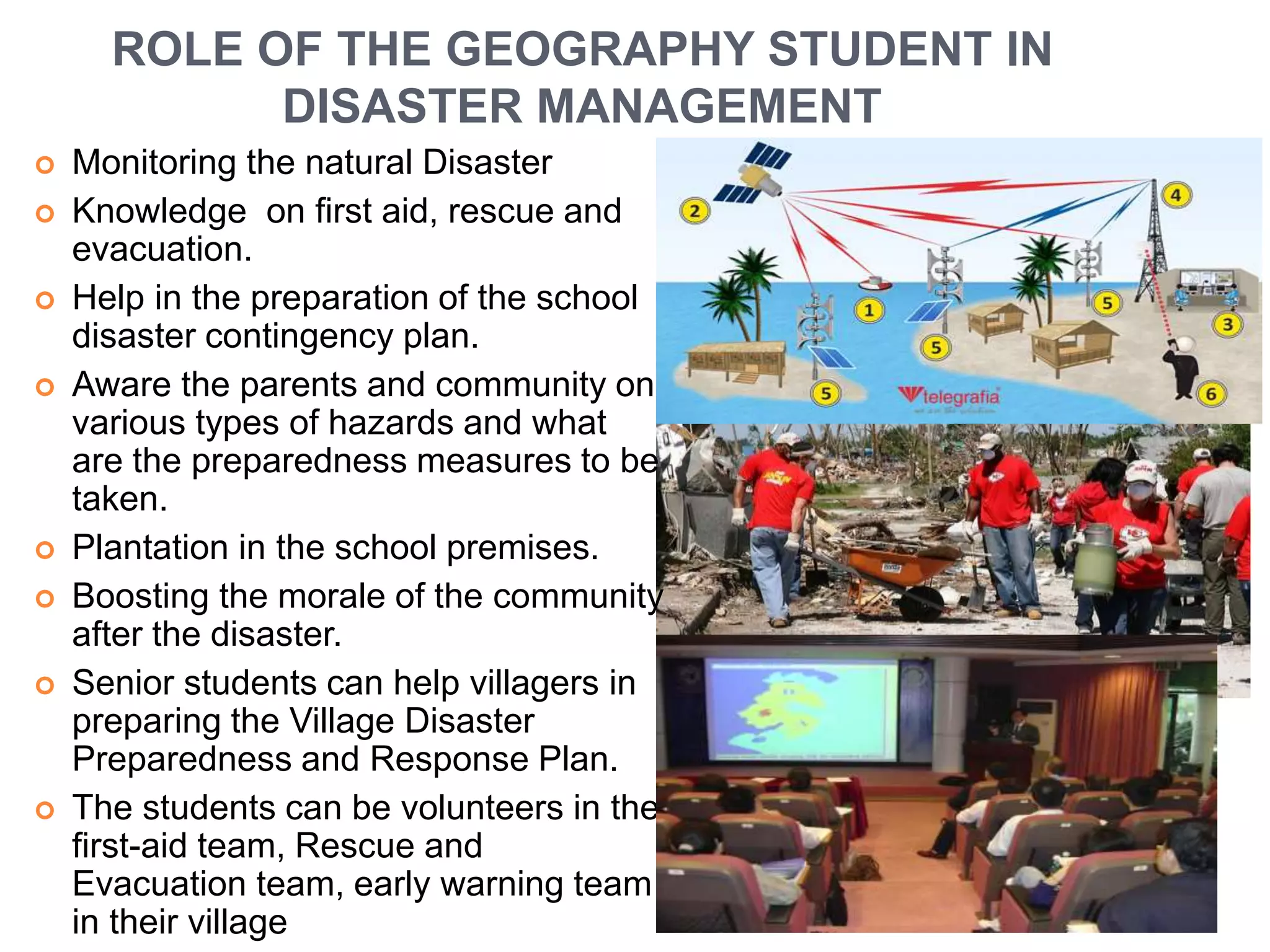
ROLE OF THE GEOGRAPHY STUDENT IN 
DISASTER MANAGEMENT 
 Monitoring the natural Disaster 
 Knowledge on first aid, rescue and 
evacuation. 
 Help in the preparation of the school 
disaster contingency plan. 
 Aware the parents and community on 
various types of hazards and what 
are the preparedness measures to be 
taken. 
 Plantation in the school premises. 
 Boosting the morale of the community 
after the disaster. 
 Senior students can help villagers in 
preparing the Village Disaster 
Preparedness and Response Plan. 
 The students can be volunteers in the 
first-aid team, Rescue and 
Evacuation team, early warning team 
in their village
S.Mohanaraj

the Role of geography student in Disaster managemant

  • 1.
    The role ofGeography student in Disaster Management S.Mohanaraj CYCLONE Special in Geography Department of Geography SOUTH EASTERN UNIVERSITY OF SRI LANKA
  • 2.
    CONTENTS  Whatis disaster  Types of disaster  Definitions of cyclone  Cyclone's are named variously in various regions  Before the cyclone  When the cyclone hit  After the cyclone  What is disaster management  Role of the geography student in disaster management S.Mohanaraj
  • 3.
    WHAT IS DISASTER Disaster is a sudden, calamitous event bringing great damage, loss, destruction and devastation to life and property. WHO defines Disaster as "any occurrence, that causes damage, ecological disruption, loss of human life, deterioration of health and health services, on a scale sufficient to warrant an extraordinary response from outside the affected community or area “a serious disruption of the functioning of society, causing widespread human, material or environmental losses which exceed the ability of the affected society to cope using its own resources” S.Mohanaraj
  • 4.
    TYPES OF DISASTER S.Mohanaraj
  • 5.
    DEFINITIONS OF CYCLONE Tropical Cyclones are low pressure systems which develop in the tropics, in the southern hemisphere. They are sufficiently intense to produce sustained gale force winds of at least 63 km/h on average that rotates in clockwise circulations. The National Weather Service defines a tropical cyclone as "a rotating system of clouds and thunderstorms that originated over tropical or sub-tropical areas." S.Mohanaraj
  • 6.
    CYCLONE'S ARE NAMEDVARIOUSLY IN VARIOUS REGIONS A tropical cyclone is the general term for violent circular winds with torrential rains that originate in the tropics. Hurricanes is the term when they occur in the Atlantic Ocean They are called typhoons in the Pacific Ocean. They are called cyclones in the Indian Ocean. S.Mohanaraj
  • 7.
    BEFORE THE CYCLONE  Keep watch on weather and listen to radio or TV.  Keep alert about the community warning systems – loudspeakers, bells, drums or any traditional warning system.  Get to know the nearest cyclone shelter  Prepare an emergency kit containing  Keep important documents, passbook, etc. in a tight plastic bag and take it along with your emergency kits if you are evacuating  Keep a list of emergency addresses and phone numbers on display. Know the contact telephone number of the government offices /agencies, which are responsible for search, rescue and relief operations in your area. S.Mohanaraj
  • 8.
    WHEN THE CYCLONEHIT  Disconnect all electrical appliances and turn off gas.  If the building starts crumbling, protect yourself with mattresses, rugs or blankets under a strong table or bench or hold on to a solid fixture (e.g. a water pipe)  Listen to your transistor radio for updates and advice.  Beware of the calm `eye’. If the wind suddenly drops, don’t assume the cyclone is over; violent winds will soon resume from the opposite direction. Wait for the official “all clear”.  If driving, stop – but well away from the sea and clear of trees, power lines and watercourses. Stay in the vehicle. S.Mohanaraj
  • 9.
    AFTER THE CYCLONE  Do not go outside until officially advised it is safe.  Check for gas leaks. Do not use electric appliances, if wet.  Listen to local radio for official warnings and advice.  If you have to evacuate, or did so earlier, do not return until advised. Use a recommended route for returning and do not rush.  Be careful of snake bites and carry a stick or bamboo  Beware of fallen power lines, damaged bridges  Heed all warnings and do not got sightseeing. S.Mohanaraj
  • 10.
  • 11.
    ROLE OF THEGEOGRAPHY STUDENT IN DISASTER MANAGEMENT  Monitoring the natural Disaster  Knowledge on first aid, rescue and evacuation.  Help in the preparation of the school disaster contingency plan.  Aware the parents and community on various types of hazards and what are the preparedness measures to be taken.  Plantation in the school premises.  Boosting the morale of the community after the disaster.  Senior students can help villagers in preparing the Village Disaster Preparedness and Response Plan.  The students can be volunteers in the first-aid team, Rescue and Evacuation team, early warning team in their village
  • 12.