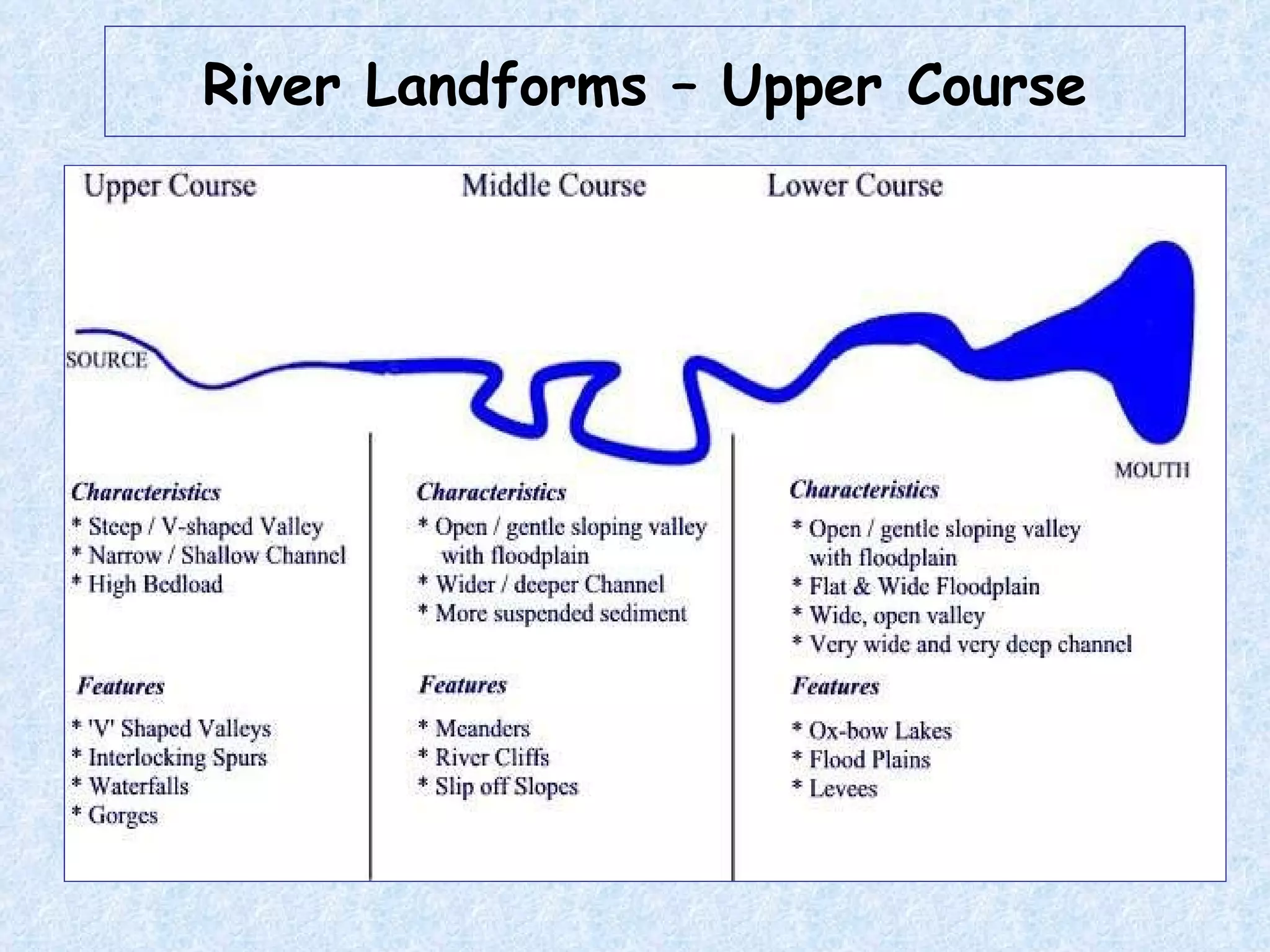
River Landforms – Upper Course
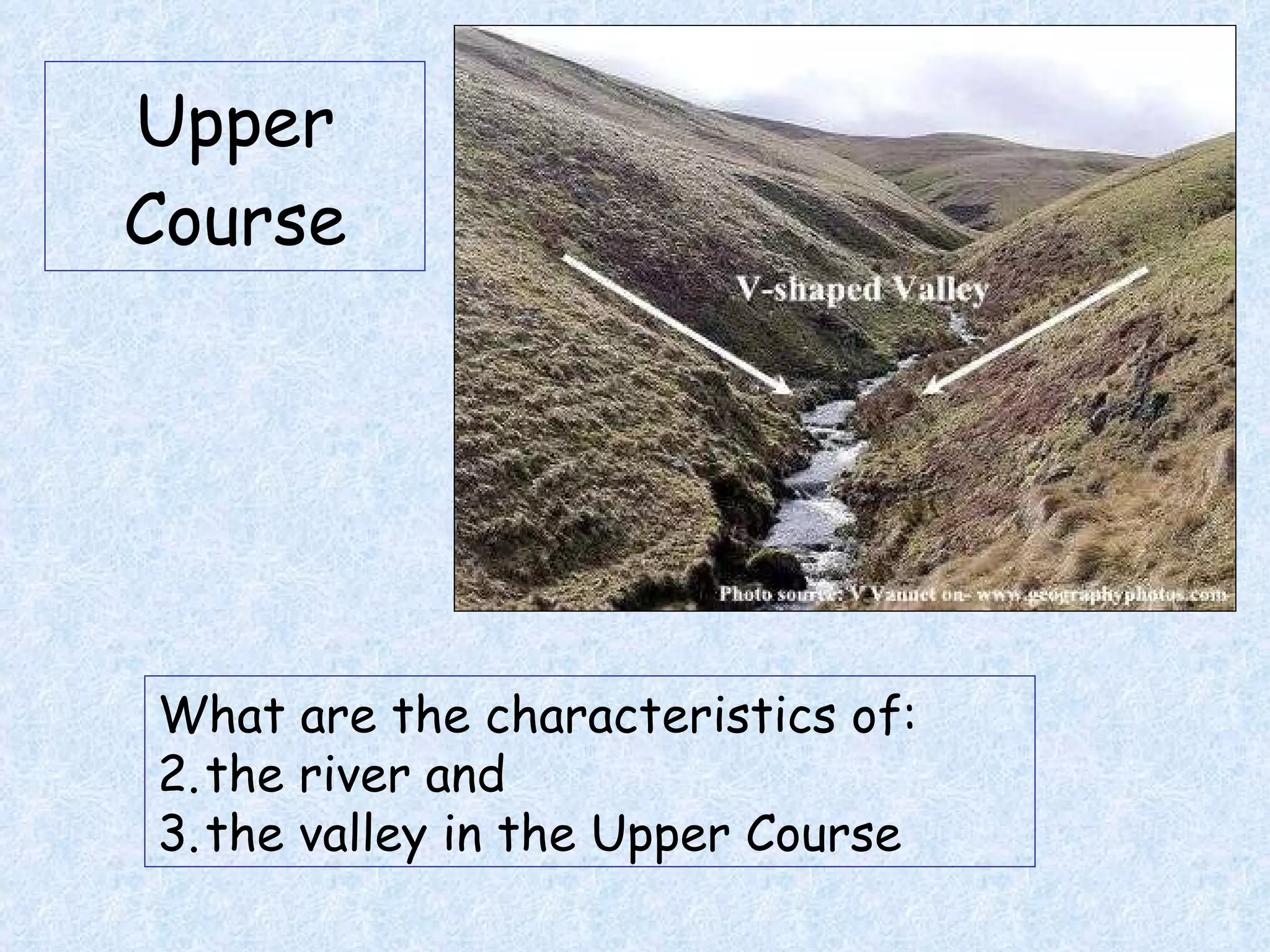
Upper Course What are the characteristics of: the river and  the valley in the Upper Course
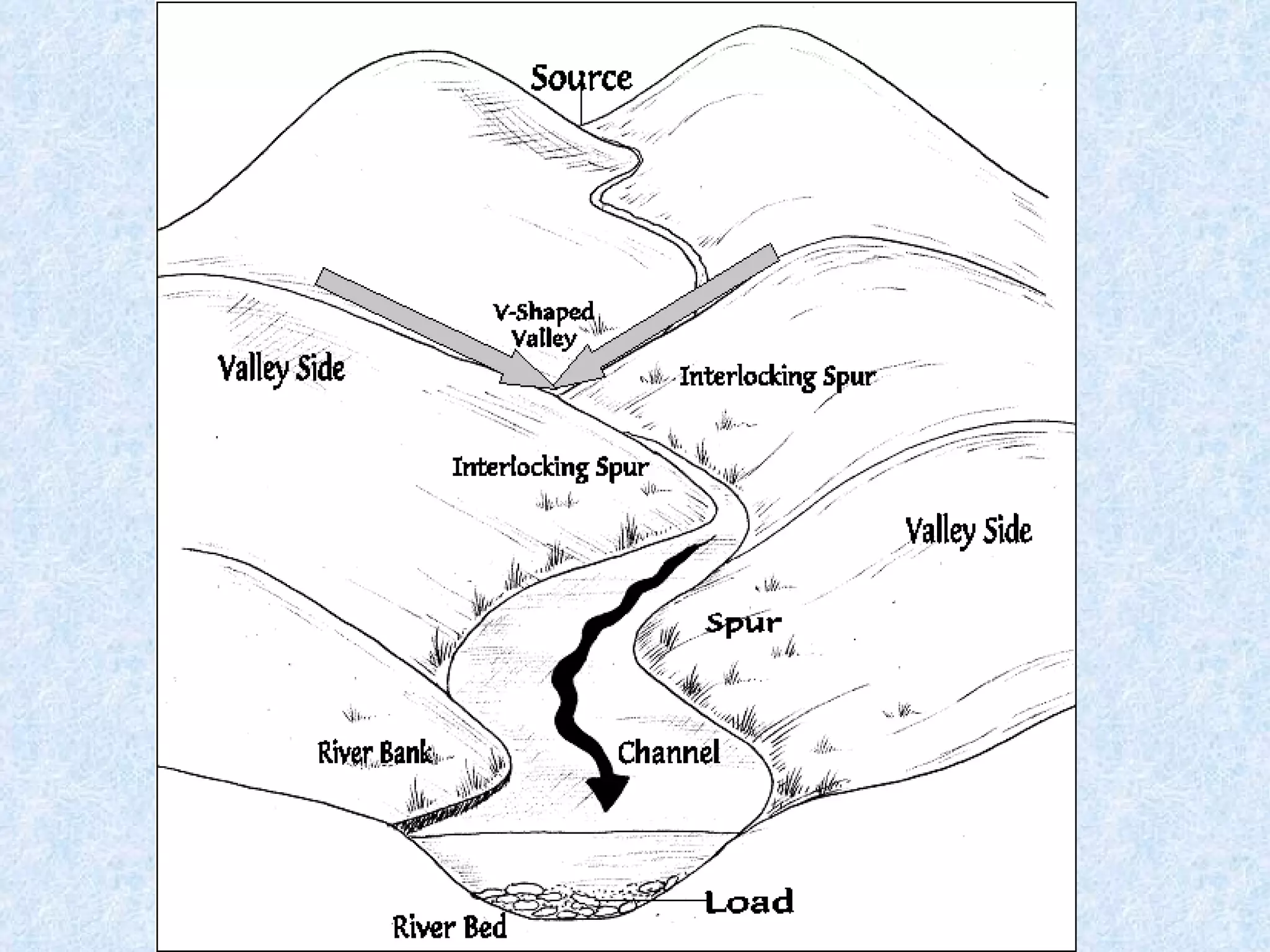
Lowest volume  of water A narrow channel with a  steep gradient ; The river erodes  downwards .  This  vertical erosion  results in a number of distinctive landforms including: V shaped valley cross section narrow valley floor interlocking spurs river’s load is of various sizes and angular. Characteristics of the upper course of a river:
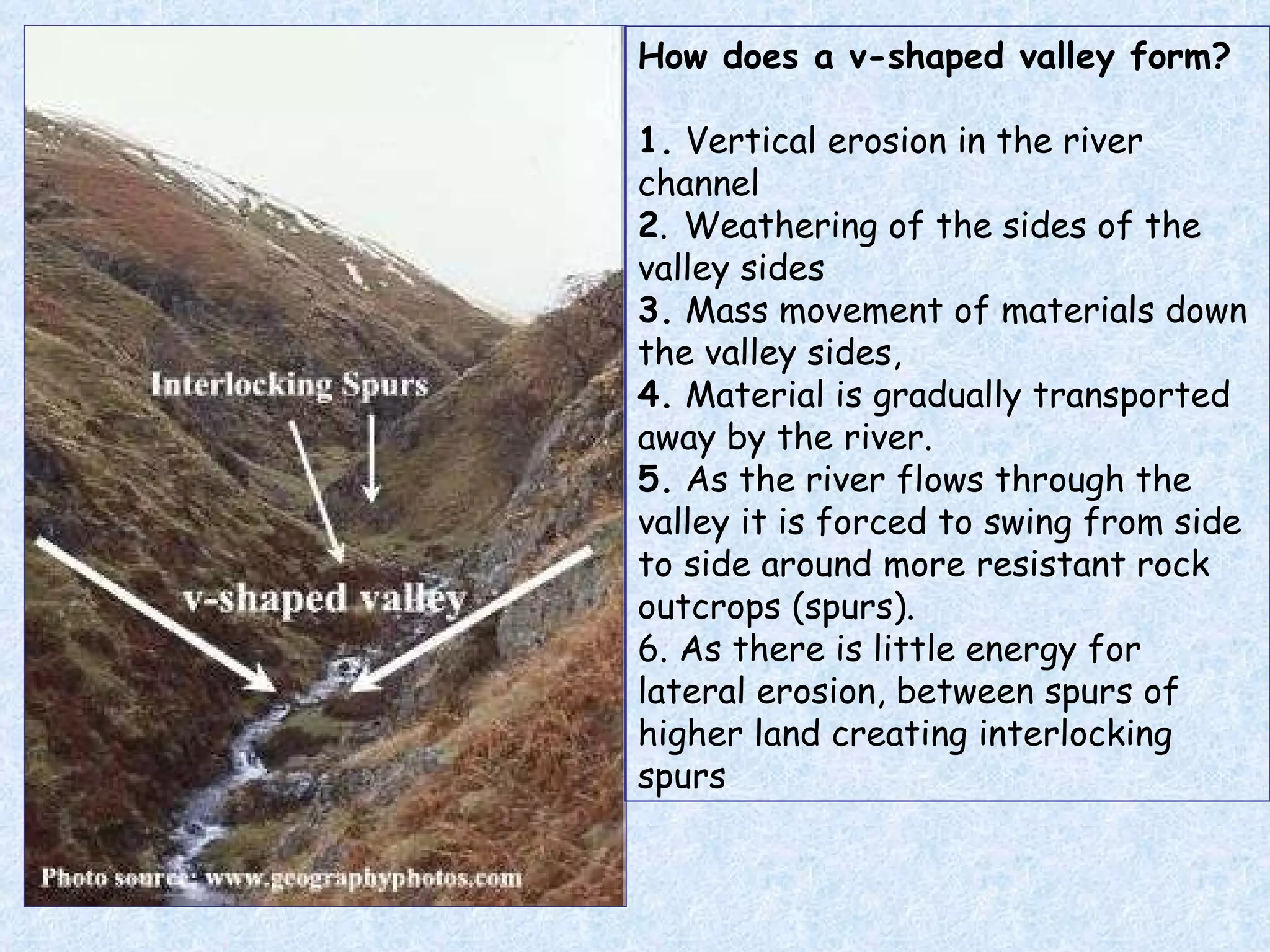
How does a v-shaped valley form? 1.  Vertical erosion in the river channel  2 .   Weathering of the sides of the valley sides  3.  Mass movement of materials down the valley sides,  4.  Material is gradually transported away by the river. 5.  As the river flows through the valley it is forced to swing from side to side around more resistant rock outcrops (spurs). 6. As there is little energy for lateral erosion,  between spurs of higher land creating interlocking spurs
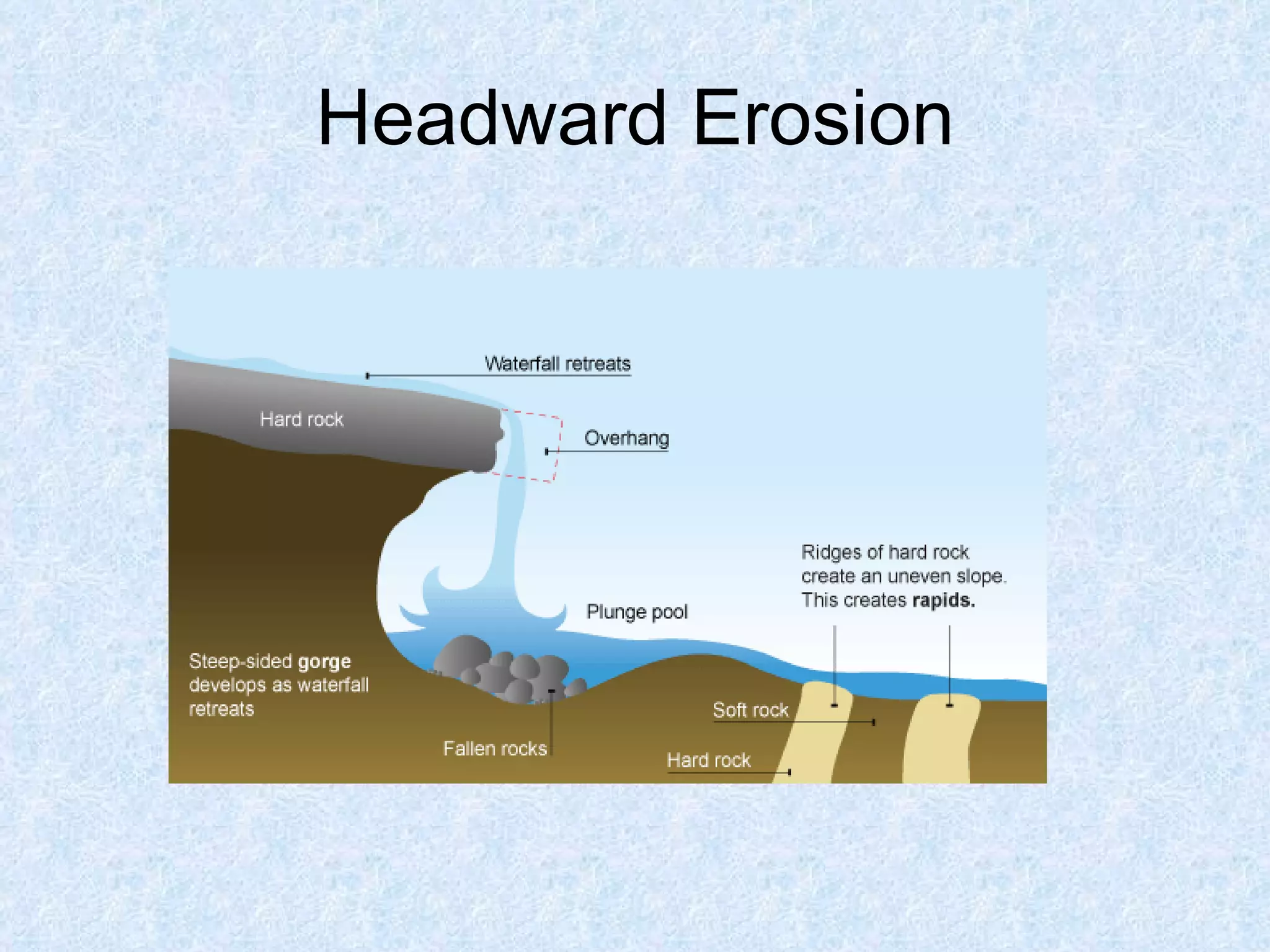
Headward Erosion
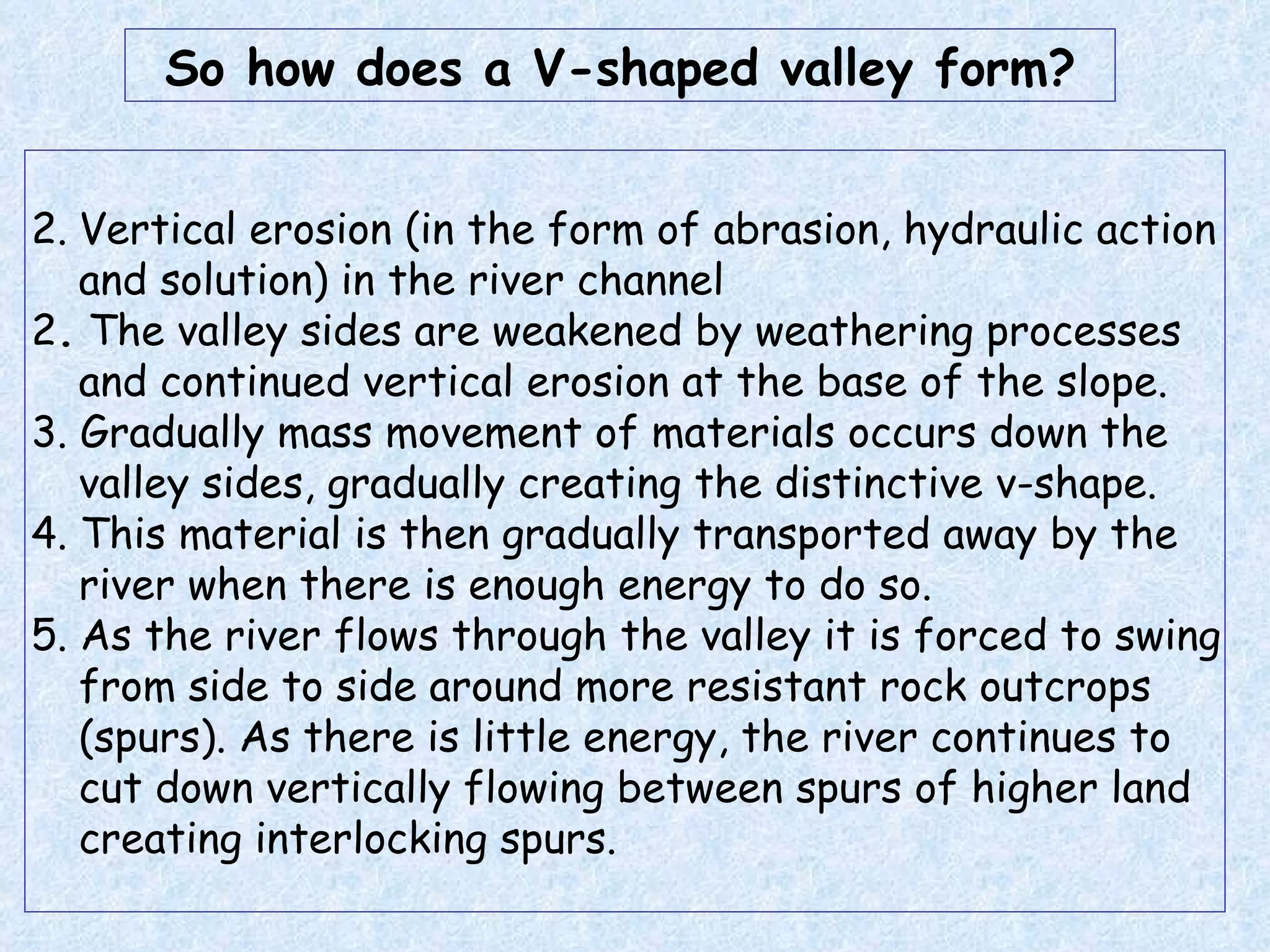
Vertical erosion (in the form of abrasion, hydraulic action and solution) in the river channel  2 .  The valley sides are weakened by weathering processes and continued vertical erosion at the base of the slope.  3. Gradually mass movement of materials occurs down the valley sides, gradually creating the distinctive v-shape. 4. This material is then gradually transported away by the river when there is enough energy to do so. 5. As the river flows through the valley it is forced to swing from side to side around more resistant rock outcrops (spurs). As there is little energy, the river continues to cut down vertically flowing between spurs of higher land creating interlocking spurs. So how does a V-shaped valley form?
 
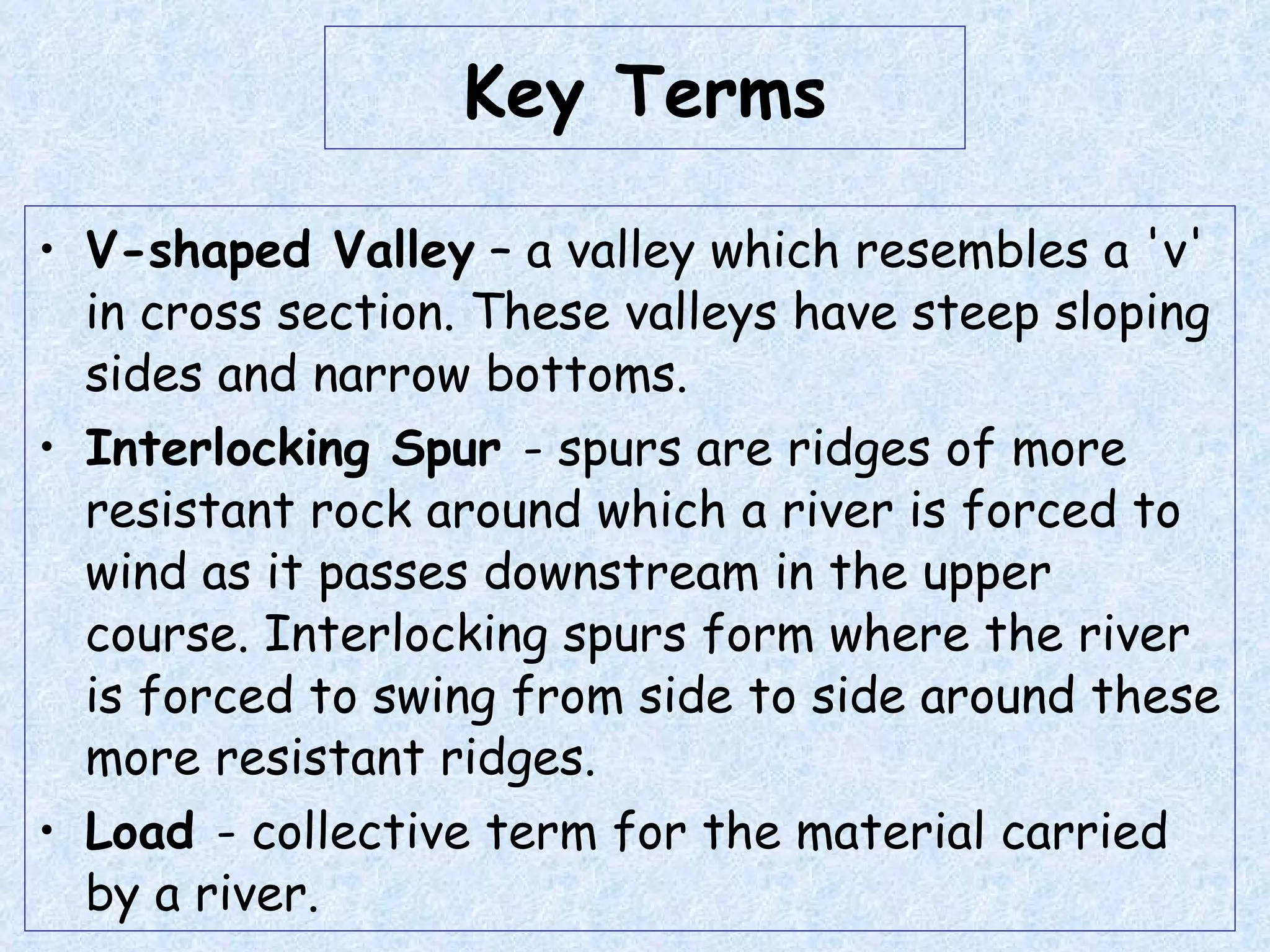
Key Terms V-shaped Valley  – a valley which resembles a 'v' in cross section. These valleys have steep sloping sides and narrow bottoms. Interlocking Spur  - spurs are ridges of more resistant rock around which a river is forced to wind as it passes downstream in the upper course. Interlocking spurs form where the river is forced to swing from side to side around these more resistant ridges. Load  - collective term for the material carried by a river.
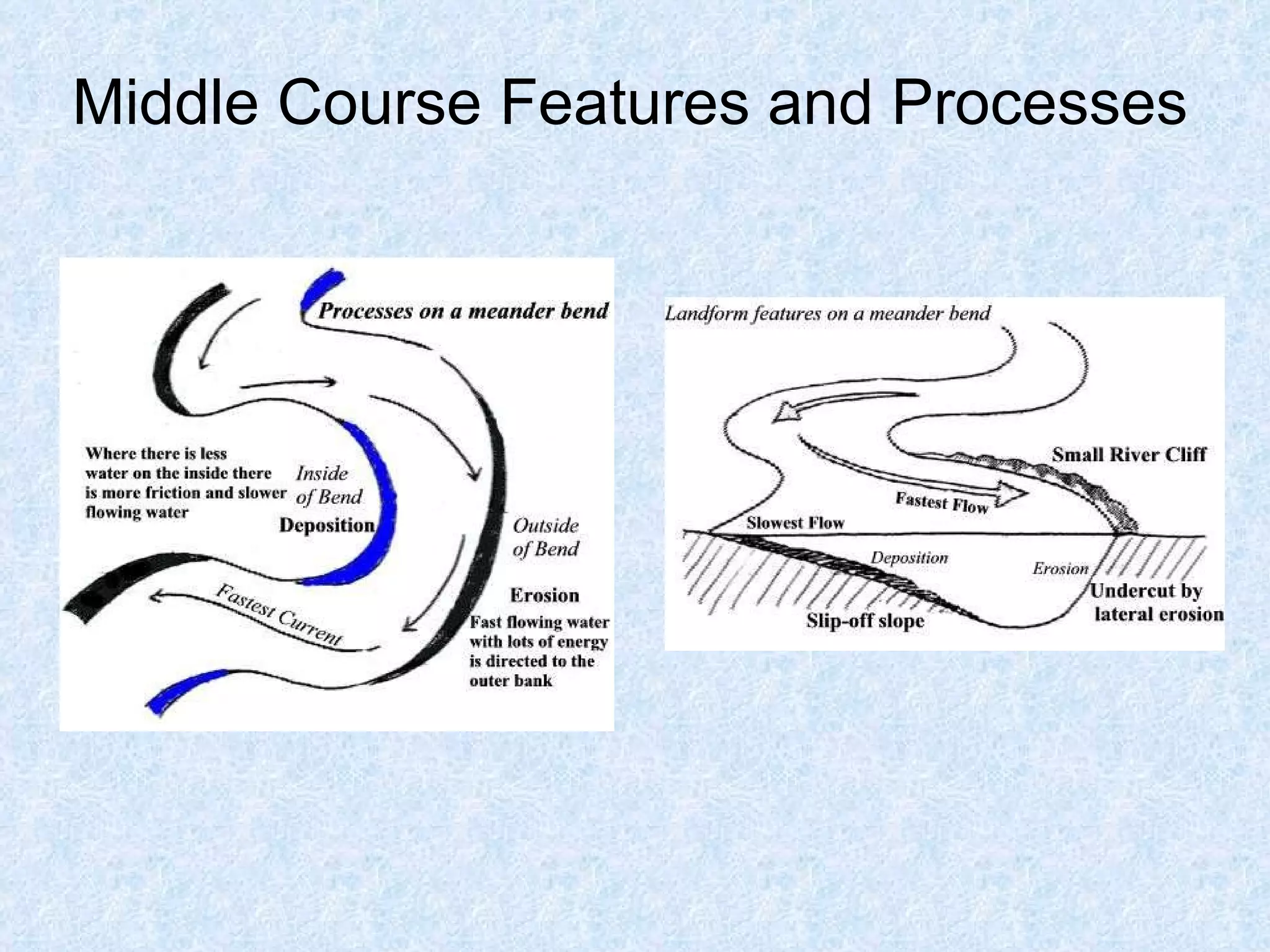
Middle Course Features and Processes
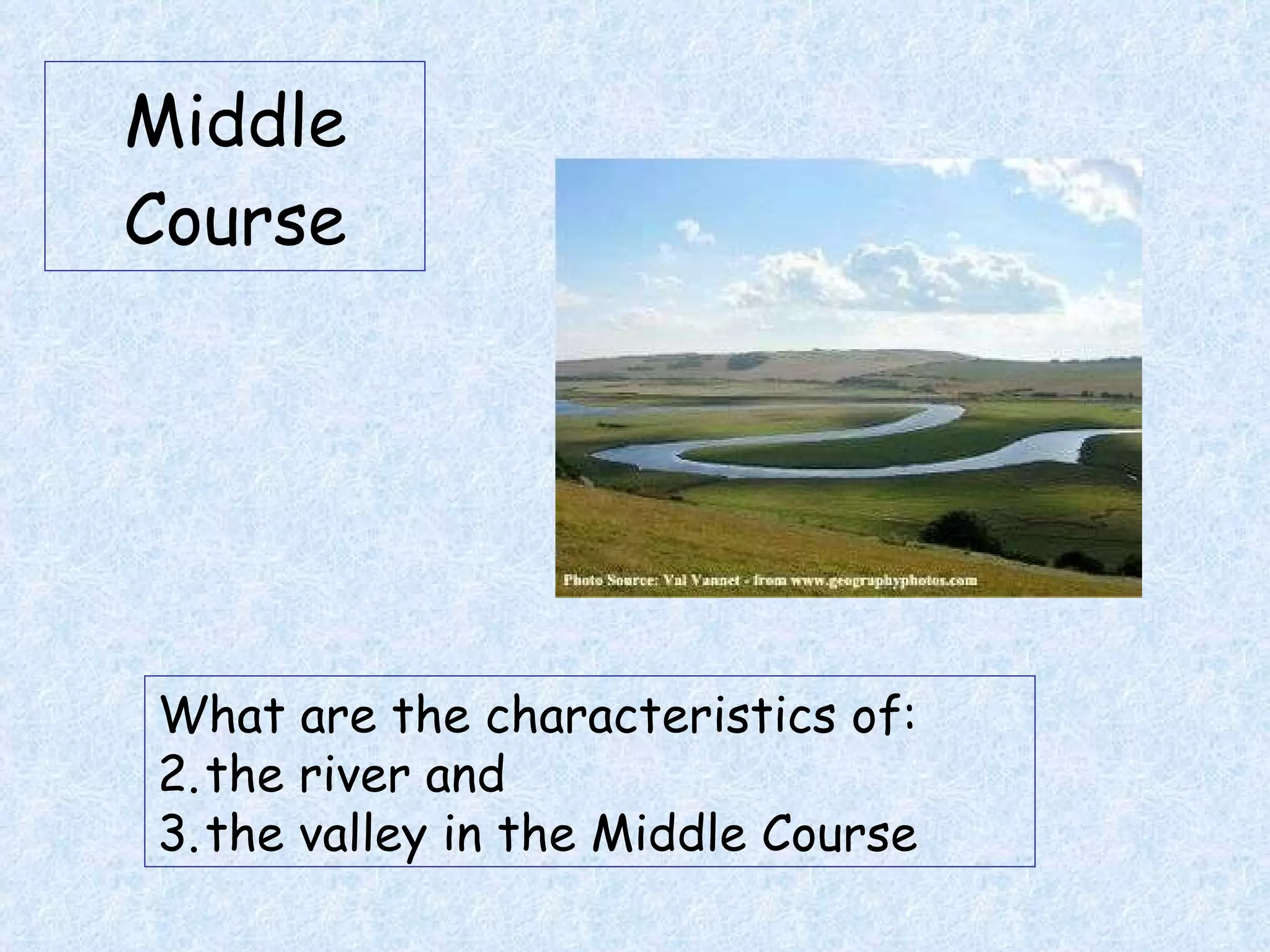
Middle Course What are the characteristics of: the river and  the valley in the Middle Course
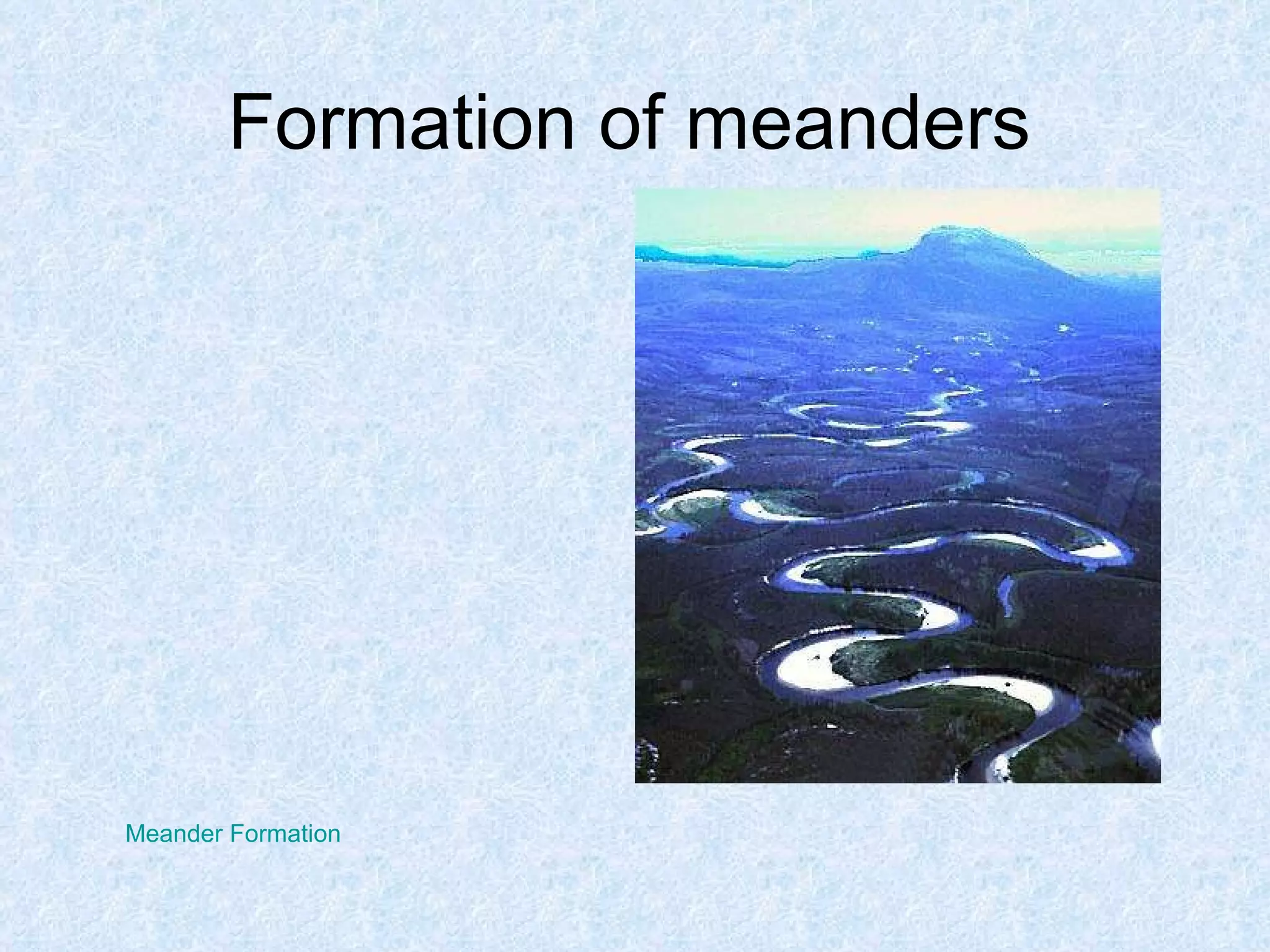
Formation of meanders Meander Formation
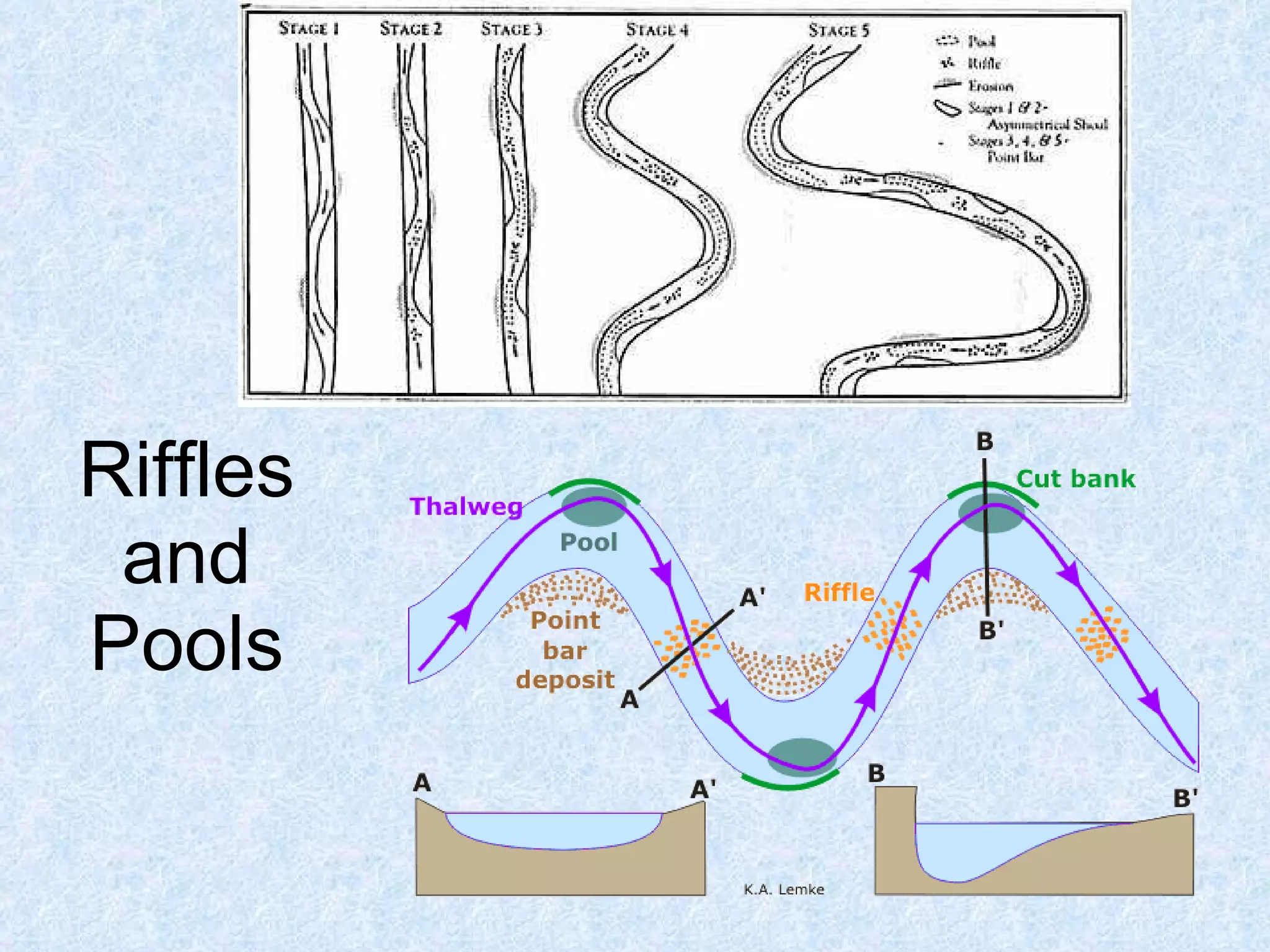
Riffles and Pools
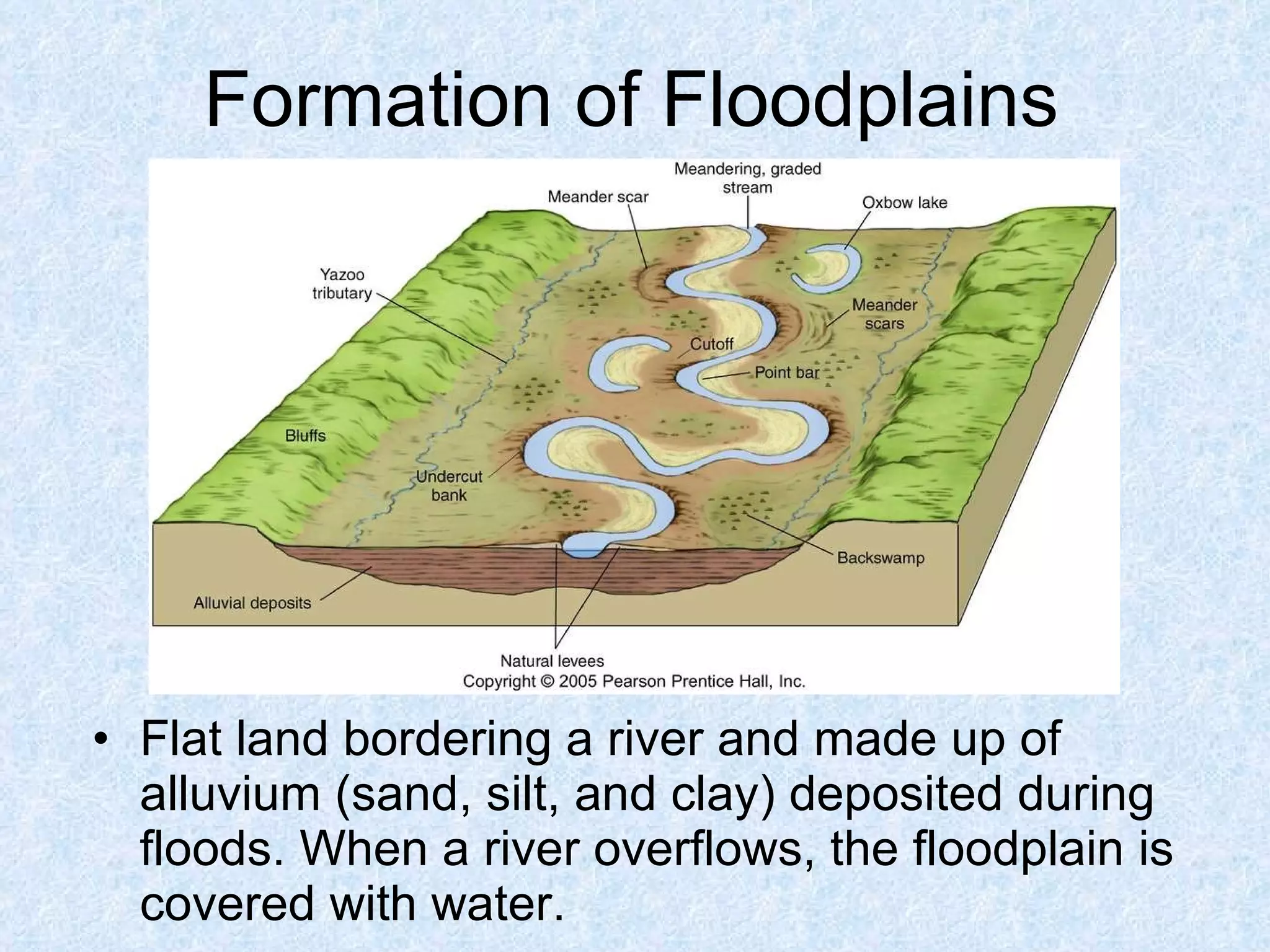
Formation of Floodplains Flat land bordering a river and made up of alluvium (sand, silt, and clay) deposited during floods. When a river overflows, the floodplain is covered with water.

River landforms in the upper course

  • 1.
    River Landforms –Upper Course
  • 2.
    Upper Course Whatare the characteristics of: the river and the valley in the Upper Course
  • 3.
    Lowest volume of water A narrow channel with a steep gradient ; The river erodes downwards . This vertical erosion results in a number of distinctive landforms including: V shaped valley cross section narrow valley floor interlocking spurs river’s load is of various sizes and angular. Characteristics of the upper course of a river:
  • 4.
    How does av-shaped valley form? 1. Vertical erosion in the river channel 2 . Weathering of the sides of the valley sides 3. Mass movement of materials down the valley sides, 4. Material is gradually transported away by the river. 5. As the river flows through the valley it is forced to swing from side to side around more resistant rock outcrops (spurs). 6. As there is little energy for lateral erosion, between spurs of higher land creating interlocking spurs
  • 5.
  • 6.
    Vertical erosion (inthe form of abrasion, hydraulic action and solution) in the river channel 2 . The valley sides are weakened by weathering processes and continued vertical erosion at the base of the slope. 3. Gradually mass movement of materials occurs down the valley sides, gradually creating the distinctive v-shape. 4. This material is then gradually transported away by the river when there is enough energy to do so. 5. As the river flows through the valley it is forced to swing from side to side around more resistant rock outcrops (spurs). As there is little energy, the river continues to cut down vertically flowing between spurs of higher land creating interlocking spurs. So how does a V-shaped valley form?
  • 7.
  • 8.
    Key Terms V-shapedValley – a valley which resembles a 'v' in cross section. These valleys have steep sloping sides and narrow bottoms. Interlocking Spur - spurs are ridges of more resistant rock around which a river is forced to wind as it passes downstream in the upper course. Interlocking spurs form where the river is forced to swing from side to side around these more resistant ridges. Load - collective term for the material carried by a river.
  • 9.
  • 10.
    Middle Course Whatare the characteristics of: the river and the valley in the Middle Course
  • 11.
    Formation of meandersMeander Formation
  • 12.
  • 13.
    Formation of FloodplainsFlat land bordering a river and made up of alluvium (sand, silt, and clay) deposited during floods. When a river overflows, the floodplain is covered with water.