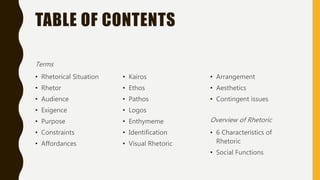
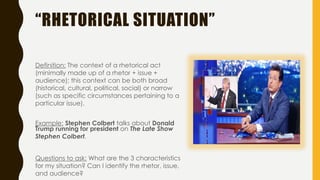
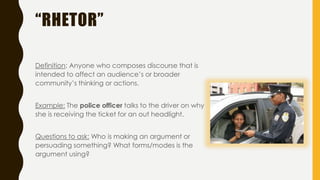
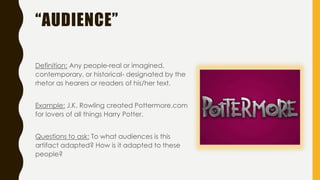
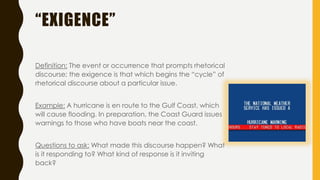
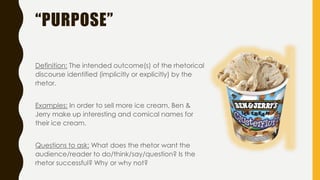
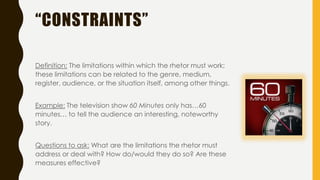
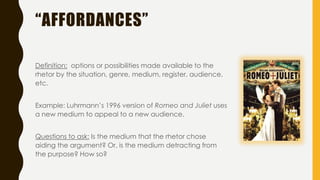
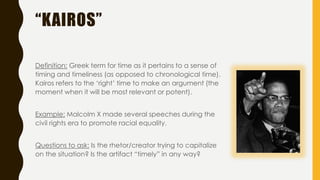
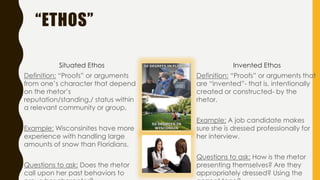
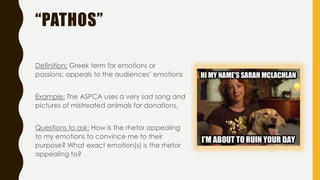
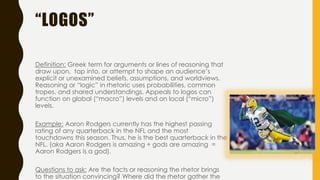
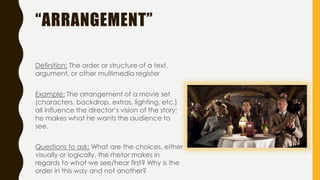
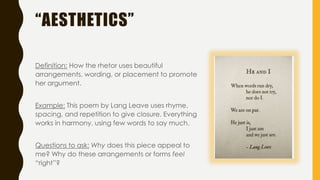
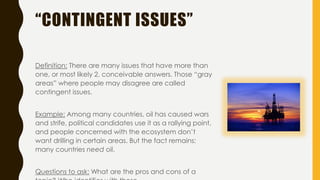
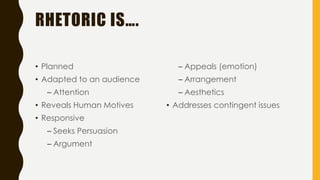
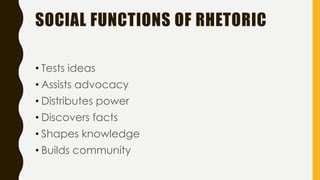
This document defines and provides examples of key rhetorical terms including rhetorical situation, rhetor, audience, exigence, purpose, constraints, affordances, kairos, ethos, pathos, logos, enthymeme, identification, visual rhetoric, arrangement, aesthetics, and contingent issues. It also provides an overview of rhetoric, outlining its 6 main characteristics as planned, adapted to audience, reveals human motives, responsive, seeks persuasion through various appeals, and arrangement and aesthetics. Finally, it lists some social functions of rhetoric such as testing ideas, assisting advocacy, distributing power, discovering facts, shaping knowledge, and building community.