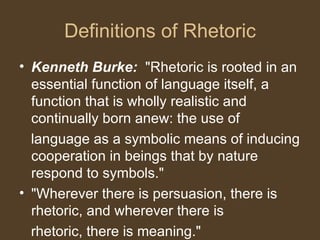
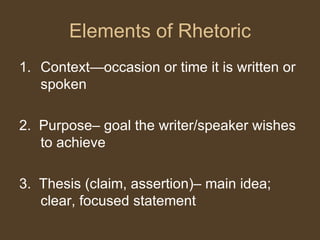
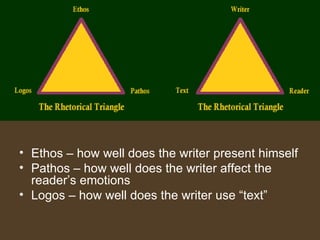
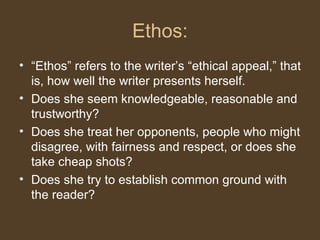
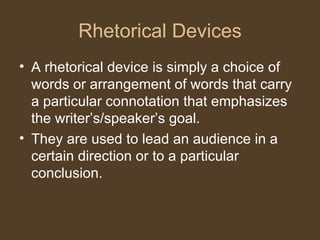
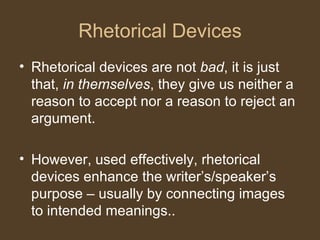
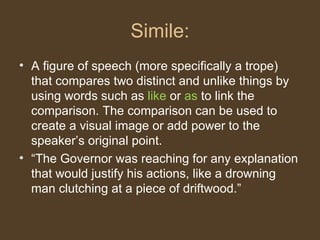
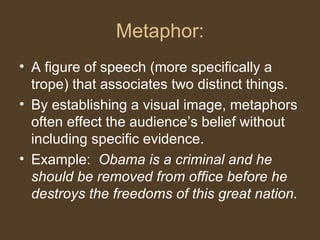
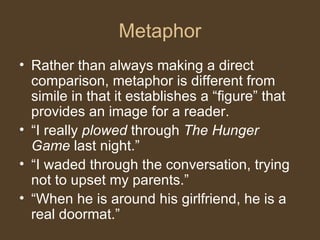
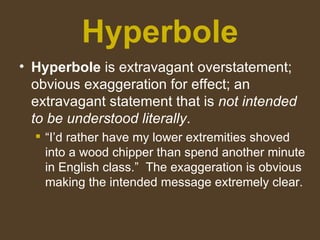
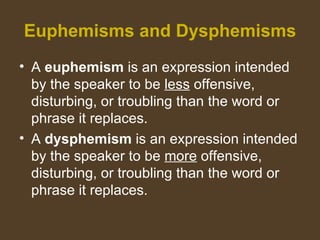
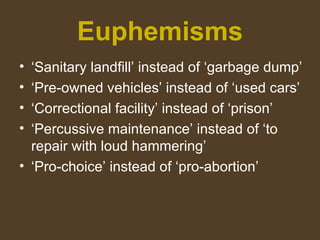
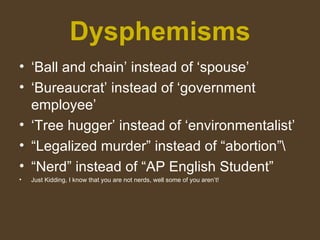
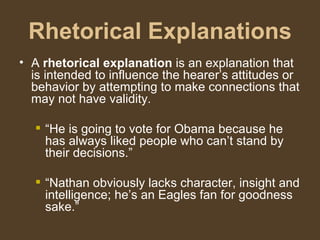
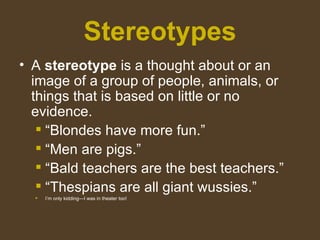
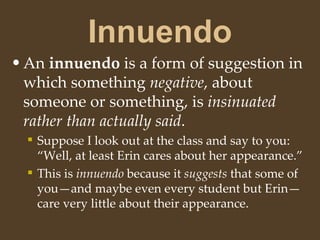
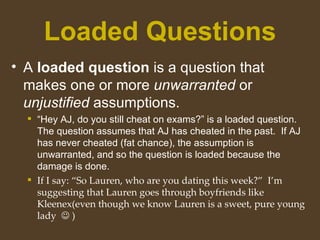
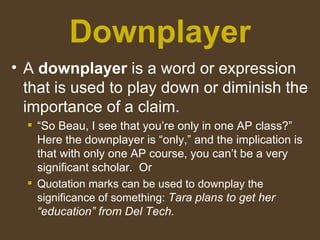
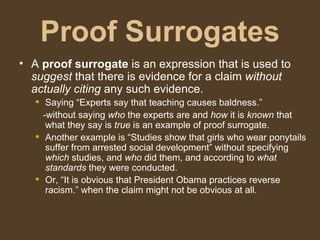
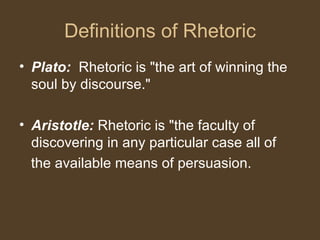
This document defines and discusses various rhetorical techniques used for persuasion. It begins by defining rhetoric from the perspectives of philosophers like Plato, Aristotle, Bacon, and Burke. It then outlines key elements of rhetoric like context, purpose, and thesis. The document also discusses rhetorical appeals of ethos, pathos, and logos. Finally, it provides examples and definitions of common rhetorical devices used to influence audiences, such as similes, metaphors, hyperbole, euphemisms, and loaded questions.
![Definitions of Rhetoric
• Francis Bacon: Rhetoric is the
application of reason to imagination "for
the better moving of the will."
• George Campbell: [Rhetoric] is that art
or talent by which discourse is
adapted to its end. The four ends of
discourse are to enlighten the
understanding, please the imagination,
move the passion, and influence the will.](https://image.slidesharecdn.com/rhetoricpowerpoint-120118140913-phpapp022-221127003826-49cac328/85/rhetoricpowerpoint-120118140913-phpapp02-2-pdf-3-320.jpg)